7 Key Differences Between a Luxury Watch vs Fashion Watch
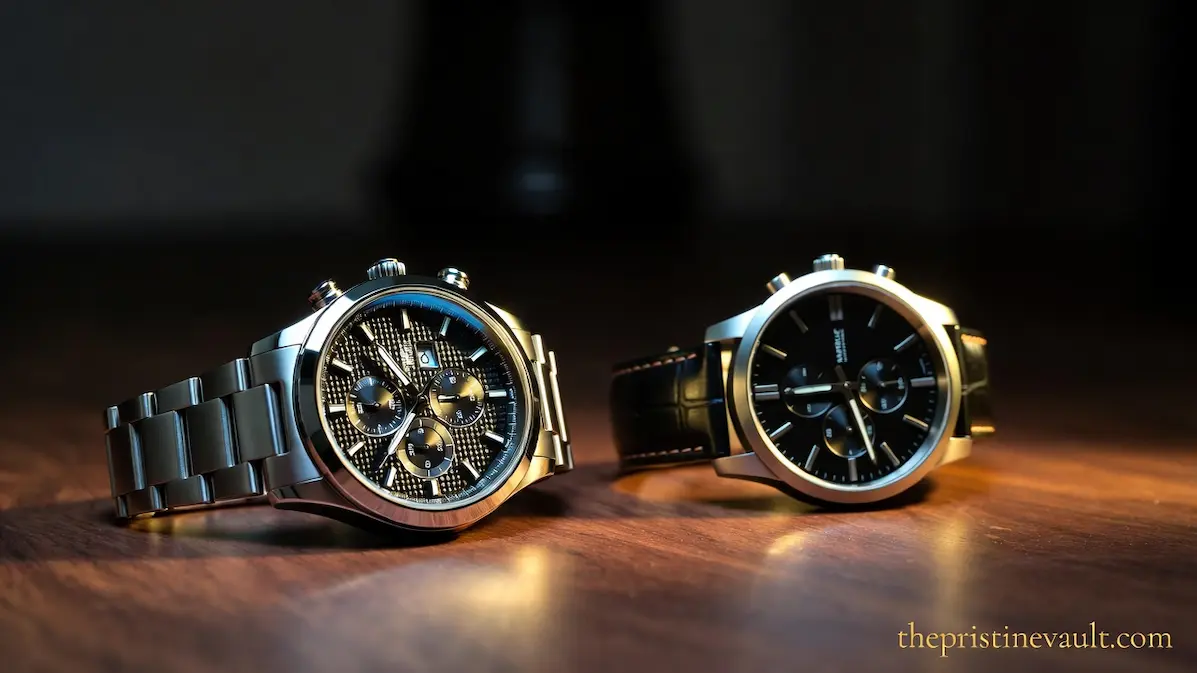
The debate around luxury watch vs fashion watch comes up every time someone stands in a boutique — or scrolls a retailer's site at midnight — staring at two watches that both look sharp and both tell the time. One is $250. The other is $2,500 — or $25,000. So what exactly separates them?
A lot of buyers find out the hard way. They pick the more affordable option, wear it daily for a year, and watch the case tarnish, the crystal scratch, and the movement stutter to a stop.
Meanwhile, a colleague's Omega from 1987 is still running like it was just serviced.
This guide breaks down the luxury watch vs fashion watch difference across seven real, measurable categories — so you know exactly what you're buying before your money leaves your wallet.
Here's everything you need to know.
Table of Contents
- What Actually Defines a "Luxury Watch"?
- Materials: Where the Price Gap Becomes Obvious
- Resale Value: Can You Get Your Money Back?
- Craftsmanship and Finishing: The Details You Notice Up Close
- Brand Heritage and Horology History
- 6 Quick Tips for Getting the Most From Either Watch (Most Owners Skip These)
- Mistakes That Are Slowly Ruining Your Watch (Luxury or Fashion)
- Frequently Asked Questions
- Conclusion
Editor's Picks: Best Products for Watch Owners
Before we dive in, here are the top-rated products most luxury watch owners trust:
- Watch Cleaning & Polishing Cloth Set by Selvyt→ Perfect for both luxury and fashion watches
- Diplomat 31-803 Watch Storage Case → Top-rated multi-watch storage box
- Mozsly Watch Winder for Automatic Watches → Trusted by Rolex and Omega owners
(More recommendations throughout the article)
What Actually Defines a "Luxury Watch"?
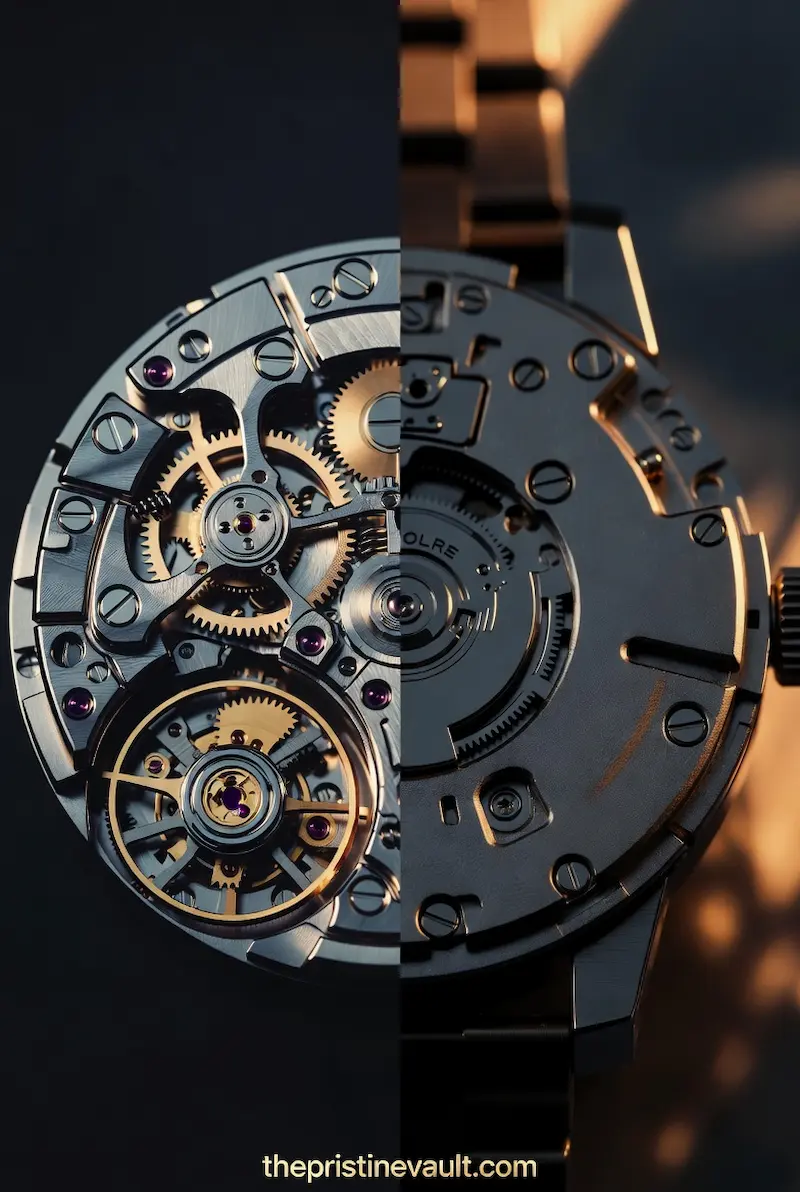
The term gets thrown around loosely, but in the watch world, "luxury" has a fairly specific meaning. It starts with the movement — the engine inside the case — and extends to every material, every component, and the hands that assembled them.
Swiss vs. Mass-Produced Movements
Most genuine luxury watches use Swiss-made mechanical movements, either automatic or manual. Brands like Rolex, Patek Philippe, and IWC design and manufacture their calibers in-house. That means thousands of hours of engineering for a single movement architecture.
Fashion watches — think Michael Kors, DKNY, or Fossil — typically run on quartz movements sourced from mass-production suppliers, often the same $4 module used across dozens of different brands. That's not a flaw if you just want accurate, low-maintenance timekeeping. But it's a very different product.
The "In-House" Advantage
An in-house movement is considered the gold standard in watchmaking. It signals that a brand controls its own supply chain, quality benchmarks, and innovation. It's also what makes a watch serviceable — and valuable — decades later.
That said, some entry-level luxury pieces like certain Tudor or Longines models use third-party movements that are still far superior to fashion-watch quartz. The movement tier matters more than the brand name alone.
Worth noting: if long-term serviceability matters to you, this section is the most important one in the article. The next section covers the mistake most people make at this stage.
Materials: Where the Price Gap Becomes Obvious
Pick up a fashion watch and a luxury watch side by side, and the difference is often immediate — before you even look at the dial.
Case and Bracelet Construction
Luxury watches are built from surgical-grade 316L or 904L stainless steel (Rolex uses the latter exclusively), solid gold, or titanium. The bracelet links are machined from solid metal, brushed and polished by hand.
Fashion watch cases are typically made from base metal alloys with a thin plating over the top. That plating wears through. A Michael Kors watch worn daily for 18 months will often show brass or silver-toned metal at the lug edges — the spots that contact your wrist and clothing most.
Crystal Quality
- Luxury watches: Sapphire crystal — hardness rating of 9 on the Mohs scale, scratch-resistant under nearly all daily conditions
- Fashion watches: Mineral glass or acrylic — functional, but scratches easily and fogs over time
One real-world example: a Seiko Presage (an affordable luxury-adjacent piece) retains its crystal clarity after years of daily wear. A similarly-priced fashion watch from the same period often looks clouded and dinged within the first 12 months.
For protecting any watch crystal from fine scratches during storage, this microfiber-lined watch roll is one of the most practical accessories you can own.
Up next: the one factor that changes everything for long-term storage.
Resale Value: Can You Get Your Money Back?
This is where the luxury watch vs fashion watch conversation gets financially serious.
Luxury Watches as Wearable Investments
Certain references — Rolex Submariner, Audemars Piguet Royal Oak, Patek Philippe Nautilus — have appreciated significantly over the past decade. Even mainstream luxury pieces from Omega, Tudor, or Grand Seiko tend to hold 60–80% of their retail value if kept in good condition with original papers and box.
Fashion watches, by contrast, depreciate almost immediately and almost completely. A $300 Michael Kors watch bought new is worth roughly $30–50 on the secondhand market. There's no collector demand, no horological heritage, and no service ecosystem propping up its value.
The "Box and Papers" Factor
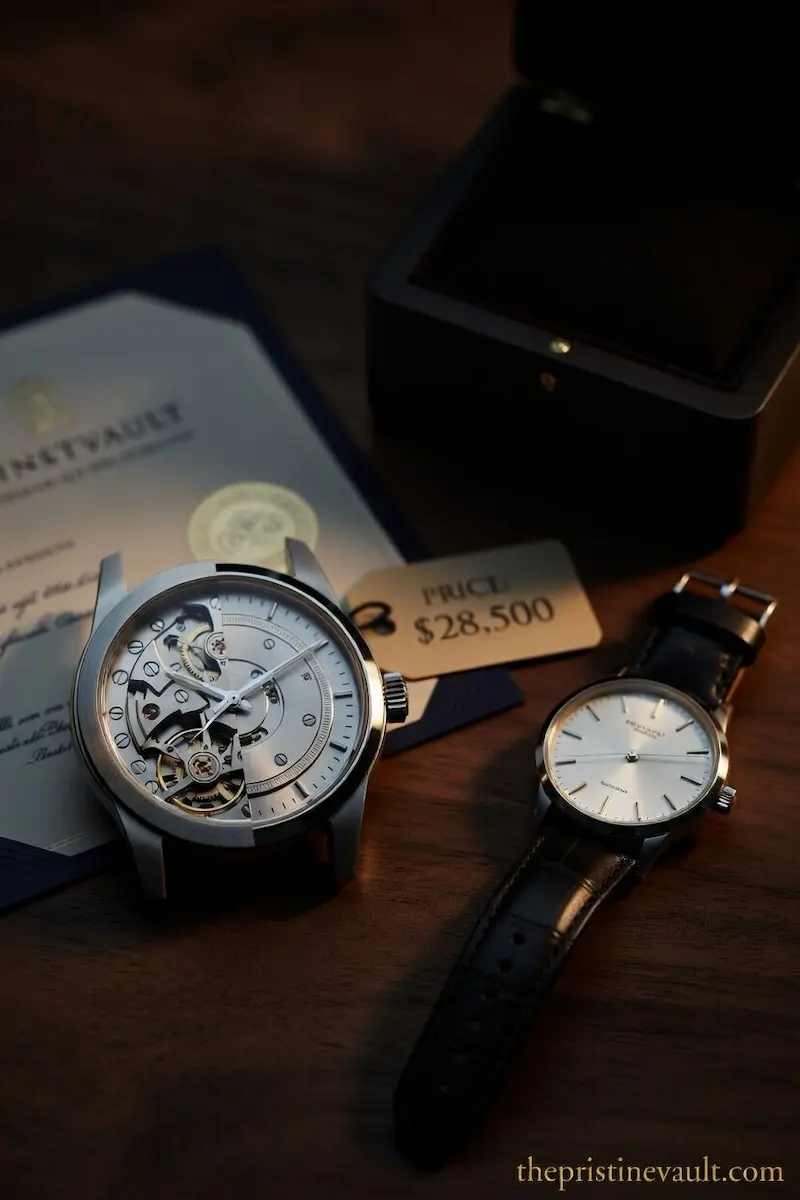
With luxury watches, original box and papers (the warranty card, certificate, and packaging) can add 15–30% to resale value. Serious collectors and platforms like Chrono24 or Bob's Watches routinely price "full set" pieces at a meaningful premium.
Fashion watch buyers almost never think about box and papers — because it simply doesn't matter in that market.
If you're serious about protecting a luxury piece long-term, check out our guide to the 7 best luxury watch storage boxes tested by collectors — proper storage is one of the most overlooked factors in preserving resale value.
But storing correctly is only half the battle — here's what to do every 3 months.
Craftsmanship and Finishing: The Details You Notice Up Close
A seasoned watch enthusiast can identify a luxury piece in seconds — not because of the logo, but because of the finishing.
Anglage, Beveling, and Hand Polishing
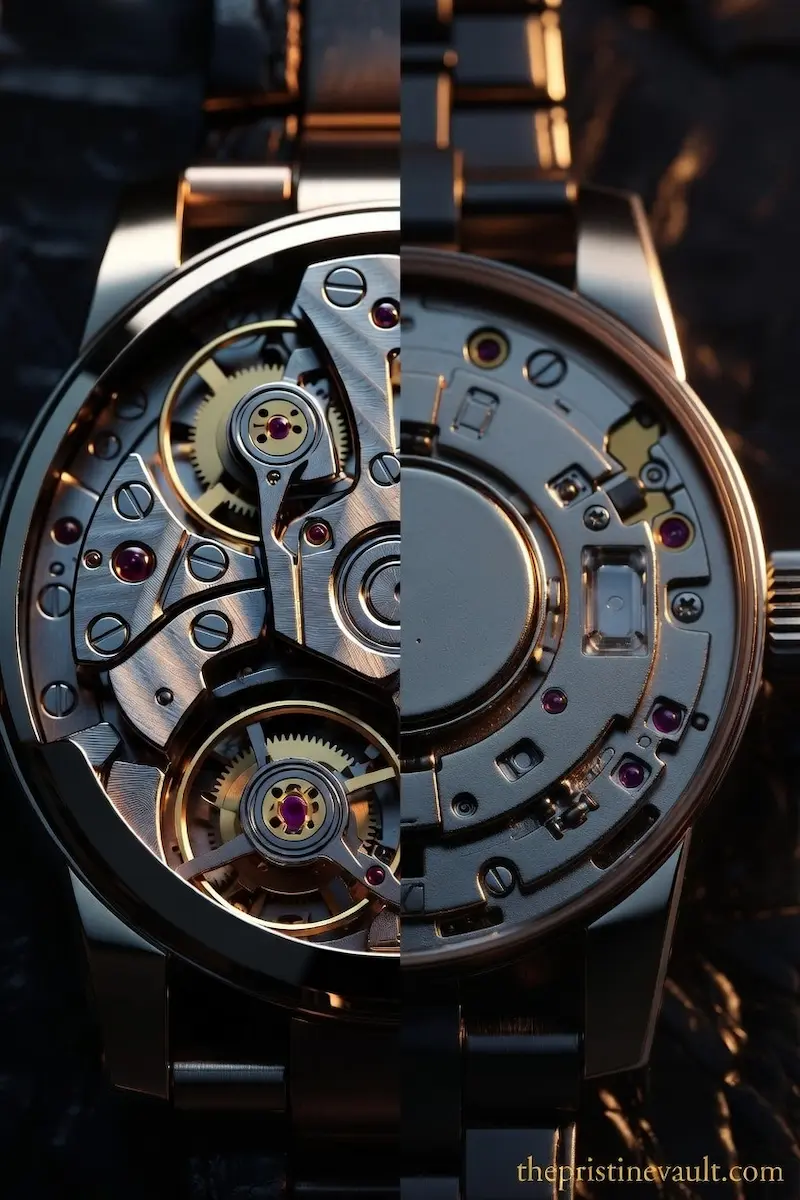
High-end watchmakers apply "anglage" — a chamfered, mirror-polished bevel — to movement bridges, plates, and even individual screws. On a piece like a Jaeger-LeCoultre Reverso, the finishing visible through the caseback represents hundreds of hours of hand work.
Fashion watches are assembled from pre-finished components with minimal hand-finishing. They're not poorly made — they're efficiently made. The difference is whether craft or cost-per-unit is the guiding principle.
Dial and Hands
Luxury watch dials are often hand-lacquered, guilloche-engraved, or enameled. Hands are individually polished and luminite-filled by hand. On a fashion watch, the dial is typically printed, and hands are machine-applied.
Brand Heritage and Horology History
Why History Adds Value
Patek Philippe has been making movements since 1839. Vacheron Constantin since 1755. That institutional knowledge — of metallurgy, escapement engineering, and casing techniques — compounds over generations. It's embedded in the product.
Fashion watch brands entered watchmaking as a licensing and branding exercise. They are excellent at design and marketing. Horological depth is not what they're selling — and that's okay, as long as you know that going in.
Collector Communities and Brand Ecosystems
Rolex, Omega, and AP have thriving secondary markets, dedicated forums, and brand-affiliated service centers worldwide. If your Submariner needs a new crown, Rolex can source and fit it 40 years from now.
Fashion watch brand support typically extends a few years past discontinuation — and then spares dry up entirely.
For automatic watch owners, keeping the movement running between wears is essential. Our roundup of the best watch winder for Omega Speedmaster covers everything you need.
The next section covers the mistake most people make at this stage.
6 Quick Tips for Getting the Most From Either Watch (Most Owners Skip These)
Whether you own a Rolex or a Fossil, these habits extend the life and appearance of your watch significantly.
- Rinse after saltwater exposure. Even stainless steel corrodes when salt dries in the crown gasket — rinse with fresh water and dry thoroughly after beach or pool use.
- Store automatic watches in a winder if unworn for more than 2 weeks. A stopped movement causes lubricants to pool and congeal. For creative solutions when a winder isn't available, see our guide on how to store watches without a watch box.
- Avoid magnetic fields. Phone speakers, laptop closures, and bag clasps are all magnetism sources that can disrupt a mechanical movement. Keep your watch in a separate compartment.
- Wipe the case and bracelet weekly. Skin oils and sweat accelerate plating wear on fashion watches and can cause micro-corrosion on even high-grade steel.
- Service mechanical watches every 5–7 years. Skipping service shortens movement life dramatically — the oils break down and metal-on-metal wear begins.
- Never store watches in the bathroom. Humidity and temperature fluctuations degrade seals, gaskets, and leather straps faster than almost anything else.
- Keep original packaging for luxury pieces. Even if you never plan to sell, full sets command a significant premium if you change your mind.
⚠️ Pro Tip: For automatic Rolex owners, keeping your watch running consistently is critical for movement health. The best watch winder for the Rolex Datejust guide covers the top options at every price point — including why rotation direction matters more than most people realize.
Mistakes That Are Slowly Ruining Your Watch (Luxury or Fashion)
- Ignoring water resistance ratings. Splashing water on a "water resistant" fashion watch is fine — submerging it in a pool is not. "Water resistant" and "waterproof" are not the same thing.
- Winding a running automatic watch. If your automatic is already on your wrist and running, manually winding it adds unnecessary stress to the crown and stem over time.
- Storing on a soft surface face-down. Placing a watch crystal-down on a dresser — even briefly — causes micro-scratches on sapphire and deep gouges on mineral glass.
- Using household cleaners on bracelets. Bleach, ammonia, and vinegar-based cleaners destroy gasket seals and can discolor PVD coating on fashion watches within one application.
- Skipping crown re-tightening after setting the time. On water-resistant watches, the screw-down crown must be returned to its locked position — forgetting this step voids water resistance entirely.
Frequently Asked Questions
Is a luxury watch worth it compared to a fashion watch? It depends entirely on your priorities. If you want a reliable daily timepiece with strong aesthetics for under $500, a quality fashion watch delivers that. If you want longevity, investment potential, mechanical artistry, and resale value, a luxury watch justifies the premium — particularly at the $1,000–$5,000 entry point with brands like Seiko Presage, Tissot, or Hamilton.
What makes a watch "luxury" vs just expensive? Price alone doesn't define luxury. True luxury watches are distinguished by in-house or high-grade movements, hand-finished components, sapphire crystals, solid metal cases, and a heritage of horological expertise. Some "luxury" branded watches are essentially fashion watches at a high markup.
Do fashion watches hold their value? Rarely. Fashion watches depreciate by 70–90% almost immediately after purchase. They're consumer goods, not collectibles. If resale or long-term value matters to you, this is one of the most important luxury watch vs fashion watch differences to understand before buying.
Can a fashion watch last as long as a luxury watch? With light use and careful storage, a quality fashion watch can last 5–10 years. A well-maintained luxury mechanical watch — regularly serviced — can last generations and be passed down. The engineering tolerances simply aren't comparable.
What are the best entry-level luxury watch brands? Seiko (especially the Presage and Prospex lines), Hamilton, Tissot, and Longines are widely considered the best entry points into genuine luxury watchmaking. They offer Swiss or Japanese movements, sapphire crystals, and strong secondary markets at $300–$1,000 retail.
Are smartwatches luxury or fashion watches? Neither, technically. Smartwatches occupy their own category — consumer electronics with fashion-watch aesthetics. They depreciate similarly to fashion watches and lack mechanical movements. Some luxury brands (TAG Heuer, Montblanc) have released smartwatch hybrids, but the collector and investment community does not treat them as horological pieces.
How do I tell a luxury watch from a fashion watch in person? Flip it over. Luxury watches often feature an exhibition caseback showing the movement. Check the crystal with your fingernail — sapphire won't scratch. Feel the bracelet links: solid metal has a smooth, weighty quality that hollow or plated links can't replicate. And look at the finishing under good light — luxury pieces show distinct polished and brushed surfaces, not a uniform machine sheen.
Conclusion
The luxury watch vs fashion watch divide comes down to three fundamentals: what's powering it, what it's made of, and what happens to its value over time.
A fashion watch is a perfectly legitimate purchase — stylish, affordable, and low-maintenance. But it's a consumable. A luxury watch is an investment in craft, materials, and a mechanical tradition that's held its value for centuries.
If you're ready to make the move into serious watchmaking, protecting that investment from day one is non-negotiable. Start with this highly rated multi-watch storage case— it's one of the simplest upgrades any new luxury watch owner can make.
Now it's your turn — choose with confidence, store with care, and service on schedule. Your watch will thank you for it.