Essential Tools Every Luxury Watch Collector Must Own
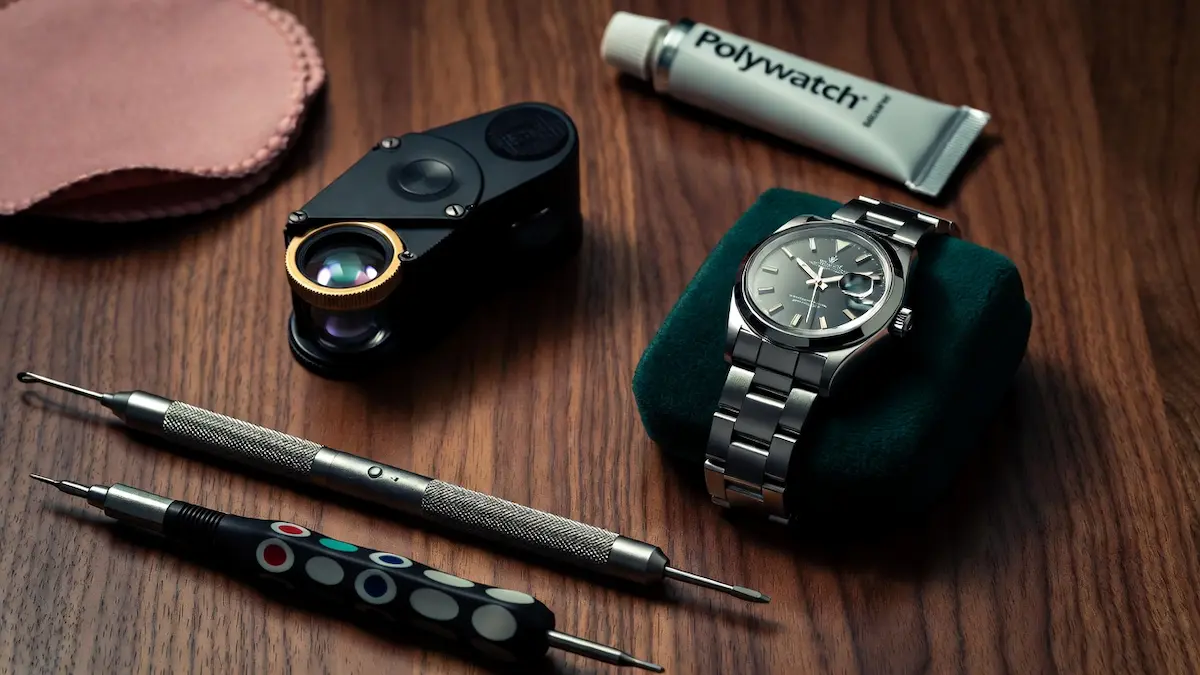
"Having the right essential tools separates luxury watch collectors who preserve six-figure investments from those who spend thousands on preventable repairs."
Your Rolex Submariner developed condensation under the crystal. Your watchmaker said moisture got inside during a routine strap change because you used the wrong spring bar tool.
Or maybe your vintage Omega Speedmaster has mysterious scratches on the caseback. Turns out your polishing cloth contained abrasive compounds designed for jewelry — not watch finishing.
A collector I know snapped the spring bar on his $8,000 Jaeger-LeCoultre trying to change straps with a kitchen knife. The bar flew across the room. The loose watch dropped onto tile floor. Scratched crystal. Dented case. Repair estimate: $2,200.
These disasters share one cause: wrong tools or no tools at all.
This guide covers the 7 essential tools every serious watch collector needs. Not expensive professional equipment — just the right basic tools that protect your investment during everyday ownership tasks like strap changes, cleaning, storage, and monitoring.
Here's everything you need to know.
Table of Contents
- Editor's Picks: Must-Have Watch Collector Tools
- Tool #1: Professional Spring Bar Tool
- Tool #2: Quality Microfiber Polishing Cloth
- Tool #3: Digital Hygrometer
- Tool #4: Watch Winder (For Automatic Watches)
- Tool #5: Jeweler's Loupe (Magnification)
- Tool #6: Silica Gel Packets (Humidity Control)
- Tool #7: Watch Case Back Opener (For Battery Changes Only)
- 5 Quick Tips for Building Your Watch Toolkit (Most Collectors Skip These)
- Mistakes That Destroy Watches During Routine Care
- Frequently Asked Questions
- Do I really need specialized tools for watch care?
- How much should I spend on watch collector tools?
- Can I change my own watch straps?
- How often should I clean my luxury watches?
- Do I need a watch winder for every automatic watch?
- Should I open my own watch caseback?
- How do I know if my storage humidity is correct?
- Conclusion
This post contains affiliate links. We may earn a small commission at no extra cost to you.
Editor's Picks: Must-Have Watch Collector Tools
Before we dive in, here are the top-rated tools most serious watch collectors trust:
- Bergeon Spring Bar Tool — Professional-grade, precision tips, won't scratch lugs
- Connoseours Polishing Cloth — Jeweler-approved, safe for all watch finishes
- Digital Hygrometer — Monitors humidity in watch storage areas
(More recommendations throughout the article)
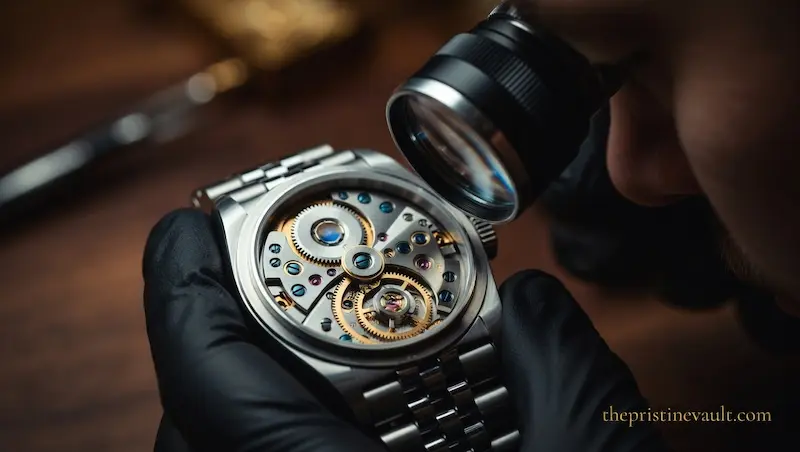
Tool #1: Professional Spring Bar Tool
Every strap change risks damaging your watch. A proper spring bar tool eliminates that risk almost entirely.
Why This Tool Matters
Spring bars are tiny metal rods that connect straps and bracelets to watch cases. Changing straps requires compressing these bars while navigating tight spaces between delicate lugs.
Wrong tools — screwdrivers, knives, paperclips — slip unpredictably. When they slip, they gouge lug surfaces, scratch cases, and sometimes damage the spring bar channel inside the lug itself.
A collector showed me his Patek Philippe Nautilus with deep scratches inside both lugs from amateur strap changes using a flathead screwdriver. Professional refinishing cost $800 and slightly altered the original surface finish.
What to Look For
Forked tip (Y-shaped): Standard for most spring bar types. The fork grabs the spring bar shoulder and compresses it cleanly.
Single pointed tip: Necessary for watches with drilled lugs (holes through the lug sides). Many luxury watches use this design.
Proper handle: Comfortable grip that allows controlled pressure. Cheap tools have thin handles that slip during use.
The Bergeon brand is what professional watchmakers use. Their spring bar tools cost $15-30 but last decades. Cheap alternatives dull quickly and slip more frequently.
For comprehensive guidance on watch storage that complements proper tool ownership, our luxury watch storage box review covers protection options.
The next section covers the mistake most people make at this stage.
Tool #2: Quality Microfiber Polishing Cloth
Your watch accumulates fingerprints, skin oils, and micro-debris every time you wear it. The wrong cleaning material creates more damage than the dirt itself.
Why Regular Cloths Fail
Paper towels scratch. Regular cotton T-shirts carry lint and hidden abrasive particles. Even some cloths marketed as "polishing cloths" contain compounds too aggressive for watch finishes.
Polished stainless steel and precious metals show micro-scratches from inappropriate cleaning materials. These scratches accumulate invisibly until one day you notice your watch looks dull and worn — despite never being dropped or bumped.
The Right Cloth Makes the Difference
Watch-safe polishing cloths use ultra-fine microfiber that lifts oils and particles without scratching. Professional jewelers and watchmakers use specific brands for a reason — they've been tested against fine finishes.
Keep separate cloths for different purposes: one for routine wiping after wear, another for occasional polishing.
Never use the same cloth indefinitely. Cloths accumulate particles over time that eventually scratch. Replace every 6-12 months depending on use frequency.
For maintaining various watch finishes including removing minor scratches, keeping the right tools available makes routine maintenance effortless.
Up next: the one product that changes everything for long-term storage.
Tool #3: Digital Hygrometer
Humidity destroys watches silently. A $15 hygrometer prevents thousands in moisture damage.
What Humidity Does to Watches
High humidity (above 60%):
- Corrodes movement components
- Causes condensation under crystal
- Promotes rust on steel parts
- Degrades leather straps
- Tarnishes metal bracelets
Low humidity (below 35%):
- Dries leather straps and causes cracking
- Can affect some gasket materials
- Desiccates lubricants faster
Ideal Range for Watch Storage
Maintain 40-55% relative humidity in storage areas. This range protects both movements and straps while preventing condensation.
Place a digital hygrometer inside your watch storage area — whether that's a watch box, safe, or closet shelf. Check readings weekly. Address deviations immediately.
For environments where humidity control is challenging, our guide on how to store watches without a watch box covers alternative approaches with humidity management.
But monitoring humidity is only half the battle — here's what humidity control actually requires.
Want to keep all these tips in one place? Download our "Luxury Watch Maintenance Mastery" — a complete 9-page checklist system trusted by serious collectors.
Tool #4: Watch Winder (For Automatic Watches)
Automatic watches need movement to stay running. Extended storage without winding affects lubricant distribution inside the movement.
When You Need a Winder
Essential for:
- Watches with perpetual calendars (resetting is complex)
- Watches with moon phase complications
- Collections where watches sit unworn for weeks
- Watches you want ready to wear without winding and setting
Not essential for:
- Simple three-hand watches (easy to wind and set)
- Watches worn in regular rotation (every few days)
- Quartz watches (battery-powered, no winding needed)
What Makes a Good Winder
Turns-per-day (TPD) settings must match your watch's requirements. Rolex movements typically need 650-800 TPD. Omega movements need similar ranges. Incorrect TPD settings can overwound or underwound your watch.
Bidirectional rotation options matter. Some movements wind in one direction only. Others wind in both. Your winder needs to match.
For Rolex owners specifically, our guide on the best watch winder for Rolex Datejust covers TPD settings and compatible options.
Omega collectors should see our dedicated Speedmaster winder recommendations for caliber-specific guidance.
👉 Check Watch Winder Options on Amazon
The next section covers the mistake most people make at this stage.
Tool #5: Jeweler's Loupe (Magnification)
You can't protect what you can't see. A basic loupe reveals damage invisible to the naked eye.
What a Loupe Reveals
Crystal condition: Hairline scratches, chips, and coating wear that indicate when professional refinishing is needed before damage worsens.
Bezel alignment: Misaligned bezels suggest internal damage from impacts. Catching this early prevents further complications.
Dial condition: Dust particles under the crystal, moisture indicators turning color, lume degradation — all visible under magnification but invisible without it.
Case condition: Micro-scratches, early corrosion spots, gasket deterioration at crystal edges — issues that worsen rapidly if unaddressed.
What Magnification to Choose
10x magnification is standard for watch inspection. Anything less misses critical details. Anything more requires steady hands and isn't necessary for routine checks.
LED-illuminated loupes reveal details that natural light misses, especially inside recessed areas around pushers and crowns.
Inspect your watches monthly. Spend 30 seconds per watch examining crystal, case, and bracelet condition. This habit catches problems worth hundreds before they become problems worth thousands.
👉 Get LED Jeweler's Loupe on Amazon
Up next: two more tools that complete your essential toolkit.
Tool #6: Silica Gel Packets (Humidity Control)
Monitoring humidity means nothing without controlling it. Silica gel packets provide passive humidity management inside watch boxes and storage containers.
How They Work
Silica gel absorbs excess moisture from enclosed spaces, maintaining humidity within safe ranges. Each packet absorbs moisture until saturated, then needs replacement or recharging.
Proper Usage
Placement: 2-3 packets per watch box. Place between cushions, not touching watches directly.
Replacement: Every 3-6 months in humid climates. Annually in dry climates. Some packets include color indicators — blue when active, pink when saturated.
Recharging: Some silica gel packets can be recharged by heating in an oven at low temperature (250°F for 2 hours). This extends their lifespan significantly.
Never use silica gel packets that contain cobalt chloride (blue indicator beads) near valuable items long-term. Cobalt chloride can off-gas trace chemicals. Look for orange-indicating silica gel as a safer alternative.
Tool #7: Watch Case Back Opener (For Battery Changes Only)
This tool is controversial among collectors. Here's when it's appropriate and when it's not.
When to Use This Tool
Appropriate:
- Quartz watches requiring battery changes
- Watches with snap-on casebacks (not screwed)
- Low-to-mid value pieces where professional service costs exceed the watch's value
Never appropriate:
- Luxury watches under warranty
- Watches with screw-down casebacks (Rolex, Omega Seamaster, etc.)
- Vintage or highly valuable pieces
- Any watch where water resistance matters
The Reality Check
Most serious collectors should leave caseback work to professionals. Opening a caseback exposes the movement to dust and moisture. Resealing improperly compromises water resistance.
That said, owning a basic caseback tool for quartz dress watches saves repeated $20-30 battery change visits for watches worth $200-500.
For luxury pieces, always use authorized service centers.
The next section covers the mistake most people make at this stage.
5 Quick Tips for Building Your Watch Toolkit (Most Collectors Skip These)
Buy tools BEFORE you need them urgently. Emergency tool purchases lead to grabbing whatever's available — which usually means the wrong tool.
Store tools separately from watches. Metal tools near watches risk accidental scratches during routine storage access.
Replace polishing cloths every 6-12 months. Cloths accumulate abrasive particles over time that eventually scratch rather than polish.
Label silica gel packets with installation dates. Without labels, you'll forget when packets need replacement and lose humidity protection.
Practice spring bar changes on inexpensive watches first. Developing technique on a $50 watch prevents learning mistakes on a $5,000 one.
⚠️ Pro Tip: Keep a dedicated "watch toolkit" bag or case. Having everything organized and accessible encourages regular maintenance. Scattered tools across drawers means maintenance gets postponed — and postponed maintenance becomes expensive damage.
👉 Check Watch Tool Kit Sets on Amazon
Mistakes That Destroy Watches During Routine Care
These common errors cause preventable damage:
Using compressed air to clean watches. The force can push dust particles past gaskets into the movement. It can also dislodge hands or damage delicate dial elements. Use gentle wiping with appropriate cloths instead.
Storing tools inside watch boxes. Metal tools contacting watch surfaces cause scratches. Even momentary contact leaves marks on polished finishes. Keep tools completely separate from watch storage.
Using generic polishing compounds. Compounds designed for jewelry or automotive use are far too aggressive for watch finishes. They remove material rather than smoothing it. Stick to dry microfiber cloths for routine cleaning.
Changing straps over hard surfaces. If a spring bar slips or the watch drops, hard surfaces cause maximum damage. Always change straps over a soft surface — a folded towel works perfectly.
Ignoring humidity in home safes. Safes create sealed environments where humidity fluctuates drastically. Watches stored in safes without humidity control develop moisture damage faster than watches stored in open closets.
Ready to protect your investment? Our "Luxury Watch Maintenance Mastery" checklist gives you everything in one place.
Frequently Asked Questions
Do I really need specialized tools for watch care?
Yes, if your collection includes watches worth $1,000+. The right tools prevent damage that costs far more than the tools themselves. A $25 spring bar tool prevents $500+ in lug scratch repairs. A $15 hygrometer prevents $2,000+ in moisture damage restoration.
How much should I spend on watch collector tools?
A complete basic toolkit costs $75-150 total. This covers a quality spring bar tool, polishing cloth, loupe, hygrometer, silica gel packets, and a basic tool case. Professional-grade upgrades cost more but aren't necessary for routine collector maintenance.
Can I change my own watch straps?
Yes, with proper tools and technique. Use a professional spring bar tool, work over a soft surface, and practice on inexpensive watches first. Never use makeshift tools like knives, screwdrivers, or paperclips.
How often should I clean my luxury watches?
Wipe with microfiber cloth after every wear. Deep clean (warm water rinse for water-resistant models) monthly. Professional servicing every 5-7 years depending on manufacturer recommendations.
Do I need a watch winder for every automatic watch?
No. Winders are most valuable for complicated watches (perpetual calendars, moon phases) that are tedious to reset. Simple three-hand automatics are easy to wind and set manually. For detailed winder guidance, see our Omega Speedmaster winder review.
Should I open my own watch caseback?
Generally no for luxury watches. Opening casebacks exposes movements to contaminants and risks water resistance. Reserve DIY caseback work for inexpensive quartz watches where professional service costs exceed practical value.
How do I know if my storage humidity is correct?
Place a digital hygrometer inside your watch storage area. The ideal range is 40-55% relative humidity. Check weekly. Use silica gel packets to manage excess moisture. Address readings outside this range immediately.
Conclusion
The 7 essential tools every luxury watch collector must own focus on three priorities: preventing damage during routine tasks, monitoring storage conditions, and maintaining watches between professional services.
A proper spring bar tool prevents lug damage. A quality polishing cloth maintains finishes. A hygrometer and silica gel protect against humidity damage that develops invisibly over months.
These tools cost $75-150 total. The damage they prevent costs thousands. The math is straightforward.
Start with the spring bar tool and polishing cloth — the two tools you'll use most frequently. Add the hygrometer and silica gel packets next for storage protection.
Now it's your turn — assess which tools are missing from your current setup and fill the gaps before your next strap change or storage rotation. Your luxury timepieces will thank you for it.