How to Care for Dooney & Bourke Vachetta Leather: 6 Steps
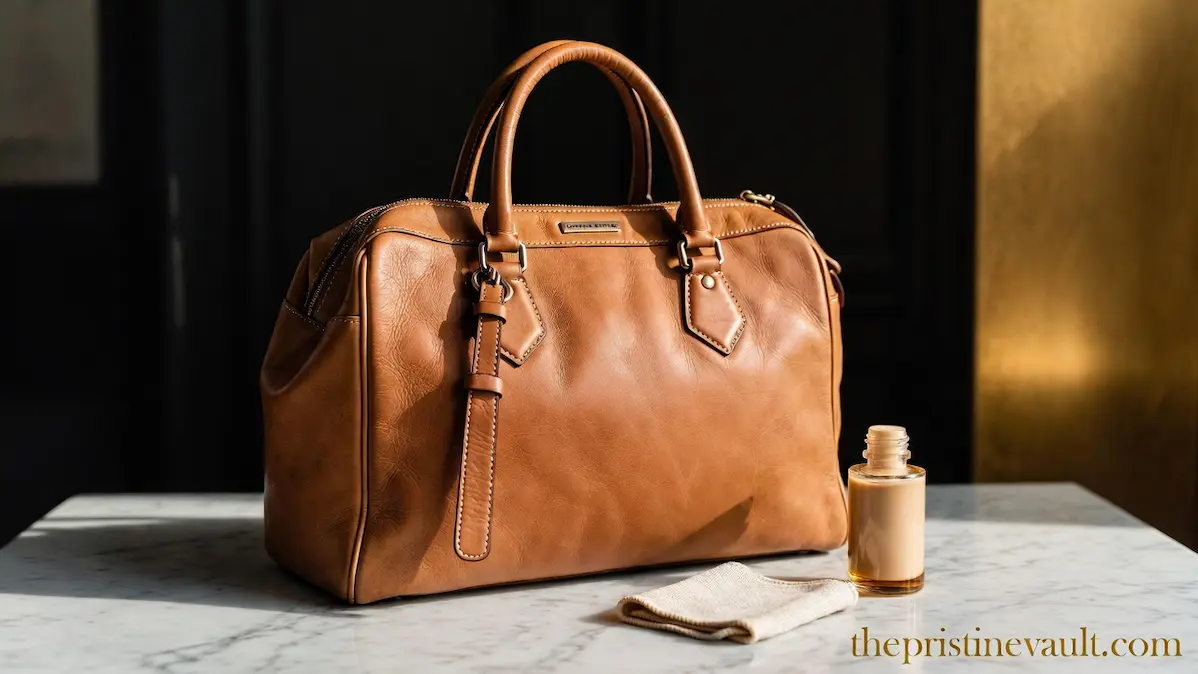
Caring for Dooney & Bourke Vachetta leather correctly is the difference between a bag that develops a beautiful honey patina over years and one that arrives at a leather restorer covered in water rings, dark blotches, and dry cracks.
The most expensive mistake new owners make is treating Vachetta like ordinary leather — reaching for the wrong product, in the wrong order, at the wrong stage of the leather's life.
This guide covers how to clean, condition, and protect your Dooney & Bourke Vachetta bag step by step. You'll also find a breakdown of Florentine vs. trim Vachetta (they need different care), the 6 products worth using, and the 6 mistakes that permanently damage this leather.
Proper care starts before you even bring the bag home.
Table of Contents
- Florentine Vachetta vs. Vachetta Trim: Know Which Leather You Have
- The 6-Step Dooney & Bourke Vachetta Leather Care Routine
- Best Products for Dooney & Bourke Vachetta Leather (and What to Avoid)
- 6 Mistakes That Permanently Damage Dooney & Bourke Vachetta Leather
- Understanding the Vachetta Patina: What's Normal, What's Damage
- Frequently Asked Questions
- Does Dooney & Bourke Vachetta leather need to be conditioned?
Florentine Vachetta vs. Vachetta Trim: Know Which Leather You Have
Not all Dooney & Bourke Vachetta is the same. Before you apply anything, identify exactly which type you own — the approach differs, and using the wrong method on the wrong leather can cause irreversible color change.
Leather Type | Common Placement | Key Care Difference |
Florentine Vachetta (full) | Main body of Satchel, Tote, Crossbody | Can be conditioned once dry patina develops; Apple Brand Garde widely trusted |
Natural Vachetta trim | Handles, piping, straps on pebble grain & canvas bags | Most vulnerable; avoid all products until patina begins; distilled water only for spots |
Dyed Vachetta trim (tan/brown) | Handles, trim on colored D&B collections | More forgiving than undyed; Apple conditioner safe with patch test first |
The key thing to understand: Natural, undyed Vachetta trim (the pale almost-white leather on handles and piping) is the most vulnerable surface on any Dooney & Bourke bag. Even distilled water will temporarily darken it.
Most experienced collectors treat it with nothing until it develops a natural patina — at which point the leather becomes significantly more resistant to staining on its own.
Florentine Vachetta (the full-grain leather used as the main body on Florentine Satchels and similar styles) is more forgiving. It responds well to conditioning once it shows signs of dryness, and collectors widely trust Apple Brand conditioner and Bickmore Bick 4 on it.
⚠️ Pro Tip: New bag or recently patinated? Don't condition yet. Vachetta fresh from the factory has its own natural oils. Conditioning too early causes uneven darkening in patches. Wait until the leather feels notably dry to the touch — typically 6–12 months of regular use. |
The 6-Step Dooney & Bourke Vachetta Leather Care Routine
Follow these steps in order. Skipping the sequence — especially conditioning before cleaning — pushes dirt deeper into the porous leather instead of lifting it.
Step | Tool / Product | Time Required | Risk If Skipped |
1. Dry brush | Horsehair brush | 2 min | Dirt pushed deeper during conditioning |
2. Spot-clean (if needed) | Distilled water + white cloth | 5–10 min | Minerals from tap water leave deposits |
3. Condition (if dry) | Bickmore Bick 4 or Apple Brand conditioner | 20–30 min total | Leather dries and micro-cracks form |
4. Protect (new bags) | Apple Brand Garde rain & stain repellent | 30 min dry time | Uneven water staining on light Vachetta |
5. Buff | Clean white cotton cloth | 2 min | Product sits on surface instead of absorbing |
Step 1: Dry Brush First
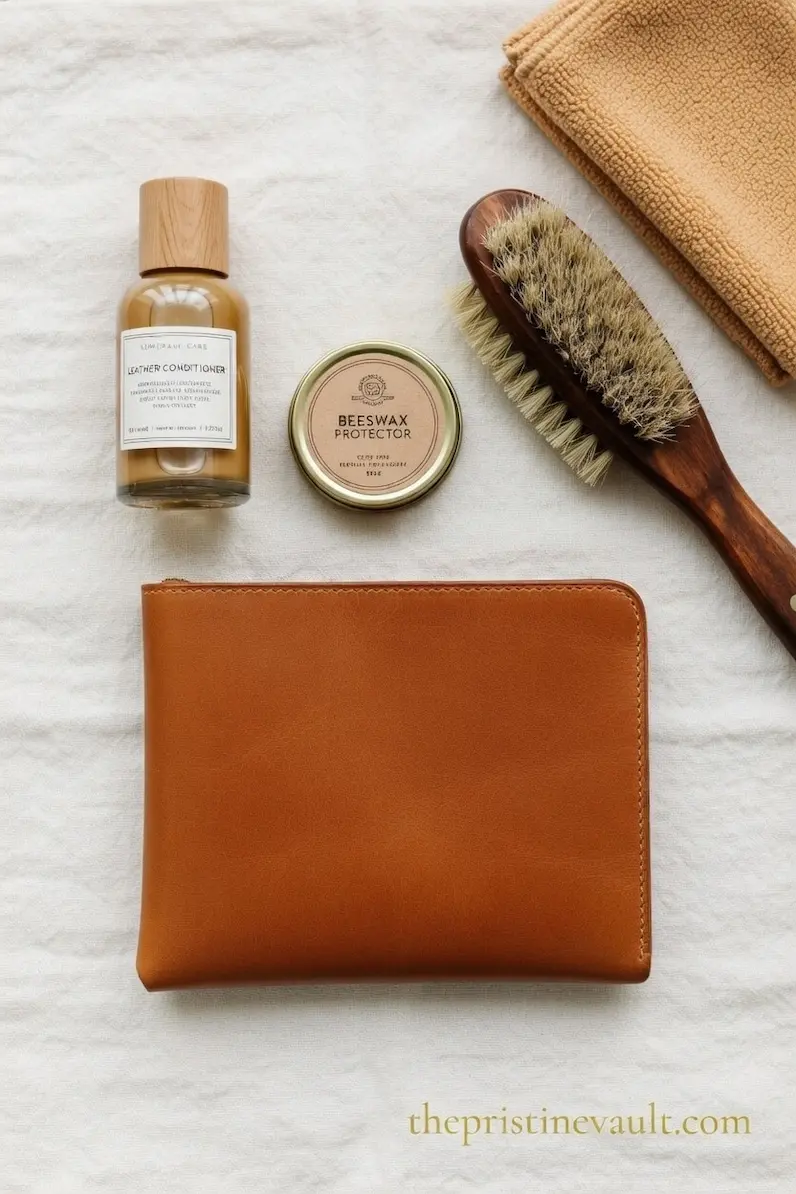
Use a 100% horsehair brush (not synthetic bristles, which can micro-scratch naked leather) to sweep the surface in short, firm strokes before doing anything else.
This removes surface dust and dried particles that would otherwise be ground into the leather during conditioning.
Step 2: Handle Water Spots Correctly
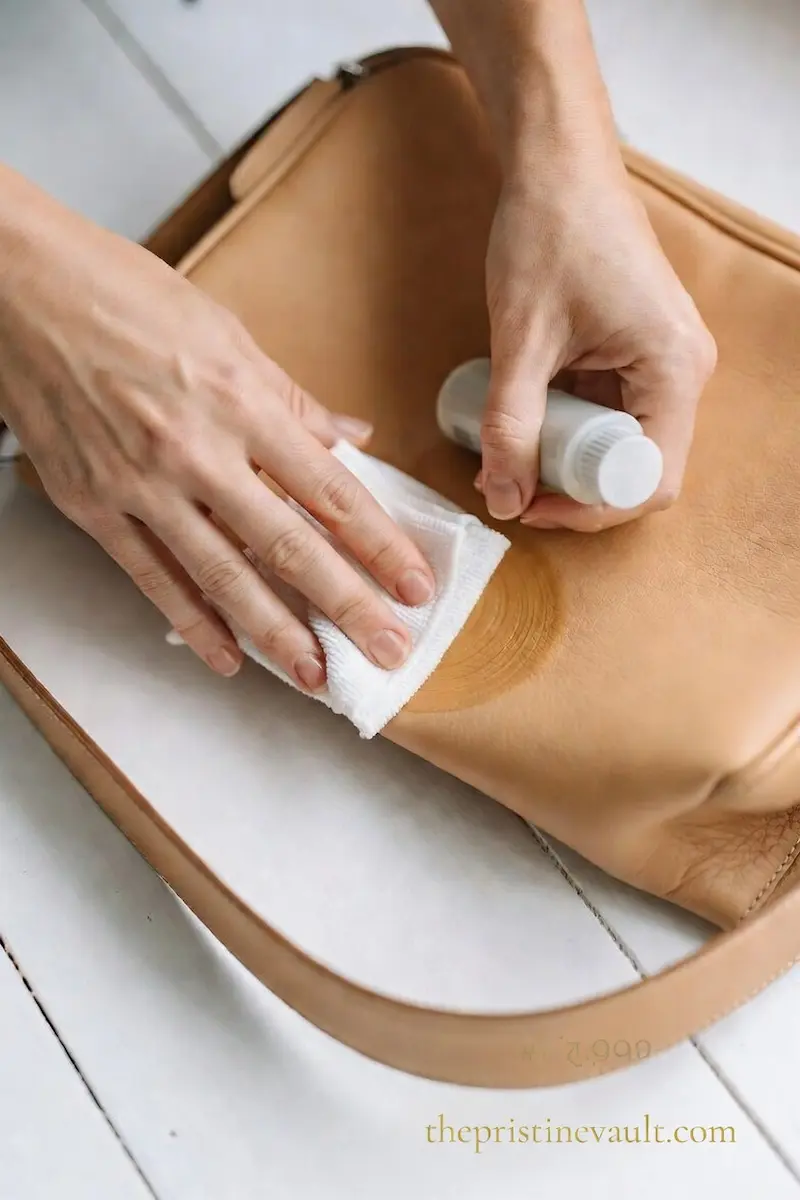
If your bag has fresh water spots, do not spot-clean them. Paradoxically, that makes it worse — you create a visible wet edge around each spot. Instead, dampen a clean white cloth with distilled water (not tap water, which contains minerals) and wipe the entire leather panel from seam to seam in one pass.
This equalizes the moisture across the surface so it dries evenly and the spot disappears.
❌ Never use tap water directly on light Vachetta. Mineral deposits from tap water leave white rings once dry. If you don't have distilled water, sodium-free seltzer water is an acceptable substitute in an emergency. |
Step 3: Condition Only If the Leather Is Dry
Apply a thin layer of conditioner using a clean white cotton cloth — never colored fabric, as dye transfers easily into Vachetta. Work in small circular motions, focusing on high-friction areas like handles and corners where oils strip fastest.
Use far less product than you think you need. You can always apply a second thin coat; you cannot remove excess once it soaks in.
Real-world example: A Florentine Satchel used daily for 18 months without conditioning may show fine lines near the handle base and a slightly stiff feel.
One thin coat of Bickmore Bick 4 applied with a white cloth, left to absorb for 20 minutes, then buffed — restores suppleness without changing the patina color significantly.
Step 4: Apply Protector on New or Unpatinated Leather
For a brand-new Dooney & Bourke bag or one where the Vachetta is still light and unpatinated, Apple Brand Garde Rain & Stain Repellent is the most widely trusted option in the collector community.
It creates a surface barrier that makes liquids bead rather than soak in — without forming a plastic-like film that blocks the natural patina process.
Application: Hold the can 6–8 inches from the surface, apply a thin even coat, and allow 30 minutes to dry completely before carrying. A second coat after the first dries adds stronger protection.
Step 5: Let It Absorb Fully
Set the bag aside in a cool, dry area away from direct sunlight or any heat source for at least 20 to 30 minutes. Do not rush this.
Leather that absorbs product slowly absorbs it more evenly.
Step 6: Buff With a Clean Cloth
Once the conditioner or protector has absorbed, buff the surface gently with a fresh white cotton cloth.
This removes surface residue and brings up a natural, soft glow. On Florentine leather, you'll notice the grain looks slightly richer and more even after this step.
No matter how durable the material is, implementing a regular maintenance routine is the only way to keep your prized possessions in mint condition. Learn more in our Comprehensive Care Guide
Best Products for Dooney & Bourke Vachetta Leather (and What to Avoid)
Safe products for Vachetta must share two properties: water-based or oil-based without silicone or petroleum, and no alcohol.
Alcohol dissolves the tannins that give Vachetta its structure and natural color. Silicone creates a surface film that blocks the patina process.
Vachetta care follows many of the same principles that apply to other uncoated luxury leathers.
Product | Price | Best For | Darkens Vachetta? | Verdict |
Apple Brand Garde (protector) | $10–20 | New bags, light-color trim | No — color-safe formula | Best first treatment |
$10–20 | Florentine full leather | Slightly, evenly | Best for conditioning | |
$10–18 | Dried or aged Florentine | Minimal | Best for restoration | |
$12–20 | Large collections, daily driver bags | Slightly | Budget workhorse | |
Saddle soap (any brand) | Avoid | Not for Vachetta | Strips tannins | ❌ Never use |
A note on the "treat vs. not treat" debate: Dooney & Bourke officially states that Vachetta leather requires no conditioners or cleansers. Most experienced collectors agree with this position for natural, undyed trim on new bags.
However, many treat Florentine leather bodies once dryness appears — and report good results with Apple Brand conditioner and Bickmore Bick 4 specifically.
The important word is "sparingly." Over-conditioning is the most common damage pattern seen by leather restoration specialists.
Denim dye transfer onto pale Vachetta is one of the hardest stains to address at home.
6 Mistakes That Permanently Damage Dooney & Bourke Vachetta Leather
Each of these mistakes shows up regularly in leather restoration requests. Most are irreversible once they occur.
Mistake | What Actually Happens |
Using baby wipes or makeup wipes | Alcohol and detergents strip the natural tannins that hold leather color and structure. Irreversible on uncoated Vachetta. |
Applying olive oil or coconut oil | Oils go rancid inside the pores within weeks. Attracts bacteria and leaves permanent blotchy darkening. |
Conditioning a brand-new bag immediately | Fresh Vachetta absorbs product unevenly, accelerating patina in unpredictable patches instead of an even honey tone. |
Spot-cleaning rain drops with tap water | Tap water contains minerals that leave white deposit rings once dry. Use distilled water only — or leave it alone. |
Using a hair dryer to speed dry | Heat shrinks leather fibers permanently. Even one pass can cause stiffness and warping that no conditioner can reverse. |
Storing in a plastic bag or bin | Trapped moisture triggers mold on Vachetta within weeks, especially in humid climates. Cotton dust bag only. |
⚠️ Real case: A natural Vachetta Florentine Satchel stored for 4 months in a plastic garment bag in a coastal city developed white mold patches across the bottom panel. By the time it was discovered, the mold had penetrated the surface. Professional cleaning recovered about 70% of the affected area — the remaining spots required re-dyeing, which altered the natural patina permanently. A $15 cotton dust bag would have prevented it entirely. |
Understanding the Vachetta Patina: What's Normal, What's Damage
New Dooney & Bourke Vachetta starts as a very pale tan — almost cream-colored on natural, undyed pieces. Over time, UV exposure and the natural oils from your hands cause it to darken through honey tones toward a deep cognac. This is patina, and it's entirely normal.
What patina looks like: Even, gradual darkening from the outside in. Handles and high-touch areas darken fastest. The bag develops a rich, warm depth that most collectors consider the point of owning Vachetta.
What damage looks like: Uneven dark patches, water rings, blotchy spots in isolated areas, white salt residue ("spewing"), or cracking along fold lines. These are signs of moisture damage, product misuse, or under-conditioning on a dry bag.
One practical distinction: a dark spot from a single raindrop on an otherwise pale bag is likely temporary. Leave it alone, let it dry fully — pure rainwater is distilled and usually dries without a mark. The marks that stay come from minerals (tap water, ocean spray) or from rubbing a wet spot before it dries.
Can You Slow or Reverse Patina?
Slowing it: yes. Keep the bag in a dark dust bag between uses, avoid prolonged direct sunlight, and store at room temperature away from UV-generating light sources. The patina process requires UV exposure — limit it and the leather stays lighter longer.
Reversing it: no. Attempting to bleach or strip Vachetta patina destroys the leather's protein structure permanently. Once the tannins have oxidized, that color change is part of the material. Embrace it — a well-patinated Florentine Satchel is genuinely more beautiful and more resistant to future staining than a pale one.
How to Store Your Dooney & Bourke Vachetta Bag Correctly
Between wears, how you store the bag matters as much as how you clean it. Poor storage causes damage that no conditioning routine can prevent.
Always use the cotton dust bag. Cotton allows airflow. Plastic and non-breathable covers trap humidity, which triggers mold growth — especially in humid climates like coastal cities or apartments with seasonal central heating.
Stuff with acid-free tissue paper. Regular tissue paper is slightly acidic and can transfer to the leather over months. Acid-free tissue maintains the bag's shape without any chemical interaction.
Store upright on a shelf, not the floor. Floor storage exposes leather to humidity fluctuations, dust, and temperature differences. A shelf or cabinet at room temperature (60–75°F, 40–60% humidity) is ideal.
Avoid storing near radiators, air conditioning vents, or windows. These create the conditions that dry leather out fastest — alternating between dry and humid air in ways that accelerate cracking.
Never store with other bags touching the Vachetta. Dye transfer from darker bags or canvas materials onto pale Vachetta is permanent. Give each bag space, or separate with acid-free tissue.
Preventing damage is always much cheaper and easier than trying to restore a ruined luxury item later on. Find the complete preventive steps in our Damage Prevention Blueprint
Frequently Asked Questions
Does Dooney & Bourke Vachetta leather need to be conditioned?
Dooney & Bourke officially recommends no conditioning products on Vachetta. For natural, undyed Vachetta trim on new bags, this is sound advice — the leather has its own oils and conditioning too early causes uneven darkening.
For Florentine leather that feels dry or shows fine lines, a light application of Bickmore Bick 4 or Apple Brand conditioner is widely accepted among collectors as safe when applied sparingly.
How do I remove water stains from Dooney & Bourke Vachetta leather?
Wipe the entire affected panel seam-to-seam with distilled water on a clean white cloth — not just the spot itself. This equalizes the moisture level across the surface so it dries evenly. Never use tap water (which leaves mineral deposits) and never rub a wet spot while it's still damp.
Let it air dry completely away from heat.
Water stains on Vachetta behave differently depending on how long they've set and what caused them.
Can I use Apple Brand Garde on Dooney & Bourke Vachetta?
Yes. Apple Brand Garde Rain & Stain Repellent is one of the most widely trusted products in the Dooney & Bourke and Louis Vuitton collector communities for Vachetta protection.
It does not contain silicone and is color-safe for light Vachetta. The conditioner (not the cleaner) is the version to use for moisturizing. Always patch-test first on a hidden area.
Why is my Dooney & Bourke Vachetta turning dark?
If the darkening is gradual and even across the surface, that's normal patina from UV exposure and natural oils from handling.
If it's blotchy, uneven, or appeared suddenly after contact with water or a product, it's likely moisture damage or product misapplication.
Uneven darkening caused by products typically cannot be reversed — it can only be minimized by allowing the overall patina to catch up over time.
How do I remove denim dye transfer from Vachetta leather?
Fresh transfer: use a leather gum eraser (the kind designed for suede or naked leather) and rub very gently in one direction to lift surface pigment. Do not use a circular motion as that pushes pigment deeper.
If the dye has penetrated into the leather itself, professional intervention is required — home attempts at this stage typically make the staining worse or cause additional damage.
How often should I condition Dooney & Bourke Florentine leather?
Condition only when the leather shows visible signs of dryness — a dull surface appearance, slight stiffness, or fine lines near high-flex areas like handles. For most bags in regular rotation, this is once every 6 to 12 months.
Bags in storage may not need conditioning for years. Over-conditioning is more common and more damaging than under-conditioning.
Final Thoughts
Three principles cover almost everything in Dooney & Bourke Vachetta leather care: know which type of Vachetta you have before applying anything, use products sparingly and only when the leather shows actual signs of dryness, and store the bag in cotton — never plastic.
For most owners, the complete routine is simpler than it sounds: horsehair brush, distilled water for spots, Apple Brand Garde for new bag protection, and Bickmore Bick 4 or Apple Brand conditioner once or twice a year once the leather is aged. The biggest mistakes are almost always the result of doing too much, not too little.
Now it's your turn — check your bag today, identify your leather type, and start with the lightest intervention first. Your Dooney & Bourke Vachetta will thank you for it.
Editorial Notice: This article is for informational purposes only. Product recommendations reflect community consensus among collectors and do not constitute professional leather care advice. Prices may vary. This article may contain affiliate links.