How to Store Automatic Watch Without a Winder: 5 Safe Methods
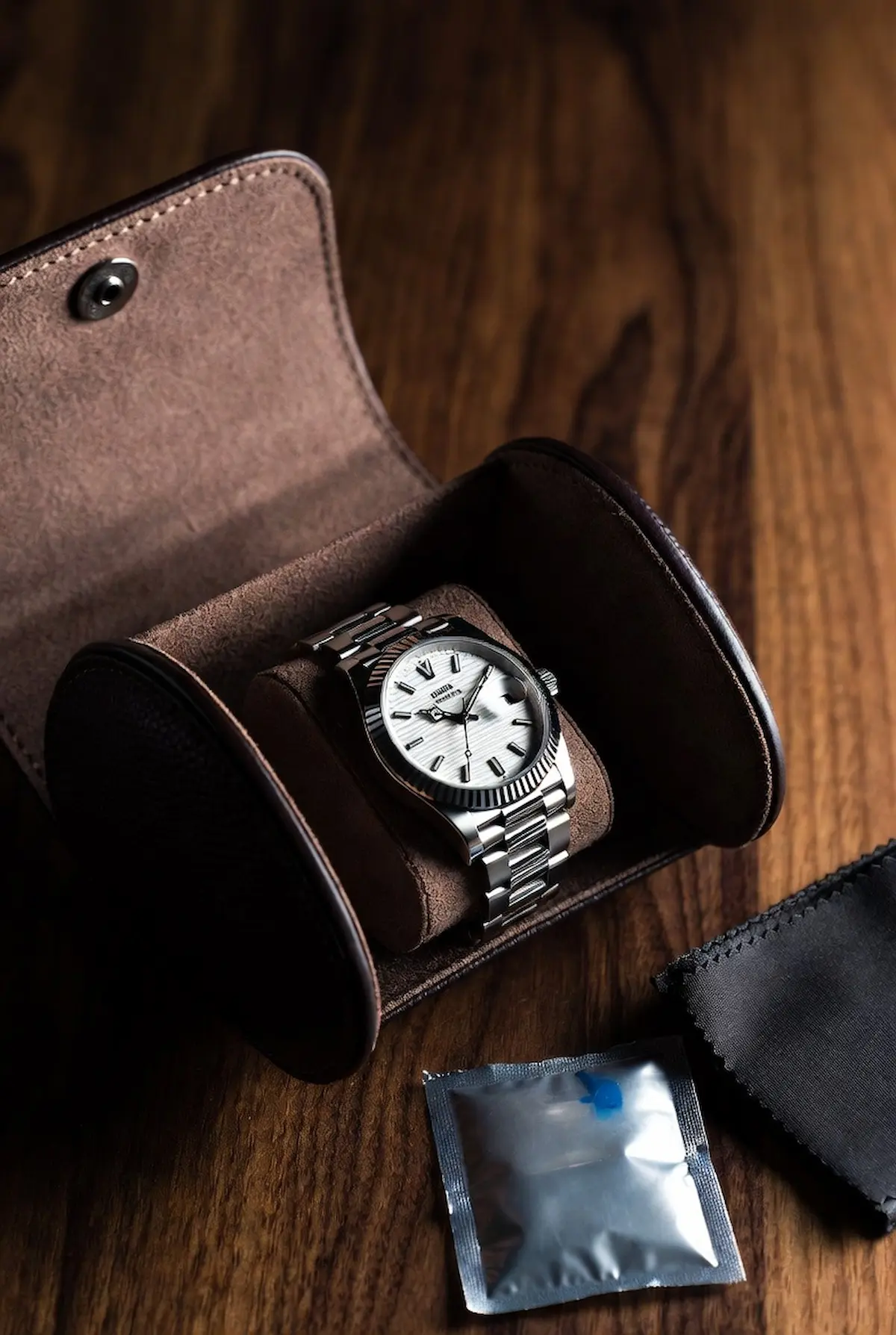
Learning how to store automatic watch properly without a winder saves collectors from the hidden movement damage that improper storage causes over months and years.
Your Rolex Datejust sits unworn in a drawer. It stopped three weeks ago. You pick it up, give it a shake, and strap it on. It runs for a few hours, then stops again mid-afternoon.
Something feels wrong. The rotor sounds different — a faint grinding instead of the smooth whir you remember.
A watchmaker later explains: the lubricants inside the movement settled and thickened during extended storage. When you shook the watch and wore it briefly, the movement ran on compromised lubrication. Three months of this start-stop-shake-repeat cycle accelerated wear on the escapement and gear train.
Service cost: $750. Cause: improper storage habits, not mechanical failure.
Another collector stored his Omega Seamaster crown-side down in a nightstand for eight months. The crown gasket compressed permanently from the watch's weight resting on it. Water resistance dropped from 300 meters to essentially nothing. One rainstorm later, moisture entered the case.
Both situations were entirely preventable.
This guide covers five safe methods for storing automatic watches without a winder. You'll learn which positions protect movements, how to maintain lubrication health during storage, and the exact routine that prevents the costly damage most collectors unknowingly cause.
Here's everything you need to know.
Table of Contents
- Editor's Picks: Essential Products for Automatic Watch Storage
- Why Automatic Watches Need Special Storage Consideration
- Method 1: Crown-Up Position Storage
- Method 2: Monthly Winding and Wearing Routine
- Method 3: Watch Roll Storage for Travel and Daily Use
- Method 4: Climate-Controlled Drawer Storage
- Method 5: Individual Watch Pouches with Rotation Schedule
- 6 Quick Tips for Storing Automatic Watches (Most Collectors Skip These)
- Mistakes That Damage Automatic Watches During Storage
- Frequently Asked Questions
- Is it bad to let an automatic watch stop?
- How long can an automatic watch sit without being worn?
- Do I need a watch winder if I only own one automatic watch?
- What position should I store my automatic watch in?
- Should I fully wind my automatic watch before storage?
- Can magnets near stored watches cause damage?
- How do I know if stored watches need professional service?
- Conclusion
This post contains affiliate links. We may earn a small commission at no extra cost to you.
Editor's Picks: Essential Products for Automatic Watch Storage
Before we dive in, here are the top-rated products most automatic watch owners trust:
- Watch Storage Roll (Leather) — Individual compartments, travel-friendly, cushioned protection
- Rechargeable Silica Gel Canister — Humidity control for any storage method
- Microfiber Watch Cleaning Cloth — Pre-storage cleaning without scratch
(More recommendations throughout the article)
Why Automatic Watches Need Special Storage Consideration
Automatic watches aren't like quartz watches. You can't simply put them in a drawer and forget about them. The mechanical movement inside creates specific storage requirements.
What Happens When Automatic Watches Stop
When an automatic watch runs down completely, the mainspring releases all tension. This is completely normal and causes no damage whatsoever.
The myth that letting an automatic watch stop damages it is exactly that — a myth. Watchmakers confirm that modern automatic movements are designed to start, stop, and restart thousands of times throughout their lifespan.
However, what happens during extended storage periods does matter.
The Real Storage Concerns
Lubricant distribution: Movement lubricants can settle and thicken when a watch sits motionless for months. Modern synthetic lubricants handle this better than older formulations, but extended static storage still affects long-term lubrication health.
Gasket compression: Rubber and synthetic gaskets in crowns and casebacks can take permanent "sets" when compressed in one direction continuously. This reduces water resistance over time.
Environmental exposure: Temperature fluctuations, humidity changes, and magnetic fields affect stored watches just as much as worn watches — sometimes more, because nobody's monitoring the conditions.
Understanding these concerns shapes how you approach storage. The goal isn't keeping the watch running — it's maintaining the conditions that protect the movement during periods of non-use.
For collectors who prefer keeping watches running during storage, our guide on Rolex watch winder settings covers exact TPD and direction specifications.
The next section covers the mistake most people make at this stage.
Method 1: Crown-Up Position Storage
The simplest and most effective storage method for automatic watches.
Why Crown-Up Works
Storing a watch with the crown facing upward (dial vertical, crown at 12 o'clock or 3 o'clock position depending on case orientation) offers two benefits:
Gasket protection: The crown gasket isn't compressed by the watch's weight. This preserves water resistance integrity during extended storage.
Movement health: In the crown-up position, gravity distributes lubricants across key pivot points differently than in the dial-up position most people default to. This isn't dramatically better, but over months of storage, varied positioning prevents lubricant pooling in one area.
How to Set This Up
Use a watch stand, a rolled cloth, or a watch pillow placed on its side. The watch should rest securely without risk of falling.
Alternate between crown-up and crown-down positions monthly. This varies gravitational stress on the balance wheel pivot — the most sensitive bearing in the movement.
Worth noting: this method works for any automatic watch regardless of brand, caliber, or complication level. It's the universal safe storage position.
For comprehensive watch storage solutions beyond positioning, our guide on how to store watches without a watch box covers dedicated methods and accessories.
Up next: the one routine that changes everything for long-term storage.
Method 2: Monthly Winding and Wearing Routine
The most effective method for maintaining automatic watch health during storage requires no equipment at all.
The Monthly Exercise
Once per month, for each stored automatic watch:
Hand-wind the watch 30-40 full turns. This distributes lubricants through the gear train and keeps the mainspring flexible.
Set the correct time and date. This exercises the keyless works (the mechanism that sets time and date) preventing these components from seizing during long-term non-use.
Wear the watch for 8-12 hours. Natural wrist movement provides varied rotation that reaches components hand-winding alone doesn't activate — specifically the automatic winding mechanism (rotor, reverser wheels, reduction gears).
Clean the watch before returning to storage. Wipe down with microfiber cloth to remove skin oils and moisture from wearing.
Return to proper storage position. Crown-up, climate-controlled environment.
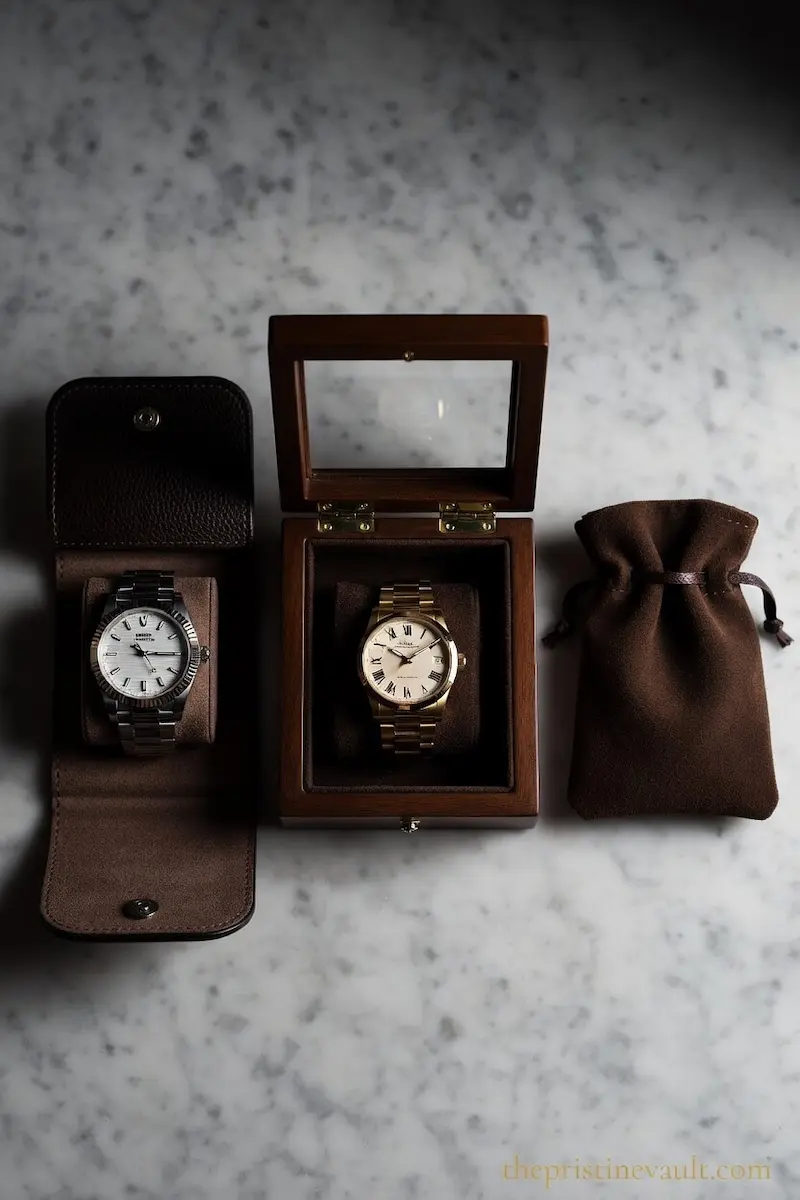
Why This Works
This routine accomplishes everything a watch winder does — but only one day per month instead of continuously.
The monthly wearing keeps lubricants distributed. The hand-winding exercises the mainspring. Setting the time exercises the keyless works. And the daily wear provides natural movement variation that no winder perfectly replicates.
A collector with twelve automatic watches dedicates one day per month to each watch. He calls it "date day" — each watch gets its monthly outing. After six years without winders, his watchmaker confirms all movements show healthy lubrication and normal wear patterns.
The next section covers the mistake most people make at this stage.
Method 3: Watch Roll Storage for Travel and Daily Use
Watch rolls provide individual cushioned compartments without the bulk and cost of traditional watch boxes.
Why Rolls Work for Automatic Watches
Quality leather watch rolls cradle watches securely while allowing air circulation. Unlike sealed boxes, rolls prevent the humidity buildup that damages movements in enclosed spaces.
Each compartment keeps watches separated — preventing the bracelet-on-crystal scratches that happen when watches touch during storage.
Choosing the Right Watch Roll
Leather quality matters. Genuine leather rolls breathe. Synthetic rolls trap moisture. For watches stored more than a few days, leather is worth the premium.
Cushion firmness matters. Soft cushions allow watches to shift. Firm cushions hold watches in position. For automatic watches, firm cushions that maintain the watch in a specific orientation (ideally crown-up) are preferable.
Compartment count: 3-5 watch rolls are ideal. Larger rolls become unwieldy and don't protect watches as securely.
👉 Check Premium Leather Watch Rolls on Amazon
But storing correctly is only half the battle — here's what environmental control requires.
Method 4: Climate-Controlled Drawer Storage
Your bedroom dresser drawer can become effective watch storage with minor modifications.
Setting Up a Watch Drawer
Step 1: Line a drawer with soft felt or velvet fabric. This prevents watches from sliding and scratching on hard surfaces.
Step 2: Create individual sections using drawer dividers or small fabric pouches. Each watch gets its own space.
Step 3: Add humidity control — 2-3 silica gel packets or one Boveda 49% humidity pack. Drawers aren't sealed, so humidity fluctuates more than in closed boxes.
Step 4: Place a mini digital hygrometer in the corner of the drawer. Monitor weekly.
Advantages of Drawer Storage
Accessibility: You see your watches every time you open the drawer. This encourages the monthly wearing routine from Method 2.
Air circulation: Drawers aren't airtight, providing moderate air exchange that prevents musty conditions.
Cost: Under $30 total for liner, dividers, and humidity control.
Limitations
Dust exposure: Drawers don't seal. Watches accumulate dust faster than in closed boxes. Monthly cleaning becomes essential.
Light exposure: If the drawer is opened frequently, watches receive intermittent light exposure. Keep the drawer closed when not accessing watches.
Security: Drawers offer no theft protection. Don't store highly valuable pieces in unsecured locations.
For collectors considering dedicated watch box solutions alongside drawer storage, our Rolex Datejust winder recommendations cover options that combine winding with proper storage.
The next section covers the mistake most people make at this stage.
Method 5: Individual Watch Pouches with Rotation Schedule
For collectors with larger collections or limited space, individual pouches combined with a rotation schedule provide flexible, scalable protection.
How This System Works
Each watch lives in its own soft pouch. Microfiber-lined pouches prevent scratches while allowing air circulation. Watches store in any drawer, shelf, or container.
A written rotation schedule ensures every watch gets worn monthly. Tape the schedule inside your closet door or save it on your phone.
Building the Schedule
Week 1: Rolex Submariner (Monday wear day)
Week 2: Omega Speedmaster (Monday wear day)
Week 3: Tudor Black Bay (Monday wear day)
Week 4: Grand Seiko SBGA211 (Monday wear day)
Repeat
Each watch gets one full wearing day per month. Before wearing, hand-wind 30 turns. After wearing, clean and return to pouch in crown-up position.
This system scales infinitely — add more watches, add more weeks.
👉 Get Watch Storage Pouches on Amazon
6 Quick Tips for Storing Automatic Watches (Most Collectors Skip These)
Always hand-wind 30 turns before wearing a stored watch. This ensures adequate lubrication before the movement experiences full operational stress.
Store watches away from electronics and speakers. Magnetic fields from devices magnetize movements, causing them to run fast. Even brief exposure accumulates over storage months.
Remove leather straps before extended storage (3+ months). Store straps separately in breathable pouches to prevent moisture damage that transfers to cases.
Keep crowns pushed in (not unscrewed) during storage. Unscrewed crowns expose the crown tube to dust and humidity, compromising water resistance.
Document storage start dates on a simple list. Knowing how long each watch has sat helps prioritize which watches need their monthly exercise first.
Avoid storing watches face-down. Crystal contact with any surface risks scratching. Crown-up or crown-side positions protect both crystal and gaskets.
⚠️ Pro Tip: If you haven't worn an automatic watch in over 6 months, take it to a watchmaker for a quick checkup before regular wearing. Thickened lubricants can cause abnormal wear during the first hours of operation. A quick movement assessment prevents damage during reactivation.
👉 Get Anti-Magnetic Watch Storage Box on Amazon
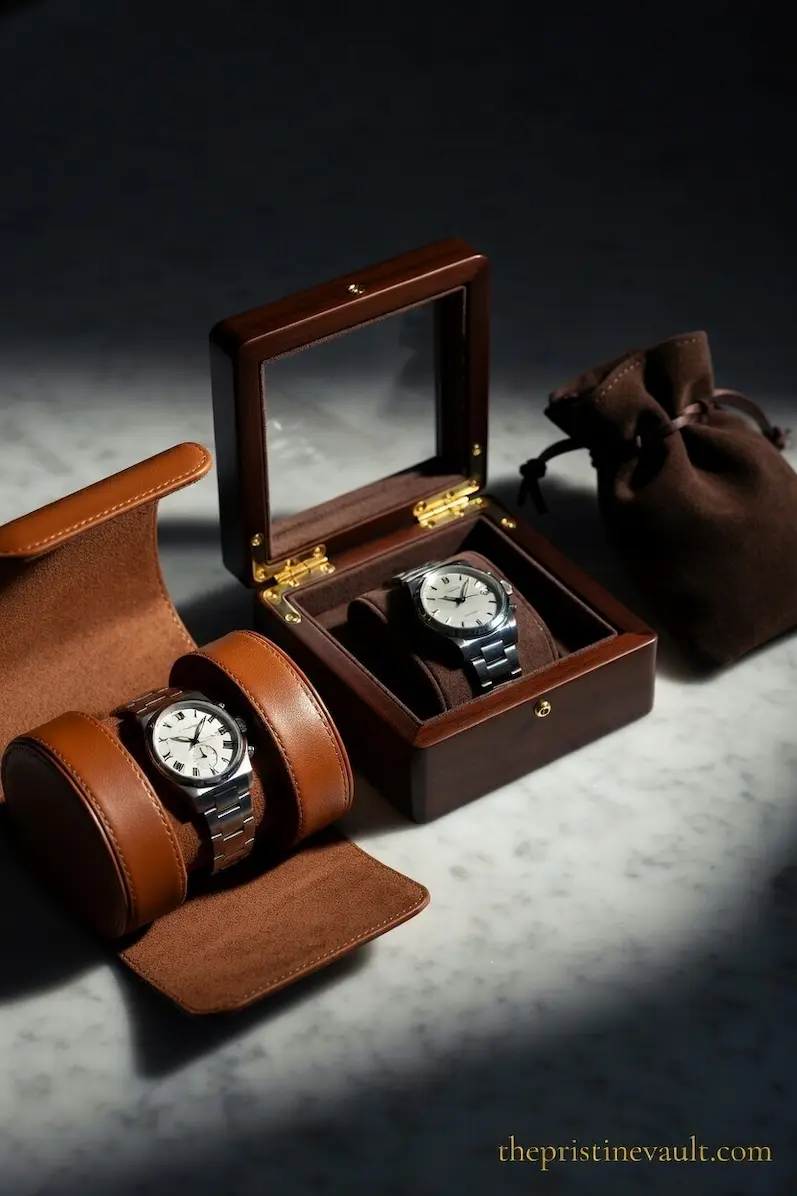
Mistakes That Damage Automatic Watches During Storage
These common errors cause preventable deterioration:
Shaking the watch vigorously to restart it. Aggressive shaking stresses rotor bearings and can damage the reverser mechanism. Instead, hand-wind 30-40 gentle crown turns to start the movement safely.
Storing all watches dial-up permanently. The dial-up position concentrates lubricant at specific pivot points. Varying position (crown-up, crown-down) distributes lubricants more evenly over extended storage periods.
Keeping the chronograph running during storage. Running chronograph hands creates constant friction on the chronograph mechanism. Reset chronograph pushers to zero before storing any chronograph watch.
Storing watches near windows. Direct sunlight fades dials, degrades luminous material, and creates temperature cycles that stress gaskets and lubricants.
Using airtight containers without humidity control. Sealed plastic containers trap whatever humidity was present when closed. Without desiccant, this moisture condenses on metal surfaces repeatedly, causing corrosion invisible from outside.
Frequently Asked Questions
Is it bad to let an automatic watch stop?
No. Letting an automatic watch run down completely is perfectly safe for modern movements.
The mainspring simply releases tension and the movement stops. Restarting requires winding — either by crown or by wearing. The myth that stopping damages automatic watches is false.
How long can an automatic watch sit without being worn?
Indefinitely, if stored properly. However, watches stored beyond 6 months without any winding should be hand-wound before wearing and ideally inspected if stored over 2 years.
Lubricants can thicken during extended non-use, though modern synthetic lubricants resist this better than older formulations.
Do I need a watch winder if I only own one automatic watch?
No. Monthly hand-winding and wearing provides adequate lubrication distribution. Winders are most valuable for complicated watches (perpetual calendars, moon phases) that are tedious to set after stopping. For simple three-hand automatics, manual winding is perfectly sufficient. For specific winder guidance, see our Rolex winder settings guide.
What position should I store my automatic watch in?
Crown-up position is generally recommended. This position protects the crown gasket from compression and provides favorable lubricant distribution across key pivot points. Alternating between crown-up and crown-down monthly provides varied gravitational effects on the balance wheel.
Should I fully wind my automatic watch before storage?
No. Allow the watch to run down naturally after your last wearing. Storing a fully wound watch maintains maximum mainspring tension indefinitely, which can stress the click spring over extended periods. Let it wind down, then hand-wind briefly before your next wearing.
Can magnets near stored watches cause damage?
Yes. Magnetic fields from speakers, laptops, phone chargers, and even refrigerators can magnetize movement components. Magnetized watches run significantly fast (30-60+ seconds per day). Store watches minimum 6 inches from any electronic device or magnetic source.
How do I know if stored watches need professional service?
Check accuracy after wearing for 24 hours. If the watch gains or loses more than 10-15 seconds per day (for COSC-certified movements), professional regulation may be needed. Unusual sounds (grinding, clicking), difficulty winding, or visible condensation all indicate service is required. For alternative storage methods, see our complete watch storage guide.
Conclusion
Knowing how to store automatic watch properly without a winder comes down to three fundamentals: correct positioning (crown-up), monthly winding and wearing routines, and environmental control (humidity and temperature).
These methods cost almost nothing compared to watch winders. A watch roll, a few silica gel packets, and a monthly wearing schedule provide equivalent movement protection for the vast majority of automatic watches.
Winders serve specific purposes — mainly complicated watches that are inconvenient to reset. For simple automatics, the five methods above provide complete protection with minimal investment and effort.
Ready to protect your investment? Our "Luxury Watch Maintenance Mastery" checklist gives you everything in one place
The key is consistency. Pick a method, schedule your monthly wearing routine, and stick with it. Your movements will maintain healthy lubrication patterns indefinitely.
Now it's your turn — choose one storage method from the five above, implement it this week, and schedule your first monthly wearing rotation. Your automatic watches will thank you for it.