Louis Vuitton Monogram Care: 12 Expert Secrets Most Owners Never Learn
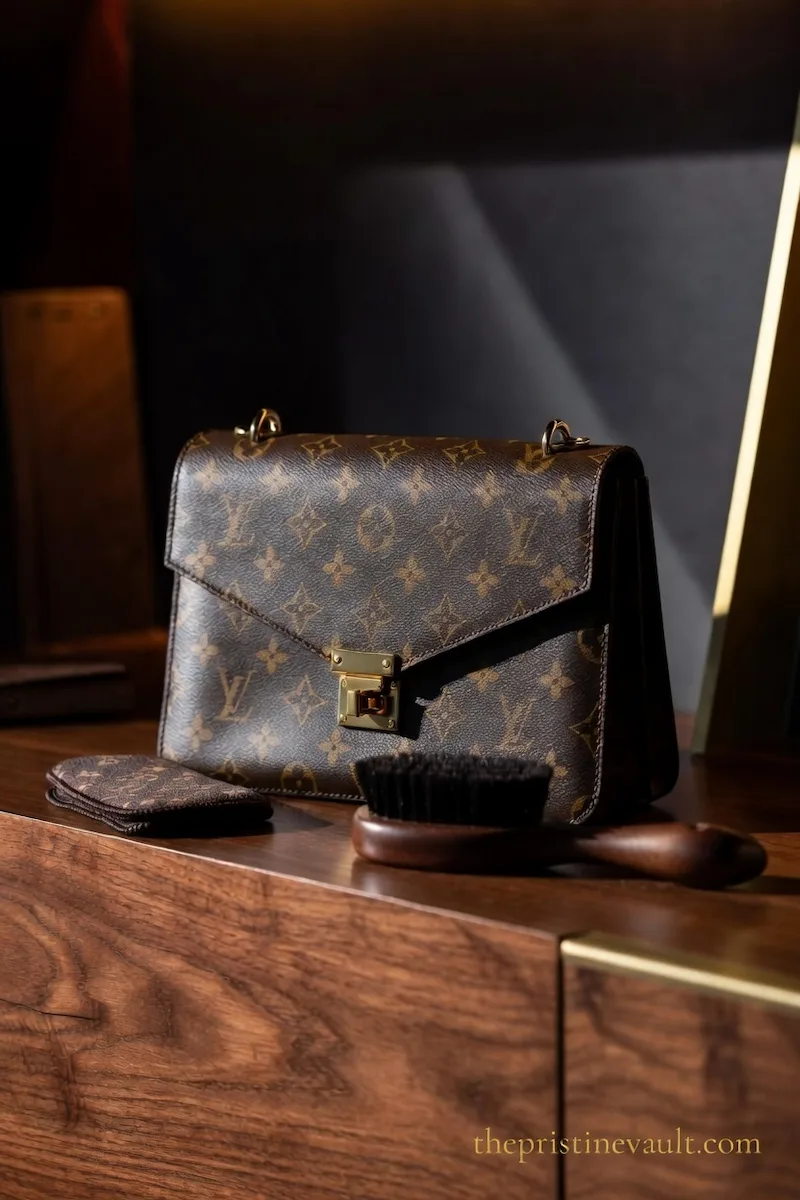
"Proper Louis Vuitton monogram care is the difference between a bag that appreciates over 20 years and one that needs expensive restoration within five."
You saved for months to buy that Speedy 30. Or perhaps you inherited your mother's vintage Neverfull. Maybe you splurged on a limited-edition Pochette Métis.
Then you wore it in unexpected rain. Water soaked into the untreated vachetta leather handles. Now they have dark water stains that won't fade no matter what you try.
Or worse — you stored your monogram bag in a humid closet. Six months later, you discovered white mold spots across the canvas. Professional cleaning quoted you $400, and they weren't sure they could remove it all.
A collector showed me her $2,200 Neverfull after two years of "careful" use. The vachetta had oxidized unevenly — some areas honey-colored, others nearly black with water damage.
The canvas showed transfer marks from dark jeans. The bag looked 15 years old, not two.
This complete Louis Vuitton monogram care guide covers everything owners need to know about maintaining both the coated canvas and vachetta leather trim. You'll learn the exact cleaning methods LV boutiques use, which products are safe versus which cause permanent damage, and how to prevent the most common deterioration issues.
Here's everything you need to know.
Table of Contents
- Editor's Picks: Best Products for Louis Vuitton Care
- Understanding Louis Vuitton Materials
- Daily Care and Handling
- Safe Cleaning Methods for Monogram Canvas
- Caring for Vachetta Leather Trim
- Storage and Environmental Protection
- 8 Quick Tips for Louis Vuitton Longevity (Most Owners Skip These)
- Mistakes That Are Slowly Destroying Your Louis Vuitton
- Frequently Asked Questions
- How do I remove water stains from vachetta leather?
- Can I use Magic Eraser on Louis Vuitton canvas?
- How often should I condition the vachetta on my Louis Vuitton?
- Is it normal for the canvas to crack or peel?
- How do I clean the inside lining of my Louis Vuitton?
- Can Louis Vuitton bags be repaired if damaged?
- Should I have my vintage Louis Vuitton professionally cleaned?
- Conclusion
Editor's Picks: Best Products for Louis Vuitton Care
Before we dive in, here are the top-rated products most Louis Vuitton owners trust:
- Cadillac Leather Lotion — Safe for vachetta, prevents cracking, recommended by cobblers
- Magic Eraser (Melamine Sponge) — Removes marks from coated canvas without damage
- Silica Gel Packets — Prevents mold during storage in humid climates
(More recommendations throughout the article)
Understanding Louis Vuitton Materials
Louis Vuitton monogram bags combine two distinct materials that require completely different care approaches.
The Monogram Canvas
The iconic brown monogram pattern isn't printed leather. It's coated canvas — cotton canvas with multiple layers of protective coating.
This coating makes the canvas water-resistant and durable. However, it's not indestructible. Harsh chemicals can strip the coating. Excessive heat can cause it to peel. Improper cleaning can dull the finish.
The canvas itself rarely fails. What damages bags is the coating deteriorating from improper care or the underlying canvas developing mold in humid storage.
Vachetta Leather Trim
The handles, piping, and bottom trim use vachetta — vegetable-tanned, untreated natural leather.
Vachetta arrives pale cream-colored and gradually darkens to honey patina with age and sun exposure. This patina is desirable — it's proof of authenticity and natural aging.
However, vachetta is extremely vulnerable when new:
- Water creates permanent dark stains
- Oils from hands darken it unevenly
- Denim transfer leaves blue marks
- Sunlight exposure darkens it faster than protected areas
For comprehensive vachetta-specific care instructions, our detailed guide on how to clean LV vachetta leather covers every technique.
Why the Materials Matter
Canvas tolerates water and gentle cleaning. Vachetta cannot handle water at all. Products safe for canvas will destroy vachetta.
This means Louis Vuitton monogram care requires treating each material separately. Clean canvas carefully. Protect vachetta obsessively. Never use the same product on both.
The next section covers the mistake most people make at this stage.
Daily Care and Handling
How you handle your Louis Vuitton bag daily determines its condition years from now.
Before First Use
New vachetta needs immediate protection. The leather is at its most vulnerable during the first few months.
What to do:
- Apply thin layer of leather protector to all vachetta areas
- Let it absorb completely (24 hours) before using
- Reapply after first week of use
- Avoid touching vachetta with bare hands for first month
This creates a protective barrier that prevents uneven darkening and reduces water damage risk.
Worth noting: some purists prefer letting vachetta patina naturally without any treatment. This is personal preference, but it increases damage risk significantly.
During Daily Use
Handle with care:
- Hold bags by canvas portions when possible, not vachetta handles
- Keep hands clean and dry when touching vachetta
- Avoid placing bags on floors (moisture, dirt, color transfer)
- Never wear dark jeans with light-colored monogram bags on first wears
A client wore her brand-new Speedy with dark denim to dinner. She placed the bag on her lap while seated. After two hours, the back canvas had visible blue transfer marks from the jeans. Professional cleaning reduced but couldn't eliminate them entirely.
After Each Use
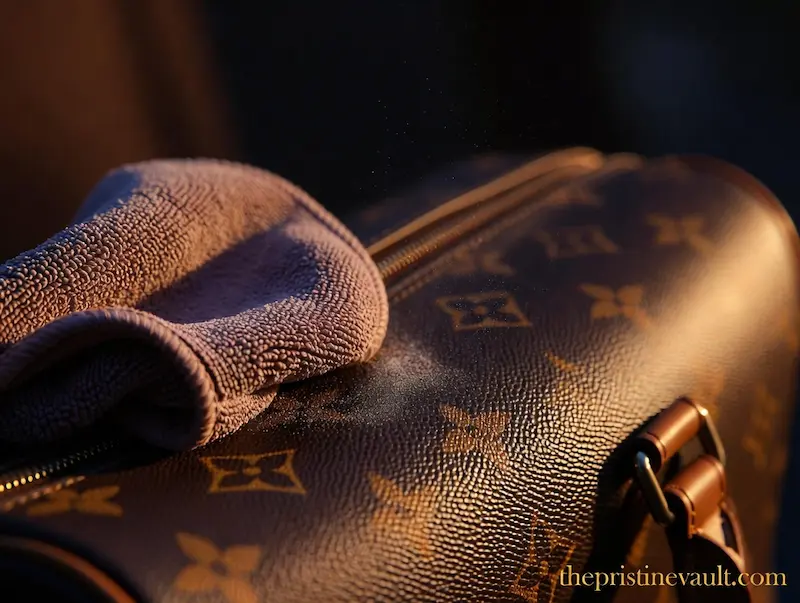
Wipe canvas with soft, dry microfiber cloth. This removes dust and surface residue before they set.
Store bags stuffed with acid-free tissue to maintain shape. Empty bags collapse and develop permanent creases in the canvas coating.
Never leave bags in cars. Temperature extremes stress both canvas coating and vachetta leather.
But protecting during use is only half the battle — here's what proper cleaning requires.
Safe Cleaning Methods for Monogram Canvas
The canvas is resilient but not maintenance-free. Proper cleaning prevents buildup that dulls the finish.
Routine Canvas Cleaning
For light dust and surface dirt:
Use a barely damp (not wet) microfiber cloth. Wipe gently in direction of the grain. Let air dry completely before storing.
Never soak the canvas. Water shouldn't penetrate beneath the coating where it can reach the underlying cotton canvas.
For stubborn marks:
Lightly dampen a Magic Eraser (melamine sponge) and test in a hidden area first. Gently rub the mark using minimal pressure.
Magic Erasers work through micro-abrasion. Too much pressure or excessive use will wear down the protective coating over time. Use sparingly and only when necessary.
What Never to Use on Canvas
Avoid completely:
- Alcohol-based cleaners (strip coating)
- Acetone or nail polish remover (dissolves coating)
- Bleach or harsh chemicals (discolor and damage)
- Baby wipes (leave residue and can contain harmful additives)
- Leather cleaners or conditioners (wrong product for wrong material)
A collector tried removing pen marks with rubbing alcohol. The ink disappeared but so did the glossy coating in that area. The canvas looked dull and matte. Professional restoration couldn't fully restore the original finish.
Addressing Specific Stains
Pen marks: Magic Eraser, used gently and sparingly
Makeup transfer: Barely damp cloth with drop of mild soap, immediate rinse
Food stains: Address immediately with damp cloth; old food stains often become permanent
Color transfer from denim: Sometimes responds to gentle Magic Eraser treatment; severe cases need professional cleaning
For general designer bag storage principles that protect against common damage, our guide on how to store designer bags long term covers environmental factors and organization.
Up next: the completely different approach vachetta requires.
Caring for Vachetta Leather Trim
Vachetta demands a completely opposite care philosophy from canvas.
Understanding Vachetta Patina
The honey-colored darkening is normal, desirable, and proof of authenticity. Counterfeit bags often use pre-darkened leather because replicating natural patina is difficult.
Embrace the patina. Fighting it causes more problems than accepting it.
Preventing Water Damage
Water is vachetta's worst enemy. Dark water stains are permanent. They don't fade. They don't buff out.
Protection strategies:
- Check weather before using bags with untreated vachetta
- Carry bags in dust bags during rainy commutes
- Apply leather protector spray to new vachetta (test first)
- Avoid using bags in humid environments until vachetta has developed protective patina
If vachetta gets wet, blot immediately with absorbent cloth. Let air dry naturally away from heat. The stain will likely remain but may fade slightly as overall patina develops.
Cleaning Vachetta Safely
Vachetta doesn't "clean" in the traditional sense. You maintain it and let it patina.
Safe maintenance:
- Wipe with soft, dry cloth after each use
- Apply leather conditioner twice yearly (after patina develops)
- Never use water-based products
- Avoid oils that darken faster than natural aging
For leather conditioners, products designed for vegetable-tanned leather work best. Our research on Hermès leather care covers similar untreated leathers with applicable techniques.
Addressing Uneven Patina
If vachetta darkens unevenly, you have two options:
1. Embrace it: Character and proof of authentic use
2. Accelerate overall patina: Place bag in indirect sunlight for several hours daily until color evens out
Never try to lighten dark areas. Products that claim to "restore" vachetta to original cream color damage the leather structure.
The next section covers the mistake most people make at this stage.
Storage and Environmental Protection
Improper storage causes more Louis Vuitton damage than daily use.
Ideal Storage Conditions
Temperature: 60-70°F (15-21°C)
Humidity: 40-50% (crucial for preventing mold)
Light: Dark or very low indirect light
Air circulation: Moderate airflow, not sealed airtight
Mold thrives in humidity above 60% with poor air circulation. For specific mold removal techniques if storage conditions fail, our guide on how to clean mold from LV canvas covers professional methods.
Proper Storage Setup
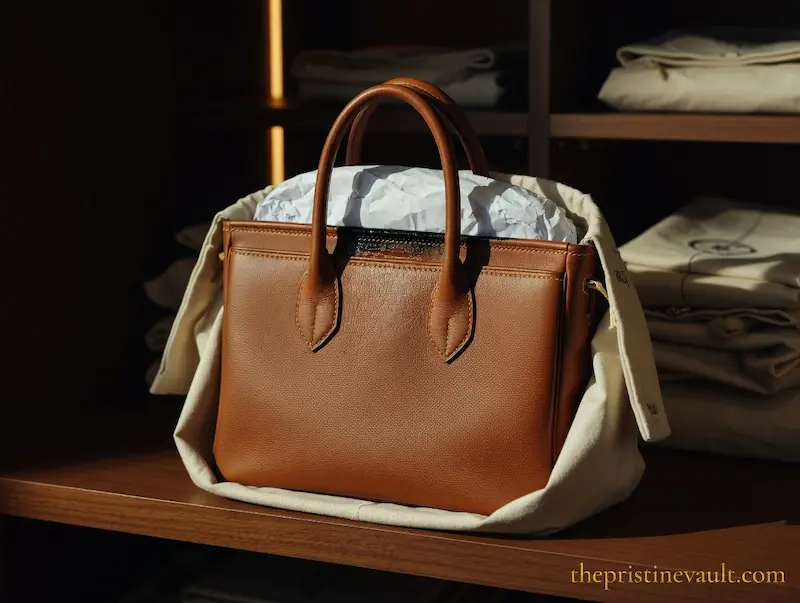
Stuffing: Fill bags with acid-free tissue to maintain shape
Dust bags: Use original LV dust bags or breathable cotton alternatives
Positioning: Store upright on shelves, never stacked or hanging
Humidity control: Silica gel packets in humid climates
A collector in Florida stored her LV collection in a closet without climate control. After one humid summer, three bags showed white mold spots across the canvas. The spores had penetrated the coating. Professional cleaning cost $350 per bag and couldn't guarantee complete removal.
What to Avoid
Never store:
- In plastic bags or containers (traps moisture)
- In attics or basements (temperature and humidity extremes)
- In original orange shopping boxes long-term (not designed for extended storage)
- Near exterior walls (temperature fluctuations)
8 Quick Tips for Louis Vuitton Longevity (Most Owners Skip These)
Rotate bags in your collection regularly. Leather and canvas both benefit from resting between uses to fully dry.
Apply leather protector to new vachetta before first use. Prevention is infinitely easier than correction.
Store bags stuffed and upright always. Empty, collapsed bags develop permanent creases in canvas coating.
Keep bags away from heat sources. Radiators, heating vents, and car trunks cause coating to crack and peel.
Document your collection with photos annually. Track condition changes and create insurance evidence.
Address stains immediately. Old stains set into canvas and become increasingly difficult to remove.
Use bag organizers to prevent interior staining. Pens, makeup, and food items can leak inside bags.
👉 Check LV-Compatible Bag Organizers on Amazon
- Have bags professionally cleaned every 2-3 years. LV boutiques offer spa services that maintain long-term condition.
⚠️ Pro Tip: For bags with significant vachetta, carry a small microfiber cloth in the bag. Immediately blot any water or liquid contact. The first 30 seconds determine whether a spill becomes a permanent stain.
Mistakes That Are Slowly Destroying Your Louis Vuitton
These common errors cause preventable damage:
Using leather cleaner on canvas. Canvas isn't leather. Leather cleaners contain oils and conditioners that create sticky buildup on coated canvas. This attracts dirt and dulls the finish permanently.
Storing bags in original shopping boxes. The orange boxes look nice but aren't designed for multi-year storage. They don't breathe properly. Humidity builds inside. Mold develops unseen until significant damage occurs.
Trying to prevent vachetta from darkening. Fighting natural patina causes more damage than accepting it. Products that claim to "protect" vachetta from darkening either don't work or contain chemicals that damage leather structure over time.
Using baby wipes for quick cleaning. Baby wipes contain lotions, fragrances, and preservatives. These leave residue on canvas that builds up over time. The residue attracts dirt and creates dull patches.
Hanging bags by handles. This stresses the handle attachment points. Canvas can tear at attachment seams. Vachetta handles stretch and weaken. Always store bags resting on their bottoms.
Ignoring small problems. A tiny stain, slight peeling at a corner, or minor mold spot worsens rapidly if ignored. Address issues immediately before they spread.
Frequently Asked Questions
How do I remove water stains from vachetta leather?
You can't, unfortunately. Water stains on vachetta are permanent. They may fade slightly as overall patina develops and darkens, making stains less noticeable. Prevention through leather protector application and weather awareness is the only effective strategy.
Can I use Magic Eraser on Louis Vuitton canvas?
Yes, but carefully. Magic Erasers work through gentle abrasion. Light, occasional use removes marks effectively. Aggressive or frequent use can wear down the protective coating over time. Always test in hidden areas first and use minimal pressure.
How often should I condition the vachetta on my Louis Vuitton?
Wait until vachetta has developed some patina — typically 6-12 months of regular use. Then condition 2-3 times yearly with products designed for vegetable-tanned leather. New, untreated vachetta benefits more from protector spray than conditioner. See our complete vachetta leather cleaning guide for detailed instructions.
Is it normal for the canvas to crack or peel?
No. Quality Louis Vuitton canvas shouldn't crack or peel with proper care. Cracking indicates heat damage, chemical exposure, or age-related deterioration. Peeling suggests the protective coating is failing — often from harsh cleaning products. Both issues require professional evaluation and potential restoration.
How do I clean the inside lining of my Louis Vuitton?
Gently vacuum interior to remove dust and debris. For stains, use barely damp cloth with drop of mild soap. Avoid saturating the lining — excess water can damage adhesives and cause lining separation. For significant interior staining, professional cleaning is safest.
Can Louis Vuitton bags be repaired if damaged?
Yes. Louis Vuitton offers spa services through their boutiques for cleaning, restoration, and repair. Costs vary by damage extent. Some damage — severe water staining on vachetta, advanced canvas deterioration — may be irreparable or cost-prohibitive to fix.
Should I have my vintage Louis Vuitton professionally cleaned?
Yes, especially if it has visible dirt, stains, or hasn't been cleaned in years. Vintage pieces often have more delicate coatings that require professional expertise. DIY cleaning on valuable vintage bags risks permanent damage. Professional services cost $200-400 but preserve collector value.
Conclusion
Proper Louis Vuitton monogram care centers on three principles: treat canvas and vachetta as different materials requiring different approaches, prevent damage rather than attempt correction, and store bags in controlled environments between uses.
Clean canvas gently with minimal moisture. Protect vachetta obsessively from water. Store bags stuffed in breathable dust bags in climate-controlled spaces.
These practices aren't complicated. But they separate owners who maintain pristine bags for decades from those who face expensive restoration every few years.
For protecting canvas from environmental moisture that leads to mold, silica gel packets in storage areas provide essential humidity control.
Now it's your turn — assess your current care routine this week and implement the canvas protection and vachetta handling practices outlined above. Your Louis Vuitton collection will thank you for it.