Luxury Watch Movement Overhaul: 8 Things Most Owners Never Know
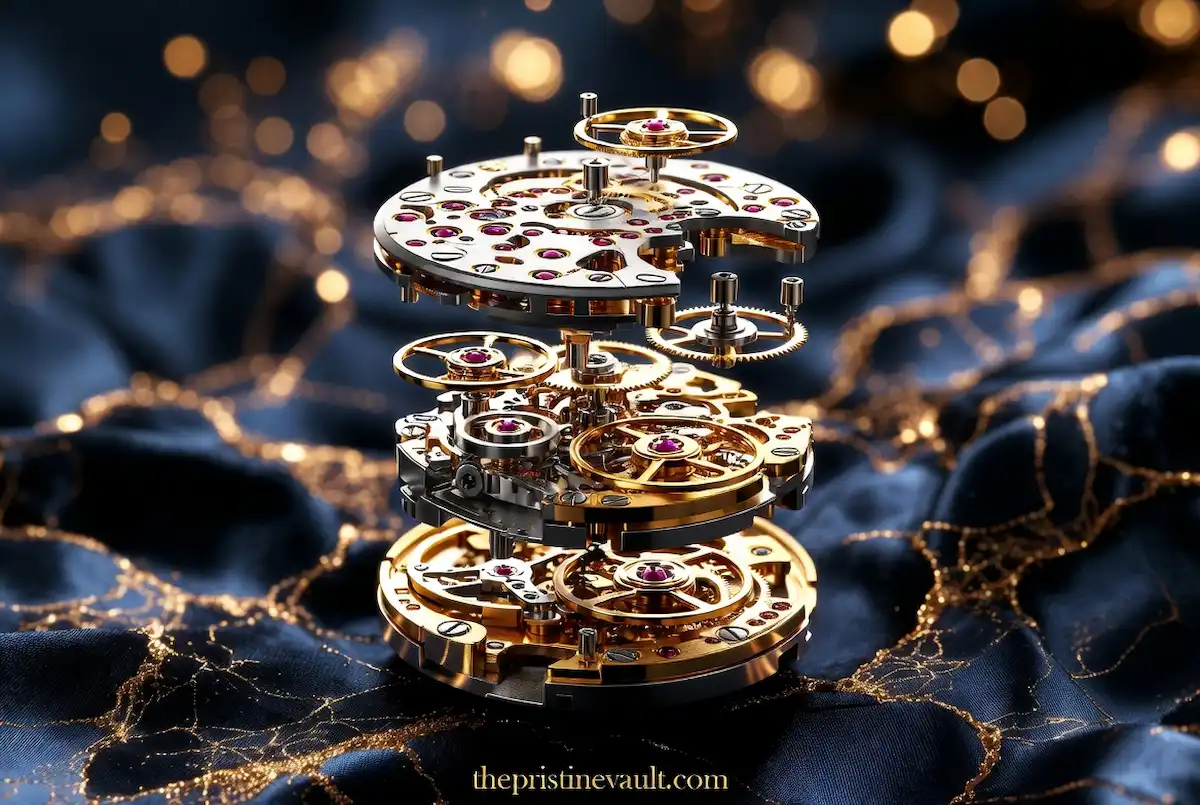
"Understanding what a luxury watch movement overhaul actually involves prevents you from overpaying for unnecessary service — or worse, delaying essential maintenance until damage becomes irreversible."
Your Rolex started gaining 30 seconds per day. You figured it just needed regulation. The watchmaker opened it up and delivered different news: the movement needed a complete overhaul. Estimated cost: $800.
You panicked. Was this legitimate? Were they upselling you? Could you wait another year?
A collector I know postponed his Omega Speedmaster's overhaul for three years after his watchmaker recommended it. He wanted to save money. When he finally brought it in, the worn mainspring had damaged the barrel wall.
The escapement showed excessive pivot wear from degraded lubricants. What would have been a $600 standard overhaul became a $1,800 repair requiring replacement parts on backorder for four months.
Delayed overhauls always cost more. But unnecessary overhauls waste money too. Knowing the difference saves collectors thousands over a lifetime of watch ownership.
This guide covers everything you need to know about luxury watch movement overhauls — when they're necessary, what happens during the process, realistic costs by brand, and how to evaluate whether your watchmaker's recommendation is legitimate.
Here's everything you need to know.
Table of Contents
- Editor's Picks: Essential Watch Care Between Overhauls
- What Exactly Happens During a Movement Overhaul
- When Your Watch Actually Needs an Overhaul
- Choosing Between Manufacturer and Independent Service
- What a Luxury Watch Movement Overhaul Should Cost
- Extending Time Between Overhauls
- 7 Quick Tips to Maximize Overhaul Value (Most Owners Skip These)
- Mistakes That Make Overhauls More Expensive
- Frequently Asked Questions
- How long does a luxury watch movement overhaul take?
- Can I negotiate the price of a watch overhaul?
- Will an overhaul make my watch look brand new?
- How do I know if my watchmaker did a good job?
- Is it worth overhauling an inexpensive watch?
- Do quartz watches need overhauls?
- What happens if I never overhaul my luxury watch?
- Conclusion
This post contains affiliate links. We may earn a small commission at no extra cost to you.
Editor's Picks: Essential Watch Care Between Overhauls
Before we dive in, here are the top-rated products most luxury watch owners trust between professional services:
- Selvyt Polishing Cloth — Safe for all case finishes, extends time between professional polishing
- Digital Hygrometer — Monitors storage humidity that affects lubricant health
- Watch Storage Roll — Proper storage between wearings protects movement health
(More recommendations throughout the article)
What Exactly Happens During a Movement Overhaul
A movement overhaul isn't a quick tune-up. It's the watchmaking equivalent of an engine rebuild — complete disassembly, cleaning, replacement of worn parts, and meticulous reassembly.
Complete Disassembly
Every component comes apart. A typical three-hand automatic movement contains 150-300 individual parts. A chronograph movement: 300-400+. Each part is cataloged and inspected.
The watchmaker removes the movement from the case first. Then the dial and hands come off. Then the movement itself is disassembled gear by gear, spring by spring, jewel by jewel.
This step alone can take 2-4 hours for an experienced watchmaker working on a familiar caliber.
Ultrasonic Cleaning
All metal components go through multiple ultrasonic cleaning baths. Different solutions target different contaminants — old lubricants, metal particles from wear, dust, and environmental residue.
After cleaning, parts go through rinsing baths to remove cleaning solution residue. Any chemical left behind contaminates fresh lubricants applied during reassembly.
Jewels (the synthetic ruby bearings inside movements) require separate cleaning. Contaminated jewels cause pivot friction that accelerates wear on gear train components.
Inspection and Part Replacement
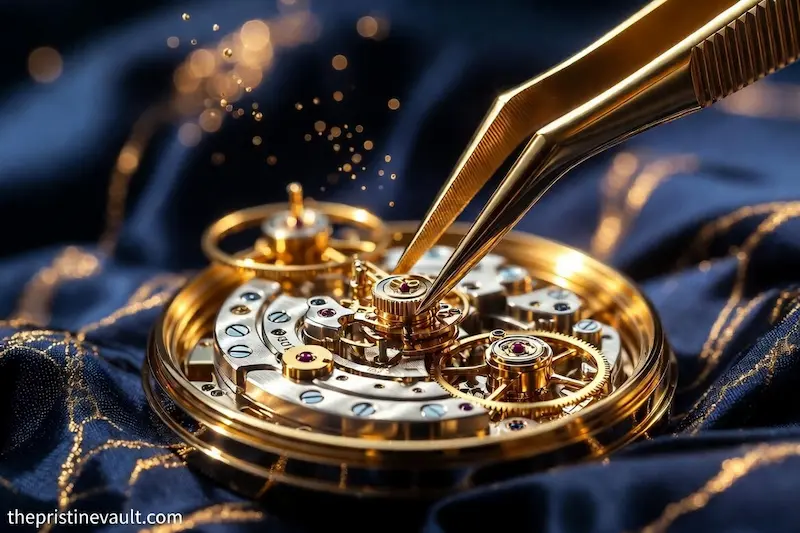
This is where the real expertise lies. The watchmaker examines every component under magnification for:
- Pivot wear on gear shafts
- Spring fatigue on mainspring and hairspring
- Jewel damage (chipped or cracked bearings)
- Gasket deterioration (crown, caseback, crystal)
- Rotor bearing wear (automatic watches)
Worn parts get replaced. Standard replacements typically include gaskets, mainspring, and click spring. Additional replacements depend on what inspection reveals.
Proper storage between overhauls extends component life significantly. For humidity control that protects lubricant health, maintaining the right storage environment matters. Our guide on how to store watches properly covers essential environmental factors.
The next section covers the mistake most people make at this stage.
When Your Watch Actually Needs an Overhaul
Not every accuracy issue requires a full overhaul. Knowing when service is truly needed prevents both premature spending and delayed maintenance.
Clear Signs an Overhaul Is Due
Accuracy deviation exceeding 15-20 seconds per day. Minor drift (5-10 seconds) is normal for mechanical movements. Significant deviation indicates lubricant degradation or component wear affecting the escapement.
Power reserve has noticeably decreased. If your watch used to run 50+ hours after full winding and now stops after 30 hours, the mainspring or barrel components are worn.
The rotor sounds different. Grinding, clicking, or unusually loud rotor noise indicates worn rotor bearings. This worsens quickly if ignored.
Date change hesitates or skips. Calendar mechanism issues indicate worn intermediate wheels or dried lubricants in the date mechanism.
Condensation appears under crystal. This means water has entered the case — gaskets have failed. Immediate service prevents movement corrosion.
Manufacturer-Recommended Intervals
| Brand | Recommended Interval | Typical Cost |
|---|---|---|
| Rolex | Every 10 years | $600-1,200 |
| Omega | Every 5-8 years | $500-1,000 |
| Patek Philippe | Every 5-7 years | $1,500-5,000+ |
| IWC | Every 5-8 years | $600-1,500 |
| Cartier | Every 5-7 years | $500-1,200 |
| Tudor | Every 10 years | $400-800 |
| Tag Heuer | Every 4-6 years | $400-900 |
These intervals assume normal wearing conditions. Watches exposed to extreme temperatures, humidity, or physical stress may need service sooner.
For maintaining proper winder settings between overhauls, correct TPD prevents unnecessary wear on winding components. Our detailed guide on Rolex winder settings covers exact specifications by caliber.
But knowing when to service is only half the equation — here's what determines service quality.
Choosing Between Manufacturer and Independent Service
This decision affects cost, turnaround time, warranty coverage, and potentially your watch's long-term value.
Manufacturer Service Centers
Advantages:
- Genuine replacement parts guaranteed
- Factory-trained watchmakers
- Movement updated to current specifications
- Warranty on service (typically 2 years)
- Maintains brand provenance for collector value
Disadvantages:
- Higher cost (20-40% premium over independent)
- Longer turnaround (6-12 weeks is common, 16+ weeks for complex pieces)
- Less transparency (you rarely speak directly with the watchmaker)
- May replace parts unnecessarily (brands err on the side of caution)
- May polish cases without permission (removes original finishing character)
Independent Certified Watchmakers
Advantages:
- Lower cost (typically 30-50% less than manufacturer)
- Faster turnaround (2-4 weeks for standard overhaul)
- Direct communication with the watchmaker
- More conservative approach (replace only what's genuinely worn)
- Can preserve original finishing and patina (important for vintage)
Disadvantages:
- Parts sourcing can be challenging (especially for newer calibers)
- Quality varies dramatically between watchmakers
- No manufacturer warranty
- May affect collector value perception for rare pieces
The Smart Approach
Send to manufacturer for:
- Watches under warranty
- Complicated movements (minute repeaters, tourbillons, perpetual calendars)
- Rare or collector-grade pieces where provenance matters
- First overhaul after purchase (establishes service history)
Use independent watchmaker for:
- Routine overhauls on standard calibers
- Watches where cost matters significantly
- Vintage pieces where preserving original character is priority
- Second opinions when manufacturer quotes seem excessive
Finding a Qualified Independent Watchmaker
Look for AWCI (American Watchmakers-Clockmakers Institute) certification or CW21 certification. Ask for references from other luxury watch owners. Check online forums (WatchUSeek, Rolex Forums) for recommended independents in your area.
A good independent watchmaker will photograph your movement before and after service, explain exactly what needs replacement and why, and show you the worn parts they removed.
Up next: the one maintenance routine that extends overhaul intervals significantly.
What a Luxury Watch Movement Overhaul Should Cost
Pricing varies dramatically. Understanding the components helps evaluate quotes.
Cost Breakdown
A standard three-hand automatic overhaul includes:
Labor (disassembly, cleaning, reassembly, regulation): 40-50%
Replacement parts (gaskets, mainspring, springs): 20-30%
Testing and quality control: 10-15%
Case refinishing (if included): 10-20%
Realistic Price Ranges
Standard three-hand automatic (Rolex, Omega, Tudor):
- Manufacturer: $600-1,200
- Independent: $350-700
Chronograph (Rolex Daytona, Omega Speedmaster):
- Manufacturer: $800-1,800
- Independent: $500-1,000
Complicated (Perpetual calendar, minute repeater):
- Manufacturer: $2,000-8,000+
- Independent: $1,200-4,000
Vintage movements (pre-1970):
- Specialist: $500-2,000 (parts availability affects cost dramatically)
Red Flags in Service Quotes
Suspiciously low pricing ($200 for a Rolex overhaul): Likely cutting corners — skipping proper cleaning, reusing old gaskets, not replacing worn parts.
Excessively high pricing without detailed explanation: Ask for itemized quote. Legitimate service providers explain every charge.
Refusing to show old parts: Reputable watchmakers keep and show replaced components upon request.
No timing data provided: Professional service includes before-and-after timing machine results showing accuracy, amplitude, and beat error across multiple positions.
👉 Get Timegrapher for Home Accuracy Testing on Amazon
The next section covers the mistake most people make at this stage.
Extending Time Between Overhauls
Proper daily care dramatically extends overhaul intervals. Some collectors stretch Rolex's 10-year recommendation to 12-15 years through meticulous maintenance.
Daily Habits That Protect Movements
Avoid extreme temperature exposure. Don't leave watches in hot cars or cold garages. Temperature extremes affect lubricant viscosity and stress metals differently — repeated cycles cause microfractures in components.
Screw down crowns after every setting change. Unsealed crowns allow moisture and dust entry. Even brief exposure introduces contaminants that degrade lubricants.
Wind watches regularly, even if unworn. Monthly hand-winding distributes lubricants through the gear train. Stagnant lubricants thicken and lose protective properties.
Keep watches away from magnets. Magnetized movements run erratically and require professional demagnetization. Strong magnets can permanently affect hairspring geometry.
Storage Practices That Extend Service Life
Proper storage between wearings prevents the environmental damage that accelerates overhaul need.
Humidity control prevents internal corrosion. Maintain 40-50% relative humidity in storage areas.
Temperature stability prevents thermal cycling that stresses gaskets and lubricants.
Magnetic shielding prevents magnetization from nearby electronics.
For collectors using winders between wearings, correct settings prevent unnecessary mechanical stress. Our guide on Rolex Datejust winder recommendations covers optimal TPD to minimize wear while maintaining power reserve.
7 Quick Tips to Maximize Overhaul Value (Most Owners Skip These)
Request before-and-after timing machine printouts. These prove your watch was actually regulated and show measurable improvement from the service.
Ask to keep replaced parts. Examining old parts confirms legitimate replacement decisions and creates documentation for your records.
Specify no case polishing unless you want it. Many service centers polish cases by default, removing original surface character and potentially thinning case metal.
Get a written service warranty. Reputable providers guarantee their work for 12-24 months minimum.
Document your watch's condition before sending. Photograph every angle. Note existing scratches, dents, and blemishes. This prevents disputes about damage occurring during service.
Ask about parts sourcing. Genuine manufacturer parts versus aftermarket alternatives affect both quality and future collector value.
Schedule service before symptoms become severe. Early intervention prevents cascading damage that doubles or triples costs.
⚠️ Pro Tip: Create a service log for each watch. Record dates, work performed, parts replaced, costs, and timing results. This documentation significantly increases resale value and helps future watchmakers understand the watch's service history.
👉 Want to keep all these tips in one place? Download our "Luxury Watch Maintenance Mastery" — a complete 9-page checklist system trusted by serious collectors.
Mistakes That Make Overhauls More Expensive
These common errors increase service costs unnecessarily:
Ignoring accuracy changes hoping they'll resolve themselves. Mechanical watches don't self-correct. Accuracy deviation indicates real wear that worsens with continued use. Early service prevents cascading component damage.
Using unauthorized service providers to save money. Unqualified technicians often cause more damage than they fix. Improper reassembly, wrong lubricants, and contaminated movements turn routine overhauls into major repairs.
Postponing service after water exposure. Any moisture intrusion requires immediate professional attention. Waiting even days allows corrosion to begin on delicate movement components. Emergency service after water exposure costs far less than corrosion damage repair.
Requesting unnecessary complications during overhaul. Adding aftermarket modifications, custom dials, or non-original components during service voids manufacturer warranties and diminishes collector value. Keep modifications separate from maintenance service.
Not communicating specific concerns to your watchmaker. Tell them exactly what symptoms you've noticed — when the watch runs fast, specific positions where it stops, sounds that changed. This information guides their inspection and prevents overlooking issues.
Frequently Asked Questions
How long does a luxury watch movement overhaul take?
Manufacturer service centers typically require 6-12 weeks, sometimes longer for complicated movements or when parts are backordered. Independent watchmakers generally complete standard overhauls in 2-4 weeks. Complex complications may take 4-8 weeks regardless of provider.
Can I negotiate the price of a watch overhaul?
Manufacturer service centers have fixed pricing — negotiation isn't typically possible. Independent watchmakers often have more flexibility, especially for repeat customers or multiple watches serviced simultaneously. Always get itemized quotes to understand what you're paying for.
Will an overhaul make my watch look brand new?
An overhaul addresses movement function, not cosmetics. Case polishing and refinishing are separate services, usually offered as add-ons. Movement overhaul restores accuracy and reliability. Visual restoration is a different process with its own costs.
How do I know if my watchmaker did a good job?
Request timing machine results showing accuracy across 6 positions (dial up, dial down, crown up, crown down, crown left, crown right). Accuracy within +/-5 seconds per day across all positions indicates excellent regulation. Amplitude above 250 degrees indicates healthy power delivery. For proper storage after service, see our watch storage guide.
Is it worth overhauling an inexpensive watch?
Generally, no. If the overhaul cost exceeds 50% of the watch's current value, replacement makes more financial sense. A $300 watch needing a $400 overhaul should be replaced. A $5,000 watch needing a $600 overhaul should absolutely be serviced.
Do quartz watches need overhauls?
Not in the traditional mechanical sense. Quartz movements need battery replacement every 2-5 years and occasional gasket replacement for water resistance. Full overhauls are uncommon except for high-end quartz calibers (Grand Seiko Spring Drive, Breitling SuperQuartz).
What happens if I never overhaul my luxury watch?
The watch will continue running with degrading accuracy. Eventually, worn components will cause visible timing issues, then erratic running, then stopping. More critically, worn metal parts contaminate lubricants with metal particles, creating abrasive compounds that accelerate damage exponentially.
Conclusion
A luxury watch movement overhaul protects your investment through three essential outcomes: restored accuracy through proper lubrication and regulation, extended movement lifespan through worn part replacement, and maintained water resistance through fresh gaskets and pressure testing.
Timing matters — too early wastes money, too late compounds damage costs. Follow manufacturer intervals as guidelines, but monitor your watch's actual performance for personalized timing decisions.
Choose service providers carefully. Manufacturer centers guarantee authenticity but cost more. Qualified independents offer value but require careful vetting. Either way, demand documentation, timing results, and transparent communication.
Between overhauls, proper care extends service intervals significantly. Consistent wearing routines, humidity-controlled storage, and correct winder settings keep movements healthy longer.
Now it's your turn — check your watch's accuracy today and schedule service if deviation exceeds manufacturer specifications. Your luxury timepiece will thank you for it.