5 Best Silica Gel for Watch Boxes That Experts Actually Recommend
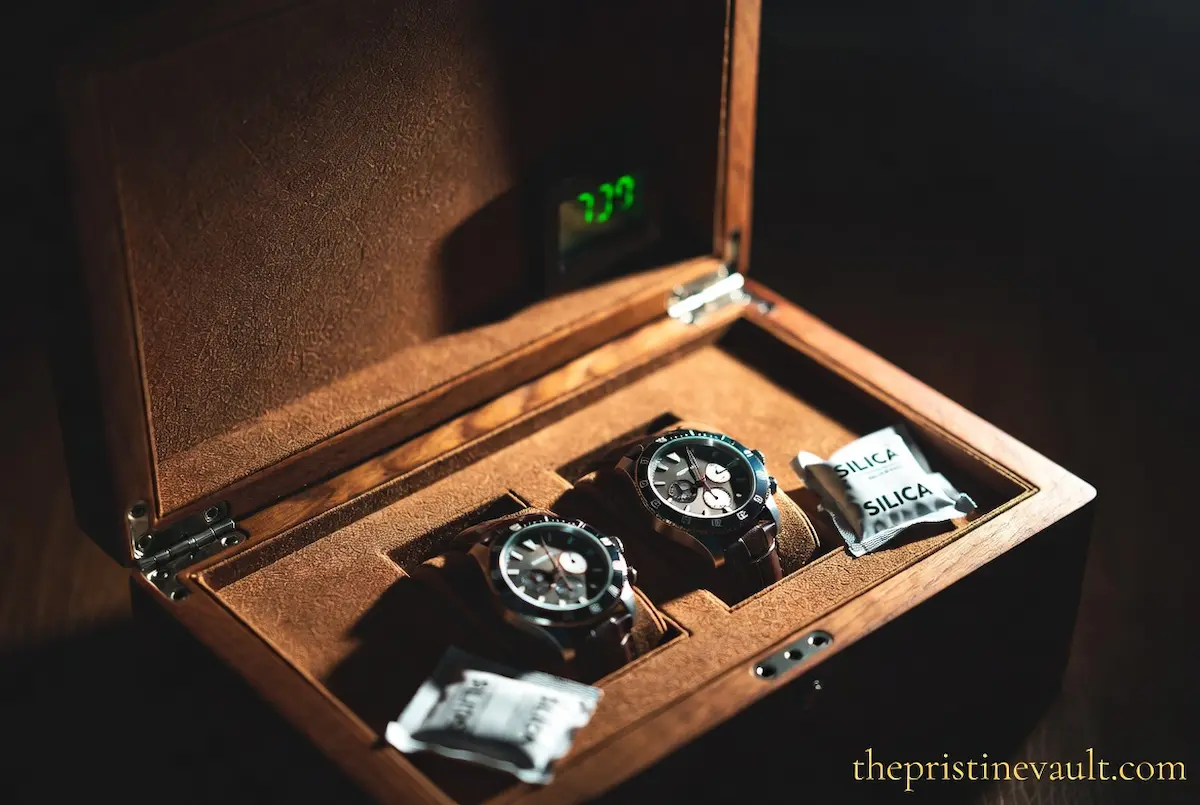
"Choosing the best silica gel for watch boxes prevents the invisible moisture damage that corrodes luxury movements — damage that costs thousands to repair once it starts."
Your Rolex GMT-Master II lives in a beautiful mahogany watch box. Cushioned. Protected from scratches. Looking pristine every time you open the lid.
But inside that sealed box, humidity has been climbing silently. Condensation forms on your watch's caseback at night when temperatures drop. By morning, it evaporates. By night, it returns. This invisible wet-dry cycle repeats hundreds of times per year.
A collector in Houston showed me his three-year-old Omega Seamaster after routine service. The watchmaker found rust on the barrel bridge and early-stage corrosion on two wheel pivots. The watch had never been near water. Never been worn in rain. The damage came entirely from uncontrolled humidity inside a standard watch box — in an air-conditioned house.
Repair cost: $1,200. Prevention cost: $12 worth of proper silica gel.
This guide reviews the five best silica gel products specifically suited for luxury watch storage. You'll learn which types actually work inside watch boxes, how much you need per box, and the maintenance schedule that keeps protection active.
Table of Contents
- 5 Best Silica Gel for Watch Boxes That Experts Actually Recommend
- Editor's Picks: Best Silica Gel for Watch Boxes
- Why Standard Silica Gel Packets Aren't Enough
- The 5 Best Silica Gel Products for Watch Boxes (Reviewed)
- 1. Dry & Dry Rechargeable Silica Gel Canister — Best Overall
- 2. Boveda 49% RH Two-Way Humidity Control — Best "Set and Forget"
- 3. Eva-Dry Mini Dehumidifier — Best for Large Collections
- 4. Wisedry Rechargeable Silica Gel Packets — Best Value Multi-Pack
- 5. Lockdown Silica Gel Safe Dehumidifier — Best for Home Safes
- Best Silica Gel Placement Inside Watch Boxes
- Monitoring and Maintenance Schedule
- 6 Quick Tips for Watch Box Silica Gel (Most Collectors Skip These)
- Mistakes That Compromise Watch Box Humidity Control
- Frequently Asked Questions
- How much silica gel do I need for my watch box?
- Can silica gel damage my watches?
- How often should I replace silica gel in my watch box?
- Is Boveda better than silica gel for watches?
- Can I reuse silica gel packets from shoe boxes?
- Do I still need silica gel if my watch box has good seals?
- What humidity level damages luxury watches?
- Conclusion
Here's everything you need to know.
Editor's Picks: Best Silica Gel for Watch Boxes
Before we dive in, here are the top-rated humidity control products most watch collectors trust:
- Dry & Dry Rechargeable Silica Gel Canister — Color-indicating, reusable, fits inside any watch box
- Boveda 49% RH 2-Way Humidity Pack — Maintains exact humidity range, no monitoring needed
- Eva-Dry Mini Dehumidifier — Wireless, rechargeable, compact enough for watch storage
(More recommendations throughout the article)
Why Standard Silica Gel Packets Aren't Enough
Those small white packets that come in shoe boxes and electronics packaging seem like an obvious solution. Just toss a few in your watch box, right?
Not quite. Standard silica gel packets have significant limitations for watch storage.
The Capacity Problem
A typical packet from a shoe box contains 1-5 grams of silica gel. That's enough to protect the airspace inside a shoe box from shipping humidity for a few weeks.
Your watch box has different requirements. It sits in your home for months or years. Humidity constantly infiltrates through the lid seal, through the hinge gap, through the tiny spaces where wood panels meet.
A single shoe box packet saturates within days to weeks in a typical home environment. Once saturated, it stops absorbing moisture entirely — and you have no way of knowing it's stopped working because there's no visual indicator.
The Chemical Concern
Some cheap silica gel packets contain cobalt chloride as a color indicator. Cobalt chloride changes from blue (dry) to pink (saturated) — convenient but potentially problematic.
Cobalt chloride can off-gas trace chemical compounds in enclosed spaces. Over years of exposure inside a sealed watch box, these trace compounds can contribute to tarnishing on metal surfaces.
Quality silica gel for watch storage uses orange-indicating silica gel instead. It changes from orange (active) to green (saturated) — equally visible but without the chemical concerns.
For comprehensive humidity control setup inside watch boxes, our detailed guide on building a DIY watch humidity box covers complete assembly instructions.
The next section covers the mistake most people make at this stage.
The 5 Best Silica Gel Products for Watch Boxes (Reviewed)
Each option serves different needs. Match your choice to your collection's size and your climate's humidity level.
1. Dry & Dry Rechargeable Silica Gel Canister — Best Overall
Price: $12-18
Capacity: 40-gram canister
Indicator: Orange to green color change
Recharge method: Microwave or oven
Best for: Standard 6-12 watch boxes
This is what most serious collectors use. The 40-gram canister provides roughly 10x the capacity of a standard shoe box packet. That translates to months of active protection versus days.
The orange-to-green color indicator eliminates guesswork. When the beads turn green, recharge in the microwave for 3-5 minutes or in the oven at 250°F for 2 hours. The beads return to orange and absorb again.
One canister lasts years of recharging cycles. The silica gel doesn't degrade — it just needs heat to release absorbed moisture.
A collector with a 10-watch Wolf watch box placed one Dry & Dry canister inside. Monthly humidity checks showed consistent 42-48% readings for three months before needing recharge. In Houston's humid climate, that's impressive performance.
👉 Get Dry Rechargeable Canister on Amazon
2. Boveda 49% RH Two-Way Humidity Control — Best "Set and Forget"
Price: $8-15 (4-pack)
Capacity: 8-gram or 60-gram packs
Indicator: Pack feels hard when depleted
Best for: Collectors who don't want to monitor
Boveda packs are different from standard silica gel. They're two-way humidity controllers — they both absorb AND release moisture to maintain a specific humidity percentage.
For watches, the 49% RH version is ideal. It keeps humidity at exactly 49% — right in the safe zone for movements, leather straps, and metal bracelets.
No monitoring required. No hygrometer needed (though one is still recommended). The pack simply maintains 49% until it's depleted.
Depletion time: 2-4 months depending on box seal quality and ambient humidity. When the pack feels hard and crunchy instead of soft, replace it.
The downside? Boveda packs aren't rechargeable. Once depleted, they're finished. Over a year, replacement costs add up compared to rechargeable silica gel.
3. Eva-Dry Mini Dehumidifier — Best for Large Collections
Price: $20-30
Capacity: Covers 250+ cubic inches
Indicator: Built-in indicator window
Recharge method: Plug into wall outlet (built-in heater)
Best for: Large watch boxes, watch cabinets, safes
For collectors with display cabinets, large watch boxes (15+ watches), or home safes containing watches, individual silica gel packets aren't sufficient. The Eva-Dry unit absorbs significantly more moisture than any canister.
Recharging is effortless — plug it into a wall outlet for 12-24 hours. The built-in heating element drives moisture out. Unplug, return to storage area.
Compact enough to fit inside most watch cabinets and large safes. Not small enough for standard 6-watch boxes.
👉 Get Eva-Dry Mini Dehumidifier on Amazon
4. Wisedry Rechargeable Silica Gel Packets — Best Value Multi-Pack
Price: $10-15 (10-pack)
Capacity: 10-gram packets
Indicator: Orange to dark green
Recharge method: Microwave 3 minutes
Best for: Multiple watch boxes, drawer storage
If you store watches in multiple locations — a watch box, a travel case, a drawer, a safe — Wisedry's multi-pack provides affordable coverage across all locations.
Each packet is smaller than the Dry & Dry canister, so you'll need 2-3 per watch box for adequate protection. However, the per-packet cost is lower.
For collectors who prefer storing watches without traditional boxes, our guide on storing watches without a watch box covers how to integrate silica gel into alternative storage setups.
5. Lockdown Silica Gel Safe Dehumidifier — Best for Home Safes
Price: $15-22
Capacity: 40-gram or 75-gram canisters
Indicator: Blue to pink (uses cobalt-free formula)
Recharge method: Oven at 325°F for 3 hours
Best for: Watches stored inside home safes or gun safes
Designed specifically for sealed safe environments. The higher-capacity 75-gram option handles the larger airspace inside home safes where watches share space with documents and other valuables.
Safe environments are particularly challenging because they're sealed tightly (fire protection) but have no air circulation. Humidity builds rapidly. Without active desiccant, watches stored in safes corrode faster than watches in open closets.
For comprehensive watch storage solutions beyond humidity control, our luxury watch storage box review covers boxes with built-in environmental protection features.
For a complete step-by-step maintenance system, grab our premium checklist collection
Up next: the placement strategy that maximizes protection.
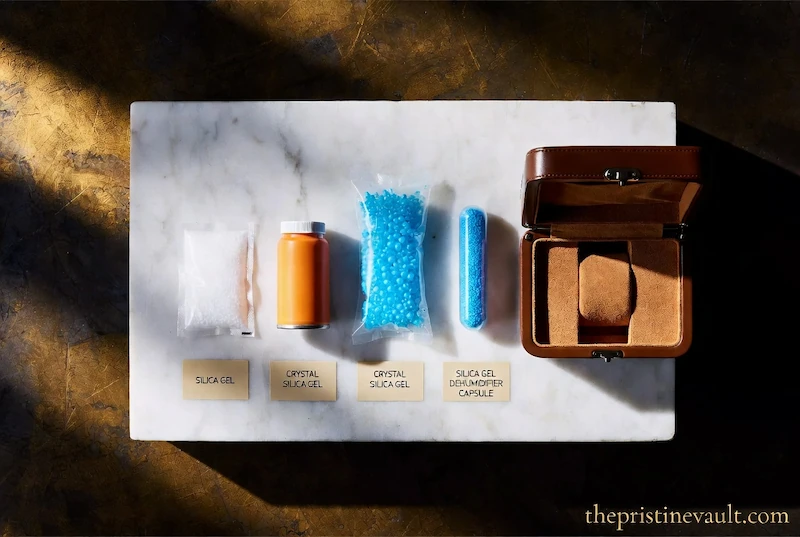
Best Silica Gel Placement Inside Watch Boxes
Where you place silica gel matters as much as which type you choose.
Optimal Positioning
Small boxes (4-6 watches): One 40-gram canister or one Boveda pack, placed centrally between cushions.
Medium boxes (8-12 watches): One 40-gram canister on each end, or 3-4 small packets distributed evenly.
Large boxes/cabinets (15+ watches): Eva-Dry unit or multiple canisters spaced throughout.
Contact Rules
Never place silica gel directly against watches. Always maintain a cloth or cushion barrier. Direct contact with some desiccant materials can leave residue on metal surfaces over extended periods.
Keep silica gel away from leather straps. While brief contact isn't damaging, prolonged direct contact between aggressive desiccant and leather can create localized dry spots.
Position packets below watch level when possible. Moist air is slightly heavier and settles. Desiccant below watch level intercepts moisture before it reaches your timepieces.
For collectors using automatic watch winders with integrated storage, proper winder settings complement humidity control. Our detailed guide on Rolex winder settings covers exact specifications.
But placing silica gel correctly is only half the battle — here's what monitoring requires.
Monitoring and Maintenance Schedule
Silica gel without monitoring is guesswork. A simple routine ensures continuous protection.
Essential Monitoring Setup
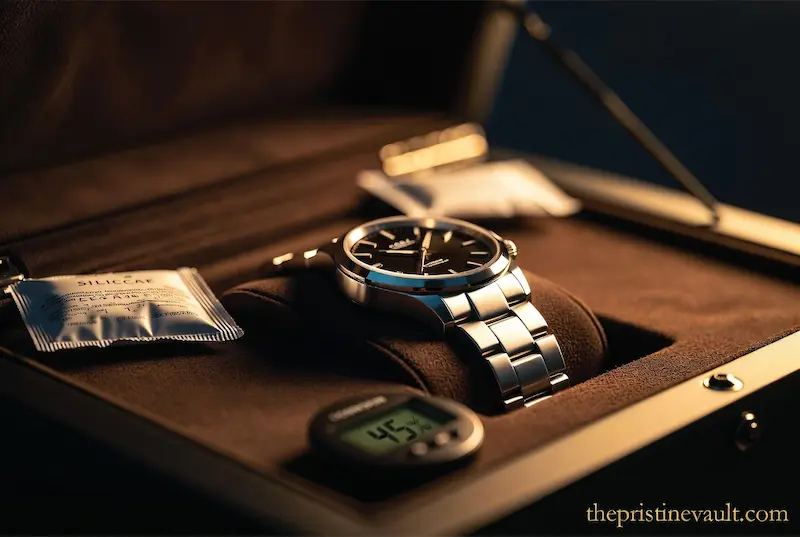
Place a mini digital hygrometer inside your watch box. Check the reading every time you open the box to select or return a watch.
Target range: 40-50% relative humidity
Action thresholds:
- Below 35%: Remove one silica gel packet (environment too dry)
- 40-50%: Perfect, no action needed
- 51-55%: Add another packet or recharge existing ones
- Above 55%: Immediate attention — add packets and check box seal
👉 Get Mini Digital Hygrometer for Watch Box on Amazon
Recharging Schedule
Dry climates (Arizona, Colorado): Recharge every 4-6 months
Moderate climates (California, most of UK): Recharge every 2-3 months
Humid climates (Florida, Singapore, Gulf states): Recharge every 4-8 weeks
How to recharge:
- Microwave method: Remove from watch box. Microwave on medium power for 3-5 minutes. Let cool completely before returning to box.
- Oven method: Place on baking sheet at 250°F for 2 hours. Let cool completely.
Never return warm or hot silica gel to your watch box. Heat damages watch cushions, finishes, and can affect movements temporarily.
For proper automatic watch storage techniques that work alongside humidity control, our guide on storing automatic watches without a winder covers positioning and rotation methods.
6 Quick Tips for Watch Box Silica Gel (Most Collectors Skip These)
Label silica gel with recharge dates. Without labels, you'll forget when packets were last recharged and lose protection unknowingly.
Buy two sets and rotate. While one set recharges, the other protects your watches. Zero downtime in humidity protection.
👉 Get Extra Silica Gel Packets on Amazon
Replace silica gel every 2-3 years regardless of condition. Absorption capacity gradually decreases with repeated recharging cycles.
Don't mix different silica gel types in one box. Standard silica gel and Boveda packs work on different principles. Using both simultaneously creates competing humidity control that neither can manage effectively.
Check box seals annually. The best silica gel can't overcome a watch box with deteriorated seals. Humidity infiltrates faster than desiccant absorbs.
Store spare silica gel in sealed containers. Unused packets absorb ambient moisture if left open. Store spares in airtight bags until needed.
⚠️ Pro Tip: During travel, remove silica gel from your watch box at home and seal the box. Replace with fresh packets when you return. Travel disrupts the microclimate you've established — resetting with fresh desiccant stabilizes conditions faster than recharging used packets.
Mistakes That Compromise Watch Box Humidity Control
These common errors undermine silica gel effectiveness:
Using rice instead of silica gel. Rice absorbs minimal moisture compared to silica gel. It also introduces starch dust and can attract insects. Purpose-made desiccant outperforms rice by orders of magnitude.
Leaving saturated silica gel in the watch box. Saturated silica gel doesn't just stop absorbing — in certain conditions, it can release previously absorbed moisture back into the box. Check indicators regularly and recharge promptly.
Placing silica gel on top of watches. Weight from packets can press against crystals, bezels, or delicate hands. Always position desiccant beside or below watches, never on top.
Using too much silica gel in a small box. Excessive desiccant creates an environment below 35% humidity. This dries leather straps, can shrink gaskets, and accelerates lubricant drying in movements. More isn't better — match capacity to box size.
Ignoring seasonal humidity changes. A silica gel setup that works perfectly in winter may be overwhelmed in summer. Adjust packet quantity and recharging frequency with the seasons.
Frequently Asked Questions
How much silica gel do I need for my watch box?
For a standard 6-8 watch box, one 40-gram rechargeable canister or two Boveda 49% packs provide adequate protection. For larger boxes (12+ watches), use two canisters or 4-5 small packets distributed throughout. Always verify with a hygrometer rather than guessing.
Can silica gel damage my watches?
Not if used correctly. Keep silica gel in packets or canisters — never loose beads that could contact watch surfaces. Maintain a fabric barrier between desiccant and watches. Avoid cobalt chloride indicator types. Used properly, silica gel only benefits watch storage.
How often should I replace silica gel in my watch box?
Rechargeable silica gel needs recharging every 1-6 months depending on climate. The gel itself lasts 2-3 years before absorption capacity noticeably decreases. Boveda packs need replacement every 2-4 months (non-rechargeable). For complete DIY humidity box setup, see our watch humidity box guide.
Is Boveda better than silica gel for watches?
Both work well but differently. Boveda maintains a specific humidity level (two-way control). Silica gel absorbs excess moisture only (one-way). Boveda is more precise but costs more over time. Silica gel is more economical but requires monitoring. For most collectors, either works when used properly.
Can I reuse silica gel packets from shoe boxes?
Yes, temporarily. However, shoe box packets are typically small (1-5 grams) and may contain cobalt chloride indicators. They work as emergency supplements but shouldn't be your primary watch box humidity control. Invest in purpose-made rechargeable desiccant for reliable long-term protection.
Do I still need silica gel if my watch box has good seals?
Yes. Even well-sealed boxes exchange air when opened for watch selection. Ambient humidity enters with every opening. Additionally, watches themselves release moisture absorbed during wearing. Silica gel addresses both sources of humidity inside the box.
What humidity level damages luxury watches?
Sustained humidity above 60% causes condensation on metal, corrosion of movement components, and mold on leather. Below 35% dries leather straps and can shrink gaskets.
The ideal range for luxury watch storage is 40-50% relative humidity. For alternative storage approaches beyond boxes, see our guide on storing watches without a watch box.
Ready to protect your investment? Our "Luxury Watch Maintenance Mastery" checklist gives you everything in one place.
Conclusion
The best silica gel for watch boxes combines three qualities: adequate absorption capacity for your box size, reliable color indication for monitoring, and convenient recharging for long-term use.
Dry & Dry rechargeable canisters offer the best all-around value for standard watch boxes. Boveda packs provide effortless two-way control for collectors who prefer minimal monitoring. Eva-Dry units serve large collections and safe storage.
Whichever option you choose, consistent monitoring with a hygrometer and regular recharging on schedule transforms humidity control from hope to certainty.
A $12-15 investment in proper silica gel prevents thousands in moisture damage over your collection's lifetime. The math doesn't require a calculator.
Now it's your turn — check the humidity inside your watch box this week and add proper silica gel protection where readings exceed 50%. Your luxury watches will thank you for it.
This post contains affiliate links. We may earn a small commission at no extra cost to you.