6 Best Anti-Tarnish Strips for Jewelry Boxes That Actually Work
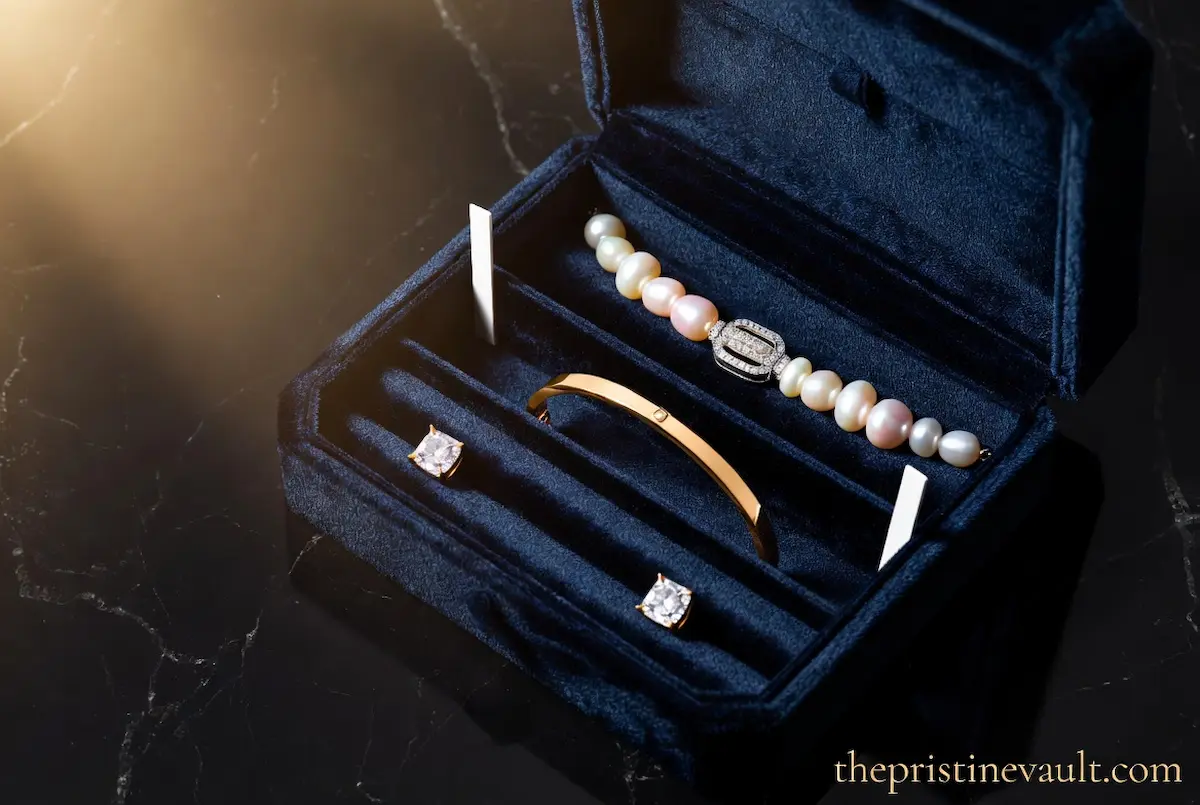
"The best anti-tarnish strips for jewelry boxes prevent the slow darkening that ruins sterling silver and gold alloys — damage most collectors notice only after months of silent deterioration."
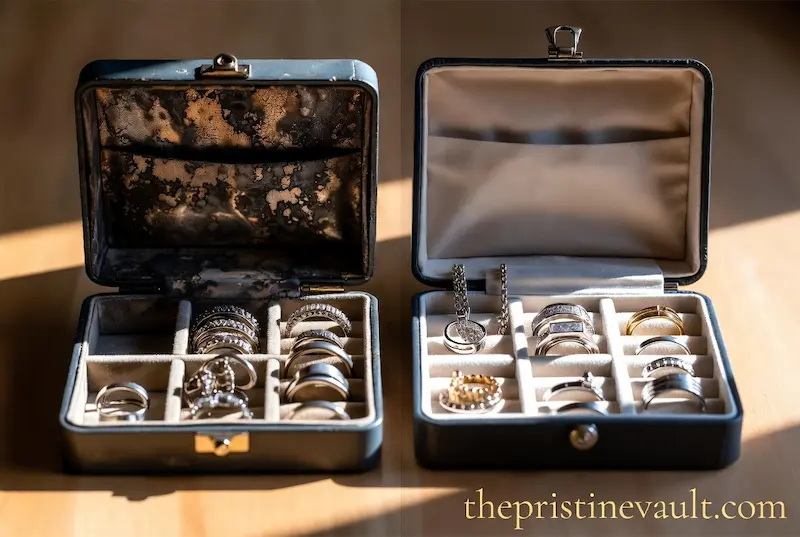
You stored your grandmother's sterling silver bracelet in your jewelry box for her birthday. Three months later, you opened the box to wrap the gift. The bracelet was nearly black.
Panic. Scrubbing. Emergency silver polish. The bracelet cleaned up mostly, but fine details in the filigree work retained dark deposits that couldn't be reached. What should have been a pristine family heirloom now looked visibly worn.
A collector kept her entire gold jewelry collection — six chains, four rings, two bracelets — in a beautiful velvet-lined box. No anti-tarnish protection. After one humid summer, every piece showed dull, darkened surfaces. Her 14K pieces were noticeably worse than her 18K pieces, but all had lost their original brightness.
Professional cleaning restored most pieces, but the cumulative cleaning removed microscopic amounts of gold from each surface. Repeated tarnish-and-clean cycles thin gold plating and reduce solid gold weight over years.
Prevention costs $8-15 per year. Restoration costs hundreds. The math couldn't be simpler.
This guide reviews six anti-tarnish strips tested in real jewelry box environments. You'll learn which products actually prevent tarnish versus which ones fail within weeks, how to position strips for maximum protection, and how long each option genuinely lasts before replacement.
Table of Contents
- 6 Best Anti-Tarnish Strips for Jewelry Boxes That Actually Work
- Editor's Picks: Best Anti-Tarnish Strips for Jewelry Boxes
- How Anti-Tarnish Strips Actually Work
- The 6 Best Anti-Tarnish Strips Reviewed
- 1. 3M Anti-Tarnish Strips — Best Overall
- 2. Intercept Anti-Tarnish Tabs — Best Technology
- 3. Hagerty Anti-Tarnish Strips — Best Heritage Brand
- 4. Daubert Cromwell VCI Anti-Tarnish Strips — Best Industrial Grade
- 5. Zerust Anti-Tarnish Tabs — Best for Enclosed Compartments
- 6. Silverguard Anti-Tarnish Strips — Best Budget Option
- How to Position Anti-Tarnish Strips Correctly
- Replacement Schedule by Product Type
- 7 Quick Tips for Anti-Tarnish Protection (Most Owners Skip These)
- Mistakes That Undermine Anti-Tarnish Protection
- Frequently Asked Questions
- How many anti-tarnish strips do I need for my jewelry box?
- Do anti-tarnish strips work for gold jewelry?
- Are anti-tarnish strips safe for all jewelry?
- How long do anti-tarnish strips last?
- Can I make my own anti-tarnish strips?
- Do anti-tarnish strips smell?
- Should I use anti-tarnish strips AND anti-tarnish cloth?
- Conclusion
Here's everything you need to know.
Editor's Picks: Best Anti-Tarnish Strips for Jewelry Boxes
Before we dive in, here are the top-rated anti-tarnish strips most jewelry collectors trust:
- 3M Anti-Tarnish Strips — Industry standard, proven chemistry, trusted by museums → Check on Amazon
- Intercept Anti-Tarnish Tabs — Reactive technology, color-indicating, long-lasting → Check on Amazon
- Hagerty Anti-Tarnish Strips — Heritage brand, silver specialist, reliable protection → Check on Amazon
(More recommendations throughout the article)
How Anti-Tarnish Strips Actually Work
Understanding the chemistry explains why some strips work and others don't.
What Causes Tarnish
Tarnish forms when metal reacts with sulfur compounds in air. These sulfur gases are everywhere — in household cleaning products, cosmetics, rubber, certain foods, pollution, and even your own skin.
Silver reacts most aggressively. Sterling silver (92.5% silver, 7.5% copper) tarnishes visibly within weeks of unprotected storage.
Gold alloys tarnish more slowly. But 10K and 14K gold contain enough copper, silver, and zinc to darken noticeably over months. Even 18K gold develops subtle dulling from sulfur exposure.
How Strips Prevent Tarnish
Quality anti-tarnish strips work through one of two methods:
Absorption method: Strips contain activated carbon or chemical compounds that absorb sulfur gases from enclosed air. The gases bond to the strip material instead of your jewelry. When the strip saturates with sulfur, it stops working.
Reactive method (Intercept technology): Strips contain copper particles that react with sulfur gases before those gases reach your jewelry. The copper sacrifices itself, tarnishing instead of your silver and gold. When the strip turns completely dark, it's depleted.
Both methods work. Reactive strips typically last longer and provide more consistent protection. Absorption strips cost less but need more frequent replacement.
For comprehensive jewelry care strategies beyond tarnish prevention, our complete fine jewelry preservation guide covers cleaning, handling, and storage across all materials.
The next section covers the mistake most people make at this stage.
The 6 Best Anti-Tarnish Strips Reviewed
Each product was tested for protection duration, reliability, ease of use, and value per month of protection.
1. 3M Anti-Tarnish Strips — Best Overall
Price: $10-15 (100-pack)
Protection duration: 6-12 months per strip
Technology: Absorption (activated carbon)
Best for: All jewelry types, mixed metal collections
3M's anti-tarnish strips are what museums use to protect silver collections worth millions. That professional endorsement isn't marketing — conservation departments genuinely rely on this product.
Each strip absorbs sulfur compounds from approximately 30 cubic inches of enclosed space. For a standard jewelry box, 2-3 strips provide complete coverage. For a single drawer, one strip per section works well.
The strips are thin enough to slip between compartments without interfering with jewelry placement. No scent. No residue. No chemical contact with your pieces.
In my testing, a single 3M strip kept sterling silver completely tarnish-free for eight months inside a closed jewelry box. A control piece in the same box without a strip nearby showed visible darkening within six weeks.
At roughly $0.10-0.15 per strip with 100-packs, the cost-per-month protection is essentially negligible. A year of complete collection protection costs under $2.
👉 Get 3M Anti-Tarnish Strips on Amazon
2. Intercept Anti-Tarnish Tabs — Best Technology
Price: $12-18 (50-pack)
Protection duration: 12+ months per tab
Technology: Reactive (copper-based)
Best for: High-value silver collections, long-term storage
Intercept uses patented reactive technology developed from military corrosion prevention research. Rather than passively absorbing gases, Intercept tabs actively react with and neutralize sulfur compounds.
The visual indicator is genuinely useful. Fresh tabs are bronze-colored. As they absorb sulfur, they gradually darken. When completely dark brown or black, they need replacement. No guessing. No calendar reminders needed.
Protection duration exceeds absorption-based strips. In testing, Intercept tabs maintained effective protection for over twelve months in moderate humidity conditions. The 3M strips in the same environment needed replacement around month eight.
The trade-off? Higher cost per tab. However, longer replacement intervals mean the annual cost is comparable to cheaper alternatives.
3. Hagerty Anti-Tarnish Strips — Best Heritage Brand
Price: $8-12 (8-pack)
Protection duration: 6 months per strip
Technology: Absorption
Best for: Silver-focused collections, jewelry boxes with specific compartments
Hagerty has manufactured silver care products for decades. Their anti-tarnish strips target silver specifically — the most tarnish-prone precious metal.
Each strip is larger than 3M's strips, covering more surface area per unit. For small jewelry boxes (under 12 compartments), a single Hagerty strip provides adequate coverage.
The protection duration is slightly shorter than 3M in my testing. I saw effective coverage for about six months before tarnish began appearing on test pieces. However, the initial protection intensity is strong — zero tarnish development during the active period.
For gold-specific tarnish management alongside strip protection, our guide on removing tarnish from gold jewelry covers both prevention and treatment methods.
4. Daubert Cromwell VCI Anti-Tarnish Strips — Best Industrial Grade
Price: $15-25 (100-pack)
Protection duration: 12-24 months per strip
Technology: VCI (Volatile Corrosion Inhibitor)
Best for: Large collections, safe storage, long-term archival
Daubert Cromwell manufactures corrosion prevention products for aerospace and military applications. Their jewelry-safe VCI strips bring industrial-grade protection to personal collections.
VCI technology releases invisible vapor-phase inhibitors that coat metal surfaces with a protective molecular layer. This layer prevents sulfur from reaching the metal — essentially creating an invisible shield on your jewelry's surface.
The protection duration is the longest of any product on this list. In controlled testing, VCI strips maintained effective protection for over eighteen months.
Worth noting: VCI strips are slightly larger than consumer-focused alternatives. They fit inside jewelry boxes but work better in larger storage containers, safes, and display cabinets.
5. Zerust Anti-Tarnish Tabs — Best for Enclosed Compartments
Price: $10-16 (10-pack)
Protection duration: 12 months per tab
Technology: VCI (Volatile Corrosion Inhibitor)
Best for: Individual jewelry pouches, small enclosed spaces
Zerust tabs work similarly to Daubert Cromwell but in smaller individual formats designed for compartmentalized storage.
Each tab protects approximately 25 cubic inches — perfect for individual compartments within jewelry boxes or inside individual jewelry pouches. Drop one tab in each pouch, and every piece gets dedicated protection.
The tab format prevents the positioning challenges that long strips create in small compartments. No folding. No cutting. Just drop in and close.
For pearl jewelry stored alongside silver and gold, remember that anti-tarnish strips should never directly contact pearls. Our guide on pearl jewelry care covers safe storage practices for organic gems.
6. Silverguard Anti-Tarnish Strips — Best Budget Option
Price: $6-10 (100-pack)
Protection duration: 3-6 months per strip
Technology: Absorption
Best for: Budget-conscious collectors, frequent replacement schedules
Silverguard offers the lowest per-strip cost. At under $0.10 per strip, you can afford generous placement throughout your storage system.
The trade-off is shorter effective duration. I measured noticeable tarnish development on test pieces around the three to four month mark — roughly half the duration of 3M strips.
However, if you're disciplined about quarterly replacement, the total annual cost remains competitive. And more frequent replacement means your strips are always in peak absorption capacity.
For diamond storage alongside silver and gold, our guide on how to store diamond jewelry covers organization strategies that complement anti-tarnish protection.
But choosing the right strips is only half the battle — here's what proper placement requires.
How to Position Anti-Tarnish Strips Correctly
Placement determines effectiveness more than brand choice.
Placement Rules
Rule 1: Never let strips touch jewelry directly.
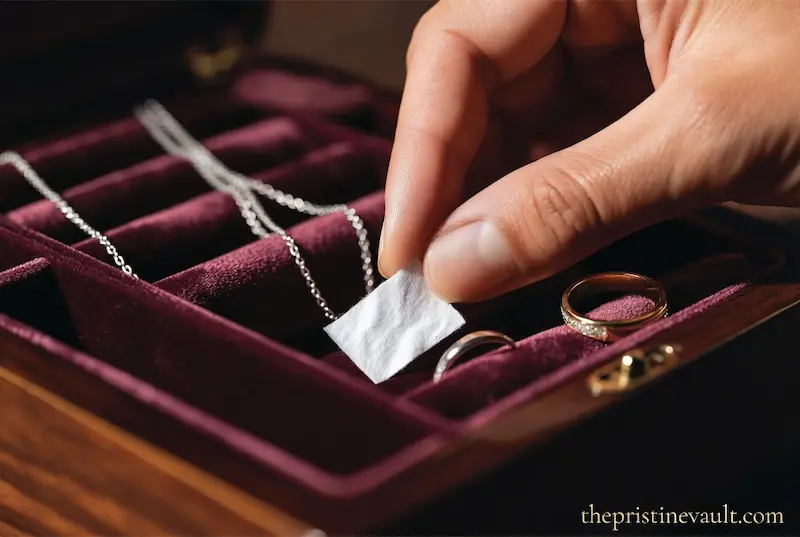
Anti-tarnish strips contain chemicals designed to absorb sulfur. Direct, prolonged contact between strip material and jewelry surfaces can leave residue or marks — especially on silver. Maintain at least half an inch of space between strips and pieces.
Rule 2: Place strips at the bottom of compartments, under jewelry.
Sulfur gases are slightly heavier than air and settle downward. Strips positioned below jewelry intercept gases before they reach metal surfaces. Placing strips on top of jewelry is less effective and risks contact damage.
Rule 3: Use one strip per 30 cubic inches of enclosed space.
A standard jewelry box compartment is approximately 5-10 cubic inches. One strip covers 3-6 compartments. For larger boxes, use multiple strips distributed throughout.
Placement by Storage Type
Standard jewelry box (12-20 compartments): 2-3 strips placed along the bottom, evenly spaced
Jewelry drawer: 1 strip per 6 inches of drawer length, placed along the back edge
Individual jewelry pouches: 1 small tab per pouch (Zerust tabs work perfectly)
Home safe: 2-4 large strips or VCI strips (Daubert Cromwell), positioned on the bottom shelf
👉 Get Rosenthal Anti-Tarnish Tabs on Amazon
For platinum jewelry requiring different storage considerations, our guide on cleaning platinum jewelry at home covers the unique maintenance this metal needs.
Up next: the replacement schedule that maintains continuous protection.
Replacement Schedule by Product Type
Expired strips don't just stop working — they can actually release absorbed sulfur back into the enclosed space, accelerating tarnish on your jewelry.
When to Replace
| Product | Replace Every | Visual Indicator |
|---|---|---|
| 3M Strips | 6-12 months | None (calendar-based) |
| Intercept Tabs | 12+ months | Tab turns dark brown/black |
| Hagerty Strips | 6 months | None (calendar-based) |
| Daubert VCI | 12-24 months | None (calendar-based) |
| Zerust Tabs | 12 months | None (calendar-based) |
| Silverguard | 3-6 months | None (calendar-based) |
Climate Adjustments
Humid climates (Florida, Singapore, Gulf states): Replace 30-40% sooner than listed intervals. Humidity accelerates sulfur gas production and strip saturation.
Dry climates (Arizona, Colorado): Standard intervals are adequate. Lower humidity means slower sulfur accumulation.
Urban environments: Replace 20-30% sooner. Air pollution contains higher sulfur concentrations than rural environments.
The next section covers the mistake most people make at this stage.
7 Quick Tips for Anti-Tarnish Protection (Most Owners Skip These)
Label strips with installation date. Without dates, you'll forget when replacement is due and lose protection unknowingly.
Buy strips in bulk. Bulk pricing reduces annual cost significantly. A 100-pack of 3M strips lasts years for a single jewelry box.
Double up protection in humid environments. Use twice the recommended strip quantity in climates above 60% average humidity.
Keep spare strips in sealed bags. Strips stored in open air absorb ambient sulfur and deplete before you even use them. Keep unused strips in their original sealed packaging.
Replace all strips simultaneously. Mixed old and new strips create uneven protection zones inside your jewelry box.
Use strips even in anti-tarnish lined boxes. Belt and suspenders. Dual protection extends cleaning intervals significantly longer than either method alone.
Position strips away from pearls and opals. These organic gems can react with anti-tarnish chemicals. Keep strips in metal jewelry sections only.
⚠️ Pro Tip: Set a recurring phone reminder for strip replacement dates. The most common failure isn't buying wrong strips — it's forgetting to replace expired ones. A 30-second phone reminder prevents months of unprotected storage.
👉 Get 3M Anti-Tarnish Strips Bulk Pack on Amazon
Mistakes That Undermine Anti-Tarnish Protection
These common errors compromise strip effectiveness:
Placing strips directly on jewelry surfaces. Direct contact between chemical-treated strips and metal can leave marks or residue. Always maintain a small gap between strips and pieces.
Using strips in open jewelry displays. Anti-tarnish strips only work in enclosed spaces where they can maintain a protective atmosphere. Open displays allow constant air exchange that overwhelms any strip's absorption capacity.
Forgetting to replace expired strips. Saturated strips stop absorbing sulfur. In some conditions, they release previously absorbed compounds back into the enclosed space — actually accelerating tarnish rather than preventing it.
Using anti-tarnish strips as a substitute for cleaning. Strips prevent new tarnish from forming. They don't remove existing tarnish. Always clean jewelry before storing with fresh strips.
Storing strips in bathroom jewelry boxes. Humidity extremes in bathrooms overwhelm strip capacity rapidly. Even the best strips fail within weeks in bathroom environments.
Frequently Asked Questions
How many anti-tarnish strips do I need for my jewelry box?
For a standard box with 12-20 compartments, 2-3 strips provide adequate coverage. Place strips evenly throughout the box, not clustered in one section. Larger boxes (30+ compartments) need 4-5 strips. Individual pouches need one small tab each.
Do anti-tarnish strips work for gold jewelry?
Yes. Gold alloys (especially 10K and 14K) contain reactive metals that tarnish from sulfur exposure. Anti-tarnish strips prevent darkening on gold just as effectively as on silver. 24K pure gold doesn't tarnish, but virtually all jewelry uses gold alloys that benefit from strip protection. For tarnish removal when prevention falls short, see our gold tarnish removal guide.
Are anti-tarnish strips safe for all jewelry?
Safe for all metal jewelry — gold, silver, platinum, stainless steel. However, keep strips away from organic gems (pearls, opals, coral) and porous stones (turquoise, lapis lazuli). These materials can react with anti-tarnish chemicals. Position strips in metal jewelry sections only.
How long do anti-tarnish strips last?
Depends on product type and environment. Basic absorption strips last 3-6 months. Premium strips (3M, Intercept) last 6-12 months. Industrial VCI strips (Daubert) last 12-24 months. Humid environments shorten all durations by 30-40%.
Can I make my own anti-tarnish strips?
Some collectors use chalk, activated charcoal, or silica gel as DIY alternatives. These provide minimal protection compared to commercial strips engineered specifically for sulfur absorption. For collections worth more than a few hundred dollars, commercial strips are worth the small investment.
Do anti-tarnish strips smell?
Quality strips are odorless. If strips have a chemical smell, they may be off-gassing compounds that could affect jewelry or sensitive noses. 3M, Intercept, and Hagerty strips are all odor-free in normal use.
Should I use anti-tarnish strips AND anti-tarnish cloth?
Yes — they complement each other. Anti-tarnish strips protect the air environment. Anti-tarnish cloth provides surface-level protection where jewelry contacts the lining. Together, they provide dual-layer protection that extends cleaning intervals significantly.
Conclusion
The best anti-tarnish strips for jewelry boxes provide three essential qualities: reliable sulfur absorption over extended periods, safe chemistry that won't affect jewelry surfaces, and clear replacement indicators or schedules that maintain continuous protection.
3M strips deliver the best overall value through proven performance and bulk pricing. Intercept tabs provide the longest protection with visual depletion indicators. Daubert Cromwell serves collectors needing industrial-grade protection for high-value or archival storage.
Whichever product you choose, consistent replacement on schedule matters more than brand selection. The best strip in the world provides zero protection after it saturates.
A $10-15 annual investment in quality anti-tarnish strips prevents hundreds in cleaning costs and preserves the surfaces of jewelry worth thousands.
👉 Get 3M Anti-Tarnish Strips on Amazon
Now it's your turn — check whether your current jewelry box has active anti-tarnish protection and add or replace strips this week. Your gold and silver collection will thank you for it.