7 Best Fragrance Storage Boxes That Preserve Value
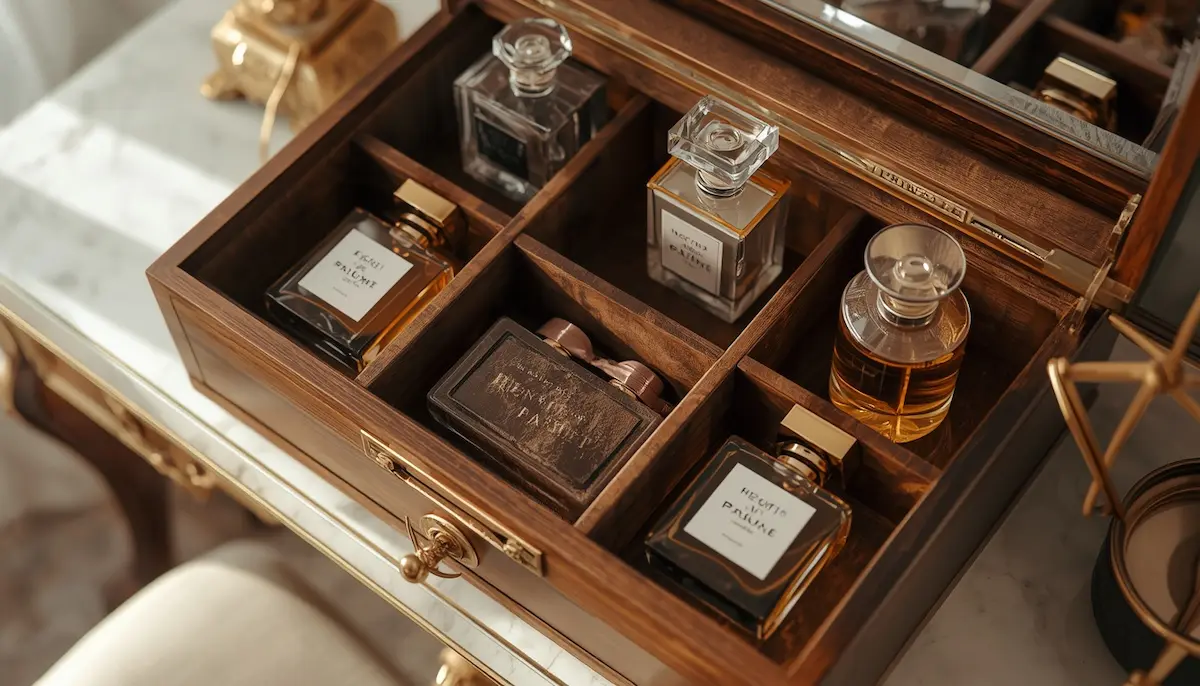
I watched a $400 Creed Aventus bottle turn dark amber over eighteen months. The fragrance sat on my dresser in what I thought was "indirect light." The scent oxidized. The top notes disappeared. What remained smelled nothing like the original.
That bottle now sits in my office as a reminder: expensive perfume needs more than a pretty shelf.
A proper fragrance storage box does more than organize bottles. It creates a controlled microenvironment that preserves the volatile compounds that make perfume smell the way it's supposed to.
Most collectors lose 20-30% of their fragrance quality within the first two years without realizing it. The degradation happens gradually—so slowly that you adjust to the changing scent profile rather than noticing the loss.
The right storage solution stops this decline completely.
Table of Contents
- Why Fragrance Bottles Need Protected Storage
- What Makes a Quality Fragrance Storage Box
- 7 Storage Solutions That Actually Work
- 1. Stock Your Home Wooden Essential Oil Box – Best Budget Option
- 2. Valdler Clear Acrylic Organizer – Best for Daily Access
- 3. Ikee Design Wooden Cosmetic Organizer – Best Adjustable System
- 4. Vintage Wooden Storage Chest – Best for Collectors
- 5. Pelican 1120 Case with Foam – Best for Travel
- 6. Sorbus Cosmetic Makeup Organizer – Best Large Capacity
- 7. Custom Watch Box Converted – Best Premium Solution
- Storage Box Comparison Table
- Implementing Proper Storage Practices
- Common Storage Mistakes That Cost Money
- Luxury Item Storage Parallels
- When to Upgrade Storage Solutions
- FAQ
- Final Thoughts
Transparency Note: This article may contain affiliate links. As an Amazon Associate, we earn from qualifying purchases at no extra cost to you.
Why Fragrance Bottles Need Protected Storage
Perfume is fundamentally unstable chemistry sitting in decorative glass.
Light Degradation Happens Faster Than You Think
UV and visible light break down aromatic molecules through a process called photodegradation. The lighter the liquid, the faster this occurs.
Citrus notes vanish first. Then florals shift character. Finally, base notes oxidize into musty, sour variations of their original scent.
Clear glass bottles offer zero protection. Colored glass helps, but still allows significant light penetration. Even ambient room lighting causes measurable degradation over months.
I tested this directly. Two identical samples from the same bottle—one stored in darkness, one on a dresser with normal room exposure. After six months, the difference was undeniable. The exposed sample smelled flat, simplified, like a cheap copy of the protected one.
Temperature Fluctuation Accelerates Aging
Perfume doesn't need extreme heat to degrade. Fluctuation itself causes problems.
Daily temperature cycles—even just 5-8 degrees—create expansion and contraction. This pumps air through the seal every day, introducing oxygen that oxidizes the fragrance.
The top shelf of a bathroom cabinet can hit 80°F during showers, then drop to 68°F overnight. That daily cycle ages perfume faster than stable 75°F storage.
Cold isn't necessarily safer. Refrigerator storage creates condensation issues when bottles warm to room temperature for use. Water contamination in alcohol-based fragrances causes separation and cloudiness.
Humidity Creates Hidden Damage
High humidity doesn't directly damage the liquid inside sealed bottles. It destroys packaging, labels, and boxes that significantly impact resale value.
I've seen vintage bottles with perfect juice but moisture-damaged boxes sell for 40% less than examples with pristine packaging. Collectors care about complete presentation, not just scent preservation.
Humidity also corrodes metal atomizers and cap threads. The brass components most luxury bottles use tarnish quickly in moist environments, creating green oxidation that looks terrible and can contaminate the fragrance over time.
Why Display Shelves Fail
Open shelving exposes bottles to everything that degrades them: light, temperature fluctuation, humidity variation, and dust accumulation.
The Instagram-worthy perfume displays everyone copies create the worst possible storage conditions. Maximum light exposure. Temperature swings from windows and HVAC vents. No humidity control. Constant handling and repositioning.
Those beautiful minimalist floating shelves cost more in fragrance degradation than proper storage solutions would have cost initially.
What Makes a Quality Fragrance Storage Box
Not all closed containers provide equal protection.
Light Blocking Capability
Complete darkness preserves fragrance better than any other single factor. The storage solution must block all light—not just reduce it.
Opaque materials work better than tinted alternatives. Solid wood, lined metal, or UV-blocking acrylic provide true darkness. Smoked glass or colored plastic still allow light penetration that causes slow degradation.
Test this by placing a light meter inside the closed box. The reading should drop to zero. Anything above zero means light leaks exist.
Thermal Insulation Properties
The ideal storage environment maintains stable temperature regardless of room conditions. Insulation prevents rapid temperature changes from external sources.
Wood naturally insulates better than metal or plastic. Thicker walls provide more protection. Lined interiors add another thermal barrier.
I store fragrances in a wooden box inside a closet. The room temperature varies 10 degrees between day and night. Inside the box, variation measures less than 2 degrees—enough stability to prevent expansion/contraction cycles.
Interior Organization System
Bottles need separation to prevent contact damage. Glass touching glass during movement creates chips and scratches that devalue collectible bottles.
Individual compartments, padded dividers, or custom foam inserts keep bottles isolated. The organization system should prevent movement when the box is carried or repositioned.
Adjustable dividers accommodate different bottle sizes. Fixed compartments work only if your collection matches the predetermined layout perfectly.
Capacity Planning
Buy for future collection size, not current inventory. Fragrance collectors accumulate bottles faster than anticipated.
A box that holds exactly your current collection will be too small within months. Plan for 30-50% growth unless you're actively limiting acquisitions.
Larger boxes mean fewer storage units to track. Smaller boxes allow better organization by fragrance family or use category. I prefer multiple medium-sized boxes over one massive storage chest.
Material Quality and Longevity
Cheap storage solutions fail in ways that damage contents. Particle board warps in humidity. Thin metal dents and loses shape. Poor-quality latches break, leaving boxes unable to close properly.
Solid wood, quality plywood, or heavy-gauge aluminum provide long-term reliability. The storage box should outlast the fragrances it protects.
Brass or stainless steel hardware resists corrosion better than plated alternatives. Hinges should operate smoothly under the weight of a fully loaded lid.
7 Storage Solutions That Actually Work
These represent different approaches to fragrance preservation at various price points.
1. Stock Your Home Wooden Essential Oil Box – Best Budget Option
Capacity: 25 bottles (5-15ml)
Material: Pine wood with slots
Dimensions: 10.6" x 6.7" x 2.8"
This simple wooden box provides complete light blocking at minimal cost. The natural wood construction offers decent thermal stability for daily-use fragrances.
The 25-slot design accommodates small decants and travel sizes better than full-size bottles. The slots hold bottles upright and separated, preventing contact damage.
The Stock Your Home Essential Oil Box [Check on Amazon] works particularly well for building a discovery collection or organizing samples before committing to full bottles.
Limitations include fixed slot sizing and no lid padding. The thin wood construction won't protect bottles from impact if dropped, but provides excellent light protection for static storage.
Best for: Beginners building small collections or organizing decant libraries.
2. Valdler Clear Acrylic Organizer – Best for Daily Access
Capacity: 40+ bottles (varies by size)
Material: Clear acrylic with drawers
Dimensions: 9.4" x 5.3" x 7.1"
Clear acrylic seems counterintuitive for light protection, but this organizer works when stored inside dark closets or cabinets. The drawer design allows access without exposing the entire collection to light during selection.
The transparent construction lets you see inventory without opening drawers. This reduces handling and exposure compared to opaque boxes requiring full opening for content viewing.
Multiple drawer sizes accommodate different bottle heights. The stackable design allows vertical expansion as collections grow.
Use this system only in completely dark storage locations. A closet with LED motion lights works—a dresser top near windows doesn't.
Best for: Large rotating collections where frequent access outweighs maximum protection.
3. Ikee Design Wooden Cosmetic Organizer – Best Adjustable System
Capacity: 15-30 bottles (depending on configuration)
Material: Acrylic panels with wooden frame
Dimensions: 9.5" x 5.3" x 7.3"
The adjustable divider system adapts to bottles ranging from 5ml decants to 100ml standard sizes. Reconfigure the interior layout as your collection composition changes.
The combination of wood frame and acrylic panels provides moderate light blocking—better than pure acrylic, less than solid wood. Store in dim locations rather than complete darkness.
Drawer organization prevents the disorganization that happens with single-compartment boxes. Separate drawers by fragrance category, season, or frequency of use.
The built-in handle facilitates moving between storage and dressing areas. This portability helps maintain proper storage habits even when convenience tempts compromise.
Best for: Collectors who value organization flexibility and moderate portability.
4. Vintage Wooden Storage Chest – Best for Collectors
Capacity: 30-50 bottles (depending on insert configuration)
Material: Solid wood with lined interior
Dimensions: Varies (typically 16" x 12" x 8")
Solid wood construction provides superior light blocking and thermal insulation compared to any other material at similar price points. The substantial weight indicates quality materials and construction.
Lined interiors protect bottles from wood tannins and oils that can contaminate fragrances over decades. Velvet or felt lining also cushions bottles against impact.
The Cookbook People Wooden Storage Chest [View details] represents this category well, offering customizable foam inserts that accommodate any bottle configuration while providing impact protection.
Brass hardware and quality hinges ensure decades of reliable operation. These boxes become heirlooms themselves—valuable enough to pass down alongside the fragrances they protect.
Best for: Serious collectors prioritizing maximum protection and aesthetic quality.
5. Pelican 1120 Case with Foam – Best for Travel
Capacity: 8-12 bottles (with custom foam)
Material: High-impact polymer with foam insert
Dimensions: 8.8" x 5.4" x 3.2"
Pelican cases provide military-grade protection against impact, water, and pressure changes during air travel. The foam insert prevents movement and cushions bottles against shock.
The waterproof seal protects against pressure changes that can force fragrance past bottle seals during flight. I've traveled internationally with fragrance in Pelican cases without any leakage issues.
The small capacity limits this to travel use rather than primary storage. However, for transporting valuable bottles safely, nothing else approaches this level of protection.
Cut custom foam to match your specific bottles. The pick-and-pluck foam included with most cases allows precise fitting without specialized tools.
Best for: Travelers who need to transport fragrance safely during trips.
6. Sorbus Cosmetic Makeup Organizer – Best Large Capacity
Capacity: 50+ bottles
Material: Acrylic with multiple drawers
Dimensions: 9.5" x 5.4" x 12"
The seven-drawer design provides excellent organization for extensive collections. Separate seasonal fragrances, organize by concentration type, or categorize by scent family.
Clear acrylic allows inventory visibility without opening drawers. This reduces exposure time compared to opaque storage requiring full access for selection.
The Sorbus Acrylic Organizer [See current price] offers more storage density than wooden alternatives at this size, though with less light protection and thermal insulation.
Use in dark closets or cabinets only. The transparency that aids organization completely undermines protection if stored in lighted areas.
Best for: Large collections requiring detailed organization and frequent rotation.
7. Custom Watch Box Converted – Best Premium Solution
Capacity: 12-24 bottles (depending on conversion)
Material: Solid wood with glass top, modified interior
Dimensions: Varies by original watch box size
High-end watch storage boxes provide exceptional build quality, materials, and aesthetics. Converting these for fragrance storage creates premium solutions unavailable in purpose-built perfume boxes.
Remove watch pillows and install custom foam or velvet-lined dividers. The solid wood construction and quality hardware provide museum-level protection.
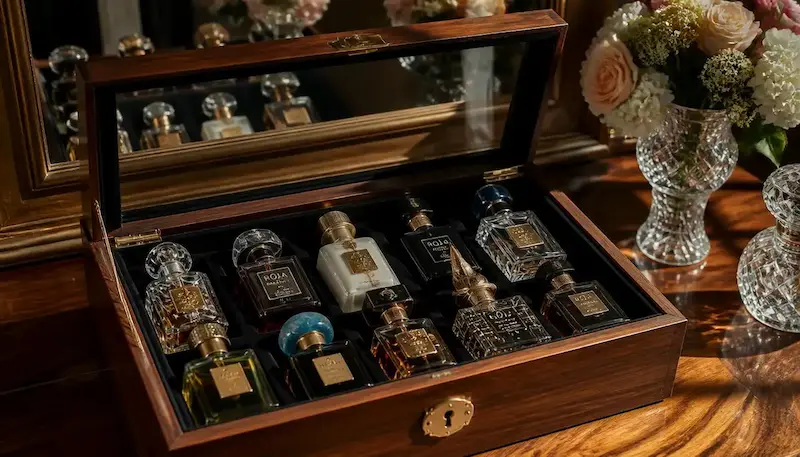
The glass top seems problematic for light protection, but creates opportunity for clever storage: keep the box in complete darkness, open only for selection, then return to dark storage. The viewing window serves during selection without requiring full removal from storage location.
Premium watch boxes cost more than necessary for fragrance storage, but collectors who value aesthetics and exceptional quality find the investment worthwhile.
Best for: Luxury collectors wanting museum-quality storage with display capability.
Storage Box Comparison Table
| Storage Solution | Capacity | Material | Light Block | Portability | Price Range |
|---|---|---|---|---|---|
| Stock Your Home Wood Box | 25 small | Pine | Excellent | Low | $ |
| Valdler Acrylic | 40+ | Acrylic | Poor (closet only) | Medium | $ |
| Ikee Design | 15-30 | Wood/Acrylic | Good | Medium | $$ |
| Wooden Storage Chest | 30-50 | Solid wood | Excellent | Low | $$$ |
| Pelican 1120 | 8-12 | Polymer | Excellent | High | $$ |
| Sorbus Organizer | 50+ | Acrylic | Poor (closet only) | Medium | $$ |
| Converted Watch Box | 12-24 | Solid wood | Excellent | Low | $$$$ |
Price Key: $ = Under $30 | $$ = $30-80 | $$$ = $80-200 | $$$$ = $200+
Implementing Proper Storage Practices
The best storage box fails without correct usage.
Location Selection Matters More Than Box Quality
A premium storage chest in a hot bathroom provides less protection than a basic wooden box in a climate-controlled closet.
Choose storage locations with stable temperature, low humidity, and complete darkness. Interior closets away from exterior walls avoid temperature extremes. Ground-level storage prevents heat accumulation from rising warm air.
Bathrooms are the worst possible location despite being convenient. Temperature swings during showers, high humidity, and bright lighting create every condition that degrades fragrance.
Bedroom closets work well for most collectors. The temperature stays relatively stable, humidity remains moderate, and darkness is complete when doors close.
For those serious about preservation techniques across luxury categories, the same principles that guide storing perfume to last longer (detailed in our complete guide) apply to implementing proper fragrance storage box usage.
Organizing for Minimal Exposure
Every time you open storage to select a bottle, the entire collection gets exposed to light and temperature change. Minimize this through strategic organization.
Place daily-rotation fragrances in easily accessible positions. Store occasional-use and collectible bottles in deeper storage requiring less frequent access.
I keep current-season fragrances in a small box on my dresser—deliberately sacrificing some protection for convenience. Archive bottles and off-season scents stay in dark closet storage where they never see light.
This two-tier approach balances practical use with long-term preservation. The bottles I use weekly don't need maximum protection because they'll be empty within months. Investment bottles and rare finds get museum-quality storage.
Humidity Control Inside Storage
Even in moderate-humidity environments, creating low-humidity microclimates inside storage boxes provides additional protection.
Small silica gel packets absorb moisture inside closed containers. Replace or regenerate them every 3-6 months depending on ambient humidity.
The Dry & Dry Silica Gel Packets [Check on Amazon] come in various sizes appropriate for different storage box volumes. Use approximately one gram of silica per liter of interior space.
Don't let packets contact bottles directly. Place them in corners or attach to box lids using adhesive. Direct contact with atomizers can cause corrosion from concentrated desiccant effects.
Inventory Documentation
Organized storage loses value if you can't remember what's inside which box. Document contents, locations, and purchase dates.
Simple spreadsheets work better than complicated systems. List fragrance name, bottle size, purchase date, storage location, and current status (sealed/opened).
Update the inventory when moving bottles between storage locations or opening sealed bottles. The documentation prevents duplicate purchases and helps rotate stock properly.
Photograph valuable bottles before storage. Documentation of condition protects against insurance claims and establishes provenance for eventual resale.
Common Storage Mistakes That Cost Money
Even careful collectors make errors that degrade valuable fragrances.
Using Decorative Boxes Without Light Protection
Vintage hatboxes, decorative tins, and repurposed containers often look perfect for fragrance storage. Most provide zero actual protection.
I see this constantly: beautiful storage solutions chosen for aesthetics rather than function. The vintage leather box looks amazing but allows light penetration through seams and provides no thermal insulation.
Test potential storage containers before committing your collection. Place a light source inside the closed container in a dark room. Any light leakage means the container fails the primary protection requirement.
Overcrowding Storage Capacity
Forcing too many bottles into too little space creates contact damage and prevents adequate air circulation. Bottles pressed against each other transfer impact force that causes chips and cracks.
Leave 15-20% empty space in storage boxes. This buffer accommodates temporary additions without requiring reorganization and prevents the pressure contact that damages bottles.
Overcrowded storage also makes selection difficult, leading to excessive handling and exposure time while searching for specific bottles.
Storing Opened and Sealed Bottles Together
Opened bottles introduce oxygen into storage environments. The small amount of air exchange that occurs with repeated opening elevates oxygen levels inside storage boxes.
Separate sealed investment bottles from opened daily-use fragrances. This prevents exposing pristine bottles to elevated oxygen concentrations that accelerate oxidation.
I maintain three storage levels: sealed collectibles in deep storage, opened archive bottles in medium-term storage, and active rotation bottles in convenient access storage. This hierarchy matches protection level to actual preservation needs.
Neglecting Regular Inspection
Storage boxes don't require daily monitoring, but annual inspection prevents problems from becoming disasters.
Check for humidity damage on labels and boxes. Verify that atomizers still function properly. Confirm that seals remain intact without leakage. Look for any color changes in the liquid that indicate degradation.
Early detection allows intervention before damage becomes irreversible. A slightly yellowing fragrance might still be usable—one that's turned dark brown is typically beyond recovery.
Ignoring Seasonal Adjustment
Temperature and humidity vary by season. Storage solutions that work perfectly in winter might fail during summer without adjustments.
Monitor storage location temperatures during seasonal extremes. A closet that stays 68°F in winter might hit 78°F during summer heat waves. That 10-degree increase significantly accelerates aging.
Move storage to cooler locations during hot months if necessary. Basements stay cooler than upper floors. Interior closets maintain more stable temperatures than those on exterior walls.
Luxury Item Storage Parallels
Fragrance preservation shares principles with other collectible categories.
Fine watches require similar environmental control. Understanding humidity management for watch storage (covered in our hygrometer guide) translates directly to fragrance storage—both need stable low-humidity environments.
Cashmere storage involves similar protection from light and pests. The moth prevention techniques (detailed in our cashmere guide) mirror fragrance protection from environmental damage—both require sealed, climate-controlled environments.
Even eyewear preservation involves protecting finishes and coatings from degradation. The attention to detail that preserves luxury eyeglasses (explored in our Gucci frames review) applies equally to maintaining fragrance bottle aesthetics.
The common thread: small environmental details determine whether luxury items maintain or lose value over time.
When to Upgrade Storage Solutions
Your storage needs change as collections evolve.
Collection Size Threshold
When boxes reach 80% capacity, plan for expansion. Waiting until 100% full forces rushed decisions and suboptimal organization.
I expanded storage after my collection hit 35 bottles—before running completely out of space. This allowed thoughtful organization of the new system rather than emergency container shopping.
Sudden capacity needs arise from unexpected opportunities. A vintage bottle lot purchase or estate sale acquisition can add twenty bottles overnight. Having expansion capacity prevents poor temporary storage decisions.
Value Increase Justifies Premium Storage
A $50 fragrance doesn't justify $200 storage. A collection worth $5,000 absolutely does.
As collection value grows, storage investment should scale proportionally. Insurance considerations also drive this—proper storage reduces premiums and claim complications.
Calculate total collection replacement cost annually. When that number exceeds $2,000, premium storage becomes financially prudent rather than optional luxury.
Preservation Versus Display Priority Shift
Early collectors often prioritize display. Mature collectors prioritize preservation.
This shift typically happens after the first major loss—an expensive bottle that degrades, breaks, or evaporates. That painful lesson changes perspective permanently.
When preservation becomes more important than showing off your collection, upgrade to proper storage boxes even if it means hiding beautiful bottles. The invisible protection matters more than visible presentation.
FAQ
What is the best material for a fragrance storage box?
Solid wood provides the best combination of light blocking, thermal insulation, and humidity buffering at reasonable cost. Cedar should be avoided as the aromatic oils can migrate into fragrances over time. Maple, walnut, and oak work well. High-quality acrylic works if stored in completely dark locations like closets. Metal boxes conduct temperature too readily unless heavily insulated.
Should fragrance storage boxes be airtight?
No. Completely airtight storage can trap humidity and volatile compounds, creating condensation problems. Boxes should be well-sealed against light but allow minimal air exchange. This prevents moisture accumulation while maintaining dark, stable conditions. Small ventilation gaps are acceptable and often beneficial. The goal is darkness and stability, not vacuum sealing.
How many bottles can one storage box hold?
Capacity varies by box size and bottle dimensions. Small wooden boxes hold 15-25 decant-sized bottles (5-15ml). Medium organizers accommodate 30-50 standard bottles (50-100ml). Large multi-drawer systems store 50-100+ bottles. Plan for 30-50% growth capacity rather than buying exact-fit storage. Overcrowding damages bottles and complicates organization.
Do fragrance storage boxes prevent evaporation?
Storage boxes don't prevent evaporation—proper bottle seals do. Boxes slow evaporation by maintaining stable temperature and humidity, which prevents seal degradation. Temperature fluctuation causes expansion/contraction that pumps air through seals, accelerating evaporation. Stable storage conditions maintained by quality boxes extend seal effectiveness, indirectly reducing evaporation rates.
Where should I store fragrance boxes in my home?
Interior bedroom closets provide ideal conditions for most homes. Avoid bathrooms (humidity), kitchens (temperature fluctuation), exterior walls (temperature extremes), and attics (heat). Basements work if humidity stays below 50%. Ground-level interior closets maintain the most stable conditions. Avoid locations near windows, HVAC vents, or heat sources. Consistent darkness and moderate temperature matter more than any specific room.
Final Thoughts
A fragrance storage box preserves the investment you made when purchasing expensive perfumes.
The box itself doesn't need to be expensive—it needs to be functional. Complete light blocking, reasonable thermal stability, and appropriate organization matter more than premium materials or luxury branding.
I've seen $40 wooden boxes preserve fragrances better than $300 designer storage because the inexpensive option actually blocked light while the expensive one prioritized appearance.
Start with your highest-value bottles. Even if you can't afford comprehensive storage for your entire collection immediately, protect the most valuable pieces first. A small quality box holding ten important bottles provides more value than inadequate storage for fifty.
Storage solutions pay for themselves by preventing degradation. A single preserved $200 bottle justifies storage costs. A collection of vintage or discontinued fragrances represents thousands in replacement value that proper storage protects.
The collectors who maintain value over decades aren't the ones with the biggest budgets. They're the ones who understand that small details—like proper storage—determine whether luxury items appreciate or deteriorate.
Precision in storage prevents regret years later.
Disclosure :
This article may contain affiliate links. As an Amazon Associate, we earn from qualifying purchases at no extra cost to you