8 Best Leather Conditioners for Luxury Handbags Experts Trust
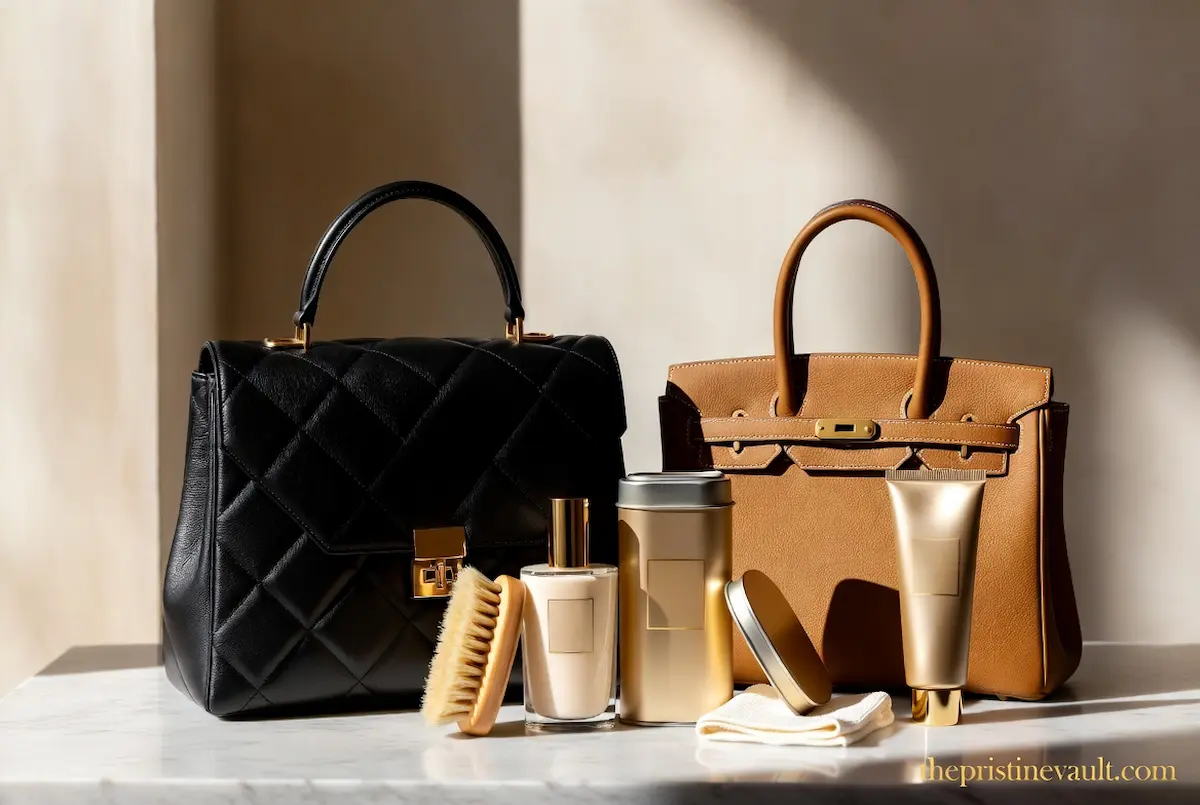
"Choosing the best leather conditioner for luxury handbags means understanding that a product safe for your car seats can permanently darken, stain, or destroy a $5,000 Hermès bag."
Your Chanel Classic Flap felt dry. The lambskin had lost its buttery softness. You grabbed leather conditioner from under the kitchen sink — the same one you use on your car seats — and applied a generous coat.
Twenty-four hours later, the leather had darkened two full shades. The conditioner left an oily residue that attracted dust. And the distinctive quilting pattern now showed uneven dark spots where product pooled in the seams.
A collector brought me her $8,500 Hermès Birkin in Togo leather after using a petroleum-based conditioner she found at a shoe repair shop. The conditioner had been absorbed unevenly, creating permanent tide marks across the front panel. Her bag's resale value dropped roughly $3,000 from a single application of wrong product.
This guide reviews eight leather conditioners specifically safe for luxury handbags. You'll learn which formulations work on which leather types, how to apply conditioner without causing damage, and which products professional restorers actually use behind closed doors.
Table of Contents
- Editor's Picks: Best Leather Conditioners for Luxury Bags
- Why Luxury Leather Needs Specialized Conditioners
- The 8 Best Leather Conditioners Reviewed
- 1. Cadillac Select Leather Lotion — Best Overall
- 2. Leather Honey Leather Conditioner — Best Deep Conditioning
- 3. Chamberlain's Leather Milk No. 6 — Best Natural Formula
- 4. Collonil 1909 Supreme Crème de Luxe — Best European Formula
- 5. Apple Brand Garde Rain & Stain Repellent + Conditioner — Best Dual Purpose
- 6. Saphir Renovateur — Best Premium European
- 7. Bickmore Bick 4 Leather Conditioner — Best Everyday Value
- 8. Fiebing's Aussie Leather Conditioner — Best for Dry Climates
- How to Apply Leather Conditioner Correctly
- How to Read Conditioner Ingredients
- 7 Quick Tips for Conditioning Luxury Handbags (Most Owners Skip These)
- Mistakes That Ruin Luxury Handbags During Conditioning
- Frequently Asked Questions
- Can I use the same conditioner on all my luxury handbags?
- How do I know when my handbag needs conditioning?
- Will leather conditioner darken my light-colored bag?
- How long does leather conditioner last once applied?
- Can I use coconut oil instead of leather conditioner?
- Is expensive conditioner worth it for luxury bags?
- Should I condition the inside of my handbag?
- Conclusion
Here's everything you need to know.
Editor's Picks: Best Leather Conditioners for Luxury Bags
Before we dive in, here are the top-rated conditioners most luxury handbag collectors trust:
- Cadillac Select Leather Lotion — Safe for most luxury leathers, professional-grade, no residue → Check on Amazon
- Leather Honey Leather Conditioner — Deep conditioning, long-lasting, trusted for decades → Check on Amazon
- Apple Leather Care — pH-balanced, all-natural ingredients, gentle on delicate skins → Check on Amazon
(More recommendations throughout the article)
Why Luxury Leather Needs Specialized Conditioners
Generic leather conditioners weren't designed for luxury handbags. Understanding why prevents expensive mistakes.
How Luxury Leather Differs from Regular Leather
Your car seats, work boots, and furniture use heavily processed leather with thick protective coatings. They're designed to tolerate aggressive products.
Luxury handbag leather is different. Hermès Togo, Chanel lambskin, Bottega Veneta nappa — these leathers receive minimal surface treatment to preserve natural texture and softness. They're more porous, more sensitive to chemicals, and more reactive to wrong products.
That porosity means conditioner absorbs deeper and faster. Too much product or wrong formulation saturates the leather rather than nourishing it.
What Conditioner Actually Does
Quality leather conditioner replenishes natural oils that evaporate through use and aging. These oils keep leather fibers flexible and prevent cracking.
Without periodic conditioning, leather fibers stiffen. Stiff fibers break rather than flex. That's how cracks start — not from single events, but from gradual oil depletion over months and years.
However, over-conditioning creates equally serious problems. Excess oils soften leather structure, attract dirt, and create sticky surfaces that collect dust permanently.
For maintaining specific luxury leather types, our detailed guide on Hermès bag care covers brand-specific conditioning requirements.
The next section covers the mistake most people make at this stage.
The 8 Best Leather Conditioners Reviewed
Each product was evaluated for compatibility with luxury leathers, absorption quality, residue levels, and long-term protection.
1. Cadillac Select Leather Lotion — Best Overall
Price: $10-15
Size: 8 oz
Best for: Togo, Clemence, Epsom, calfskin, lambskin
Not for: Suede, nubuck, untreated vachetta
Cadillac has been the go-to among professional handbag restorers for years. The water-based formula absorbs cleanly without leaving oily residue.
The lotion consistency makes controlled application easy. Unlike thick creams that clump in seams, Cadillac spreads evenly across textured and smooth leathers alike.
I've used this on Hermès Togo, Chanel caviar, and Prada Saffiano over several years. Zero darkening on any leather. Zero residue buildup. Consistent results every application.
The only caveat: test on a hidden area first regardless of reputation. Every leather batch varies slightly, and past success doesn't guarantee identical results on your specific piece.
👉 Get Cadillac Select Leather Lotion on Amazon
2. Leather Honey Leather Conditioner — Best Deep Conditioning
Price: $18-25
Size: 8 oz
Best for: Dried leather needing restoration, structured bags
Not for: Very light-colored leather (test first), suede
Leather Honey has been manufactured since 1968. The concentrated formula requires very small amounts — a single bottle lasts years of use on handbags.
Where Leather Honey excels is restoring leather that's already dry and stiff. It penetrates deeper than water-based conditioners, reaching leather fibers that have lost significant moisture content.
That penetrating ability means you must use sparingly. Over-application darkens leather because excess product saturates rather than conditions. Apply thin coats. Wait 24 hours. Assess before applying more.
A collector restored a 15-year-old Coach bag that had sat in storage without conditioning. Two thin applications of Leather Honey over one week brought the leather from stiff and chalky back to flexible and lustrous. The bag looked ten years younger.
3. Chamberlain's Leather Milk No. 6 — Best Natural Formula
Price: $18-28
Size: 6 oz
Best for: Sensitive leathers, lambskin, vegetable-tanned, vachetta
Not for: Patent leather, exotic skins
Chamberlain's uses all-natural ingredients — no petroleum, no silicone, no parabens. For collectors who care about what touches their $10,000 bags, this matters.
The pH-balanced formula specifically avoids ingredients that shift leather chemistry. Some conditioners temporarily improve appearance while slowly degrading leather structure through chemical incompatibility. Chamberlain's avoids this entirely.
The milk consistency absorbs quickly and completely. No buffing required. No residue period. The leather feels conditioned within minutes rather than the 24-hour wait some products require.
Particularly good for Louis Vuitton vachetta leather, which reacts badly to petroleum-based products. For complete vachetta care methods, our Louis Vuitton monogram care guide covers conditioning protocols.
4. Collonil 1909 Supreme Crème de Luxe — Best European Formula
Price: $15-22
Size: 3.38 oz
Best for: European luxury brands, calfskin, smooth leather
Not for: Heavily textured or suede leathers
German-made Collonil is what many European luxury boutiques sell as their recommended care product. Some Hermès and Bottega Veneta stores stock Collonil products specifically.
The crème formula includes natural waxes that leave a subtle protective finish without visible shine or buildup. This wax layer provides mild water resistance — useful for bags exposed to occasional light rain.
For collectors of quiet luxury brands like Bottega Veneta and The Row, this European formulation aligns with the brands' own care recommendations. Our Bottega Veneta vs The Row comparison covers specific care differences between these brands.
👉 Get Collonil 1909 Supreme on Amazon
5. Apple Brand Garde Rain & Stain Repellent + Conditioner — Best Dual Purpose
Price: $8-12
Size: 5.5 oz
Best for: Bags needing both conditioning and weather protection
Not for: Already-saturated leather, patent leather
Apple Brand combines conditioning with light water repellency. For bags that face occasional weather exposure, this two-in-one approach simplifies care routines.
The spray application provides even coverage on textured leathers where cream conditioners can accumulate in crevices.
That said, dedicated conditioners generally outperform dual-purpose products at pure conditioning. Use Apple Brand when convenience and weather protection are priorities. Use dedicated conditioners when deep leather nourishment is the goal.
6. Saphir Renovateur — Best Premium European
Price: $22-35
Size: 2.5 oz
Best for: High-end calfskin, box calf, smooth luxury leathers
Not for: Budget-conscious collectors, heavily grained leathers
Saphir is the gold standard in French luxury leather care. Their Renovateur balm contains mink oil, jojoba, and natural waxes — a formulation that French luxury houses have trusted for generations.
The price per ounce is significantly higher than competitors. However, the small amounts needed per application mean a single jar lasts 12-18 months of regular use on handbags.
The conditioning quality is noticeably superior. Leather feels softer, looks richer, and maintains that conditioned feel longer between applications compared to budget alternatives.
For bags requiring water stain treatment before conditioning, our guide on removing water stains from leather bags covers pre-conditioning stain management.
7. Bickmore Bick 4 Leather Conditioner — Best Everyday Value
Price: $8-12
Size: 8 oz
Best for: Regular maintenance on multiple bags, calfskin, cowhide
Not for: Suede, extremely light-colored leather without testing
Bick 4 offers reliable conditioning at accessible pricing. The formula won't darken leather when used correctly — a claim that holds up consistently across leather types.
This is the conditioner to keep on hand for routine quarterly maintenance across a collection of mid-range to luxury bags. It won't provide the premium conditioning of Saphir, but for regular upkeep, it performs admirably.
8. Fiebing's Aussie Leather Conditioner — Best for Dry Climates
Price: $10-16
Size: 15 oz (large!)
Best for: Leather in arid environments (Arizona, Dubai, etc.), heavy conditioning
Not for: Humid environments (adds unnecessary moisture)
Fiebing's formulation specifically addresses leather dehydration in dry climates. The beeswax and lanolin base provides longer-lasting moisture retention than water-based alternatives.
If you live somewhere with consistently low humidity, your bags lose moisture faster than average. Fiebing's compensates with a richer conditioning formula that maintains leather health between applications longer.
For comprehensive bag storage between conditionings, our guide on storing designer bags long term covers environmental protection that extends conditioning intervals.
But choosing the right product is only half the battle — here's what proper application technique requires.
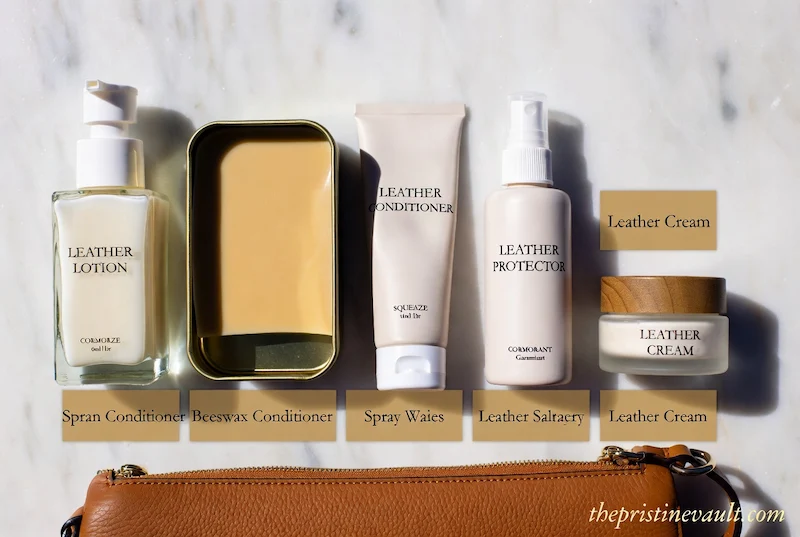
How to Apply Leather Conditioner Correctly
Wrong application technique damages leather even when using the right product.
The Correct Application Process
Step 1: Clean first. Always clean leather before conditioning. Conditioning over dirt seals contaminants into the leather permanently.
Step 2: Test in hidden area. Apply a small amount to an inconspicuous spot — the bottom, inside flap, or a concealed fold. Wait 24 hours. Check for darkening, color change, or residue.
Step 3: Apply thin layers. Less is always more. You can add a second coat. You can't remove excess that's already absorbed.
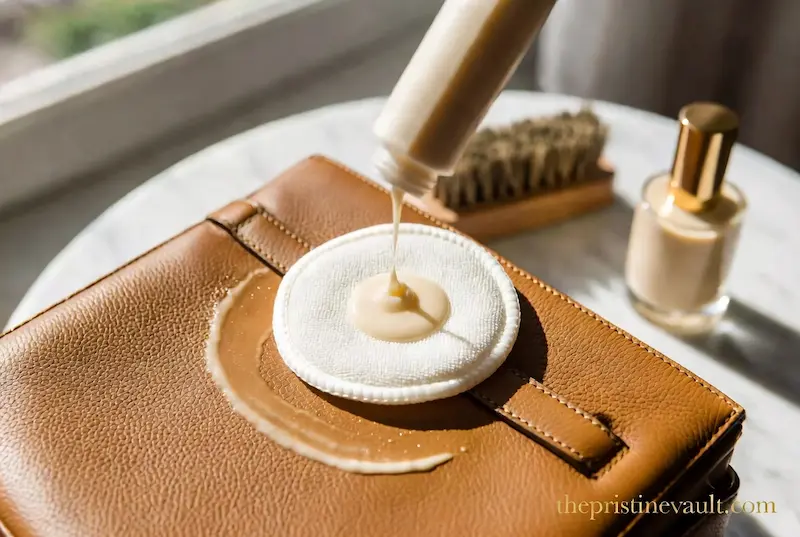
Step 4: Use soft, lint-free cloth. Apply conditioner to the cloth first — never directly onto the bag. This prevents over-application and ensures even distribution.
Step 5: Work in sections. Condition one panel at a time. This ensures even coverage and prevents product from drying before you can spread it.
Step 6: Buff after absorption. After 15-30 minutes (or per product instructions), buff with a clean, dry cloth to remove any surface residue.
Step 7: Allow full drying before use. Most conditioners need 24-48 hours to fully absorb. Using the bag before complete absorption transfers product to clothing.
How Often to Condition
General guideline:
- Daily-use bags: Every 3-4 months
- Occasional-use bags: Every 6-12 months
- Stored bags: Before and after extended storage periods
Climate adjustments:
- Dry climates: Condition more frequently (every 2-3 months)
- Humid climates: Condition less frequently (every 6-8 months)
👉 Get Microfiber Application Cloths on Amazon
Up next: the one ingredient list that reveals conditioner quality instantly.
How to Read Conditioner Ingredients
Not all formulations suit luxury leather. Knowing what to look for prevents expensive mistakes.
Ingredients to Seek
Lanolin: Natural moisturizer from sheep's wool. Conditions without darkening. Safe for most luxury leathers.
Beeswax: Provides light protective barrier. Doesn't clog leather pores when used in proper concentrations.
Jojoba oil: Closest natural match to leather's own oils. Absorbs completely without residue.
Natural waxes (carnauba, candelilla): Create protective finish without synthetic buildup.
Ingredients to Avoid
Silicone: Creates artificial shine that blocks leather pores. Prevents future conditioner absorption. Builds up over repeated applications.
Petroleum/mineral oil: Darkens leather permanently. Breaks down leather structure over time despite initial softening.
Mink oil (in excess): Effective in small amounts (Saphir uses it well) but over-concentration darkens and over-softens leather. Avoid products where mink oil is the primary ingredient.
Neatsfoot oil: Originally excellent for work leather but too heavy for luxury handbag skins. Darkens significantly and attracts dust.
The next section covers the mistake most people make at this stage.
7 Quick Tips for Conditioning Luxury Handbags (Most Owners Skip These)
Always condition after cleaning, never before. Conditioning over dirt traps contaminants permanently inside leather fibers.
Use product designed for leather type, not brand loyalty. A product safe for calfskin may damage lambskin. Match conditioner to your specific leather type.
Test every new product on every new bag. Even products you've used successfully on one bag can react differently on another due to leather batch variations.
Store conditioner bottles upright in cool, dark spaces. Heat and light degrade conditioner formulations, reducing effectiveness and potentially changing chemical composition.
Apply conditioner to cloth, never directly to bag. Direct application risks over-saturating one area while leaving others untreated.
Condition handles more frequently than body panels. Handles receive more hand oil exposure and friction, depleting natural oils faster.
Never condition patent leather. Patent has a synthetic coating that doesn't absorb conditioner. Product sits on the surface, collects dust, and creates sticky buildup.
⚠️ Pro Tip: Keep a conditioning log for each bag. Record the date, product used, and any observations. This tracks how your specific leather responds over time and optimizes your conditioning schedule rather than guessing.
👉 Get Leather Care Log Book on Amazon
Mistakes That Ruin Luxury Handbags During Conditioning
These common errors cause permanent damage:
Using automotive leather products on handbags. Car leather conditioners contain solvents and petroleum products designed for heavily coated automotive leather. These products darken, stain, and degrade the delicate finishes on luxury handbag leathers.
Over-conditioning in an attempt to prevent cracking. More conditioner doesn't mean more protection. Excess product saturates leather, creating soft spots that lose structure, attracting dust and dirt permanently, and potentially causing color bleeding.
Conditioning suede or nubuck leather. These materials have napped (raised fiber) surfaces that conditioner flattens permanently. Suede and nubuck need specialized spray products, not liquid or cream conditioners.
Applying conditioner in direct sunlight or near heat. Heat accelerates absorption unevenly, causing darker spots where product penetrates faster. Always condition in room-temperature shade.
Conditioning coated canvas (Louis Vuitton Monogram, Goyard). Coated canvas is not leather. Conditioner creates sticky buildup on the protective coating rather than nourishing material underneath.
Frequently Asked Questions
Can I use the same conditioner on all my luxury handbags?
Not always. Cadillac Select and Chamberlain's Leather Milk are safe for most smooth leather types. However, exotic leathers (crocodile, python, ostrich) require specialized products. Suede and nubuck need spray protectors, not conditioners. Always match product to leather type.
How do I know when my handbag needs conditioning?
The leather tells you. When it feels dry to the touch, appears dull or ashy, or shows fine surface lines (early cracking signs), conditioning is due. Additionally, if the leather doesn't spring back when gently pressed, it needs moisture replenishment.
Will leather conditioner darken my light-colored bag?
Quality conditioners applied correctly should not darken leather. However, certain products (Leather Honey, mink oil-heavy formulas) can darken light leathers when over-applied. Always test on a hidden area first. For storage care between conditionings, see our designer bag storage guide.
How long does leather conditioner last once applied?
Protection from a single application typically lasts 2-4 months depending on usage frequency, climate, and leather type. Daily-use bags in dry climates need reconditioning every 2-3 months. Occasional-use bags in moderate climates maintain conditioning for 4-6 months.
Can I use coconut oil instead of leather conditioner?
Don't. Coconut oil darkens leather significantly and becomes rancid over time, producing odors and attracting bacteria. It may feel soft initially but damages leather structure long-term. Always use purpose-made leather conditioners.
Is expensive conditioner worth it for luxury bags?
For bags worth $2,000+, yes. Premium conditioners ($15-35) use better-quality ingredients that protect without side effects. Budget products often contain fillers and petroleum that risk damage. The $10-25 price difference protects investments worth thousands.
Should I condition the inside of my handbag?
Generally no. Interior linings (fabric, suede, leather) have different care requirements. Most interior leather doesn't need conditioning unless visibly dry. For fabric linings, conditioning products cause staining. Focus conditioning on exterior leather surfaces.
Conclusion
Selecting the best leather conditioner for luxury handbags requires matching product formulation to your specific leather type, applying with restraint rather than generosity, and maintaining a consistent conditioning schedule.
Cadillac Select Leather Lotion leads for versatility and professional-grade performance across most luxury leathers. Chamberlain's Leather Milk excels for sensitive and untreated leathers. Collonil 1909 provides European-standard care trusted by luxury boutiques.
Whatever product you choose, the application technique matters as much as the product itself. Thin layers, always test first, and never condition over uncleaned leather.
A $10-25 bottle of proper conditioner protects bags worth thousands. The investment justifies itself after a single application.
👉 Get Cadillac Select Leather Lotion on Amazon
Now it's your turn — check every bag in your collection for signs of dryness and condition any that feel stiff or look dull this week. Your luxury handbags will thank you for it.
This post contains affiliate links. We may earn a small commission at no extra cost to you.