How Much to Service a Rolex in 2026?
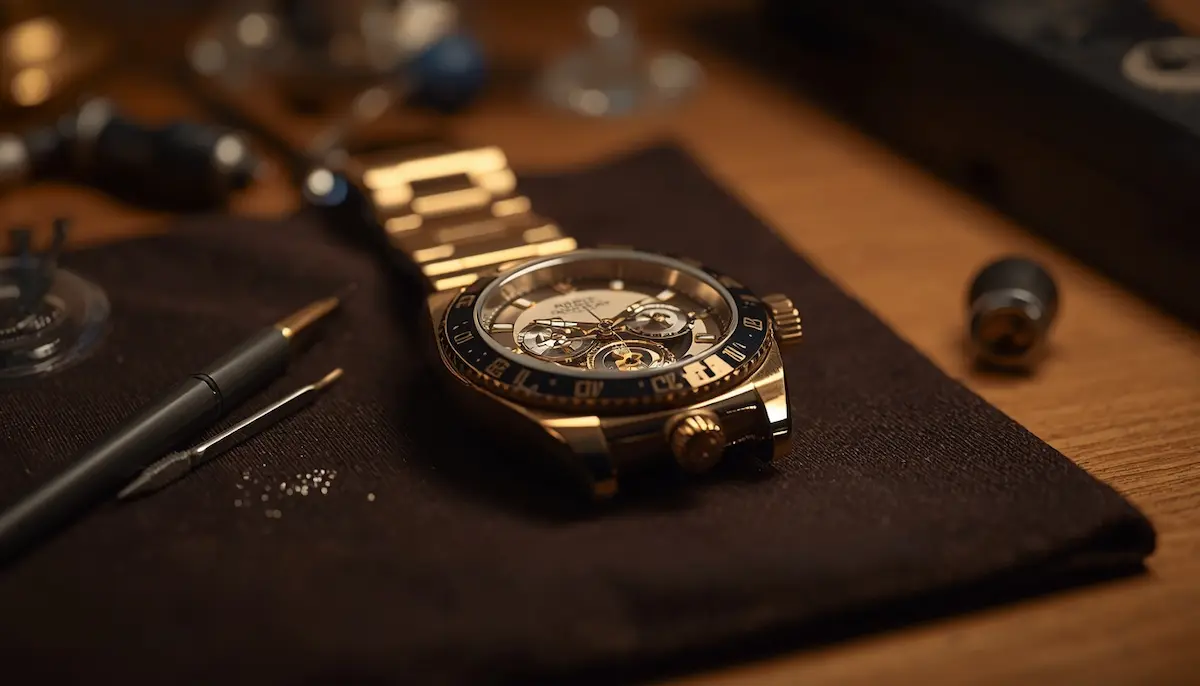
A Rolex that hasn't been serviced in over a decade is not just overdue — it's quietly deteriorating. Here's what that actually costs, and when you can no longer wait.
Not just wear.
Not just admire.
But maintain.
Protect.
And one day, perhaps, pass down.
That expectation still shapes Rolex ownership today.
A Rolex is not simply a luxury purchase. It is a mechanical object designed to outlast trends, seasons, and in many cases, even the original owner.
But there is one part of ownership that surprises many people — especially first-time buyers.
The service bill.
In 2026, Rolex service costs have become more important to understand than ever. Labor costs are higher. Parts are more expensive. And the difference between authorized service and independent repair is now large enough to affect both your wallet and your watch’s long-term value.
If you have been asking how much to service a Rolex, this guide is for you.
Not forum guesses.
Not vague estimates.
But realistic price ranges, honest context, and the key factors that actually determine what you will pay.
The good news is that Rolex service pricing is far less mysterious once you understand what drives it.
Based on current market research, Rolex service center guidance, watchmaker pricing across Tier 1 markets, and collector experience, here is what Rolex owners need to know before sending a watch in for service.
Table of Contents
- Why Rolex Service Costs More Than Most Owners Expect
- How Much Does It Cost to Service a Rolex in 2026?
- Rolex Service Cost by Model
- Authorized Rolex Service Center vs Independent Watchmaker
- What Is Included in a Rolex Service?
- What Increases the Final Rolex Service Bill?
- How Often Should a Rolex Be Serviced?
- Signs Your Rolex Needs Service Now
- How to Reduce Rolex Service Costs Without Cutting Corners
- Should You Polish a Rolex During Service?
- How Long Does Rolex Service Take?
- When It Makes Sense to Service Now vs Wait
- Final Thoughts on Rolex Service Costs
- Frequently Asked Questions
- How much does it cost to service a Rolex watch?
- How much is it to service a Rolex at an authorized service center?
- Is it cheaper to service a Rolex through an independent watchmaker?
- How often should you service a Rolex?
- Why is Rolex service so expensive?
- Is Rolex polishing included in service?
- Can you avoid Rolex service if the watch still runs?
Transparency Note: This article may contain affiliate links. As an Amazon Associate, we earn from qualifying purchases at no extra cost to you.
Why Rolex Service Costs More Than Most Owners Expect
Rolex service is expensive for one simple reason.
You are not paying for a quick cleaning.
You are paying for a complete mechanical restoration process performed on one of the most precise mass-produced luxury watches in the world.
A modern Rolex contains dozens of finely adjusted components working under constant tension. Oils degrade. Gaskets age. Friction slowly accumulates. Water resistance weakens over time. Even when a Rolex still appears to run “fine,” wear may already be building inside the movement.
That is what makes servicing different from ordinary repair.
It is preventative.
It protects the movement before visible damage becomes expensive damage.
For owners who have never looked closely at what makes a luxury watch valuable in the first place, this breakdown of the key design and engineering elements explains why high-end mechanical watches cost so much to maintain well:
→ Anatomy of a Luxury Watch: 8 Features That Make It Worth Every Dollar
A Rolex service bill often feels high in the moment.
A movement replacement, moisture damage, or badly handled repair usually feels much worse.
How Much Does It Cost to Service a Rolex in 2026?
Here is the short answer.
In 2026, servicing a Rolex typically costs between $800 and $1,500 for most modern automatic models in Tier 1 markets.
For more complex, precious-metal, or vintage Rolex watches, the cost often rises to $1,500 to $4,000 or more, especially when replacement parts are required.
That is the range most owners should realistically expect.
Not $200.
Not “just a quick tune-up.”
A proper Rolex service is a serious maintenance event.
General Rolex service cost ranges in 2026
- Simple modern Rolex models: $800–$1,100
- Popular sports models: $900–$1,300
- Chronographs and complex models: $1,200–$2,000+
- Vintage Rolex with parts needed: $1,500–$4,000+
- Case, bracelet, bezel, crystal, crown, or dial replacement: additional cost
These are not universal flat fees.
Rolex service pricing depends on:
- model
- age
- condition
- parts availability
- whether you choose Rolex or an independent watchmaker
- whether exterior components need replacement
That last point matters more than many owners realize.
A routine movement service is one thing.
A routine service plus crown tube, crystal, worn bracelet links, moisture damage, and refinishing is something else entirely.
Rolex Service Cost by Model
Not every Rolex costs the same to service.
A time-only Oyster Perpetual is usually more straightforward than a Daytona. A modern Submariner is usually easier to service than a vintage GMT-Master with discontinued parts.
Here is a practical estimate range for common Rolex categories in 2026.
Oyster Perpetual, Air-King, Explorer
Typical service cost: $800–$1,100
These are among the simpler Rolex models mechanically. If the watch is modern and in decent condition, service tends to stay at the lower end of the Rolex pricing spectrum.
Datejust, Oyster Perpetual Date, Milgauss
Typical service cost: $850–$1,200
A Datejust is one of the most commonly serviced Rolex watches in the world. Costs are usually manageable unless the watch has significant cosmetic damage or overdue maintenance.
If you own a Datejust and rotate it with other watches, proper winding habits matter more than most people think:
→ Best Watch Winder for Rolex Datejust
Submariner, GMT-Master II, Yacht-Master, Sea-Dweller
Typical service cost: $900–$1,300
These popular sports models often see harder use, more travel, and more water exposure. That can increase the chance of gasket, crown, or pressure-resistance work.
Day-Date, Sky-Dweller, precious-metal Rolex
Typical service cost: $1,200–$2,500+
Precious metal alone does not always make movement service dramatically more expensive, but these watches often come with higher handling standards, more expensive replacement components, and more valuable cosmetic surfaces.
Daytona
Typical service cost: $1,200–$2,000+
Chronographs are more complex.
That complexity almost always shows up in the invoice.
Vintage Rolex
Typical service cost: $1,500–$4,000+
Vintage Rolex ownership follows a different logic entirely.
The issue is not only labour.
It is originality.
One incorrect hand set, replacement dial, over-polished case, or mismatched crown can affect collector value far beyond the service bill itself.
This is why vintage Rolex owners should be especially cautious about where service is performed.
Authorized Rolex Service Center vs Independent Watchmaker
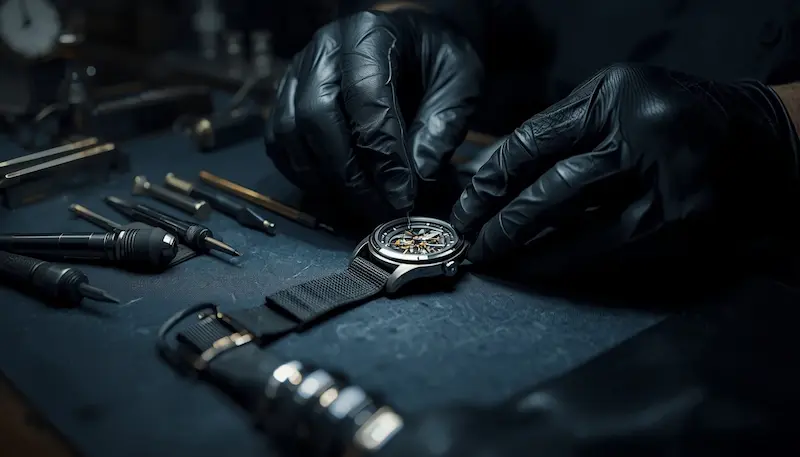
This is where the real pricing fork begins.
Authorized Rolex Service Center
Typical cost: higher
Benefits:
- genuine Rolex procedures
- access to official parts
- pressure testing and quality control
- service documentation
- strong trust factor for resale
- often includes a Rolex service guarantee
For modern Rolex models, this is usually the safest route if budget allows.
It is also the path most aligned with preserving long-term ownership confidence.
Independent Rolex-Specialist Watchmaker
Typical cost: $500–$1,000+ for simpler service, but varies widely
Benefits:
- often lower labour cost
- sometimes faster turnaround
- more flexibility with vintage preservation requests
- can be excellent if highly reputable
Risks:
- quality varies enormously
- limited parts access
- polishing standards may differ
- poor work can damage water resistance and resale confidence
For vintage Rolex, an independent specialist may actually be the better choice — but only if they truly understand collector standards.
For modern Rolex, official service is often the cleaner long-term decision.
Lower cost is not always lower cost if the result compromises value.
What Is Included in a Rolex Service?
Many owners ask why the cost is so high.
The answer becomes clearer once you see what a full service usually includes.
A complete Rolex service generally involves:
- full disassembly of the movement
- ultrasonic cleaning of movement components
- inspection of worn internal parts
- replacement of necessary internal service parts
- fresh lubrication and reassembly
- timing and regulation
- case and bracelet cleaning
- gasket replacement
- water-resistance testing
- final quality checks over multiple days
In many cases, light refinishing of the case and bracelet is offered as part of the service process, though policies vary.
What is not always included at no extra charge:
- crystal replacement
- dial replacement
- hand replacement
- crown replacement
- bezel insert replacement
- major bracelet restoration
- vintage cosmetic preservation requests
That is why a quoted service range is only the beginning.
The final estimate often depends on what inspection reveals once the watch is opened.
What Increases the Final Rolex Service Bill?
This is the section many owners wish they had read earlier.
Because the base service cost is rarely the whole story.
1. Moisture damage
If water has entered the case, service becomes far more expensive very quickly.
Rust does not negotiate.
2. Broken or worn components
A damaged crown, rotor axle, mainspring barrel, or gear train part can push the invoice far above the standard range.
3. Crystal or crown replacement
These are common extra charges, especially on watches worn heavily or serviced late.
4. Bracelet stretch or case damage
Exterior wear is often more expensive to correct than owners expect.
5. Vintage parts scarcity
The older the Rolex, the more careful and expensive correct service tends to become.
6. Poor prior repair work
A badly serviced Rolex often costs more to fix than a never-serviced one.
That is one of the harshest truths in watch ownership.
Cheap work has a long afterlife.
How Often Should a Rolex Be Serviced?
For many modern Rolex watches, a practical guideline is every 7 to 10 years.
Some owners service closer to 7 years for peace of mind.
Others follow Rolex’s modern long-interval philosophy and wait closer to 10 years if the watch is performing well.
Both approaches can be reasonable.
What matters is condition, not superstition.
A Rolex that keeps accurate time, has no moisture issues, winds smoothly, and passes water-resistance expectations may not need early intervention.
A Rolex showing warning signs should not be ignored simply because a calendar says “not yet.”
If your Rolex is part of a rotation and you use a watch winder, correct settings matter. Too much unnecessary run time is not ideal. Too little can be inconvenient. The right balance is model-specific:
→ Watch Winder Settings for Rolex: 5 Proven Steps to Get It Right
For owners who prefer not to use a winder, proper resting and storage practices are often more than sufficient:
→ How to Store an Automatic Watch Without a Winder: 5 Safe Methods
Routine care does not replace service.
But it often delays expensive problems.
A simple ultra-soft microfiber cloth is one of those small tools that helps remove oils, sweat, and dust after wear without adding unnecessary abrasion:
Signs Your Rolex Needs Service Now
Service timing is not just about years.
It is about symptoms.
Watch owners should pay attention when they notice:
- reduced power reserve
- sudden loss or gain in accuracy
- moisture or fogging under the crystal
- stiff or gritty crown action
- noisy rotor movement
- date changing improperly
- weak winding feel
- water resistance concerns after years of use
One symptom matters more than people think:
Moisture.
If you ever see condensation inside a Rolex crystal, stop wearing the watch and have it inspected immediately.
Waiting is where modest service bills become painful ones.
How to Reduce Rolex Service Costs Without Cutting Corners
There are smart ways to spend less over the long run.
They are just not dramatic.
Wipe the watch after wear
Salt, sweat, lotion, and dust accumulate faster than many owners realize.
A gentle wipe after wearing the watch is one of the simplest long-term habits.
Keep it away from impact and rough travel storage
Many service costs start with avoidable knocks, crushed crowns, and bracelet scratches during travel.
A structured single-watch travel case protects far better than tossing a Rolex into a toiletry bag or hotel drawer:
For owners who travel with multiple watches, this guide covers the leather watch rolls collectors tend to trust most:
→ 7 Best Leather Watch Rolls for Travel That Collectors Trust
Store in a stable, dry environment
Humidity and neglect are a bad combination for mechanical watches.
Many collectors quietly keep reusable silica packs in drawers or safes to reduce moisture buildup around long-term storage pieces:
A small digital hygrometer can also help monitor whether your watch drawer or safe is running too damp over time:
Do not force the crown
Cross-threading, rough handling, and over-tightening create repair bills that patience would have prevented.
Service before obvious failure
Preventative service is usually cheaper than damage recovery.
This is true with watches.
It is true with cars.
It is true with almost every mechanical object people hope to keep for decades.
Should You Polish a Rolex During Service?
This is one of the most personal decisions in Rolex ownership.
And one of the most misunderstood.
For many modern Rolex owners, light professional refinishing during service is perfectly reasonable. It restores visual freshness and is often done to a high standard when handled correctly.
For vintage Rolex owners, the answer can be very different.
Collectors usually value original case geometry, sharp bevels, and honest wear more than over-restored surfaces.
A heavily polished vintage Rolex may look smoother.
It may also become less desirable.
The right question is not:
“Do I want it to look new?”
The better question is:
“What type of Rolex do I own, and what kind of value am I trying to preserve?”
For modern daily-wear watches, tasteful refinishing can make sense.
For vintage collector pieces, restraint is often the wiser luxury.
How Long Does Rolex Service Take?
In 2026, a typical Rolex service often takes 4 to 12 weeks.
Sometimes longer.
That depends on:
- service center workload
- shipping logistics
- parts availability
- vintage complexity
- whether approval is needed for additional work
Modern owners often underestimate the patience required.
Rolex service is not fast fashion maintenance.
It is closer to restoration.
The watch is opened, assessed, serviced, tested, and observed over time before release.
A rushed luxury watch service is rarely a reassuring one.
When It Makes Sense to Service Now vs Wait
Service now if:
- your Rolex shows moisture
- accuracy has changed noticeably
- power reserve has dropped
- winding feels rough
- the watch has not been serviced in many years and is worn often
- you plan to rely on it for water use or travel
Wait a little longer if:
- the watch is performing strongly
- it has no symptoms
- it is stored correctly
- prior service was relatively recent
- a trusted watchmaker has confirmed no urgent issue
Not every Rolex needs immediate servicing the moment someone on a forum says it does.
But not every “still running fine” Rolex is healthy either.
The smartest owners avoid both extremes.
Not neglect.
Not paranoia.
Just informed maintenance.
Final Thoughts on Rolex Service Costs
A Rolex service is expensive.
There is no elegant way around that fact.
But the cost becomes easier to accept when you understand what it protects.
A Rolex is not only a luxury object.
It is a precision mechanical system designed for long ownership.
That kind of ownership has a maintenance cost.
In 2026, most modern Rolex owners should expect to pay somewhere between $800 and $1,500 for a proper service, with more complex or vintage watches often climbing much higher.
That number can feel uncomfortable.
But deferred maintenance, moisture damage, poor repair work, and avoidable wear usually cost more.
The owners who get the best value from Rolex are rarely the ones who spend the least.
They are the ones who understand where careful spending matters.
Proper servicing.
Careful storage.
Safe travel protection.
Thoughtful daily handling.
These are not glamorous habits.
But they are the habits that keep a Rolex beautiful, trustworthy, and mechanically healthy for decades.
And in the long run, that is almost always cheaper than trying to undo years of neglect.
Frequently Asked Questions
How much does it cost to service a Rolex watch?
In 2026, most modern Rolex watches cost $800 to $1,500 to service in Tier 1 markets. More complex, precious-metal, or vintage models can cost $1,500 to $4,000+ depending on required parts.
How much is it to service a Rolex at an authorized service center?
Authorized Rolex service is usually more expensive than independent repair, but it often provides official procedures, genuine parts access, stronger resale confidence, and a service guarantee.
Is it cheaper to service a Rolex through an independent watchmaker?
Often yes. Some independent specialists charge less than Rolex service centers. But quality varies widely, and poor workmanship can create bigger costs later.
How often should you service a Rolex?
A practical guideline for many modern Rolex models is every 7 to 10 years, or sooner if the watch shows signs of moisture, timing issues, reduced power reserve, or crown problems.
Why is Rolex service so expensive?
Because it involves full movement disassembly, cleaning, lubrication, part inspection, regulation, gasket replacement, water-resistance testing, and detailed quality control. Extra parts increase the bill further.
Is Rolex polishing included in service?
Sometimes light refinishing is included or offered, depending on the service provider. Many modern owners choose it. Vintage collectors are often more cautious because polishing can reduce originality.
Can you avoid Rolex service if the watch still runs?
Sometimes for a while, yes. But visible operation is not the same as healthy internal condition. A Rolex can keep running while oils degrade and wear increases inside the movement.