How to Clean Pearl Jewelry Without Damaging It
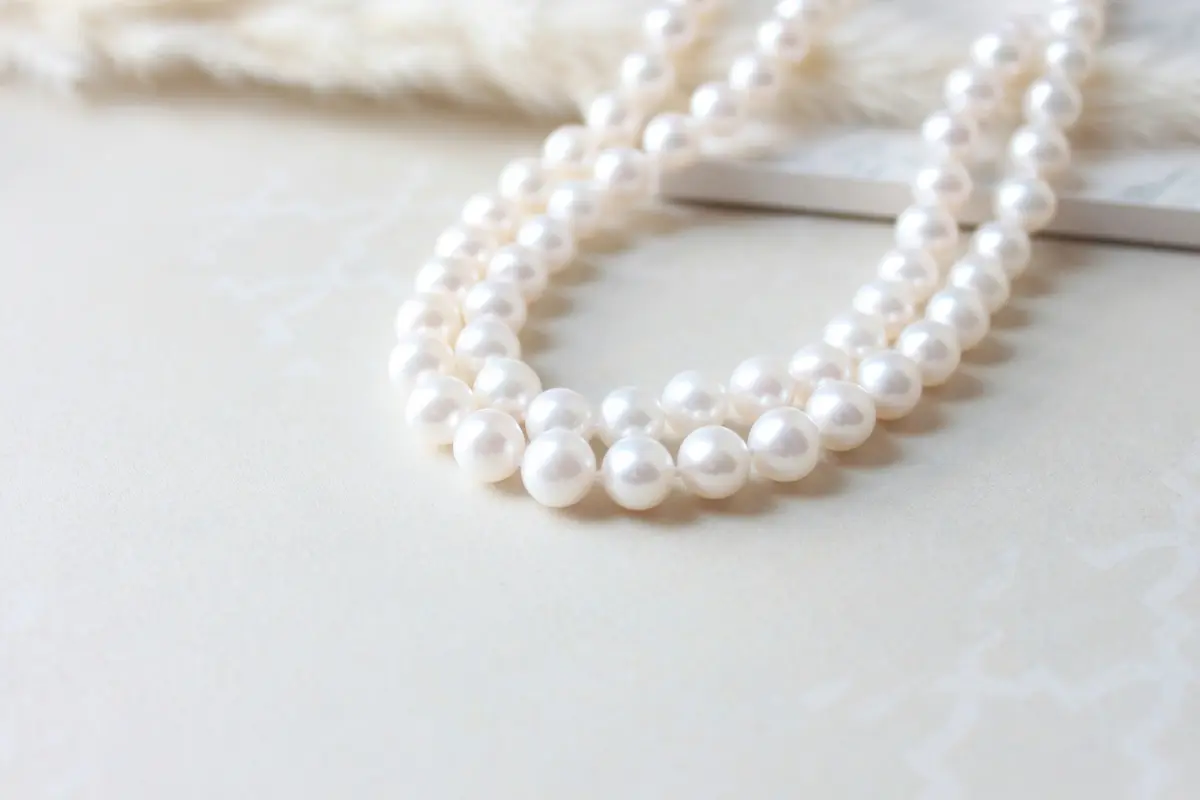
Knowing how to clean pearl jewelry correctly starts with one fact: pearls are not gemstones. That single distinction changes everything.
Here's what most people don't realize when they inherit their grandmother's pearl necklace or purchase their first strand: pearls are not stones.
They're not minerals. They're organic — built layer by microscopic layer inside a living creature — and they respond to their environment the same way any organic material does.
This matters more than you might think.
Nearly all the jewelry cleaning advice you'll find online is written for hard, inorganic gemstones like diamonds, sapphires, or even cubic zirconia.
Apply those same methods to pearls and you won't just fail to clean them. You'll damage them. Permanently.
The gentle soap-and-water technique that safely cleans your gold rings? Too aggressive for pearls.
The ultrasonic cleaner that makes your diamond studs sparkle? It will shatter the nacre on your pearl earrings in a single cleaning cycle.
Even the soft polishing cloth that restores luster to tarnished silver can scratch pearl surfaces beyond repair.
Table of Contents
- Why Pearls Require a Completely Different Approach
- What You Should Never Do to Pearl Jewelry
- The Correct Method: Wipe After Every Wear
- Pearl Necklace Restringing: The Maintenance You Cannot Skip
- Proper Storage for Pearl Jewelry
- Frequently Asked Questions
- Essential Products for Pearl Jewelry Care
- Related Resources
- Final Thoughts
Why Pearls Require a Completely Different Approach
A pearl's surface — the nacre — is composed of thousands of microscopic aragonite crystals bound together by an organic protein called conchiolin.
This alternating layered structure is what gives pearls their characteristic luster and that subtle iridescent quality that makes them so distinctive.
It's also what makes them extraordinarily vulnerable to damage that wouldn't affect other gemstones at all.
Nacre dissolves in acid. Not strong industrial acid — the weak acids naturally present in human perspiration, perfume, and even some tap water can etch the surface over time. It scratches from contact with materials that wouldn't leave a mark on harder stones.
It absorbs chemicals from cleaning products, cosmetics, and lotions like a sponge. And perhaps most surprisingly, it actually dries out and cracks when deprived of moisture for extended periods.
The enemies of pearl nacre are straightforward: acids, abrasives, chemicals, heat, ultrasonic vibration, and prolonged dryness.
A proper pearl care protocol is essentially a systematic way to avoid all of these. Which is simpler than it sounds, once you understand what you're protecting against.
What You Should Never Do to Pearl Jewelry
Before we get to the correct method, let's address the approaches that cause irreversible damage.
Many of these are standard practice for other jewelry types — which is precisely why they ruin pearls so consistently and why the damage often comes as a complete surprise.
Never Submerge Pearls in Water
I know this contradicts almost everything you've read about cleaning jewelry. But water weakens the silk thread used in strung necklaces and bracelets far faster than most people realize.
The damage isn't visible immediately — the thread looks fine, feels fine, seems totally normal. But repeated submersion causes the silk to stretch, lose its structural integrity, and eventually break, sometimes years sooner than it would have otherwise.
Water can also seep into the drill holes where pearls are strung. Once inside, it causes deterioration that you can't see from the outside.
By the time the damage becomes visible, it's extensive.
Never Use Ultrasonic Cleaners
Let me be direct about this: if you've ever dropped pearl earrings into an ultrasonic cleaner because "it's just jewelry," you've almost certainly damaged them.
The vibrations produced by ultrasonic cleaning equipment shatter nacre at a microscopic level.
You won't see cracks immediately. The pearls will look fine when you take them out.
But the damage is there — microscopic fractures in the crystalline structure that will, over time, cause the nacre to delaminate, lose its luster, and eventually flake away.
Even a single ultrasonic cleaning cycle causes damage that accumulates. This isn't a matter of using ultrasonic cleaning "carefully" or for shorter durations. The method itself is fundamentally incompatible with organic gem materials.
Never Use Steam Cleaners
Heat and moisture together are devastating to pearls. Steam cleaning causes the layers of nacre to separate at the microscopic level, resulting in permanent clouding and structural weakness that cannot be reversed by any method.
Never Apply Cosmetics While Wearing Pearls
The traditional advice — "pearls should be the last thing you put on and the first thing you take off" — exists for a good reason.
Perfume, hairspray, lotion, makeup, and sunscreen all contain chemicals that etch nacre surfaces. The damage is cumulative and subtle. You won't notice it after one application. Or ten. But over months and years, those chemicals will dull the luster of your pearls in ways that no amount of cleaning can restore.
If you must choose between wearing pearls without perfume or perfume without pearls, choose the latter. The alternative is expensive regret.
Never Use Any Chemical Cleaning Agent
This includes the mild dish soap solutions I recommend for cleaning gold and other metals in our main jewelry care guide. Even gentle, pH-balanced formulas contain surfactants and additives that interact chemically with nacre in ways that cause long-term damage.
The rule here is unambiguous: if a cleaning product is safe for other types of jewelry, assume it is not safe for pearls unless the product specifically states otherwise on the label.
The Correct Method: Wipe After Every Wear
Now here's something that surprises most people about pearl care: there's no deep cleaning. There's no monthly maintenance ritual. There's no special procedure you perform periodically to "restore" your pearls.
The entire care protocol consists of one simple action performed consistently after every single wear.
What You Need
- A soft, clean cloth — untreated, unscented, lint-free
- Microfiber works perfectly. Pure cotton works equally well.
- That's it. Nothing else.
Routine Care After Every Wear
When you take off your pearl jewelry — whether it's a necklace you wore for six hours or earrings you wore for twenty minutes — lay the piece flat on a clean surface.
Using your soft cloth, gently wipe each pearl individually. Not all at once in a quick swipe — each pearl gets individual attention.
This removes perspiration, skin oils, and any surface residue before those substances have time to interact chemically with the nacre.
Pay particular attention to the pearls that were in direct contact with skin. On a necklace, that means the pearls closest to your neck. On earrings, it means the backs that rest against your earlobes.
That is the entirety of routine pearl care. No water. No soap. No solutions of any kind. Just a soft cloth and thirty seconds of gentle wiping.
If you do this consistently — and I mean after every single wear, without exception — your pearls will maintain their luster for decades. Skip it regularly, and you'll see noticeable dulling within a few years regardless of how carefully you store them.
Deep Cleaning — When Absolutely Necessary
For pearls that have accumulated visible residue — maybe they were stored improperly before you acquired them, or they haven't been worn in years, or someone wore them extensively without wiping them — a slightly more intensive approach may be needed.
Even in these cases, "intensive" is relative.
Dampen a soft cloth very slightly with plain, room-temperature water. The cloth should be barely moist — not wet, not dripping, just the slightest amount of dampness.
Wipe each pearl gently and individually. Don't rub. Don't apply pressure beyond what's needed to make contact with the surface.
You're removing accumulated oils and residue, not polishing anything.
Allow the pearls to air dry completely — lying flat, at room temperature, with good air circulation — before storing them. Never apply heat to speed the drying process. Don't use a hairdryer.
Don't place them near a radiator or in direct sunlight. Just let them sit at ambient temperature until they're completely dry.
This deeper cleaning should be infrequent. If you're wiping your pearls after every wear as described above, you should rarely need to use water at all.
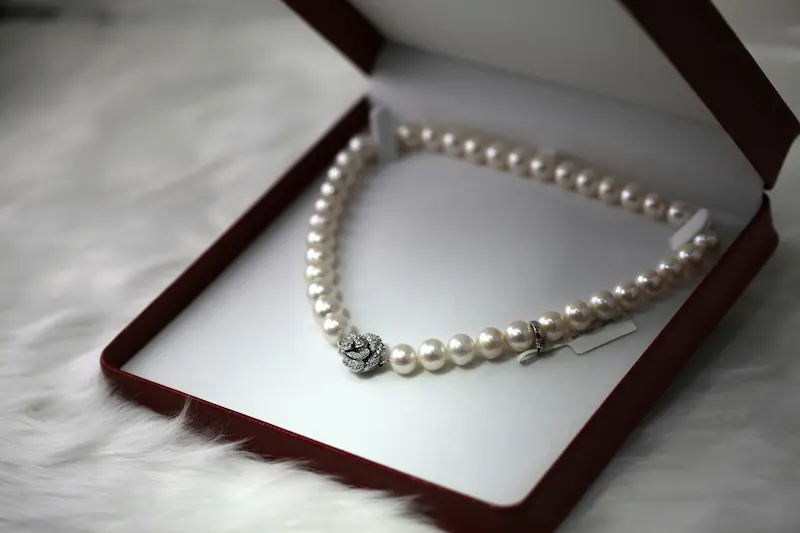
Pearl Necklace Restringing: The Maintenance You Cannot Skip
Here's something that catches people off guard: strung pearl necklaces and bracelets require periodic restringing regardless of how carefully you clean them or how infrequently you wear them.
The silk thread used between pearls — and it should always be silk, never synthetic — absorbs microscopic amounts of moisture and body oils every time you wear the piece. Over time, this causes the thread to weaken, stretch, and eventually discolor. This happens even when you never submerge the piece in water and wipe it religiously after every wear.
When to Restring
A strand you wear regularly — let's say two to three times per week — should be restrung every twelve to eighteen months by a qualified jeweler experienced in pearl work.
If you wear it daily, consider restringing every eight to twelve months.
If you only wear it a few times per year, you can extend that to every two to three years. But don't push it beyond that regardless of how good the thread looks.
Signs that restringing is overdue:
- Visible slack between pearls when you hold the strand taut
- Any discoloration of the thread visible between the pearls
- Knots that have moved away from the pearls they're supposed to secure
- Any fraying or visible wear on the thread between pearls
If you see any of these, schedule restringing immediately. Waiting risks the thread breaking while you're wearing the piece — potentially losing pearls in the process.
Why Knotting Between Pearls Matters
Traditional pearl stringing places an individual knot between each pearl. This serves two critical purposes.
First, it prevents the pearls from rubbing against each other during normal wear. Every time you move, pearls on an unknotted strand click together, creating microscopic scratches in the nacre. Over years, this dulls the luster noticeably.
Second, knotting limits your loss if the strand breaks. Only one pearl can slip off before it hits the next knot. On an unknotted strand, every pearl slides off the moment the thread snaps.
When you have pearls restrung, make absolutely certain the jeweler uses silk thread and ties individual knots between each pearl. Some jewelers offer cheaper stringing that eliminates the knots as a cost-saving measure. Decline this. The money you save isn't worth the accelerated damage and increased loss risk.
Proper Storage for Pearl Jewelry
Storage practices have as much impact on pearl longevity as cleaning methods. I've seen estate pearls that were never worn but stored improperly for twenty years emerge more damaged than pearls worn weekly for the same period.
Store Pearls Flat and Separately
Always store pearl necklaces and bracelets lying flat. Never hang them. Hanging pearl strands causes the thread to stretch over time from the weight of the pearls themselves, creating visible gaps between beads and drastically increasing how often you need restringing.
Store pearls separately from other jewelry. The nacre surface is softer than almost every other material used in fine jewelry. Contact with metal clasps, harder gemstones, or even other pearl pieces will leave scratches that cannot be polished away.
A soft cloth pouch works well for individual pieces. A fabric-lined jewelry box with separate compartments works even better.
Never Use Airtight Containers
This surprises people, but it's critical: do not store pearls in airtight containers, sealed plastic bags, or bank safety deposit boxes for extended periods.
Pearls need a small amount of ambient humidity to prevent the nacre from drying out and developing fine cracks. The ideal storage environment for pearls is essentially the same environment that's comfortable for humans — moderate humidity, stable room temperature, protection from direct sunlight.
This is why estate pearls stored in bank vaults for decades often emerge with visible damage despite never being worn. The sealed, climate-controlled environment that protects paper documents actually harms organic gemstones. The isolation itself caused the deterioration.
Wear or Handle Pearls Periodically
Pearls you don't wear regularly should still be taken out periodically, handled gently, and wiped with a soft cloth.
Contrary to what most "experts" will tell you, I actually recommend wearing valuable pearls regularly rather than saving them exclusively for special occasions. Pearls locked away in vaults suffer more damage from dehydration than pearls worn weekly suffer from skin contact — assuming, of course, that you're wiping them properly after each wear.
The slight moisture from normal skin contact actually helps keep nacre hydrated. It's one of the few cases where regular use genuinely does preserve jewelry better than careful storage.
Frequently Asked Questions
Can I wear my pearl necklace every day?
Yes, with appropriate care. And honestly, I encourage it.
Regular wear actually benefits pearls rather than harming them. That slight moisture from skin contact keeps the nacre hydrated and prevents the drying that occurs during prolonged storage. Some of the best-preserved antique pearls I've seen were worn regularly for decades by their original owners.
The critical practice is wiping the pearls with a soft cloth after every single wear to remove perspiration and oils before they can damage the nacre. Make that non-negotiable and you can wear pearls as often as you like.
How do I know if my pearls are real?
The tooth test remains the most reliable at-home method. Gently rub a pearl against the edge of your front teeth — not hard enough to damage anything, just enough to feel the surface texture.
Natural and cultured pearls feel slightly gritty, almost sandy, due to the microscopic texture of the nacre surface. Imitation pearls made from glass, plastic, or coated shell beads feel completely smooth.
This works because real nacre is composed of layered aragonite crystals. That subtle texture you feel is the natural structure of those layers. Imitation pearls have a uniformly smooth coating that can't replicate this characteristic, no matter how expensive or well-made they are.
Can pearl jewelry be cleaned professionally?
Yes, and for heavily soiled pieces or pearls that have been stored improperly for years, professional cleaning is absolutely the safer option.
But — and this is critical — you must explicitly inform the jeweler that the pieces are pearl before authorizing any work.
Not all jewelers have experience with pearls. Some will default to their standard cleaning procedures, which often include ultrasonic cleaning or chemical solutions that will damage pearls before you realize the mistake has been made.
Ask specifically what cleaning method they plan to use. If the answer includes ultrasonic cleaning, steam cleaning, or any chemical solutions, find a different jeweler.
A competent professional experienced with pearls will use only gentle mechanical cleaning methods appropriate for organic gemstones.
Should I clean antique or heirloom pearls differently?
The fundamental cleaning method remains the same — gentle wiping with a soft, dry cloth after each wear.
However, antique pearls often have decades of accumulated residue that modern pearls don't.
The silk thread in antique strands is also almost certainly long overdue for replacement, even if it looks acceptable at first glance. Silk degrades over time regardless of use.
For valuable antique or heirloom pearl pieces, I strongly recommend professional assessment and cleaning before you begin any home care routine.
An experienced jeweler can evaluate the condition of both the pearls and the stringing, identify any existing damage, and recommend whether restringing should happen before or after cleaning.
What's the difference between natural and cultured pearls in terms of care?
There isn't one. Both natural and cultured pearls are composed of the same nacre material, formed by the same biological process inside oysters or mollusks.
The only distinction is whether the pearl formed spontaneously around a natural irritant or was initiated deliberately by inserting a nucleus bead.
Both require identical care: gentle wiping after each wear, proper storage, periodic restringing for strung pieces, and protection from chemicals, heat, and ultrasonic cleaning.
The value difference between natural and cultured pearls is substantial. The care difference is zero.
Can I repair scratched or damaged pearls?
This is the answer nobody wants to hear, but it's the truth: nacre damage is permanent.
Unlike metal jewelry that can be re-polished or gemstones that can be recut, scratched or etched nacre cannot be restored to its original condition. The damage is structural. No amount of polishing, cleaning, or professional treatment will reverse it.
Minor surface dulling caused by accumulated oils can sometimes be improved slightly by professional jewelers using specialized techniques and extremely gentle abrasives. But deep scratches, cracks, or chemical etching are irreversible.
This is exactly why prevention — proper cleaning, careful storage, avoiding cosmetic contact — is so critically important with pearl jewelry. Once the damage occurs, your only options are to accept it or replace the pearls entirely.
Essential Products for Pearl Jewelry Care
The product requirements for pearl care are minimal by design, which is actually good news. Fewer products mean fewer opportunities for chemical exposure and accidental damage.
What you need is simple: soft cloths for cleaning and proper storage solutions to protect pearls between wearings.
Soft Cleaning Cloths
A dedicated soft cloth specifically for pearl care is the single most important tool you'll use. Look for untreated, unscented microfiber or pure cotton cloths without any polishing compounds, treatments, or added fragrances.
Avoid anything labeled as a "polishing cloth" for silver or gold — these often contain chemical treatments that are fine for metal but harmful to nacre.
What to look for:
- Microfiber Jewelry Cleaning Cloths (unscented, chemical-free)
- 100% Cotton Jewelry Polishing Cloths (untreated)
Storage Solutions
Proper storage prevents damage between wearings and protects pearls during travel. The goal is individual storage in breathable materials that protect against scratching while allowing minimal air circulation.
What works well:
- Individual silk or cotton jewelry pouches for each piece
- Fabric-lined jewelry boxes with separate compartments
Avoid hard plastic cases, sealed containers, or anything airtight unless you're only storing the pieces for very short periods.
Related Resources
Don't leave your hard-earned assets vulnerable to theft or unforeseen loss. Discover our comprehensive guide on luxury asset insurance and documentation to ensure your collection is fully protected by law and.
Final Thoughts
Pearl care is simpler than most people expect once they understand what they're protecting. No elaborate cleaning rituals. No expensive specialized products. No monthly maintenance schedules.
Just one soft cloth, thirty seconds after each wear, and proper storage between uses.
The discipline required isn't in learning complex techniques — it's in performing that simple wiping routine consistently, every single time, without exception. That consistency is what separates pearls that last a lifetime from pearls that need replacement within a decade.