How to Store Louboutin Shoes: 7 Expert Rules for Red Soles
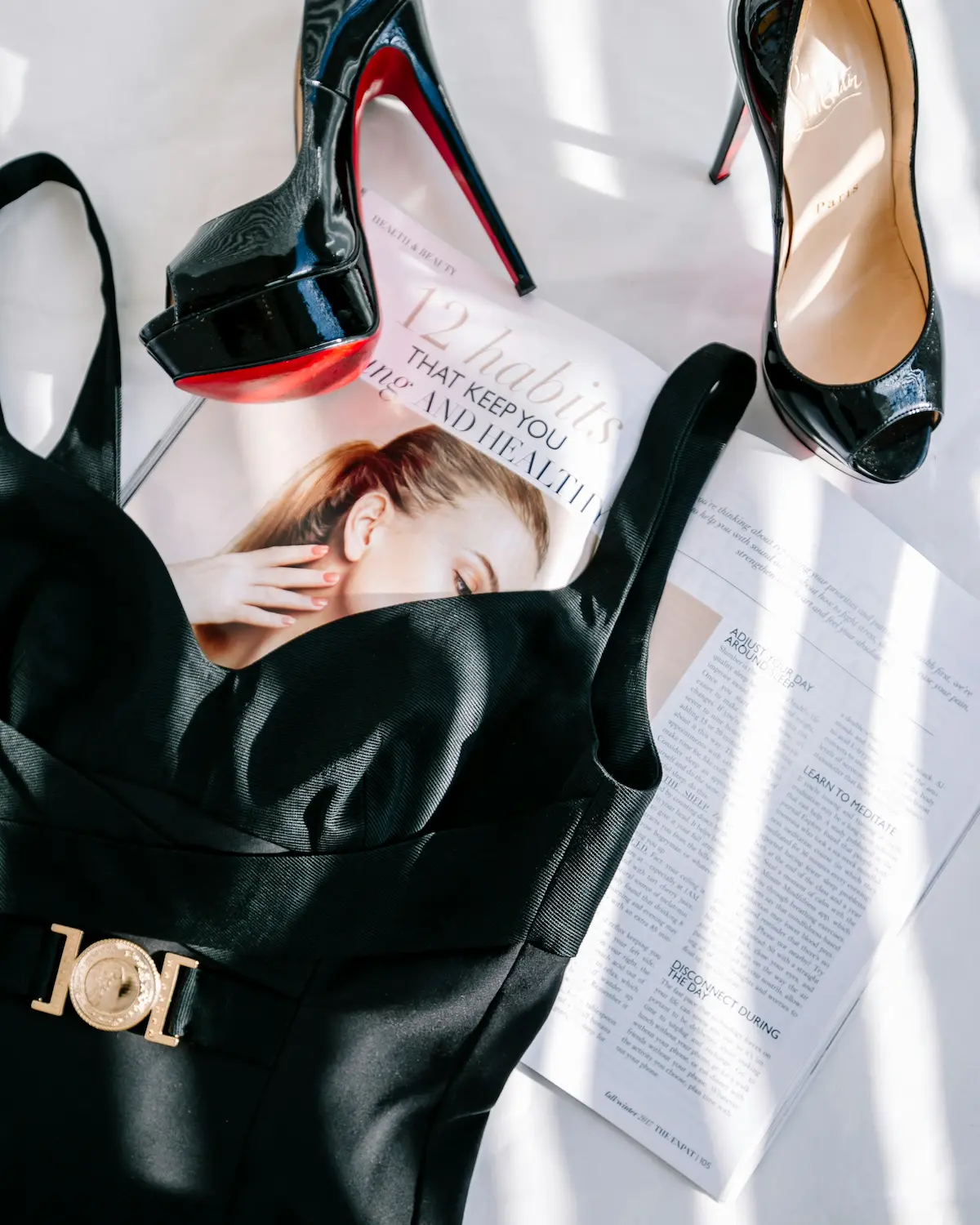
Knowing how to store Louboutin shoes correctly is the single biggest factor in whether a $900 pair holds its resale value or deteriorates on a closet shelf.
Most damage happens not during wear — but in storage. Leather cracks in an overly dry closet.
The red lacquer sole fades under UV from a nearby window. A toe box that never had a shoe tree inside it collapses permanently within months.
Table of Contents
- Rule 1: Protect the Red Sole Before the First Wear
- Rule 2: Control the Environment — Temperature, Humidity, and Light
- Rule 3: Insert Shoe Trees Within 30 Minutes of Taking Them Off
- Rule 4: Every Pair Gets Its Own Dust Bag — No Exceptions
- Rule 5: Choose the Right Storage Method for Your Collection Size
- Rule 6: Match Storage to Your Specific Louboutin Style
- Rule 7: Follow a Seasonal Maintenance Routine for Stored Shoes
- 6 Storage Mistakes That Are Quietly Ruining Your Louboutins
- Frequently Asked Questions
- How long can I store Christian Louboutin shoes?
- Should I keep the original Louboutin boxes?
- How do I protect the red sole of my Louboutins?
- Can I use regular shoe trees for Louboutins?
- How do I store Louboutins in a small apartment?
- How often should I condition leather Louboutins in storage?
- Do Louboutin shoes need to breathe during storage?
- Final Thoughts
This guide covers the 7 expert storage rules every Louboutin owner needs — including the one step most people skip before ever wearing the shoes for the first time.
You'll also get style-specific guidance for pumps, flats, boots, and exotic skins, plus a breakdown of every red sole protection method and which actually works.
ℹ️ Christian Louboutin's Official Storage Guidance: Always store away from light and heat. Store in the dust bag provided when not in use. Protect leather from rain and humidity. Source: Christian Louboutin official product care page, christianlouboutin.com |
Rule 1: Protect the Red Sole Before the First Wear
The most valuable thing you can do for a new pair of Louboutins has nothing to do with storage — it happens before you ever put them on.
The red lacquer sole that comes from the factory is unprotected.
One walk on pavement and it starts to wear. One scuff against a step and you have a permanent mark on a sole that cost a fraction of the shoe to produce but an enormous proportion of its resale value to restore.
If you're building a collection worth protecting long-term, our curated list of the 15 best quiet luxury shoes worth every dollar covers the investment-grade styles that hold their value alongside Louboutins.
The collector community is almost unanimous on this: protect the sole before the first wear. These are your main options:
Protection Method | Cost | Reversible? | Best For | Verdict |
Clear sole sticker / protector | $15–25 | Yes — peels off cleanly | New pairs, occasional wear | Best starting point |
$20–35 (cobbler) | No — permanent | Frequently worn pairs | Best long-term protection | |
Red lacquer touch-up (cobbler) | $40–80 | N/A — restoration | Worn or faded soles | Best for restoration |
DIY clear nail polish | Under $5 | Difficult to remove | Emergency only | ⚠️ Use as last resort |
No protection | $0 | N/A | Display only / never worn | ❌ Risky on wearable pairs |
The most popular choice: Clear sole stickers (sometimes called sole protectors or "sole shields") are transparent, apply at home in minutes, and peel off cleanly without damaging the red lacquer.
Brands like Sole Guard USA make pre-cut versions fitted to Louboutin shapes.
For frequently worn pairs: Red Vibram rubber soles applied by a cobbler provide much stronger protection.
The cobbler sands the existing lacquer surface slightly to help adhesion, then bonds a thin red rubber sheet to the sole area that contacts the ground.
This is permanent but preserves the visual appearance of the red sole. Cost: $20–35 at most cobblers.
⚠️ Pro Tip: The Louboutin Miss Z collection and select women's flats now feature an "Everlasting Red Sole" with an innovative coating. If you own one of these models, the sole is more resistant to wear — but sole protection is still recommended before the first outdoor wear. |
Rule 2: Control the Environment — Temperature, Humidity, and Light
The single most damaging thing for stored Louboutins is not what you put on them — it's where you keep them. Leather is sensitive to humidity, temperature, and UV exposure in ways that compound over months.
Ideal Storage Conditions
Temperature: 60–75°F (15–24°C). Consistent room temperature in a climate-controlled home.
Humidity: 45–55% relative humidity. Too dry and leather loses oils and cracks. Too humid and mold develops.
Light: Minimal. No direct sunlight, no UV-emitting LED strips pointed at shoe surfaces. UV fades the red lacquer and discolors leather uppers over time.
Airflow: Gentle circulation. Not airtight — leather releases moisture and needs to breathe.
Locations to Avoid Completely
Garage: Temperature swings of 40–60°F between seasons cause leather to expand and contract repeatedly. This destroys structural integrity within one to two years.
Attic: Summer heat can exceed 130°F. Red sole lacquer begins to soften and peel above 95°F.
Basement: Humidity typically runs above 60%, especially in older buildings. Mold grows on leather and lining at sustained humidity above 65%.
Near windows: UV exposure fades the red sole and causes surface discoloration on light-colored leathers within months, even through glass.
Adjacent to radiators or heating vents: Dry heat strips natural oils from leather rapidly. Cracks appear within weeks of consistent exposure.
Rule 3: Insert Shoe Trees Within 30 Minutes of Taking Them Off
Leather is most pliable when it's warm — meaning the 15 to 30 minutes immediately after you take your Louboutins off is the window when the shoe tree does its most important work.
The tree holds the shape as the leather cools and contracts. Without it, creases set permanently.
For pumps and pointed-toe heels: Use adjustable shoe trees specifically designed for women's dress shoes with narrow, elongated toes.
A standard wide shoe tree pushed into a Louboutin Pigalle Plato toe box will distort the shape. Correct size is essential.
For flats and ballerinas: Flats actually crease more severely than heels when stored without trees because the entire length of the sole flexes during wear. A flat shoe tree is non-negotiable for Louboutin flats.
Material: Cedar is the only correct choice. It absorbs moisture from the warm leather and releases it slowly, preventing the interior dampness that leads to odor and lining damage. Plastic shoe trees trap moisture instead of drawing it out.
Not all cedar shoe trees fit Louboutin's narrow pointed-toe lasts.
❌ Never use cheap plastic shoe trees in Louboutins. Plastic traps the moisture your foot introduced during wear. Over days, that trapped humidity degrades the leather lining from the inside and creates conditions for mold. The $30 cost of a proper cedar tree is negligible against a $900 shoe. |
Rule 4: Every Pair Gets Its Own Dust Bag — No Exceptions
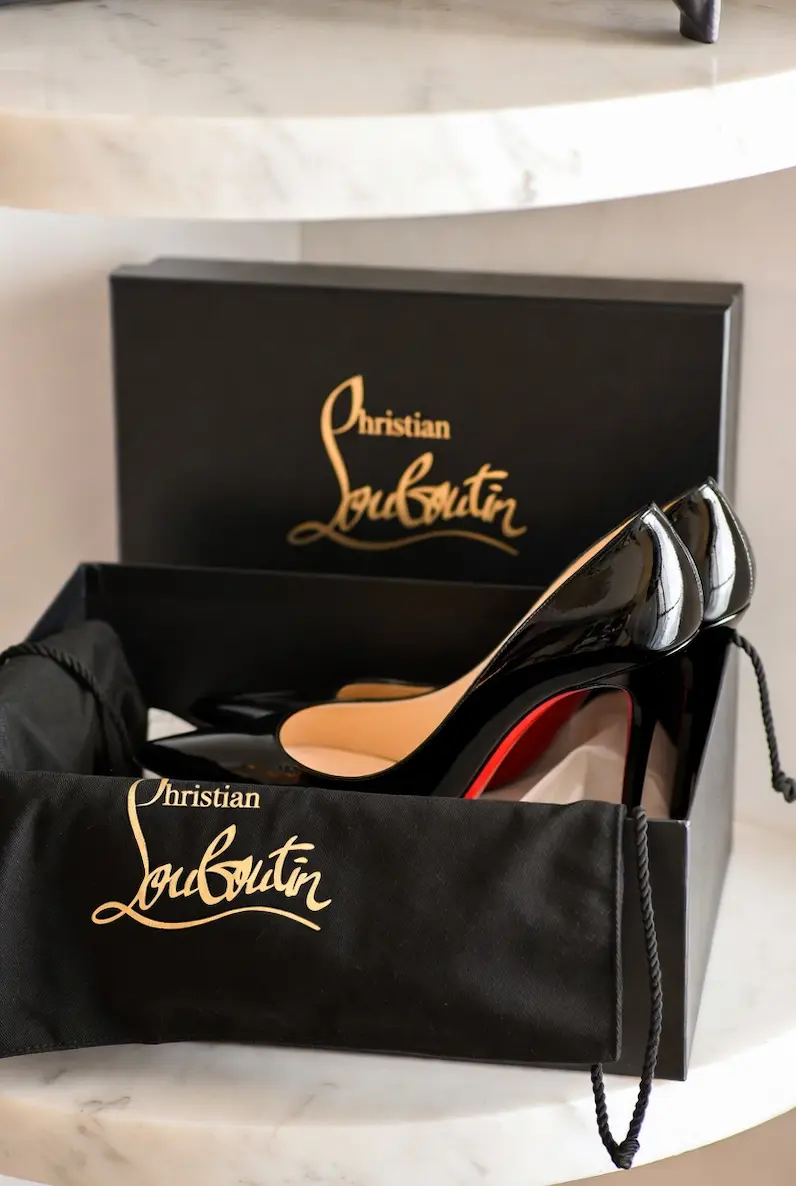
Christian Louboutin includes a dust bag with every pair for a reason. The bag does three things simultaneously: it blocks UV and ambient light that fades the red sole, it prevents contact between shoes that causes scratches, and it regulates the micro-humidity around the shoe without trapping moisture the way plastic does.
If you've lost the original bags: Purchase breathable cotton or flannel bags. Avoid satin or synthetic fabric — these provide less humidity regulation and can snag on embellishments.
Important habit: Place each shoe in its own bag individually before storing the pair together. This prevents the shoes from scratching each other during storage, particularly important for patent leather.
Rule 5: Choose the Right Storage Method for Your Collection Size
The best storage method depends on how many pairs you own, how often you access them, and how much space you have. Each approach has genuine trade-offs.
To ensure your luxury pieces retain their high resale value over the years, proper protection should start from day one. Read our full guide on How to Protect Your Luxury Investments
Storage Method | Protection Level | Visibility | Best For | Verdict |
Original box + dust bag | Excellent | None (must open) | Seasonal / rarely worn pairs | ★★★★★ Gold standard |
Clear acrylic box | Very good | Full visibility | Display collections | ★★★★☆ Runner-up |
Open shelf (closed closet) | Good | Full visibility | Frequently worn pairs | ★★★☆☆ Convenient |
Under-bed (breathable) | Good | None (must pull out) | Space-limited apartments | ★★★☆☆ Space saver |
Plastic bin / airtight | Poor | Varies | Never — traps moisture | ❌ Avoid always |
The Gold Standard: Original Box + Dust Bag
For pairs you wear occasionally or keep as collectibles, the original Louboutin box provides the most complete protection.
It's also the only storage method that maintains full resale value — collectors consistently pay a premium for shoes with original packaging.
Stack boxes no more than four to five high, with the heaviest on the bottom.
The Collector's Choice: Clear Acrylic Boxes
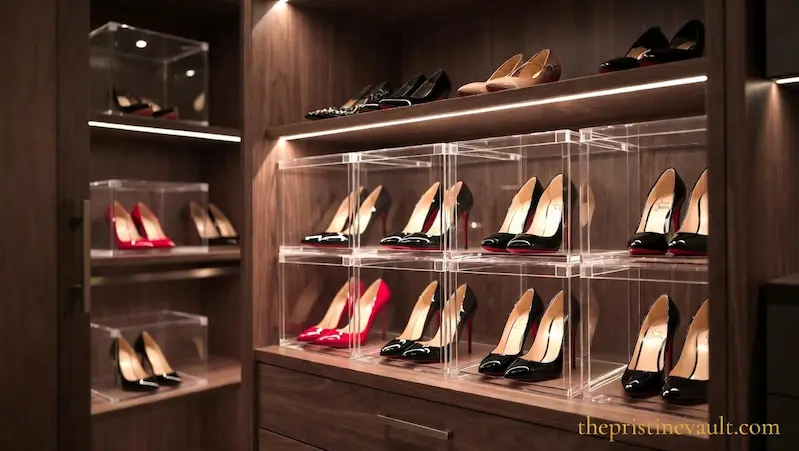
For a curated shoe wardrobe you want to see and access easily, clear acrylic boxes offer the best balance of protection and visibility.
Choose boxes with small ventilation holes — completely airtight acrylic traps humidity.
Look for UV-resistant acrylic specifically, as standard clear acrylic transmits UV light even without direct sunlight exposure.
Open Shelving
The most visually appealing option, and practical for frequently worn pairs. Works well inside a closed wardrobe or dressing room where dust accumulation is limited.
Install shelves with enough vertical clearance that heels don't rest on the shelf above — typically 8 to 10 inches for pumps, 12 to 14 inches for boots.
Rule 6: Match Storage to Your Specific Louboutin Style
Different Louboutin styles have different vulnerabilities. Using one-size-fits-all storage for a stiletto heel, a spiked flat, and a thigh-high boot means at least one pair is being stored incorrectly.
Louboutin Style | Key Vulnerability | Must-Have Accessory | Storage Position |
Pumps & heels (stiletto) | Heel tip wear, toe box collapse | Pointed-toe cedar shoe tree | Upright, never stacked |
Platform heels | Platform warping under weight | Cedar shoe tree + individual box | Upright, never stacked or weighted |
Flats & ballerinas | Toe box creasing (worse than heels) | Flat shoe tree — non-negotiable | Upright or flat in original box |
Ankle boots & knee boots | Shaft collapse and creasing | Boot shaper or rolled acid-free tissue | Upright always — never fold or lay flat |
Embellished (spikes, crystals) | Snagging on fabric, scratching adjacent pairs | Individual acid-free tissue wrap + separate box | Isolated from other shoes |
Exotic skin (python, croc) | Humidity sensitivity, scale lifting | Extra silica gel + cotton dust bag | Climate-controlled only; check every 6–8 weeks |
Suede styles | Pressure marks, pile crushing | Suede brush + individual dust bag | Never stack; store with suede protector applied |
⚠️ Real example: A pair of Louboutin Booty ankle boots stored lying flat in an original box for 8 months — without a boot shaper — will develop a permanent horizontal crease across the shaft at the flex point. This cannot be reversed. A $15 boot shaper or rolled acid-free tissue inserted before storage prevents it entirely. |
Rule 7: Follow a Seasonal Maintenance Routine for Stored Shoes
Shoes in long-term storage are not passive. Leather continues to lose oils even when unworn. Silica gel packets become saturated over time. Dust accumulates.
A simple routine every 2 to 3 months prevents the quiet degradation that catches most owners off guard when they pull out a stored pair.
Before Storing for the Season
Clean thoroughly. Leather uppers: damp cloth, leather conditioner, buff dry. Suede: brush, spot-treat, suede protector spray. Patent leather: soft cloth, mild soap, patent conditioner.
Protect the red sole with a clear protector if not already applied.
Insert cedar shoe trees or boot shapers.
Wrap embellishments in acid-free tissue before placing in dust bag.
Add silica gel packets to the storage box. Replace every 3 to 4 months.
Store in climate-controlled location away from light, heat, and humidity.
Every 2 to 3 Months During Storage
Remove shoes from storage.
Check for mold, unusual odor, or any visible deterioration.
Air out for 24 hours in a cool, dry area.
Apply a light coat of leather conditioner if leather feels dry or slightly stiff.
Replace silica gel packets.
Return to storage.
Annual rotation: Wear stored pairs at least once or twice per year. Leather benefits from movement — walking in the shoe flexes the leather in ways that prevent it from stiffening and developing micro-cracks along seam lines.
6 Storage Mistakes That Are Quietly Ruining Your Louboutins
These mistakes account for the majority of storage-related damage seen by professional shoe restorers. Most are preventable with a single habit change.
Mistake | What It Does to Your Louboutins | The Fix |
Storing in plastic bags or airtight bins | Traps moisture — triggers mold on leather lining and uppers within weeks in humid climates | Cotton dust bag + ventilated box only |
Skipping shoe trees | Toe box permanently collapses; leather creases set within hours while still warm from wear | Cedar shoe tree in within 30 minutes of taking off |
Stacking shoes directly on top of each other | Crushes heel caps, scratches patent leather, distorts toe boxes under combined weight | Individual boxes or shelf with space between pairs |
Storing near radiators or heating vents | Leather loses oils rapidly — cracks appear within weeks; red sole lacquer peels and bubbles | Minimum 3 feet from any heat source; interior closet shelf |
Using newspaper to stuff boots or toe box | Ink transfers to leather lining and interior permanently — especially on light-colored leather | Acid-free tissue paper only |
Leaving shoes unworn and unchecked in storage for over 6 months | Leather dries and develops micro-cracks; suede develops pressure marks; mold can set without visible warning | Check every 2–3 months; re-condition if needed; rotate once or twice a year |
Frequently Asked Questions
How long can I store Christian Louboutin shoes?
Indefinitely — with the right conditions. Cedar shoe trees, cotton dust bags, climate-controlled storage, silica gel for humidity control, and a check every 2 to 3 months keeps leather supple and structure intact for decades. The leather itself can outlast the original owner when stored properly.
Should I keep the original Louboutin boxes?
Yes, always. Original boxes provide excellent protection and are a meaningful factor in resale value. Collectors consistently pay more for shoes that come with original packaging, dust bags, heel tips, and any included spares.
The box takes up space but protects a disproportionate amount of value.
How do I protect the red sole of my Louboutin?
Before the first wear, apply a clear sole protector sticker or take the shoes to a cobbler for a red Vibram rubber sole application. The Vibram option is more durable for frequently worn pairs and costs $20–35.
Clear sticker protectors work well for occasional-wear shoes and are reversible. Both are significantly less expensive than a cobbler-applied red lacquer restoration ($40–80).
Can I use regular shoe trees for Louboutin?
Only if they fit the specific toe shape. Louboutin pointed-toe styles like the Pigalle require narrow, tapered shoe trees. A standard wide men's or women's tree pushed into the toe box will distort the shape rather than maintain it.
Look for adjustable trees specifically designed for pointed-toe dress shoes. Cedar is the only material worth using.
How do I store Louboutins in a small apartment?
Under-bed storage in breathable fabric containers works well for pairs in rotation. Over-door shoe organizers are suitable for lightweight flats and low heels — avoid hanging heavy heels or boots this way.
Wall-mounted acrylic shelves inside a closet maximize vertical space without requiring floor area. The critical rule regardless of space: never use plastic bins or airtight containers.
How often should I condition leather Louboutins in storage?
Every 3 to 6 months depending on climate. In drier environments (heated apartments, arid climates), every 3 months prevents leather from losing oils and cracking.
In moderate, well-humidified environments, every 6 months is sufficient. Condition every time you notice the leather feels slightly stiff or looks dull when you remove shoes for inspection.
Do Louboutin shoes need to breathe during storage?
Yes. Leather is a natural material that continues to release and absorb moisture. Cotton dust bags and boxes with small ventilation gaps allow this exchange.
Airtight containers trap the moisture leather releases, creating ideal conditions for mold and lining degradation. Always choose breathable storage over airtight, even for long-term storage.
The same principles of climate control and proper shoe trees apply across all luxury footwear.
Final Thoughts
Seven rules protect your entire Louboutin collection: protect the red sole before the first wear, control the storage environment, insert cedar shoe trees within 30 minutes of taking them off, store each pair in its own dust bag, choose the right storage method for your collection size, match storage approach to the specific shoe style, and maintain a seasonal routine that catches problems early.
None of this is complicated. The investment in proper storage products — cedar shoe trees, cotton dust bags, silica gel, clear sole protectors — is a fraction of a percent of what you've spent on the shoes themselves.
Now it's your turn — start with the pair you reach for most often, apply a sole protector if it doesn't have one, insert cedar shoe trees, and store it in its dust bag in a climate-controlled space. Your Louboutin will thank you for it.
Editorial Notice: This article is for informational purposes only. Christian Louboutin official guidance sourced from christianlouboutin.com. Product prices may vary. This article may contain affiliate links — we earn a small commission at no extra cost to you.