Best Shoe Trees for Allen Edmonds: Protect Your $400 Investment
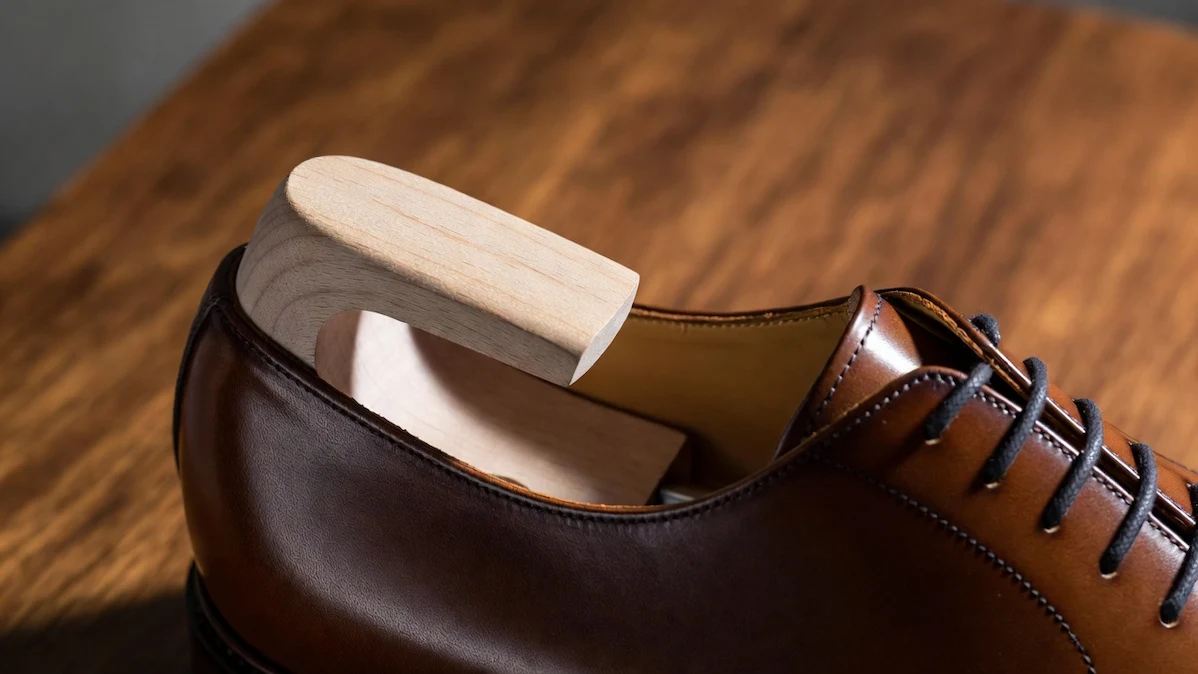
The best shoe trees for Allen Edmonds are not the most expensive — they are the ones actually matched to your specific last. Get that wrong and you end up with a tree that stretches a narrow 65 last or rattles inside a roomy 108. Either way, a $400 pair of shoes pays the price.
Allen Edmonds builds their shoes on distinct lasts — each with a different toe shape, width profile, and volume. A generic shoe tree ignores all of that. This guide doesn't.
Below: a last-by-last breakdown of which tree fits which model, a full sizing chart, the top four picks at every price point, and the mistakes that quietly wreck even well-maintained shoes.
Table of Contents
- Why Allen Edmonds Shoes Need the Right Shoe Tree
- Shoe Tree Fit by Allen Edmonds Last: The Complete Guide
- The 4 Best Shoe Trees for Allen Edmonds
- How to Size Shoe Trees for Allen Edmonds
- How to Insert and Use Shoe Trees Correctly
- Cedar vs Other Materials — And How to Maintain Yours
- Long-Term Care Habits That Protect Your Investment
- Frequently Asked Questions
Why Allen Edmonds Shoes Need the Right Shoe Tree
Every wear pushes roughly half a pint of moisture into your leather. The lining absorbs it. The upper absorbs it. As it evaporates, leather contracts — unevenly, unpredictably.
Without a shoe tree inside, that contraction sets permanent creases into the vamp. The toe box softens and collapses inward. The heel counter loses rigidity. These are not cosmetic problems — a creased, misshapen Allen Edmonds fits differently than the day you bought it.
The Goodyear welt construction that makes these shoes resolvable for decades only delivers on that promise if the upper leather holds its shape. Resoling a shoe with a warped upper is, as cobblers put it, like putting new tires on a bent frame.
A cedar shoe tree does three things simultaneously: pulls creases taut while leather is still warm and pliable, absorbs moisture before it causes long-term damage, and holds the last shape the shoe was built around. Cedar specifically — not plastic, not varnished wood — because raw cedar actively wicks moisture. Plastic traps it.
Shoe Tree Fit by Allen Edmonds Last: The Complete Guide
This is what most guides skip. Allen Edmonds uses over a dozen lasts across their lineup. Each has a different toe geometry and volume. The tree that fits a Park Avenue perfectly can be wrong for a Carlyle or a Mora 2.0.
Use this table to find the right match for your specific model:
AE Last | Popular Models | Toe Shape | Best Shoe Tree |
65 Last | Park Avenue, Strand, Fifth Avenue, McAllister, Cambridge | Narrow, elongated | AE Branded Cedar or Woodlore Epic (split-toe, full cedar) |
97 Last | MacNeil, Grayson | Slightly pointed, roomy | Woodlore Epic Twin-Tube or Rochester Full-Lasted |
108 Last | Carlyle, Delray, Mora 2.0, LaSalle | Elongated, flatter | Rochester Full-Lasted (roomy forefoot match) |
201 Last | Addison | Wide, high instep | AE Branded or Woodlore in next size up |
333 Last | Flatiron, Franciscan, Larchmont | Chiseled, square toe | Rochester Full-Lasted (best for square toe profile) |
B34 Last | Normandy, Sturgis (boots) | Wide, roomy toe box | Boot-specific cedar tree or AE branded in full size up |
Important note on the 65 last: This is the most popular AE last (Park Avenue, Strand, Fifth Avenue, McAllister). It runs narrow and long. The AE branded tree and Woodlore Epic were both designed with this profile in mind — making them the safest default for first-time buyers.
Important note on the 108 last: The Carlyle, Delray, and Mora 2.0 have a longer, flatter forefoot that most split-toe trees do not fill evenly. Rochester Full-Lasted trees are worth the premium here.
The 4 Best Shoe Trees for Allen Edmonds
These four options cover every budget and every use case — from daily rotation pairs to collector-grade preservation.
Shoe Tree | Price | Material | Design | Best For | Rating |
AE Cedar Shoe Tree | $20–45 | Aromatic red cedar | Split-toe, spring | 65 last (Park Ave, Strand) | ★★★★★ |
Woodlore Epic Twin-Tube | $30–40 | Aromatic red cedar | Twin-tube, split-toe | 65 last, budget pick | ★★★★☆ |
Rochester Full-Lasted | $30–45 | Premium cedar | Fully lasted, no spring | 108, 333 last; collectors | ★★★★★ |
Cadillac Select Cedar | $15–25 | Cedar | Split-toe, spring | Budget, multiple pairs | ★★★★☆ |
1. Allen Edmonds Cedar Shoe Tree — Best Overall
Price: $20–$45 | Material: Aromatic red cedar, unfinished | Design: Split-toe with spring mechanism
The safest choice for anyone who owns a Park Avenue, Strand, Fifth Avenue, or McAllister — all built on the 65 last. The AE branded tree was designed around this last's narrow, elongated profile. Fit is accurate without stretching.
Made from unfinished aromatic red cedar sourced from Arkansas, handcrafted in Port Washington, Wisconsin. The unfinished surface is the key — raw cedar wicks moisture aggressively. A shiny, lacquered shoe tree looks better on a shelf but does almost nothing for your leather.
Worth knowing: Woodlore manufactures these trees. The same tree is often sold under the Nordstrom, Jos. A. Bank, and Allen Edmonds labels at different price points. Functionally identical.
2. Woodlore Epic Twin-Tube — Best Value
Price: $30–$50 | Material: Aromatic red cedar | Design: Twin-tube, split-toe
The budget pick that actually performs. Same manufacturer as the AE branded tree. The twin-tube design is slightly narrower in profile than the AE version, which can be an advantage in very narrow B-width shoes.
If you own multiple pairs of Allen Edmonds on the 65 last, buying Woodlore in volume saves significant money with no compromise in performance. Watch for Nordstrom Anniversary Sale and Jos. A. Bank promotions — prices drop to $12–15.
3. Rochester Full-Lasted Cedar Tree — Best for Serious Collectors
Price: $30–$45 | Material: Premium cedar | Design: Fully lasted, no spring mechanism
The gold standard. Rochester trees are shaped to follow the entire contour of the shoe — toe, vamp, arch, and heel — without a spring mechanism pushing outward. This means even contact throughout the shoe with no concentrated pressure points.
Particularly valuable for the 108 last (Carlyle, Delray, Mora 2.0) and 333 last (Flatiron, Larchmont) where standard split-toe trees leave the forefoot unfilled. Also the best choice for shell cordovan pairs where preserving shape is non-negotiable.
Investment note: At $30–75 per pair, Rochester trees cost more than many third-party options. For your three most expensive pairs, the price difference is trivial compared to what you've spent on the shoes.
4. Cadillac Select Cedar Tree — Best Budget Option
Price: $15–$25 | Material: Cedar | Design: Split-toe, spring mechanism
Solid construction at a budget price. Works reliably on Togo and textured-toe models in the 65 and 97 last. Not recommended for the 108 or 333 last where forefoot fit matters more.
Best use case: buying in quantity for a large rotation of everyday Allen Edmonds while reserving Rochester or AE branded trees for your best pairs.
To ensure your luxury pieces retain their high resale value over the years, proper protection should start from day one. Read our full guide on How to Protect Your Luxury Investments
How to Size Shoe Trees for Allen Edmonds
Shoe tree sizing does not follow the same logic as shoe sizing. Most trees come in ranges (Small, Medium, Large, XL) that span two shoe sizes. The goal: a tree that slides in with slight resistance, fills the toe box, and sits snug in the heel — without stretching anything.
Shoe Size | Tree Size | Width Note | Width Note (Wide) |
US 7–8 | Small | D width: Small fits well | E/EE: Consider Medium |
US 8.5–9.5 | Medium | D width: Medium standard | EEE: Step up to Large |
US 10–11 | Large | D/E width: Large standard | EEE/EEEE: XL or custom |
US 11.5–12.5 | XL | D/E: XL standard | EEE+: XXL or Rochester |
US 13+ | XXL | Check brand sizing chart | Rochester custom recommended |
Width matters as much as length. Allen Edmonds offers widths from AAA to EEE. A standard medium tree in a D-width shoe fits well. The same tree in an EEE shoe leaves the sides unfilled and provides insufficient lateral support. For wide widths (EE and above), either size up one level or choose the Rochester Full-Lasted option which accommodates width variation better than spring designs.
The Fit Test — 3 Checks Before You Commit
Resistance check: Slides in with slight resistance. Not forced. Not loose. If you need two hands to push it in, it's too big.
Toe box check: Fills the toe without pushing the leather outward or creating visible bulges on the sides.
Heel check: Heel block sits flush against the heel counter. No gap at the back. No compression that deforms the counter.
If the tree passes all three, you have the right size. If it fails any one of them, sizing is off — and an ill-fitted tree causes more damage than no tree at all.
How to Insert and Use Shoe Trees Correctly
When to Insert
Insert shoe trees within 15 to 30 minutes of taking your shoes off. This gives the leather a brief window to release the initial heat from your foot before cedar takes over the drying process. If you're likely to forget, insert immediately — some protection is always better than none.
Insertion Technique
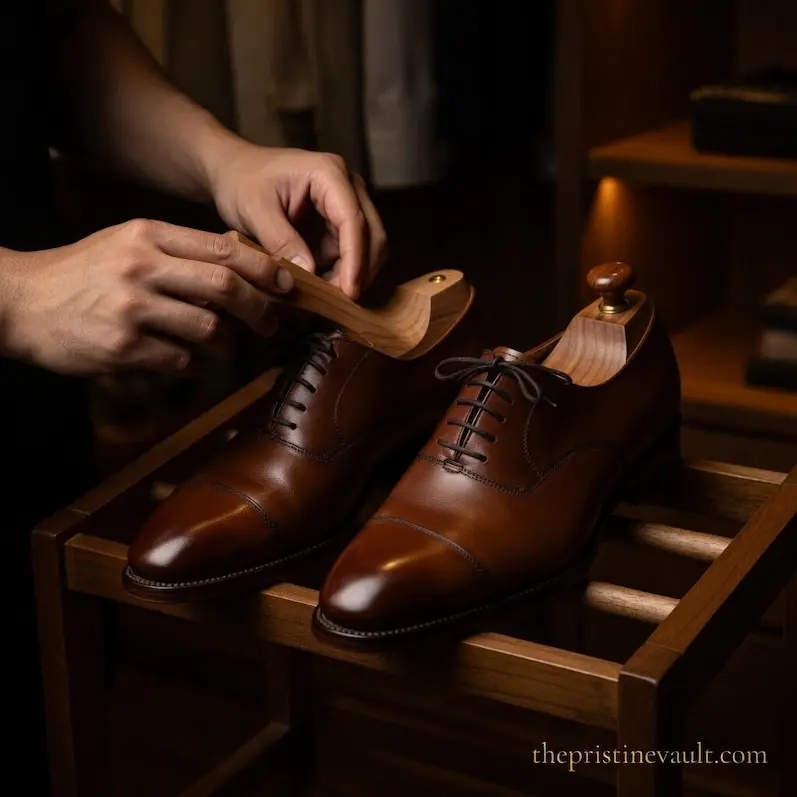
Compress the split-toe by squeezing gently.
Angle the toe section slightly downward and slide it into the shoe.
Let the spring mechanism guide the heel block into place — don't force it.
Confirm the tree sits flush. No bunching of the lining. No visible pressure ridges on the upper.
How Long to Leave Them In
Leave shoe trees in until you wear the shoes again. There is no such thing as too long with raw cedar. The moisture-wicking process slows as the wood reaches equilibrium with the surrounding air — it will not over-dry the leather.
For long-term storage: Keep the trees in, store the shoes in breathable flannel bags, and keep them on a shelf at room temperature. Never in plastic bags or airtight containers. Leather needs airflow even when not in use.
Cedar vs Other Materials — And How to Maintain Yours
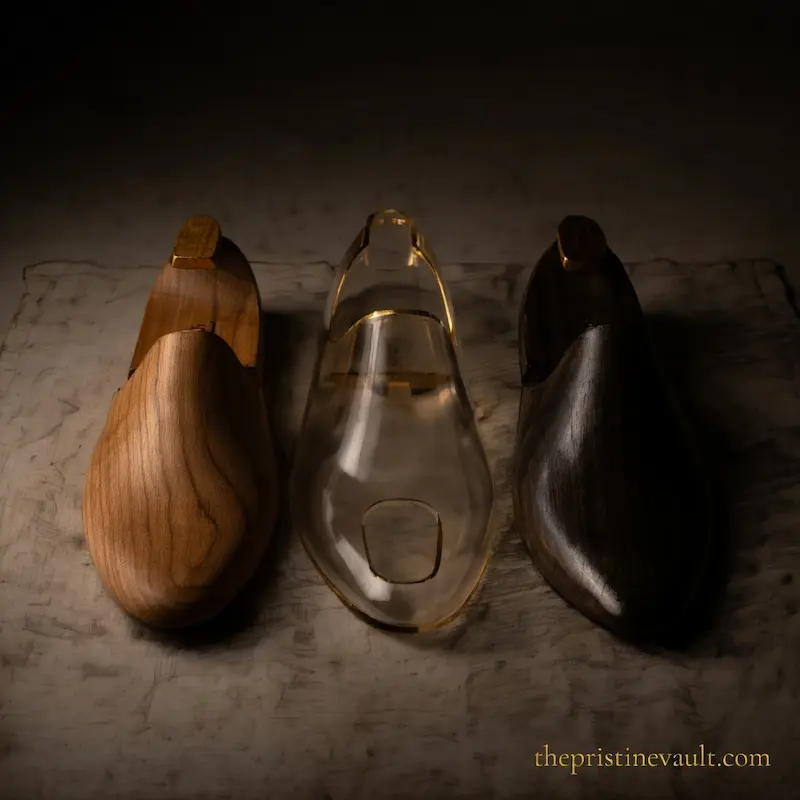
Aromatic red cedar is the default choice for good reason — it absorbs moisture faster than most woods, releases a scent that neutralizes odor-causing bacteria, and resists mildew growth. Beechwood (common in European shoe trees) offers excellent shape retention but lower moisture absorption.
Plastic shoe trees hold shape passively. They do not wick moisture. They trap humidity inside the shoe rather than drawing it out. For daily wear rotation on $400+ shoes, plastic is not an appropriate choice.
One rule that most people miss: Avoid cedar shoe trees with any varnish or lacquer finish. The coating seals the wood pores and eliminates moisture absorption entirely. The tree looks polished; it does nothing useful. You want raw, unfinished cedar — rough, fragrant, slightly textured.
Annual maintenance: When the cedar scent fades (typically after 12–18 months), take 220-grit sandpaper and make one light pass over the surface. This reopens the wood pores and fully restores absorption and scent. Takes 30 seconds. Extends the life of your trees by years.
Long-Term Care Habits That Protect Your Investment
One tree per pair, always. Every pair of Allen Edmonds should have dedicated shoe trees. Sharing between shoes means one pair is unsupported overnight — which is exactly when moisture damage sets in.
Rotate every 24 to 48 hours. Never wear the same pair on consecutive days. Shoe trees accelerate drying but cannot replace rest time. Leather that dries fully between wears lasts dramatically longer.
Handle rain-soaked shoes differently. Do not insert shoe trees immediately into soaking wet shoes. Stuff with newspaper first to absorb the bulk of the water. Switch to cedar trees after two to three hours.
Condition the leather on schedule. Shoe trees manage shape and moisture. They do not replace conditioning. Apply quality leather cream or wax every 15 to 25 wears to keep the leather supple and protected against cracking.
Store on a shelf, not the floor. Floor-level storage exposes shoes to humidity fluctuations, dust accumulation, and accidental damage. A dedicated shelf or cabinet keeps the environment stable.
Frequently Asked Questions
Do I really need shoe trees for every pair of Allen Edmonds?
Yes — every pair. If you spent $395 or more on quality footwear, a $20 to $35 shoe tree is the lowest-cost maintenance decision you can make. Without trees, even properly polished and rotated shoes crease permanently and lose shape within a year of regular wear.
What shoe tree fits the Allen Edmonds Park Avenue?
The Park Avenue is built on the 65 last — narrow, elongated, with a cap-toe profile. The Allen Edmonds branded cedar tree was designed for this last and is the safest choice. The Woodlore Epic is functionally identical (same manufacturer) at a lower price.
What shoe tree fits the Allen Edmonds Strand?
The Strand also uses the 65 last. Same recommendation as the Park Avenue: AE branded cedar tree or Woodlore Epic. The Strand has a wingtip brogue profile, but the last geometry is identical — the same tree fits both models.
What about the Carlyle, Delray, or Mora 2.0?
These models use the 108 last, which has a longer, flatter forefoot than the 65. Standard split-toe spring trees leave this area unfilled. The Rochester Full-Lasted cedar tree is the better choice for 108-last shoes — the shaped forefoot matches the shoe profile more closely.
Can I use the same shoe tree in different pairs?
Technically yes, but it defeats the purpose. The first pair sits unsupported while the tree is in the second pair. If budget is a constraint, prioritize trees for your most expensive or most frequently worn pairs first.
Are spring-loaded shoe trees bad for Allen Edmonds?
Not if they are properly sized. A well-fitted spring tree exerts only enough tension to hold shape. The problem occurs when the tree is too large — the spring then forces the shoe beyond its natural dimensions, stretching the upper. Correct sizing eliminates this risk.
How long do cedar shoe trees last?
Decades, with minimal maintenance. Sand lightly once a year to restore moisture absorption. Cedar shoe trees consistently outlast the shoes they protect.
Final Thoughts
The best shoe tree for Allen Edmonds is the one matched to your specific last. For most owners — Park Avenue, Strand, Fifth Avenue, McAllister — the Allen Edmonds branded cedar tree or Woodlore Epic covers everything. For 108-last and 333-last models, Rochester Full-Lasted trees are worth the premium.
Whatever you choose: buy raw cedar, not varnished. Size it for slight resistance, not force. Insert it within 30 minutes of taking your shoes off. And give every pair its own dedicated tree.
A $25 shoe tree protecting a $400 pair of Allen Edmonds is not an accessory. It is the foundation of every care routine that actually works.
Editorial Notice: This article discusses footwear care for informational purposes only. Prices may vary by retailer. This article may contain affiliate links — we earn a small commission at no extra cost to you.