Best Leather Conditioner for Hermès Bags (2026): Protect Your Birkin Investment
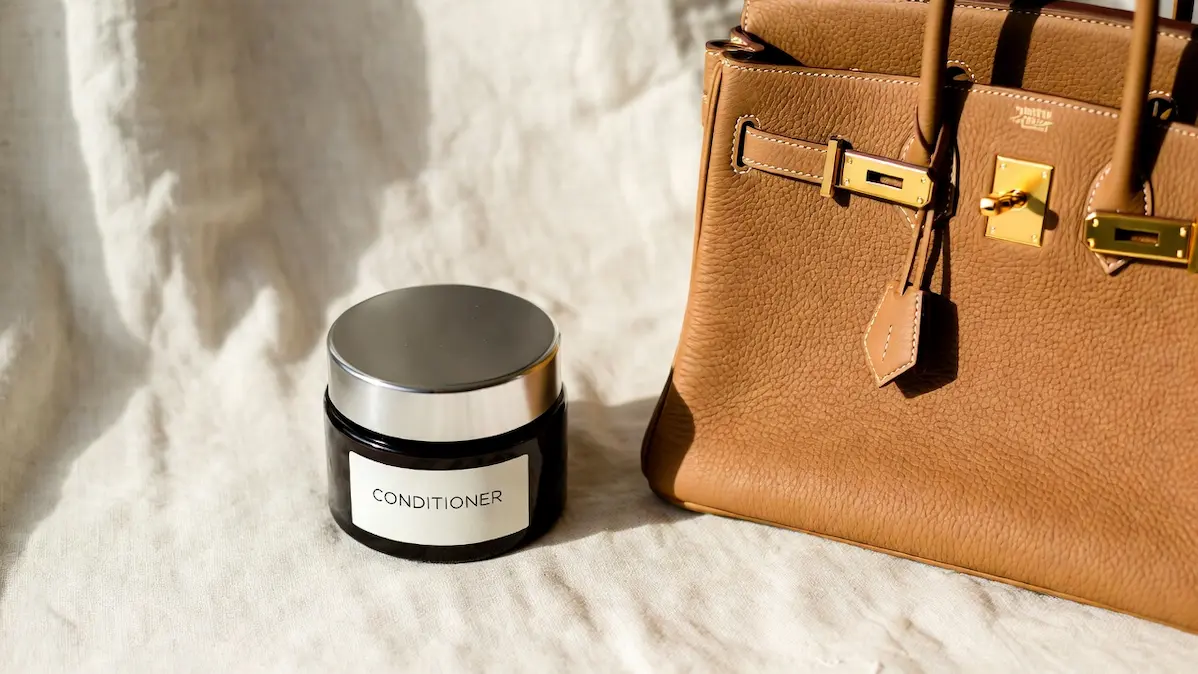
Finding the right leather conditioner for Hermès bags is one of the most important — and most misunderstood — parts of owning a Birkin. Use the wrong product and you're looking at permanent darkening, shape loss, or residue damage on a five-figure investment. In seconds.
That sounds dramatic — until you've seen what happens when someone applies the wrong product to a $14,000 bag. Permanent darkening. Greasy residue that attracts dirt. Leather that goes limp and loses its shape. These aren't horror stories. They land in restoration ateliers every week.
Here's the truth: Hermès leather is unlike any leather you've worked with before. It's tanned and finished using proprietary methods at select French tanneries. What conditions your boots, your sofa, or your car seats can destroy it.
This guide tells you exactly which conditioners are safe, which ones to avoid permanently, and how to apply product without making a costly mistake. No filler. No guessing. Just what works.
Table of Contents
Why Hermès Leather Is Different From Regular Leather
Most leather conditioners are formulated for durability leather — boots, saddles, car interiors, furniture. These hides are thick, heavily treated, and built to take abuse. Hermès leather is the opposite.
Togo, Clemence, Box Calf, Swift — each of these skins goes through finishing processes that most tanneries never use. The result is leather with a very specific moisture balance and surface treatment. It's more responsive to conditioning products, which means the margin for error is much smaller.
Two specific dangers apply to Hermès leather that don't apply to everyday leather goods:
Ingredient sensitivity: Silicones, petroleum derivatives, and heavy waxes clog the pores of fine leather. They create a surface film that looks fine at first, then yellows, cracks, or traps dirt over months.
Over-saturation: Too much product — even a good product — causes leather fibers to over-soften. On structured bags like the Birkin or Kelly, this means permanent shape loss. That directly impacts resale value.
The right conditioner applied correctly keeps Hermès leather supple, protected, and beautiful for decades. The wrong one can do damage in minutes that no spa service can fully reverse.
Many collectors make simple, avoidable mistakes when handling their collections, which can cause permanent damage. Avoid these costly errors by reading our Luxury Maintenance Mistakes to Avoid
Know Your Hermès Leather Before You Open Any Bottle
Not all Hermès leather responds the same way. Identify your leather type first — then choose your product. Skipping this step is the most common mistake buyers make.
Textured Leathers — More Forgiving
Togo — Soft, pebbled grain. Most common leather on Birkin bags. Scratch-resistant and forgiving. Accepts conditioning well. If you own a Togo bag, you have the most room for error.
Clemence — Similar grain to Togo but heavier and softer. Tends to slouch slightly. Absorbs product faster than Togo — use less than you think you need.
Epsom — Pressed, rigid grain with a heavily treated surface. This leather rarely needs conditioning at all. Its coating resists absorption. When in doubt, leave it alone.
Smooth Leathers — Handle With Care
Box Calf — High-gloss, smooth, and extremely sensitive. Shows every water drop and scratch. Requires precise product selection and very light application. One wrong move is visible.
Swift — Lightweight, smooth, and porous. Absorbs conditioner rapidly and darkens easily. Always test on a hidden area before applying anywhere visible.
Barenia — Develops a rich patina over time. Fairly resilient but darkens noticeably with most conditioners. This is expected with Barenia — if you want to preserve the original tone, use Collonil 1909 specifically.
Exotic Skins — Professional Care Only
Crocodile, alligator, ostrich, and lizard should never be conditioned at home. The wrong product can lift scales, cause color bleeding, or permanently flatten the texture. Send these to a professional or back to Hermès spa service. No exceptions.
The 4 Best Leather Conditioners for Hermès Bags
A safe conditioner for Hermès leather must meet four criteria: pH-neutral formula, no silicones or petroleum derivatives, lightweight absorption, and either unscented or naturally scented. These four products meet that standard.
1. Saphir Renovateur — Best Overall
Price: $24–$28 (75ml jar)
Best for: Togo, Clemence, Box Calf
Key ingredients: Mink oil, beeswax, lanolin
Saphir Renovateur is the gold standard. Hermès artisans and professional leather workers have used it for decades. It's not a marketing claim — it's earned through consistent, repeatable results on fine leather.
The formula nourishes without causing significant darkening on most leathers. It also cleans gently, meaning one application handles both conditioning and light surface cleaning. On Togo and Clemence, it's nearly impossible to over-apply when used sparingly.
Important: On very light colors like Craie, Blanc, or Rose Sakura, even Saphir can cause subtle darkening. Test first. When in doubt, use Collonil 1909 instead.
Affiliate note: Available on Amazon and specialty leather care retailers. Search "Saphir Renovateur" for current pricing.
2. Collonil 1909 Supreme Crème de Luxe — Best for Light Colors & Swift
Price: $18–$22 (100ml tube)
Best for: Togo, Clemence, Swift — and all light-colored Hermès bags
Key ingredients: Cedarwood oil, lanolin
Lighter than Saphir. Absorbs faster and with less risk of darkening. This is the product to reach for when you own a pale-toned Hermès bag or when you're working with Swift leather where even slight darkening would be visible.
The cedarwood oil base also provides mild antibacterial protection — useful if your bag has been in storage. Popular across European markets, where luxury leather care has a longer tradition of precision.
3. Cadillac Select Premium Leather Lotion — Best Budget Option
Price: $10–$20 (8oz bottle)
Best for: Togo and Clemence only
Key ingredients: Lanolin-based formula
If you're rotating between multiple bags and need a reliable everyday maintenance product, Cadillac Select works well on textured leathers without the premium price tag. Absorbs cleanly, leaves no greasy residue.
Limitation: Not suitable for smooth leathers like Box Calf or Swift. Reserve this for your Togo and Clemence bags only.
4. Leather Honey Leather Conditioner — Best Long-Lasting Formula
Price: $20–$40 (8oz bottle)
Best for: Togo and Clemence
Key ingredients: Natural oils, silicone-free
One application lasts significantly longer than most alternatives. The formula is concentrated — a pea-sized amount covers an entire bag. Popular among collectors who condition infrequently and want results that hold between sessions.
Warning: Apply very sparingly. This product is powerful. Test on a hidden area first, particularly on any leather lighter than mid-tone brown or camel.
How to Condition Your Hermès Bag Without Causing Damage
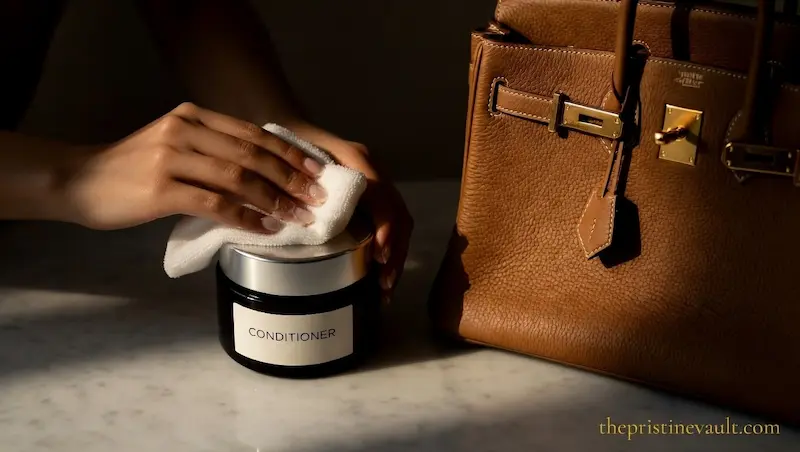
Even the right product applied incorrectly causes problems. Follow these six steps every time.
Clean the surface first. Wipe the bag with a clean, dry microfiber cloth to remove surface dust and debris. Never condition over dirt — the application process grinds particles into the leather.
Test in a hidden spot. Apply a small amount to the bottom of the bag or inside the flap. Wait 20 minutes. If you see color change, darkening, or residue, stop and reassess your product choice.
Apply to cloth — not leather. Put a pea-sized amount on a clean soft cloth. Never apply product directly onto the bag. You can add more; you cannot remove what's already absorbed.
Work in small circles, one panel at a time. Use light circular motions. Do not scrub. Cover each section evenly before moving to the next.
Let it absorb. Set the bag in a cool, dry area away from direct sunlight for 15 to 30 minutes. Do not rush this step.
Buff gently with a fresh cloth. Remove remaining surface residue and bring up a soft, natural glow. Do not apply pressure.
How Often Should You Condition Your Hermès Bag?
Conditioning too frequently is as damaging as never conditioning. Here's the schedule that works:
Togo and Clemence: Every 6 to 12 months for bags in regular rotation.
Box Calf: Every 4 to 6 months. This leather dries faster and shows it visibly.
Swift: Every 8 to 12 months. Swift absorbs product quickly, so less frequent application prevents over-saturation.
Epsom: Rarely. The treated surface resists absorption. Condition only if the leather looks visibly dry, which is uncommon.
Bags in long-term storage: Condition lightly before storing and again when bringing back out.
Keep a simple note in your phone: bag name, product used, date applied. Over-conditioning almost always happens when you lose track of the schedule.
Products and Ingredients to Avoid Completely
These products cause permanent damage. No exceptions.
Baby wipes: Contain alcohol, fragrances, and detergents that strip leather finishes. They feel gentle and are catastrophically destructive.
Olive oil or coconut oil: Go rancid over time. Attract bacteria, darken leather unevenly, and leave residue that can never be fully removed.
Household cleaners (including Windex): Destroy dye and finish on contact. One pass can permanently alter the surface.
Conditioners containing silicone: Create a surface film that prevents leather from breathing. Looks fine immediately, causes long-term damage.
Pure heavy mink oil: Too dense for Hermès leather. Significant darkening on light colors. The mink oil in Saphir Renovateur is blended at a much lower, safer concentration.
Saddle soap: Designed for equestrian tack that endures rough outdoor conditions. Far too aggressive for luxury bag leather.
A Special Warning for Light-Colored Bags
If you own a Hermès bag in Craie, Nata, Blanc, Rose Sakura, Gris Perle, or any other pale tone, proceed with maximum caution. Light leathers make every product interaction visible. Even products that are safe on medium or dark leather can cause subtle color shift on pale skins.
For light-colored bags: use Collonil 1909 as your default, always test first, and apply even less than you normally would.
Habits That Extend Time Between Conditioning Sessions
Good storage and handling habits reduce how often your bag needs conditioning — and protect it more consistently than any product alone.
Store properly: Stuff with acid-free tissue paper to maintain shape. Store in the dust bag, in a cool and dry environment. This preserves moisture balance between uses.
Rotate your bags: A bag worn daily dries out significantly faster than one rotated with others. Rotation extends conditioning intervals by months.
Keep conditioner away from hardware: Product buildup around turn locks, buckles, and feet causes tarnishing and creates a sticky residue that attracts dirt. Use a cotton swab to clean around hardware after any conditioning session.
Never condition in sunlight or heat: Heat causes uneven absorption and can bake residue into the leather surface.
Don't condition to fix scratches: Light surface scratches on Togo and Clemence often buff out naturally with a dry cloth and gentle fingertip warmth. Conditioner can make shallow scratches more visible, not less.
Frequently Asked Questions
Will leather conditioner darken my Hermès bag?
It can, especially on smooth or light-colored leathers. Swift and Barenia are most susceptible. Togo and Clemence are more forgiving. Always test in a hidden area first and apply minimally — you can add more, but you cannot reverse darkening once it occurs.
Is Saphir Renovateur safe for Hermès leather?
Yes, and it's widely considered the safest choice for Togo, Clemence, and Box Calf. The formula has been used on fine leather for decades.
For very light-colored bags, opt for Collonil 1909 instead, as it carries less risk of color shift.
How often should I condition my Birkin?
For a Birkin in regular use, every 6 to 12 months is sufficient for Togo. Box Calf benefits from conditioning every 4 to 6 months. Epsom almost never needs it. If you're unsure, feel the leather — if it feels stiff or looks dull, it's time.
Should I condition my Hermès bag before long-term storage?
Yes. A light application before putting the bag away prevents leather from drying out during storage. Stuff the bag with acid-free tissue, place it in the dust bag, and store in a cool, dry location away from humidity and light.
Can Hermès repair damage caused by the wrong conditioner?
Sometimes. The Hermès spa service can address color fading, light surface damage, and some conditioning issues. However, severe darkening, dye bleeding, or leather that has been over-saturated may be permanent — beyond what any service can restore. Prevention is always less expensive than restoration.
Can I condition exotic Hermès leathers at home?
No. Crocodile, alligator, ostrich, and lizard require professional care. Home conditioning risks scale damage, color bleeding, and texture alteration that may be impossible to reverse. If your exotic bag needs care, contact Hermès directly or work with a specialist in luxury exotic leather.
Final Thoughts
Your Birkin, Kelly, or Constance was built to last decades — but only if it receives the right care. The good news is that conditioning Hermès leather correctly is not complicated. It requires the right product, used sparingly, on the right leather type.
Saphir Renovateur covers most situations safely and is worth keeping in your leather care kit. For pale-toned bags or Swift leather, Collonil 1909 is the more cautious choice. If you're maintaining a larger collection on a budget, Cadillac Select and Leather Honey both perform well on textured leathers.
When in doubt, do less. The most common conditioning mistake is not using the wrong product — it's using too much of the right one.
Condition sparingly. Test religiously. Track every application. Your investment deserves nothing less.
Editorial Notice: This article discusses high-value luxury purchases for informational purposes only. Prices may change. The Pristine Vault does not provide financial or purchasing advice. This article may contain affiliate links — we earn a small commission at no extra cost to you.