How to Store Pearl Necklace: 7 Expert Ways Without Scratching
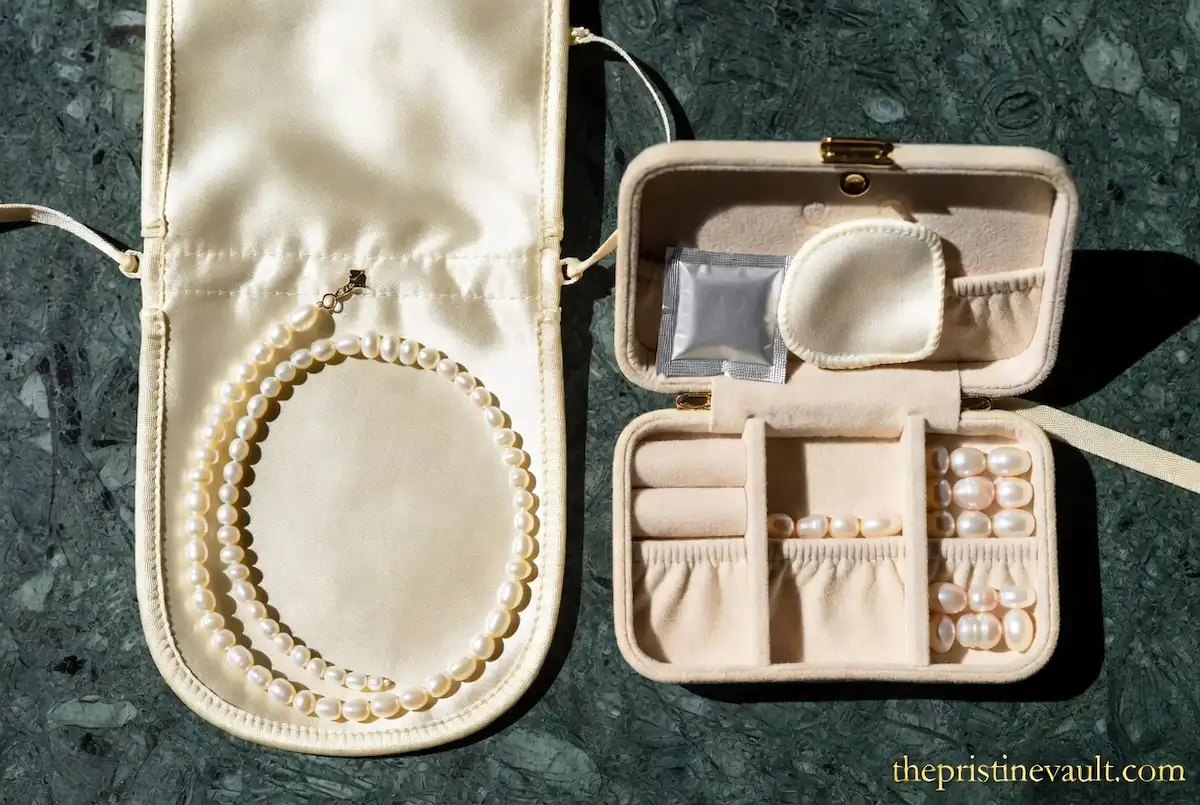
"Knowing how to store pearl necklace strands properly prevents the invisible nacre scratches that silently destroy your pearls' luster — damage that no jeweler can reverse."
You inherited your grandmother's Mikimoto pearl strand. Beautiful, luminous, irreplaceable. You stored it in your jewelry box alongside your gold chains, diamond tennis bracelet, and silver earrings.
Six months later, you noticed the pearls looked different. The luster seemed duller. Under magnification, the surface showed dozens of hairline scratches across multiple pearls.
The damage was permanent.
A collector showed me her $4,000 South Sea pearl necklace after one year in a standard jewelry box. The diamond ring stored next to it had carved visible scratches into three pearls during months of casual contact every time she opened and closed the box.
The scratches caught light at certain angles, creating dull patches on what had been flawless nacre.
Her jeweler confirmed the damage: unrepairable. Nacre scratches don't polish out. Once the surface is compromised, it stays compromised.
This guide covers seven proven methods for storing pearl necklaces safely. You'll learn why pearls scratch so easily compared to other gems, which storage materials protect nacre, and the specific setup that prevents contact damage entirely.
Here's everything you need to know.
Table of Contents
- Editor's Picks: Best Pearl Storage Products
- Why Pearls Scratch So Easily
- Method 1: Individual Silk Pouches (Best Overall)
- Method 2: Flat Storage in Lined Jewelry Box
- Method 3: Climate-Controlled Storage
- Method 4: Separation from Other Jewelry (Non-Negotiable)
- Method 5: Pre-Storage Cleaning Ritual
- 7 Quick Tips for Pearl Necklace Storage (Most Owners Skip These)
- Mistakes That Permanently Damage Pearl Necklaces in Storage
- Frequently Asked Questions
- Can I store pearl necklace in original box from jeweler?
- How long can pearls be stored without wearing?
- Should I store pearls in a plastic bag to protect them?
- Can pearl necklaces touch each other during storage?
- How do I know if my pearls are scratched?
- Do freshwater pearls need different storage than saltwater pearls?
- Is it OK to store pearl necklace in bathroom?
- Conclusion
This post contains affiliate links. We may earn a small commission at no extra cost to you.
Editor's Picks: Best Pearl Storage Products
Before we dive in, here are the top-rated products most pearl necklace owners trust:
- Silk Jewelry Pouches (Set) — Individual compartments, soft lining, breathable fabric
- Pearl Necklace Storage Box (Flat) — Dedicated flat storage with soft lining
- Microfiber Jewelry Cleaning Cloths — Pre-storage wiping without scratching
(More recommendations throughout the article)
Why Pearls Scratch So Easily
Understanding pearl vulnerability explains why standard jewelry storage methods fail completely for pearl necklaces.
The Nacre Factor
Pearls rank only 2.5-4.5 on the Mohs hardness scale. For perspective:
- Diamond: 10 (scratches everything)
- Sapphire/Ruby: 9
- Gold: 2.5-3
- Pearl nacre: 2.5-4.5
- Fingernail: 2.5
That means virtually every other material in your jewelry box — gold settings, silver clasps, diamonds, sapphires, even other pearls' clasps — is harder than pearl nacre. Contact with any of them causes scratches.
Why Scratches Matter More on Pearls
Diamond scratches can be polished out by recutting. Gold scratches can be buffed. Pearl scratches are permanent because nacre is organic material laid down in microscopic layers by living oysters.
When those layers are scratched, the light-refracting structure that creates pearl luster is disrupted. The damaged area appears dull compared to surrounding nacre. No amount of cleaning, polishing, or treating restores the original surface.
This is why pearl storage demands separation from every other jewelry piece — no exceptions.
For complete pearl cleaning methods that complement proper storage, our detailed guide on how to clean pearl jewelry at home covers safe techniques.
The next section covers the mistake most people make at this stage.
Method 1: Individual Silk Pouches (Best Overall)
The simplest and most effective pearl storage solution.
Why Silk Works for Pearls
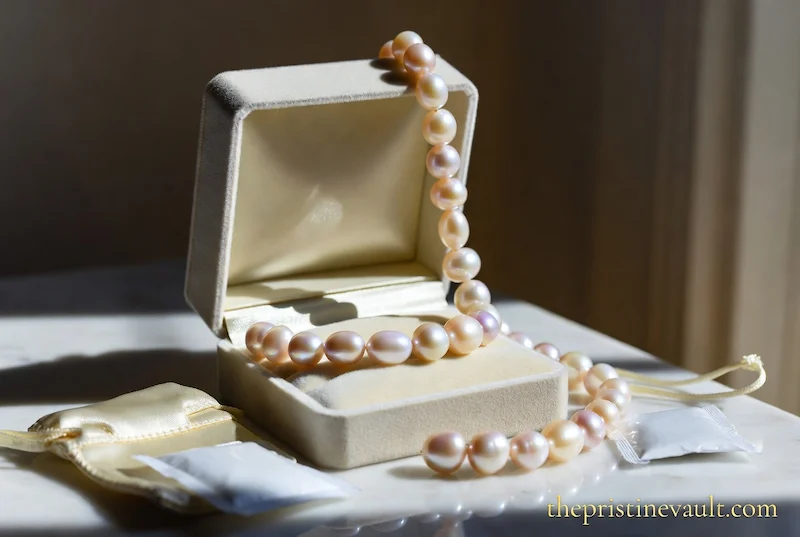
Silk is one of the softest natural fabrics available. Its smooth fibers can't scratch nacre under normal contact. Additionally, silk breathes — allowing the minimal air circulation pearls need to prevent dehydration.
Cotton works too, but silk's smoother surface provides marginally better scratch protection.
How to Use Silk Pouches
Step 1: Wipe each pearl gently with a soft, barely damp cloth after wearing. This removes perspiration and oils before they dry on the nacre surface.
Step 2: Lay the pearl necklace flat inside the silk pouch. Don't fold, coil, or bunch the strand. Folding stresses the silk thread between pearls and can press pearls against each other.
Step 3: Close the pouch loosely. Don't cinch it tight — pearls need air circulation.
Step 4: Store the pouch flat in a drawer or on a shelf. Never hang pearl necklaces — the weight stretches the silk thread between pearls.
One Pouch Per Necklace
Never store two pearl strands in the same pouch. Even pearl-on-pearl contact causes scratching over time. Each strand gets its own individual pouch.
The metal clasps on pearl necklaces are particularly dangerous. A gold or platinum clasp resting against a pearl creates scratches within weeks. Position the clasp away from pearls inside the pouch, or wrap the clasp separately in a small piece of soft cloth.
Up next: the dedicated storage solution for serious pearl collectors.
Method 2: Flat Storage in Lined Jewelry Box
Pearl necklaces must always be stored flat — never hanging, never coiled vertically.
Why Flat Storage Matters
Thread protection: Pearl necklaces are strung on silk thread. Hanging places the full weight of all pearls on the upper knots and the clasp attachment point. Over months, this stretches the thread and weakens knots.
Shape maintenance: Hanging can cause pearls to shift on the thread, creating uneven spacing that looks wrong when worn.
Gravity stress: Heavier pearl strands (South Sea, Tahitian) are particularly vulnerable. A 16-inch strand of 12mm South Sea pearls weighs enough to stress thread significantly when hanging.
Setting Up Proper Flat Storage
Use a jewelry box with a flat compartment lined in soft fabric. The compartment should be large enough for the necklace to rest in a gentle curve without any pearl touching another piece of jewelry.
If your jewelry box doesn't have dedicated pearl compartments, line a small tray with a piece of soft cotton or silk fabric. Place the pearl strand flat on this liner inside the box.
Critical: Pearl compartments must be physically separated from other jewelry. A thin fabric divider between pearl and diamond compartments isn't sufficient — pearls need solid separation.
For comprehensive jewelry storage principles covering all materials, our complete fine jewelry care guide addresses organization strategies.
But proper physical storage is only half the battle — here's what environmental control requires.
Method 3: Climate-Controlled Storage
Pearls have unique environmental needs that differ from every other gemstone.
The Humidity Balance
Pearls contain 2-4% water. They need ambient humidity to maintain nacre integrity.
Too dry (below 40% humidity):
- Nacre dehydrates and develops micro-cracks
- Surface becomes chalky
- Luster diminishes permanently
- Pearl becomes brittle
Too humid (above 65% humidity):
- Mold develops on silk thread
- Metal clasps tarnish faster
- Moisture weakens string knots
- Surface deposits form on nacre
Ideal range: 45-55% relative humidity
Temperature Considerations
Avoid temperature extremes and rapid temperature changes. Pearls expand and contract minimally with temperature shifts, but the nacre layers can separate at extreme temperatures.
Safe range: 60-75°F (15-24°C)
Never store pearls in:
- Bathrooms (humidity spikes from showers)
- Attics (temperature extremes)
- Bank vaults for extended periods (too dry, no humidity control)
- Near heating vents (direct dry heat)
A collector stored her pearl collection in a bank safety deposit box for three years. When she retrieved them, multiple pearls showed surface crazing — fine cracks from dehydration in the vault's bone-dry environment. The damage was irreversible.
👉 Get Small Humidity Monitor for Jewelry Storage on Amazon
The next section covers the mistake most people make at this stage.
Method 4: Separation from Other Jewelry (Non-Negotiable)
This isn't a method so much as an absolute rule that applies regardless of which storage approach you choose.
What Scratches Pearls in Standard Storage
Diamonds: The hardest natural material. Even brief contact scores nacre permanently.
Gold and platinum settings: Metal prongs, bezels, and clasps are all harder than pearl nacre.
Silver pieces: Sterling silver is hard enough to scratch pearls and tarnish compounds can stain nacre.
Other pearls' clasps: The metal clasp on one pearl necklace can scratch pearls on another strand stored nearby.
Chains: Fine chain links act like tiny saws against nacre when they shift during drawer opening and closing.
The Storage Rule
Pearls touch nothing but silk, soft cotton, or soft microfiber. Period.
No metal. No other gems. No other pearls unless individually wrapped. No hard surfaces of any kind.
This rule extends to temporary placement. Don't set pearl earrings on a marble countertop. Don't lay a pearl strand on a glass-topped dresser. Always place pearls on soft fabric, even momentarily.
For gold jewelry pieces that often share storage space with pearls, keeping metals properly maintained reduces tarnish compounds that can transfer to pearl surfaces. Our guide on removing tarnish from gold jewelry covers safe cleaning methods.
Up next: the one maintenance step that extends pearl life decades.
Method 5: Pre-Storage Cleaning Ritual
What you do before storing pearls matters as much as how you store them.
The After-Wear Routine
Every time you remove a pearl necklace, before it goes into storage:
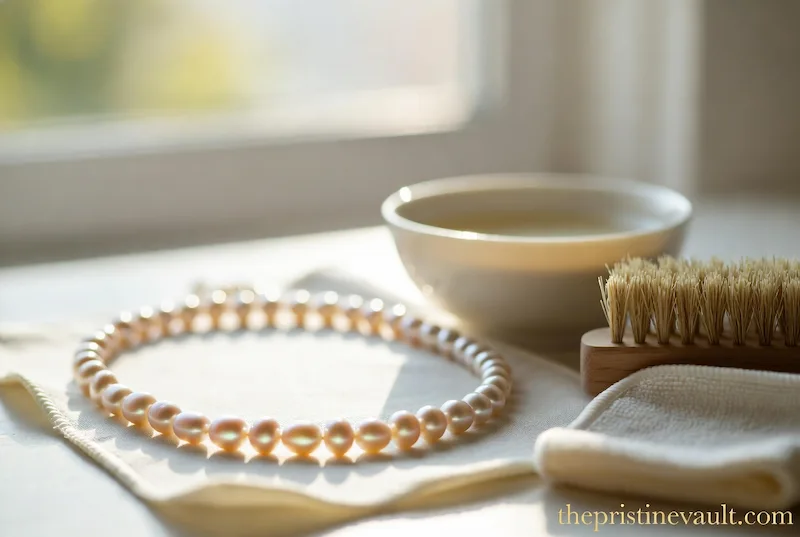
Step 1: Wipe each pearl individually with a soft, barely damp microfiber cloth. Not wet — barely damp.
This removes:
- Perspiration (acidic, etches nacre over time)
- Skin oils (dull the surface and attract dirt)
- Perfume residue (chemicals damage nacre)
- Makeup transfer (can stain)
- Environmental dust (micro-abrasive particles)
Step 2: Let the strand air dry flat for 30 minutes on a soft cloth. Never store pearls while still damp — moisture trapped in the silk thread promotes deterioration.
Step 3: Place in individual silk pouch or lined compartment.
Why Skipping This Causes Damage
Perspiration left on pearls during storage slowly etches the nacre surface. The acids in sweat are weak, but over weeks and months of contact, they dull the luster noticeably.
A collector wore her pearl strand to a summer garden party. She tossed it in her jewelry box without wiping. Three months later, the pearls that had rested against her neck — where perspiration concentration was highest — were visibly duller than the pearls lower on the strand.
For comprehensive cleaning guidance on other precious materials in your jewelry collection, our guide on cleaning platinum jewelry at home covers safe methods for metals that often appear alongside pearl settings.
7 Quick Tips for Pearl Necklace Storage (Most Owners Skip These)
Never store pearls in plastic bags or airtight containers. Pearls need humidity from ambient air. Sealed containers cause dehydration and nacre cracking.
Lay strands flat — never hang them. Gravity stretches silk thread and stresses knots. Hanging causes thread failure and pearl loss.
Wrap clasps separately from pearls. A small piece of soft cloth around the clasp prevents metal-on-nacre contact during storage.
Wear pearls regularly. Skin contact provides natural moisture that keeps nacre hydrated. Ironically, wearing pearls is better for them than permanent storage.
Restring every 1-2 years for regularly worn strands. Silk thread absorbs oils and weakens over time. New thread and fresh knots prevent the catastrophic strand break that loses pearls.
Store away from direct sunlight. UV exposure can yellow some pearl varieties, particularly white and cream-colored pearls.
Keep anti-tarnish strips near pearl storage, not touching pearls. These protect metal clasps without contacting nacre.
👉 Get Anti-Tarnish Strips for Jewelry Storage on Amazon
⚠️ Pro Tip: Place a small piece of slightly damp (not wet) cotton in your pearl storage area during dry winter months. This provides localized humidity that prevents nacre dehydration without wetting the pearls themselves. Replace the cotton monthly.
Mistakes That Permanently Damage Pearl Necklaces in Storage
These common errors cause irreversible nacre damage:
Storing pearls with diamonds and other gemstones. Any gemstone harder than 4.5 on the Mohs scale scratches pearls. Diamonds, sapphires, rubies, emeralds — all destroy nacre on contact. Always separate completely.
Spraying perfume while wearing pearls then storing without wiping. Perfume alcohol and chemical compounds etch nacre surfaces. The damage compounds during storage as residue concentrates. Always wipe pearls after any chemical exposure.
Coiling pearl strands tightly for compact storage. Tight coiling stresses knots between pearls and can create pressure points where pearls press against each other. Store in gentle natural curves with no tension.
Using ultrasonic jewelry cleaners on pearls before storage. Ultrasonic vibrations shatter nacre at microscopic levels. Never clean pearls with ultrasonic devices, steam cleaners, or any mechanical cleaning method.
Storing pearls in a safe or vault without humidity monitoring. Bank vaults and home safes are extremely dry environments. Extended storage without humidity control causes nacre dehydration, cracking, and permanent loss of luster.
Frequently Asked Questions
Can I store pearl necklace in original box from jeweler?
Yes, if the box has a soft fabric lining and the pearl strand fits flat without contact with other pieces. Original boxes from quality jewelers (Mikimoto, Tiffany) are designed for pearl storage. However, avoid storing the box itself in airtight locations — pearls need ambient humidity even inside their box.
How long can pearls be stored without wearing?
Pearls can be stored indefinitely with proper conditions (45-55% humidity, soft separation, flat positioning). However, wearing pearls periodically benefits them — skin moisture keeps nacre hydrated naturally. Take stored pearls out and handle them every few months at minimum. For detailed cleaning before and after storage, see our pearl jewelry cleaning guide.
Should I store pearls in a plastic bag to protect them?
Never. Plastic bags trap or exclude humidity, either dehydrating pearls (sealed dry) or promoting mold (sealed humid). Pearls need breathable storage — silk pouches, cotton bags, or fabric-lined boxes that allow minimal air exchange.
Can pearl necklaces touch each other during storage?
Ideally no. While pearl-on-pearl contact is less damaging than pearl-on-diamond contact, the metal clasps on each strand can scratch pearls on adjacent strands. Store each necklace in its own individual pouch or compartment.
How do I know if my pearls are scratched?
Hold pearls under direct bright light and rotate slowly. Scratches appear as thin lines that catch light differently from surrounding nacre. Under magnification (10x loupe), scratches are clearly visible as surface disruptions in the normally smooth nacre layering.
Do freshwater pearls need different storage than saltwater pearls?
The storage method is identical. Both freshwater and saltwater pearls have nacre surfaces vulnerable to the same scratch and environmental damage. However, freshwater pearls generally have thicker nacre layers, making them slightly more forgiving of minor contact — but still requiring proper separation from harder materials.
Is it OK to store pearl necklace in bathroom?
Absolutely not. Bathroom humidity fluctuates dramatically with every shower — from 40% to 90%+ and back within hours. These rapid humidity cycles stress nacre and promote mold growth on silk thread. Store pearls in climate-stable rooms away from moisture sources.
Conclusion
Learning how to store pearl necklace strands safely centers on three non-negotiable principles: complete separation from harder materials, flat positioning on soft surfaces, and climate control maintaining 45-55% humidity.
Every pearl scratch is permanent. Every storage shortcut risks irreversible nacre damage. But the protection methods are simple — silk pouches, flat storage, regular wiping after wear.
The investment in proper pearl storage is minimal. A set of silk pouches costs under $20. The pearls they protect are worth thousands — and the sentimental value of heirloom strands is literally priceless.
Now it's your turn — check your current pearl storage setup this week and separate any strands currently touching other jewelry. Your pearl necklaces will thank you for it.