What Water Resistance Ratings on Watches Actually Mean (And What People Get Wrong)
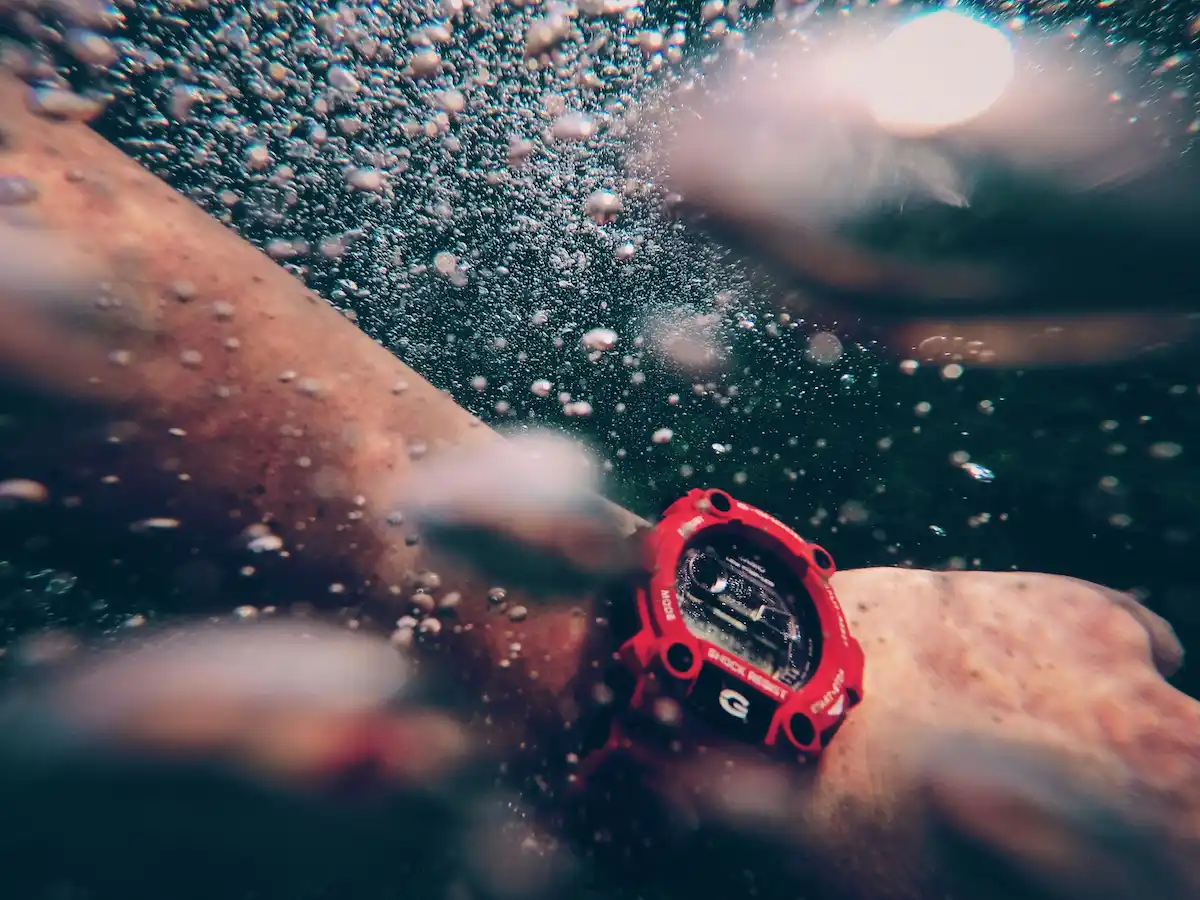
Somebody ruined a decent watch in front of me once by jumping into a hotel pool with it on, confidently pointing at the case back that said "30m" as proof it would be fine. It wasn't fine. The watch fogged up within the hour and never ran quite right again.
The number wasn't wrong. His understanding of it was.
Table of Contents
- Why the Ratings Are Misleading By Default
- A Rough (But More Honest) Breakdown
- What Actually Fails First (It's Rarely the Case Itself)
- The Crown Is the Other Common Failure Point
- How to Actually Know If Your Watch Is Still Protected
- FAQ
- Can I shower with a 50m water resistant watch?
- Does water resistance decrease over time even without visible damage?
- Is a screw-down crown always water resistant if it's a dive watch?
- Should I get water resistance tested separately from a full service?
- Why did my watch fog up even though it's rated higher than what I was doing?
Why the Ratings Are Misleading By Default
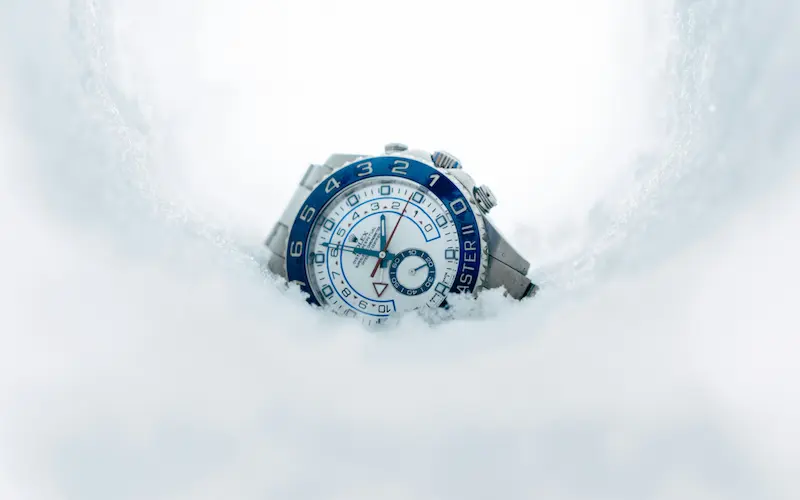
Water resistance ratings on watches are based on static pressure testing in a lab, not real-world conditions. A 30m rating doesn't mean the watch can go 30 meters underwater — it means it was tested to withstand pressure roughly equivalent to that depth, under still, controlled conditions, with the watch not moving.
Real life isn't still. Swimming, showering, or diving involves movement, temperature changes, and pressure fluctuations that don't match a lab test at all. That's why the general rule among watchmakers is to treat the rated number as a rough safety margin, not a literal depth limit.
A Rough (But More Honest) Breakdown
30 meters (3 ATM) generally means splash resistant — rain, hand washing, maybe an accidental drop in a sink. Not swimming, not showering.
50 meters (5 ATM) allows for light swimming, but not diving or prolonged submersion. Showering is still a gray area since hot water and soap can affect gaskets over time even if the pressure itself would technically be fine.
100 meters (10 ATM) is generally safe for swimming and snorkeling, though still not intended for scuba diving despite what the number might suggest.
200 meters (20 ATM) and above is where actual dive-rated watches live, usually accompanied by a proper ISO dive watch certification, not just a depth number on the case back.
Preventing damage is always much cheaper and easier than trying to restore a ruined luxury item later on. Find the complete preventive steps in our Damage Prevention Blueprint
The pattern here is that ratings assume a margin of safety, and watchmakers intentionally rate conservatively because so many variables outside the lab (temperature shock, wear and tear on seals, unscrewed crowns) can compromise the rating in practice.
What Actually Fails First (It's Rarely the Case Itself)
The watch case is usually the least of the problem. Water resistance depends almost entirely on rubber gaskets — small O-rings sealing the crown, case back, and crystal — and those degrade over time regardless of how carefully you treat the watch.
Gaskets harden and lose elasticity with age, typically over a few years depending on the watch and how often it's exposed to temperature swings or chemicals like sunscreen, chlorine, or soap. A watch that was genuinely 100m water resistant when new might not be anymore, five or ten years later, even if nothing looks visibly wrong.
This is the part almost nobody checks. A water resistance rating isn't a permanent property of the watch — it's a snapshot of condition at the time it was tested or serviced, and it decays quietly with age.
The Crown Is the Other Common Failure Point
An unscrewed or partially engaged crown is one of the most common ways water gets into a watch that's otherwise perfectly rated for the activity. Screw-down crowns need to be fully tightened, not just pushed in, and it's an easy thing to forget after setting the time or date.
I've seen this happen with genuinely well-built dive watches — someone adjusts the date at the pool, forgets to screw the crown back down, and jumps in five minutes later. The watch's actual capability was never the issue.
How to Actually Know If Your Watch Is Still Protected
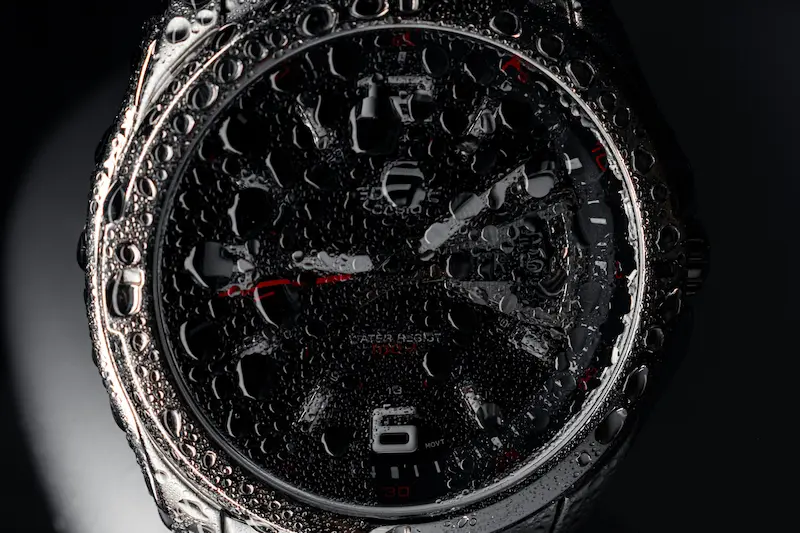
The honest answer is that you often don't, unless it's been pressure-tested recently by a watchmaker. Visual inspection alone won't reveal a hardened gasket or a compromised seal.
If a watch is more than a few years past its last full service, and water resistance actually matters to you — not just as a spec on paper but for real activities like swimming or diving — it's worth having it pressure tested rather than assuming the original rating still holds. Most watchmakers can do this quickly without a full service being necessary.
To ensure your luxury pieces retain their high resale value over the years, proper protection should start from day one. Read our full guide on How to Protect Your Luxury Investments
FAQ
Can I shower with a 50m water resistant watch?
Technically the pressure involved in showering is low enough that a 50m rating should handle it, but hot water and soap accelerate gasket wear over time, so many watchmakers still advise against habitual showering with any watch that isn't specifically rated for it.
Does water resistance decrease over time even without visible damage?
Yes. Gaskets harden and lose their seal gradually with age and environmental exposure, regardless of whether the watch shows any outward signs of wear.
Is a screw-down crown always water resistant if it's a dive watch?
Only if it's actually screwed down fully. A dive watch with an unscrewed crown offers no more protection at that point than one without a screw-down mechanism at all.
Should I get water resistance tested separately from a full service?
Yes, if you just want peace of mind about a specific rating without committing to a full movement service — most watchmakers can do a standalone pressure test.
Why did my watch fog up even though it's rated higher than what I was doing?
Fogging usually indicates a seal failure rather than the rating being exceeded — meaning the actual protection had already degraded below the number stamped on the case, most likely due to gasket age or an improperly sealed crown.
The number on the case back was never meant to be the whole story. It's a starting point that assumes fresh gaskets and correct use — not a permanent guarantee that holds up exactly the same years later.