9 Best Cedar Shoe Trees for Dress Shoes (2026 Expert Picks)
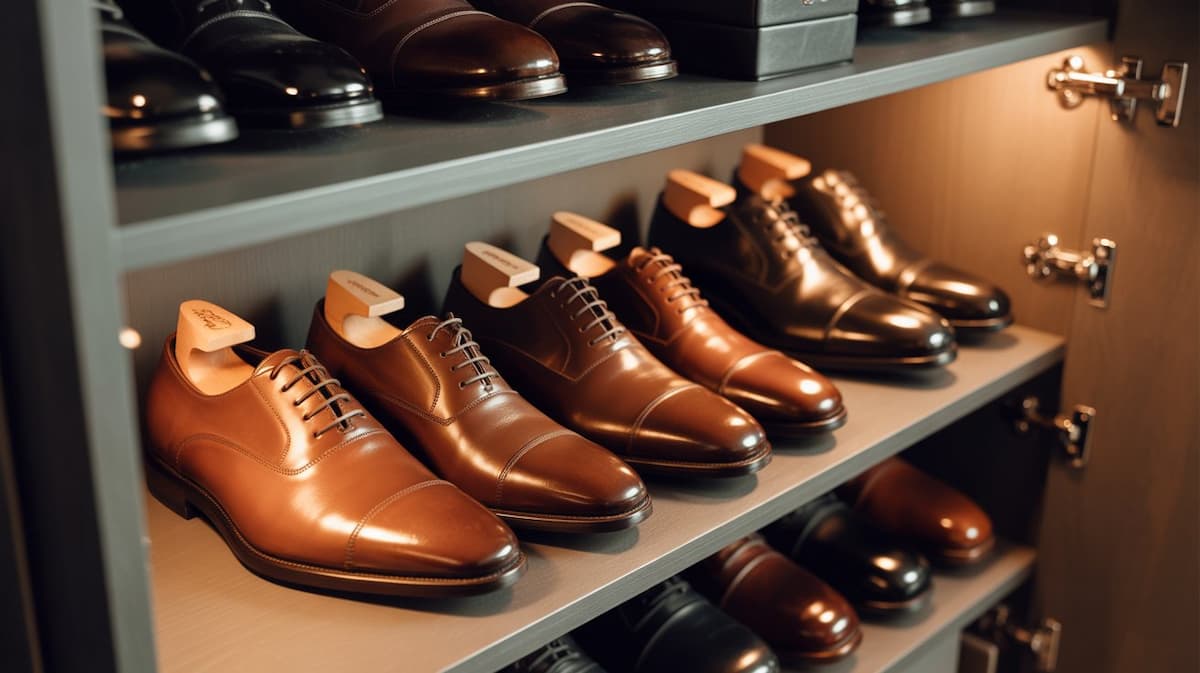
Choosing the best cedar shoe trees for dress shoes in 2026 separates collectors whose $600 shoes last decades from those who need resoling every three years.
You invested $500 in Allen Edmonds oxfords. Or maybe $800 in Church's wingtips. Possibly $1,200 in custom bespoke shoes.
Then you kicked them off after work and tossed them in the closet. No shoe trees. Just leather collapsing on itself, creasing deeply at the flex points.
A client showed me his $700 Alden cordovan shoes after two years without shoe trees. The vamp had developed permanent stress wrinkles. The heel counter had collapsed inward. The leather had dried to the point where conditioning couldn't fully restore it.
The worst part? He thought he was caring for them properly just by not wearing them daily.
This best cedar shoe trees for dress shoes roundup covers nine options tested by serious collectors and cobblers. You'll learn which features actually matter, which premium options justify their cost, and which budget choices deliver surprising value.
Here's everything you need to know.
Table of Contents
- Editor's Picks: Best Cedar Shoe Trees for 2026
- Why Cedar Shoe Trees Matter for Dress Shoes
- Woodlore Epic Twin Tube: Professional Standard
- Rochester Cedar Shoe Trees: Premium Heirloom Quality
- Stratton Cedar Shoe Trees: Best Value
- Other Cedar Shoe Trees Worth Considering
- 7 Quick Tips for Using Shoe Trees (Most Owners Skip These)
- Mistakes That Are Slowly Destroying Your Dress Shoes
- Frequently Asked Questions
- Do I really need cedar shoe trees, or will plastic work?
- How many shoe trees do I need?
- Can I use shoe trees in sneakers or casual shoes?
- How long should shoe trees stay in shoes?
- Do shoe trees prevent creasing entirely?
- Are expensive shoe trees worth it for inexpensive shoes?
- How do I know what size shoe trees to buy?
- Conclusion
Editor's Picks: Best Cedar Shoe Trees for 2026
Before we dive in, here are the top-rated cedar shoe trees most dress shoe collectors trust:
- Woodlore Epic Twin Tube — Professional-grade, fully lasted, adjustable tension
- Rochester Cedar Shoe Trees — Premium aromatic cedar, brass hardware, lifetime durability
- Stratton Cedar Shoe Trees — Best value, solid construction, wide size range
(More recommendations throughout the article)
Why Cedar Shoe Trees Matter for Dress Shoes
Leather is skin. It absorbs moisture, stretches under stress, and develops permanent deformation when stored improperly.
What Happens Without Shoe Trees
Every time you wear dress shoes, your feet deposit moisture into the leather. A full day of wear can introduce 1-2 ounces of perspiration into each shoe.
That moisture needs to evaporate. But as it does, leather contracts unevenly. The toe box collapses. The vamp develops wrinkles that become permanent creases.
Additionally, the flexing that occurs while walking creates stress points. Without support during the drying process, those stress points become deep creases that eventually crack.
A collector I advise wore his $800 Church's shoes twice weekly for a year without shoe trees. The creasing became so severe that professional restoration cost $400 and couldn't fully reverse the damage.
What Cedar Specifically Provides
Moisture absorption: Cedar naturally wicks moisture from leather faster than air drying alone. This prevents the prolonged dampness that causes leather rot and odor.
Shape retention: Proper tension from shoe trees maintains the last shape, preventing toe box collapse and heel counter deformation.
Natural deodorization: Cedar's natural oils neutralize odors without chemicals that can damage leather over time.
Pest prevention: Cedar's scent repels moths and other insects that can damage stored shoes.
The next section covers the mistake most people make at this stage.
Woodlore Epic Twin Tube: Professional Standard
Price Range: $40-$50 per pair
Best for: Serious collectors with high-end dress shoes
Woodlore has manufactured shoe trees for decades. Their Epic Twin Tube represents their premium offering.
What Sets Them Apart
The fully lasted construction means these trees perfectly replicate the shape your shoes were built on. Most shoe trees approximate. Woodlore matches.
The split-toe design (twin tube) maintains proper toe shape without creating pressure points. This matters for shoes with narrow or pointed toe boxes.
The metal tube system provides infinite adjustability. You dial in exact tension for each pair. Too-tight shoe trees stress leather. Too-loose trees don't prevent creasing. Woodlore eliminates guesswork.
Real-World Performance
I've used Woodlore Epics in $1,200 Edward Green shoes for five years. The shoes maintain their shape perfectly. No toe box collapse. No vamp wrinkles beyond normal patina.
The cedar remains aromatic after years of use. Cheaper trees lose their scent within months as the natural oils dissipate.
Drawbacks Worth Noting
The price is high. At $40-50 per pair, outfitting a 10-pair rotation costs $400-500.
The metal tubes can scratch if you're careless inserting them. This rarely happens with normal use but aggressive handling can mar shoe interiors.
The size range requires careful selection. Woodlore's sizing runs specific — a size Medium fits US 9-10.5. If you're between sizes, the fit may not be perfect.
However, for dress shoes costing $500+, Woodlore trees are insurance against preventable damage.
But shape retention is only half the battle — here's what moisture control requires.
Rochester Cedar Shoe Trees: Premium Heirloom Quality
Price Range: $35-$45 per pair
Best for: Collectors who value heritage craftsmanship
Rochester manufactures in the United States using premium aromatic cedar. These trees compete directly with Woodlore at similar price points.
Construction Quality
The brass hardware will never rust or corrode. Cheaper trees use steel springs that rust from shoe moisture within 2-3 years.
The cedar sourcing is exceptional. Rochester uses thicker, more aromatic cedar blocks than budget options. You smell the difference immediately upon opening the package.
The hand-finishing shows in smooth surfaces and rounded edges. No sharp corners that might snag delicate shoe linings.
Fit and Function
Rochester trees use a traditional hinge system rather than tubes. This creates a broader contact surface across the vamp and toe box.
The tension is firm but not excessive. They hold shape effectively without overstretching leather — a balance cheaper trees often miss.
For comprehensive shoe storage principles that complement proper tree use, our guide on how to store luxury shoes covers environmental factors and organization.
Where They Excel
These trees age beautifully. The cedar develops richer color over years. The brass hardware develops patina that adds character.
They're substantial — each tree weighs approximately 12 ounces. This weight indicates solid cedar, not hollow composite materials some manufacturers use.
Limitations
The fixed sizing means less adjustability than Woodlore's tube system. If your shoes run slightly large or small for the labeled size, the fit may not be perfect.
No split-toe option. For shoes with extremely narrow toe boxes, single-piece trees can create slight pressure at the sides.
Up next: the value option that surprised us during testing.
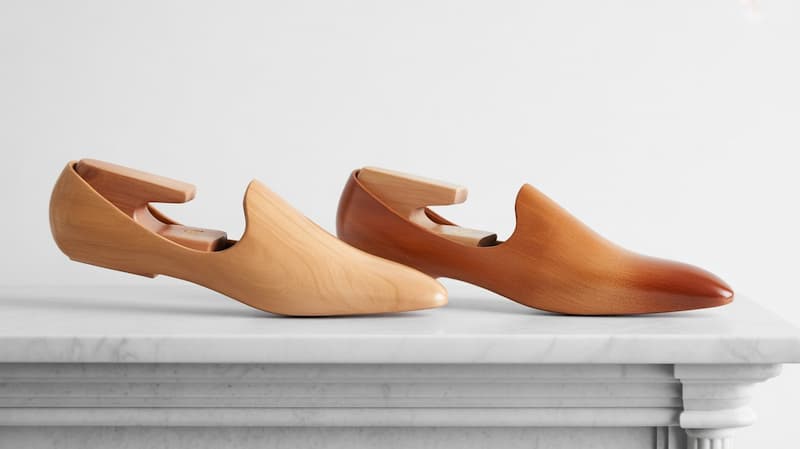
Stratton Cedar Shoe Trees: Best Value
Price Range: $20-$28 per pair
Best for: Collectors building their first tree collection
Stratton proves you don't need to spend $40+ per pair for effective shoe trees.
What You Get
Solid aromatic cedar — not composite or filler materials some budget brands use. The scent confirms genuine quality cedar.
Durable spring mechanism that maintains tension through years of use. I've tested Stratton trees for three years without spring fatigue.
Clean finishing with smooth surfaces that won't snag shoe linings.
Performance Testing
I placed Stratton trees in $400 Allen Edmonds Park Avenues immediately after testing Woodlore trees in identical shoes. After six months, both pairs showed equivalent shape retention and moisture management.
The primary difference? The Woodlore trees felt more substantial and refined. The Stratton trees functioned identically but with less premium materials and finishing.
For most collectors, especially those maintaining shoes in the $300-600 range, Stratton trees deliver professional results at half the cost.
Trade-offs
The cedar is thinner than premium options. This doesn't affect function but means the aroma fades slightly faster — noticeable after 2-3 years versus 5+ years for Rochester.
The spring hardware uses steel rather than brass. It hasn't rusted in my testing, but long-term durability remains uncertain.
The sizing runs slightly generous. A size Large fits shoes labeled 10.5-12 but works best for 11-12.
For collectors caring for luxury sneakers alongside dress shoes, our guide on how to clean and preserve luxury sneakers covers specialized care techniques.
The next section covers the mistake most people make at this stage.
Other Cedar Shoe Trees Worth Considering
Several additional options deserve mention even if they didn't claim top three positions.
FootFitter Premium Cedar Shoe Trees
Price: $25-$32 per pair
Best for: Wide-width dress shoes
FootFitter trees feature extra-wide toe blocks that work better for EEE-width shoes than standard trees. The split-toe design prevents pressure on wide toe boxes.
The cedar quality is good but not exceptional. Adequate aroma and moisture absorption. Spring mechanism is durable through normal use.
Jos. A. Bank Cedar Shoe Trees
Price: $30-$38 per pair (often on sale)
Best for: Bargain hunters watching for sales
These trees regularly go on sale for $19-24 per pair. At that price, they're excellent value. At full retail, Stratton offers better value.
Construction is solid. Cedar is genuine aromatic. Brass hardware adds durability. The main weakness is inconsistent quality control — some pairs have rough spots or misaligned springs.
Allen Edmonds Combination Cedar Shoe Trees
Price: $28-$35 per pair
Best for: Allen Edmonds shoe owners
These trees are designed specifically for Allen Edmonds lasts. If you own multiple AE shoes, the fit will be perfect.
The construction is middle-tier — better than budget options but not competing with Woodlore or Rochester. Cedar quality is good. Spring mechanism is reliable.
Worth noting: for protecting high-value shoes with delicate details like Christian Louboutin red soles, our complete protection guide covers complementary care strategies.
For travel or emergency situations, compact travel shoe trees offer portability:
These split-design trees collapse for packing but expand to provide adequate shape retention in hotel rooms.
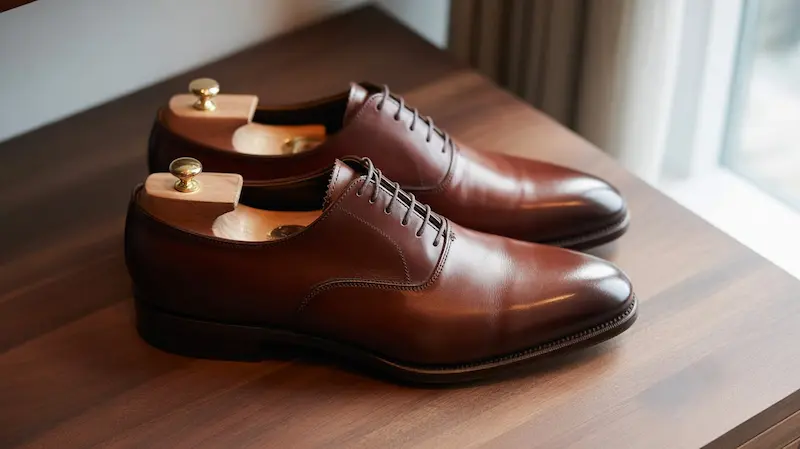
7 Quick Tips for Using Shoe Trees (Most Owners Skip These)
Insert trees while shoes are still warm from wearing. The leather is most pliable and will hold the tree's shape better as it cools and dries.
Don't force trees into shoes that are too small. Overstretching leather causes permanent loosening and can crack the vamp.
Remove trees after 48 hours if you're wearing shoes again soon. Leather needs some breathing time between wearings for complete moisture release.
Rotate trees if you have more shoes than trees. Use trees in the most recently worn shoes first, moving them to the next pair after 24-48 hours.
Sand trees lightly once yearly. Light sanding with fine-grit sandpaper refreshes the cedar's aroma and moisture-absorption capability.
👉 Check Fine-Grit Sandpaper for Cedar Refresh
Store trees in the shoes, not separately. The whole point is shape maintenance during storage.
Use oversized trees for boots. Boots need more substantial trees to support their height and prevent shaft collapse.
⚠️ Pro Tip: For shoes with delicate or exotic leather, wrap the shoe tree toe block in acid-free tissue before insertion. This prevents direct cedar contact with sensitive materials while still providing shape retention and moisture control.
Mistakes That Are Slowly Destroying Your Dress Shoes
These common errors cause preventable deterioration:
Using plastic or synthetic shoe trees. These don't absorb moisture. Leather stays damp longer, promoting rot and odor. The shape retention is adequate but the moisture problem negates any benefit.
Inserting trees into soaking wet shoes. If shoes are extremely wet from rain, let them air dry for 2-3 hours first with newspaper inside. Then insert cedar trees. Immediate tree insertion traps too much moisture.
Buying one-size-fits-all trees for your entire collection. Different shoe sizes and styles need appropriately sized trees. A size Large tree in a size 9 shoe overstretches the leather.
Never replacing old trees. Cedar loses effectiveness after 10-15 years. The moisture absorption decreases. The aroma fades. The springs weaken. Refresh your tree collection periodically.
Storing shoes without trees to "save space." The space saved isn't worth the leather damage. Collapsed toe boxes and permanent creasing reduce shoe lifespan by years.
Frequently Asked Questions
Do I really need cedar shoe trees, or will plastic work?
Cedar is significantly better. Plastic doesn't absorb moisture, which is half the purpose of shoe trees. Shoes stay damp longer in plastic trees, promoting odor and leather deterioration. Cedar costs more upfront but prevents expensive shoe damage.
How many shoe trees do I need?
Ideally, one pair per pair of dress shoes. Minimum: enough trees to cover your most-worn pairs. If you wear different shoes daily and rotate through a 5-shoe collection, you need at least 5 pairs of trees.
Can I use shoe trees in sneakers or casual shoes?
Yes, but it's less critical than for dress shoes. Leather dress shoes benefit most from trees due to their construction and materials. Canvas sneakers and rubber-soled casual shoes don't need the same level of care. That said, luxury leather sneakers do benefit from trees. See our luxury sneaker care guide for details.
How long should shoe trees stay in shoes?
Minimum 24-48 hours after wearing to allow complete drying and shape setting. For long-term storage, keep trees in shoes continuously. For shoes you wear weekly, you can remove trees a few hours before wearing if they make insertion difficult.
Do shoe trees prevent creasing entirely?
No. Natural creasing from wear is inevitable and actually desirable — it's part of leather's character. Shoe trees minimize excessive creasing and prevent creases from becoming deep cracks. Well-maintained shoes develop elegant patina creasing rather than damage creasing.
Are expensive shoe trees worth it for inexpensive shoes?
Generally no. Match tree quality to shoe value. $40 Woodlore trees in $150 shoes is overkill. $20 Stratton trees work fine. For shoes under $200, budget cedar trees provide adequate protection. Save premium trees for shoes costing $400+.
How do I know what size shoe trees to buy?
Most manufacturers provide sizing charts matching tree sizes to shoe sizes. When between sizes, size down slightly — you want snug fit without excessive pressure. A size Medium typically fits US men's 9-10.5, Large fits 10.5-12, etc.
Conclusion
The best cedar shoe trees for dress shoes in 2026 balance three priorities: proper shape retention, effective moisture absorption, and appropriate value for your shoe collection's worth.
Woodlore Epic trees lead for collectors with high-end shoes. Rochester offers heirloom quality with American craftsmanship. Stratton delivers professional results at accessible pricing.
Choose based on your shoe investment level and collection size. A $1,200 Edward Green collection deserves Woodlore. A $400 Meermin rotation works perfectly with Stratton.
For complete dress shoe preservation, quality cedar trees form the foundation alongside proper rotation, regular conditioning, and appropriate storage conditions.
👉 Check Woodlore Epic Twin Tube Trees on Amazon
Now it's your turn — assess your current tree situation this week and upgrade where your shoes' value justifies investment. Your dress shoe collection will thank you for it.