How to Clean Platinum Jewelry at Home (Safe DIY Method)
There's a particular kind of disappointment that comes from looking at a platinum ring you paid several thousand dollars for and thinking it looks — somehow — worse than it did six months ago. Duller. Grayer. Less like the cool, bright metal you chose over white gold because you wanted something that would last.
The instinct is to worry. Has something gone wrong with the metal? Is the platinum wearing down? Did the jeweler sell you something that wasn't what they claimed?
Almost certainly, no.
What you're looking at is buildup. Body oils, lotion residue, soap film, cooking grease, hand sanitizer — the quiet accumulation of daily life sitting on top of a metal that is, underneath all of that, exactly as beautiful as the day you bought it.
Knowing how to clean platinum jewelry at home is one of those things that sounds like it should be complicated for something this valuable. It isn't. The method takes less than twenty minutes, costs almost nothing, and the results are immediate. But the mistakes people make — reaching for the wrong product, scrubbing too hard near gemstones, or skipping steps that seem minor — those can cause the kind of damage that isn't easily undone.
This is the full guide. What works, what doesn't, and why the difference matters.
Table of Contents
- Why Platinum Gets Dull (And Why That's Not Damage)
- What Dirty Platinum Does to Your Gemstones
- Understanding Platinum Purity (It Affects Cleaning)
- The Safe Method: Soap and Warm Water
- The Baking Soda Method (For Heavy Buildup)
- Cleaning Platinum with Diamonds
- Cleaning Platinum with Softer Gemstones
- When Platinum Looks Yellow
- Cleaning Heirloom and Antique Platinum
- 5 Mistakes That Damage Platinum Jewelry
- How Often Should You Clean Platinum?
- Storage Between Cleanings
- Long-Term Care: Beyond Cleaning
- Frequently Asked Questions
- The Simplest Things Last the Longest
Why Platinum Gets Dull (And Why That's Not Damage)
Platinum is the densest precious metal used in fine jewelry. It doesn't corrode. It doesn't tarnish. It doesn't oxidize the way silver does. If you sealed a platinum ring in a box for fifty years and opened it, the metal itself would be unchanged.
What platinum does do — and this surprises most owners — is develop a patina.
When platinum gets scratched during daily wear, the metal doesn't wear away. It displaces. Microscopic amounts of material shift to the side rather than being lost. Over months, these tiny surface movements create a soft, satin finish that's different from the high polish the ring had when new.
Some collectors genuinely prefer this look. It gives platinum a warmth and character that polished white gold can't replicate. Vintage platinum from the 1920s and 1930s often has this quality — a gentle, lived-in glow that signals real age and real wear.
But patina and dirt are two different things.
That cloudy, slightly greasy film that makes your platinum look lifeless? That's not patina. That's residue — from hand soap, moisturizer, cooking oils, sunscreen, and the natural oils your skin produces throughout the day. This buildup sits on top of the patina and blocks light from interacting with the metal's surface.
Cleaning removes the buildup. It doesn't remove the patina. Understanding that distinction changes how you think about maintenance entirely.
What Dirty Platinum Does to Your Gemstones
If your platinum piece holds diamonds — and most do — the cleaning conversation becomes about more than just the metal.
Diamonds create brilliance by refracting light. Light enters the top of the stone, bounces off the internal facets, and exits as the sparkle you see. This only works when light can enter cleanly. A film of oil, lotion, or soap residue on the diamond's surface — or coating the underside where the stone sits in the setting — blocks that light path entirely.
A dirty diamond doesn't look smaller. It looks dead. The sparkle disappears. The stone looks gray and flat. And many owners assume the diamond itself has changed, when in reality it's just a layer of grime between the stone and the light.
Cleaning the platinum setting restores the diamond's performance as much as it restores the metal's appearance. Often more.
Understanding Platinum Purity (It Affects Cleaning)
Not all platinum jewelry is created equal, and the purity level affects how the metal responds to different cleaning methods.
| Purity | Platinum Content | Common Use | Cleaning Sensitivity |
|---|---|---|---|
| 950 Platinum | 95% pure | Most fine jewelry | Very resistant — handles all safe methods |
| 900 Platinum | 90% pure | Some European pieces | Slightly more reactive to harsh chemicals |
| 850 Platinum | 85% pure | Less common, older pieces | More alloy content — avoid acidic cleaners |
The hallmark stamped inside your ring or on the clasp of your necklace tells you the purity. 950 or Pt950 is what you'll find on most modern fine jewelry. If you can't find a hallmark, assume the lower purity and use the gentlest method available.
This detail matters because lower-purity platinum alloys contain more secondary metals — often iridium, ruthenium, or cobalt — that can react differently to certain cleaning agents. The soap-and-water method below is safe for all purities. The baking soda method should be reserved for 950 platinum only.
The Safe Method: Soap and Warm Water
This is the method that works for every platinum piece — with or without gemstones, at any purity level. Jewelers use this same basic approach for routine cleaning. The difference between professional and home results is technique, not tools.
What You Need
- Mild dish soap — unscented, dye-free (Dawn Free & Clear or equivalent)
- Warm water (comfortable to touch, not hot)
- A soft-bristle toothbrush (a clean one, dedicated to jewelry — not recycled from the bathroom)
- A small bowl
- A soft microfiber cloth like the MagicFiber Premium set (Check on Amazon) — the same type used for cleaning fine leather and luxury eyewear, and gentler on metal surfaces than regular cotton
- A lint-free towel for drying
Step by Step
Step 1: Prepare the solution.
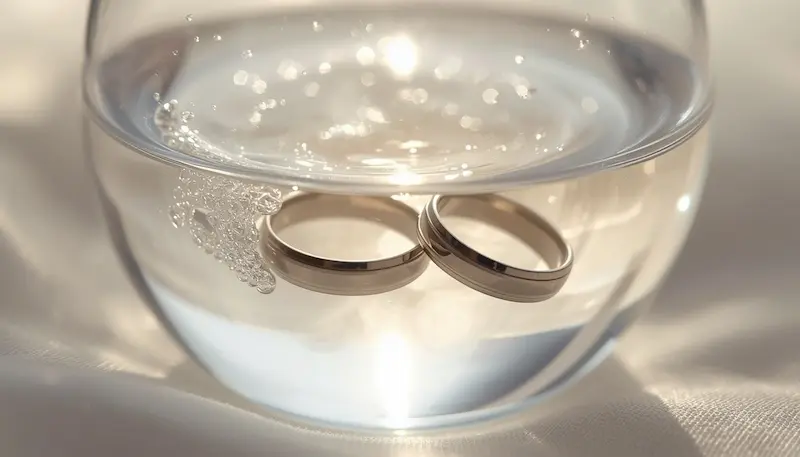
Fill a small bowl with warm water — roughly the temperature you'd use to wash your face. Add two to three drops of mild dish soap. Stir gently until slightly sudsy. No more soap than this. Excess soap leaves its own film, which defeats the purpose.
Step 2: Soak.
Place your platinum piece into the bowl and let it sit for fifteen to twenty minutes. This loosens oil and grime without scrubbing. Patience here saves effort later.
Step 3: Brush gently.
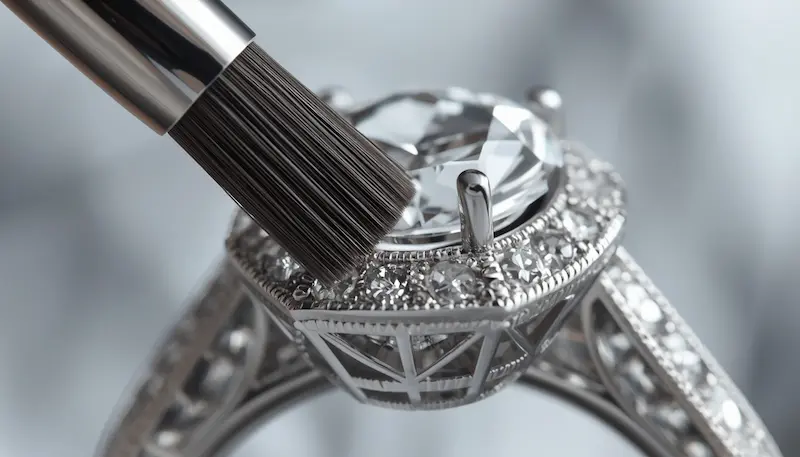
After soaking, lift the piece out and brush it with the soft-bristle toothbrush. Focus on the areas that trap the most buildup: the underside of gemstones, the crevices around prong settings, chain links, and the inner surface of rings where skin oil concentrates.
Use light pressure. You're displacing loosened grime, not scrubbing it off by force. The soaking did most of the work already.
Step 4: Rinse thoroughly.
Hold the piece under warm running water until every trace of soap is gone. Leftover soap residue creates a dull film — exactly what you're trying to remove. Rinse longer than feels necessary.
Important: Close the drain first, or hold the piece over a mesh strainer. Rings slip out of soapy fingers more often than anyone wants to admit. A three-dollar strainer prevents a loss that no amount of money fixes.
Step 5: Dry properly.
Pat — don't rub — with a lint-free towel. Then let the piece air dry completely on a soft cloth before wearing or storing. Wearing jewelry that's still slightly damp traps moisture against your skin, which accelerates the next round of buildup.
This is something most owners don't notice until it's too late — they put the ring back on while it's still damp, and wonder why it looks dull again within days.
The Baking Soda Method (For Heavy Buildup)
When a piece hasn't been cleaned in months — or years — the soap method alone may not fully remove everything. A gentle baking soda paste adds mild abrasive action that handles what soaking and brushing can't.
Important Limitation
This method is safe for plain platinum without gemstones and for platinum with diamonds only. Do not use baking soda paste on:
- ❌ Pearls — the nacre scratches easily under even mild abrasion
- ❌ Opals — too soft, surface will scratch
- ❌ Emeralds — often fracture-filled, abrasion causes damage
- ❌ Any coated or treated gemstone
If your platinum piece holds pearls, the cleaning approach is completely different. Proper pearl care requires specific techniques that protect the organic surface — techniques that don't apply to metal cleaning.
Step by Step
Mix a small amount of baking soda with a few drops of water to form a soft paste — roughly the consistency of toothpaste. Apply with your fingertip or a soft cloth to the platinum surface. Avoid direct contact with any gemstone other than diamond.
Rub gently in small circular motions for twenty to thirty seconds per section. Then rinse thoroughly under warm water.
Follow up with the full soap method above to remove any baking soda residue from crevices and settings. Baking soda that dries in a setting can leave a white film that's visible and irritating to remove later.
Dry completely with a lint-free cloth.
Cleaning Platinum with Diamonds
Diamonds are the easiest gemstones to clean alongside platinum. They're the hardest natural material — harder than baking soda, harder than a toothbrush bristle, harder than anything you'll encounter in a home cleaning scenario.
Focus the toothbrush on the underside of the diamond where grime collects. This is the area most owners miss, and it's the area that matters most for restoring sparkle. The pavilion facets on the bottom of the stone are where light bounces internally — if they're coated in oil, the diamond looks flat regardless of how clean the top surface is.
After cleaning, hold the piece under a light source. If the diamond sparkles noticeably more than before, you've successfully removed the film. If it still looks muted, repeat the soaking and brushing cycle — sometimes heavy buildup requires two passes.
For a more thorough approach to cleaning diamond settings specifically, tested jewelry cleaning kits can offer additional precision for owners who want professional-level results at home.
Cleaning Platinum with Softer Gemstones
Pieces combining platinum with pearls, opals, emeralds, or tanzanite require the soap-and-water method only — no baking soda, no ultrasonic cleaners, no aggressive brushing near the stones.
For these pieces, brush only the platinum surfaces. Use a damp cloth — not a brush — for the area immediately around the gemstone. The stone itself should be wiped gently with a slightly damp microfiber cloth and dried immediately.
This is where many owners make their most consequential mistake: treating the entire piece as if it's as durable as the platinum it's set in. The metal is nearly indestructible. The stone may not be.
When Platinum Looks Yellow
Some platinum pieces — particularly older ones — develop a slight yellow or warm tint over time. This isn't dirt. It isn't patina. And it won't respond to home cleaning.
The usual causes:
Rhodium plating wearing off. Some pieces sold as "platinum" are actually white gold with rhodium plating. As the plating wears, the slightly yellow base metal shows through. Check the hallmark — genuine platinum will be stamped 950, 900, or Pt.
Alloy metal reaction. Lower-purity platinum (850 or below) contains alloy metals that can react with body chemistry over years, producing a warm tint in certain skin chemistries.
Sulfur exposure. Certain skincare products, hot springs, and industrial environments can cause surface discoloration on platinum alloys.
None of these respond to soap and water. Yellowing requires professional assessment — either re-rhodium plating (if it's actually white gold) or professional polishing (if it's genuine platinum with alloy discoloration).
Cleaning Heirloom and Antique Platinum
Antique platinum pieces — particularly Art Deco and Edwardian jewelry from the early twentieth century — deserve extra caution.
Older settings may have weakened prongs that water pressure and brushing can stress. Vintage gemstones may have treatments or enhancements that weren't documented at the time of sale. Filigree work — the delicate, lace-like metalwork common in antique platinum — traps grime aggressively but is fragile under direct brushing.
For pieces over fifty years old, professional cleaning is almost always the safer choice. The cost — typically $30 to $80 — is minimal relative to the piece's value and irreplaceability.
If you choose to clean an antique piece at home, use the soap method with reduced soaking time (five minutes instead of fifteen) and avoid brushing near any filigree or delicate setting work. Dry with a microfiber cloth using the lightest possible touch.
5 Mistakes That Damage Platinum Jewelry
1. Using Toothpaste
Despite the persistent myth, most toothpastes contain abrasives far too harsh for fine jewelry — silica, calcium carbonate, or aluminum oxide. These scratch platinum's surface and can damage gemstones permanently. Toothpaste is for teeth. Keep it there.
2. Chlorine Bleach
Chlorine doesn't damage pure platinum directly, but it can pit lower-purity alloys and damage gemstone settings. Pool chlorine, bleach cleaning products, and chlorinated water are all risks. Remove platinum jewelry before swimming or cleaning with bleach products.
3. Consumer Ultrasonic Cleaners
Professional ultrasonic machines are calibrated precisely for jewelry. Consumer-grade versions operate with less control and can loosen stones in older settings through vibration. For plain platinum bands without stones, they're generally safe. For anything with gemstones, the risk isn't worth the convenience.
4. Ammonia-Based Cleaners
Safe for platinum metal but damaging to many gemstones — particularly pearls, opals, and treated stones. The problem is that most owners don't know whether their gemstones are treated. Avoiding ammonia entirely eliminates the risk.
5. Rubbing Alcohol and Hand Sanitizer
Both leave residue on platinum and can cloud certain gemstone surfaces. The alcohol evaporates, but the other ingredients in commercial sanitizers don't. Remove rings before applying hand sanitizer — a habit that also prevents the buildup that makes cleaning necessary so frequently.
These are the same categories of mistakes that affect fine jewelry care across all metals and stones. The products are different, but the pattern of reaching for something convenient rather than something appropriate is consistent.
How Often Should You Clean Platinum?
| How You Wear It | Cleaning Frequency | Method |
|---|---|---|
| Daily (engagement ring, wedding band) | Every 1–2 weeks | Full soap method |
| Several times per week | Every 2–4 weeks | Full soap method |
| Occasionally | Before each wear | Quick wipe with damp cloth |
| Rarely (stored most of the time) | Before wearing and before storing | Full soap method |
The Daily Habit That Changes Everything
The single most effective maintenance practice is also the simplest: wipe your platinum with a soft microfiber cloth each night when you take it off. Five seconds. No water, no soap. Just a gentle wipe removes the day's oils before they build up.
This one habit reduces how often you need to deep clean by roughly half. It's the kind of small, consistent practice that separates jewelry that looks pristine after years from jewelry that always seems to need attention.
Storage Between Cleanings
Clean platinum stored incorrectly will get dirty again faster than you'd expect. Dust, ambient moisture, and contact with other metals all contribute to the buildup cycle.
Store platinum pieces separately from gold and silver jewelry. Platinum is dense and heavy — it can scratch softer metals through simple contact in a shared jewelry box. A fabric-lined jewelry organizer with individual compartments like the Houseables Velvet Jewelry Box (View details) keeps pieces separated without requiring individual pouches for each item.
For diamond jewelry specifically, proper storage practices extend the time between cleanings significantly — the less dust and ambient contamination reaches the setting, the longer the diamond maintains its sparkle.
Adding anti-tarnish strips to your jewelry storage doesn't directly benefit platinum (which doesn't tarnish), but if your jewelry box also holds silver or gold pieces, quality anti-tarnish strips protect those metals while creating a generally cleaner storage environment for everything inside.
Long-Term Care: Beyond Cleaning
Remove before applying products. Take off platinum rings and bracelets before applying lotion, sunscreen, perfume, or hand cream. These products coat the metal and gemstones faster than anything else. Thirty seconds of prevention saves twenty minutes of cleaning.
Take rings off before heavy manual work. Platinum doesn't scratch away, but impact can bend prongs and damage settings. Gardening, weightlifting, and moving furniture are common culprits.
Have prongs checked annually. A jeweler can inspect settings under magnification and catch worn prongs before a stone comes loose. Most jewelers offer this service free or at minimal cost. It takes ten minutes and prevents the kind of loss that no amount of insurance truly compensates for.
Consider professional polishing once a year. A jeweler can restore high polish or enhance the natural patina — whichever you prefer. This also removes minor surface scratches that home cleaning doesn't address. Tell your jeweler which finish you want. Many default to high polish unless you specifically request the satin patina look.
Keep a dedicated cleaning cloth accessible. The easier it is to grab, the more likely you are to use it nightly. A microfiber cloth in your nightstand drawer — not buried in a bathroom cabinet — is the difference between a habit and an intention. A quality set like the MR.SIGA Ultra Fine Microfiber Cloths (See current price) gives you enough to keep one at each location where you typically remove jewelry.
If your jewelry storage setup needs attention beyond just platinum, choosing the right jewelry box is worth the time — proper storage preserves everything from diamonds to delicate pearls.
Frequently Asked Questions
Does platinum tarnish like silver?
No. Platinum does not tarnish, corrode, or oxidize under normal conditions. The dullness you see is either surface dirt and oils (removable with cleaning) or natural patina from microscopic metal displacement (a surface character that many collectors prefer). Neither is damage.
Can I clean my platinum engagement ring every day?
A daily wipe with a dry microfiber cloth is perfectly safe and recommended. A full soap-and-water cleaning every one to two weeks is ideal for daily-wear rings. Over-cleaning isn't a concern with platinum — unlike silver, there's no protective layer to strip away.
Is platinum harder to clean than white gold?
Actually easier. White gold has a rhodium plating that can wear off with aggressive cleaning. Platinum has no plating — what you see is solid platinum all the way through. You can clean it more thoroughly without worrying about wearing through a surface coating.
How do I remove deep scratches from platinum at home?
You can't — not safely. Deep scratches require professional buffing with specialized equipment. The reassuring news is that platinum scratches are surface displacement, not material loss. A jeweler can refinish the surface without reducing the ring's weight or structural integrity. The metal is still there — it's just been rearranged.
Can I use an ultrasonic cleaner on platinum?
For plain platinum bands without gemstones, a quality ultrasonic cleaner works fine. For platinum pieces with stones — especially softer gemstones or older settings — avoid ultrasonic cleaning at home. The vibrations can loosen prongs and dislodge stones in ways that aren't immediately visible until the stone is actually lost.
Will cleaning platinum at home void my warranty?
Gentle soap-and-water cleaning will not void any reputable jeweler's warranty. Using harsh chemicals, abrasive tools, or consumer ultrasonic machines might — check your warranty terms before trying anything beyond the soap method.
The Simplest Things Last the Longest
Knowing how to clean platinum jewelry at home isn't complicated. Warm water, mild soap, a soft brush, and a microfiber cloth handle ninety-five percent of what your platinum needs. The baking soda paste covers the remaining five percent for stubborn buildup. Everything beyond that belongs to a professional.
The owners whose platinum still looks extraordinary after decades of daily wear aren't doing anything elaborate. They're wiping the ring each night. Cleaning it properly every couple of weeks. Checking the prongs twice a year. Storing it away from other metals.
Small details, consistently maintained. That's what keeps the densest, rarest precious metal in your collection looking exactly the way it should — not just today, but for the decades of wear it was built for.