7 Proven Ways to Stop Cashmere From Pilling: The Expert Guide
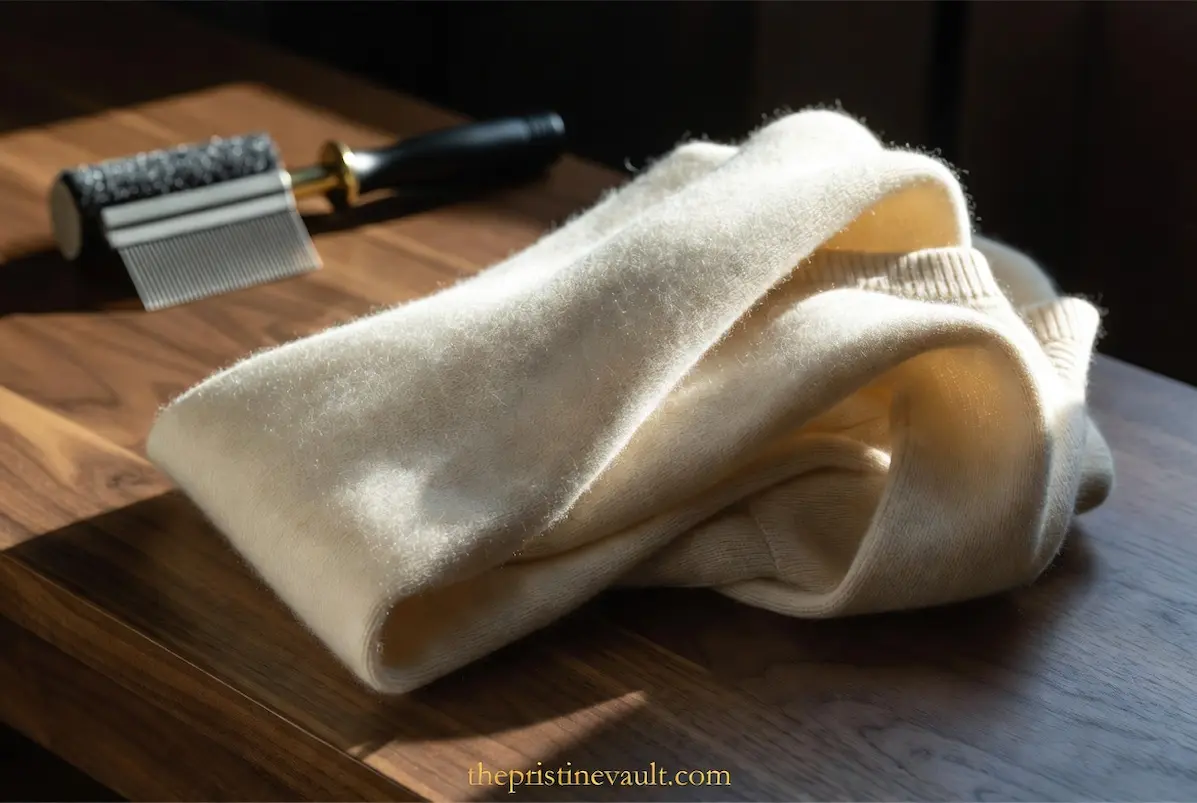
"Knowing how to stop cashmere from pilling is the difference between a $600 sweater that looks immaculate after five years and one that looks worn out after five washes."
Your Brunello Cucinelli cashmere sweater cost $800. After two months of regular wear, pills have formed under the arms and along the sides. You've tried pulling them off by hand — making everything worse. You've tried cheap lint rollers — they pulled more fibers loose.
Now the sweater looks like something from a discount rack, not a boutique in Milan.
A collector I know stored her cashmere collection improperly one winter. Everything was folded and stacked on top of each other, heavy items pressing down on lighter pieces. By spring, all three of her cashmere sweaters had pilled extensively from fabric-on-fabric friction during storage alone — without even being worn.
The heartbreaking truth: cashmere pilling is almost entirely preventable. The fiber itself is extraordinary. The damage comes from how we wash it, wear it, store it, and care for it.
This guide covers seven proven methods that actually stop cashmere from pilling. You'll learn why pilling happens at a fiber level, which washing techniques eliminate the primary cause, how to store cashmere properly, and what to do when pilling has already started.
Here's everything you need to know.
Table of Contents
- 7 Proven Ways to Stop Cashmere From Pilling: The Expert Guide
- Editor's Picks: Best Products for Cashmere Care
- Why Cashmere Pills — The Real Reason
- Method 1: Master the Hand-Washing Technique
- Method 2: Modify Your Wearing Habits
- Method 3: Store Cashmere Correctly
- Method 4: Use a Mesh Laundry Bag (If You Must Machine Wash)
- Method 5: Use the Right Detergent
- Method 6: Remove Existing Pills Correctly
- Method 7: Condition Cashmere Regularly
- 7 Quick Tips to Prevent Cashmere Pilling (Most Owners Skip These)
- Mistakes That Ruin Cashmere Permanently
- Frequently Asked Questions
- Does expensive cashmere pill less than cheap cashmere?
- Is some pilling normal for cashmere?
- Can I stop cashmere from pilling once it has already started?
- How often should I wash cashmere?
- What's the best way to remove pills without a fabric shaver?
- Can cashmere be dry cleaned instead of washed?
- Why does my cashmere pill only under the arms?
- Conclusion
This post contains affiliate links. We may earn a small commission at no extra cost to you.
Editor's Picks: Best Products for Cashmere Care
Before we dive in, here are the top-rated products most luxury cashmere owners trust:
- Steamery Fabric Shaver (Pilo No. 2) — Professional-grade pill removal without damaging fibers → Check on Amazon
- The Laundress Wool & Cashmere Shampoo — pH-balanced, lanolin-preserving wash formula → Check on Amazon
- Mesh Laundry Bags (Fine Mesh, Set of 3) — Essential protection during washing → Check on Amazon
(More recommendations throughout the article)
Why Cashmere Pills — The Real Reason
Most people blame pill formation on poor quality cashmere. That's only half the story.
The Fiber Science Behind Pilling
Cashmere comes from the undercoat of Cashmere goats. The individual fibers are extraordinarily fine — typically 14-19 microns in diameter. This fineness is what creates cashmere's legendary softness.
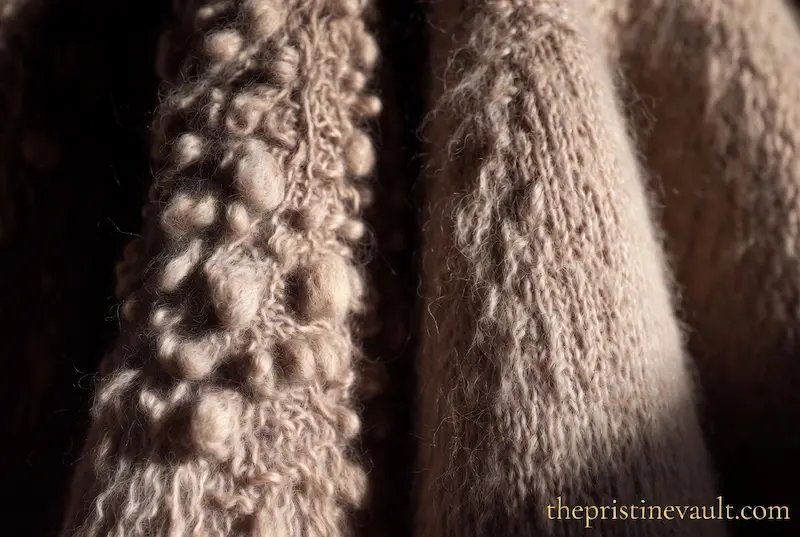
But those same fine fibers have microscopic scales on their surface. When fibers rub against each other repeatedly — through wear, washing, or storage — these scales interlock and tangle. The tangled fibers clump together and twist into the small balls we call pills.
Longer cashmere fibers pill less because they remain anchored to the fabric structure longer before tangling. Shorter fibers — common in lower-grade cashmere — have less anchor length, meaning they pull free and pill faster.
What Accelerates Pilling
Friction: The primary cause. Underarms, bag straps on shoulders, seatbelts across the chest — anywhere fabric rubs against something repeatedly.
Agitation during washing: Tumbling in a washing machine creates intense fiber friction in every wash cycle.
Improper storage: Sweaters stored pressed against each other, or with heavy items on top, create sustained friction damage.
Heat: Hot water and dryer heat cause fibers to contract and tangle, dramatically accelerating pill formation.
Understanding these causes makes the seven prevention methods obvious — each targets a specific cause.
The next section covers the mistake most people make at this stage.
Method 1: Master the Hand-Washing Technique
Why Machine Washing Is the Primary Cause of Pilling
Standard washing machines create one problem for cashmere: constant agitation. Every cycle tumbles fibers against each other, mimicking the friction that causes pilling at accelerated speed.
One machine wash on a "delicate" cycle still subjects cashmere to significantly more friction than hand washing. Over several machine washes, the cumulative fiber damage becomes visible as extensive pilling.

The Correct Hand-Washing Method
Step 1: Fill a basin or clean sink with cool water (lukewarm maximum — never warm or hot).
Step 2: Add a small amount of cashmere-specific shampoo or gentle, pH-balanced detergent. Swirl gently to dissolve — don't create excessive suds.
Step 3: Submerge the sweater. Press it gently into the water without twisting, wringing, or scrubbing. Let it soak for 10-15 minutes. The soaking does the cleaning — not rubbing.
Step 4: Remove by supporting the sweater's full weight with both hands. Never lift by a single point (this stretches). Let water drain naturally.
Step 5: Press gently against the sink to remove excess water. Do not wring or twist.
Step 6: Roll in a clean dry towel, pressing gently to absorb remaining moisture.
Drying Correctly Matters as Much as Washing
Lay flat on a clean towel or drying rack. Reshape gently to original dimensions.
Never hang cashmere to dry — the weight of wet fibers stretches the garment permanently, and the distorted fiber arrangement actually increases pilling as the sweater is worn afterward.
Never machine dry. Tumble drying at any temperature causes significant fiber damage and accelerated pilling.
Allow to dry completely before folding or storing. Damp cashmere stored or folded develops mildew and fiber weakness.
For comprehensive care of other luxury textiles and accessories, understanding proper cleaning chemistry matters across all luxury categories — similar principles of gentle pH-balanced products apply to our jewelry cleaning kits guide.
But washing correctly is only half the battle — here's what wearing habits prevent.
Method 2: Modify Your Wearing Habits
The Friction Zones to Watch
Pilling concentrates in specific areas because friction concentrates there:
- Under the arms: Your arm movement creates constant fabric-on-fabric friction with the side panels
- Across the chest and shoulder: Bag straps, seatbelts, backpacks
- At the waistband: Where the sweater contacts trouser or skirt waistbands
- At the cuffs: Where jacket sleeves overlap
Practical Wearing Adjustments
Rotate your cashmere wardrobe. Wearing the same sweater multiple days in a row doesn't allow fibers to rest and recover. A cashmere sweater worn daily will pill significantly faster than one worn twice weekly. Ideally, rest cashmere 24-48 hours between wearing.
Avoid carrying bags with shoulder straps directly on cashmere shoulders. The strap's fabric or leather, combined with bag weight and body movement, creates concentrated friction on the shoulder panel. Carry bags in your hand or wear a jacket layer that takes the strap contact.
Be conscious of seatbelt contact. Long drives with a seatbelt crossing your cashmere sweater create sustained friction across a significant portion of the fabric. In cold months, keep a light layer between the seatbelt and cashmere.
Watch jewelry contact. Rough-cut gemstones, scratched hardware on bracelets, or any jagged jewelry element can catch and pull cashmere fibers. Smooth, polished jewelry is safe. Textured or damaged jewelry is not.
Similar investment-protection principles apply across your luxury collection — just as proper jewelry care preserves value, clothing care preserves your wardrobe investment. Our guide on best leather conditioners for luxury handbags demonstrates the same preventive-care philosophy.
Up next: the storage method that eliminates pilling between wearing.
Method 3: Store Cashmere Correctly
Folded, Never Hung
Hanging cashmere on hangers causes two problems:
1. Gravity stretches fibers. Cashmere's weight on a hanger creates sustained tension that permanently distorts the garment shape over days and weeks.
2. Hanger pressure creates localized friction. The hanger shoulders press against the cashmere fabric continuously, creating sustained pill formation exactly where the hanger contacts the garment.
Always fold cashmere flat for storage.
The Right Folding Method
Lay the sweater face-down on a flat surface. Fold the arms across the back panel. Then fold in thirds — bottom up to the shoulder line, then top down. This creates a neat rectangle that stacks without excessive pressure on any single point.
Stack cashmere loosely. Avoid piling more than 3-4 items on top of each other — the weight of heavy items compresses lower pieces and creates sustained friction damage.
Storage Environment
Breathable garment bags over sealed containers. Cashmere needs minimal air circulation to prevent musty odor and fiber weakness from humidity buildup. Sealed plastic containers trap moisture. Breathable cotton storage bags allow appropriate air exchange.
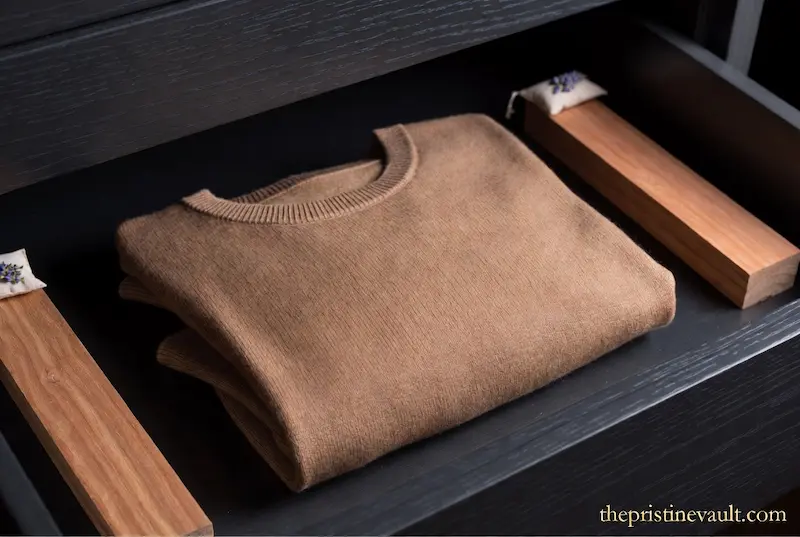
Cedar blocks and lavender sachets for moth prevention. Moths are cashmere's most destructive storage threat. The larvae don't damage synthetic fibers — only natural animal fibers like cashmere, wool, and silk. Cedar naturally repels moths without harsh chemicals.
Cool, dry, dark storage. Heat and humidity accelerate fiber degradation. Closets away from exterior walls maintain more stable conditions. Direct sunlight fades cashmere dyes over time.
A collector stored her cashmere sweaters for summer in sealed plastic bins under her bed. When she retrieved them in autumn, moth larvae had eaten through two of them — $1,200 in damage. Breathable cotton bags with cedar blocks would have prevented the loss entirely.
For storing other luxury textiles and precious items, similar environmental principles apply — just as our guide on how to store pearl necklaces properly demonstrates, environmental control matters for all luxury investments.
The next section covers the mistake most people make at this stage.
Method 4: Use a Mesh Laundry Bag (If You Must Machine Wash)
Hand washing is always preferable. But sometimes machine washing is the only practical option.
How Mesh Bags Reduce Pilling
A fine mesh laundry bag creates a physical barrier that limits how much your cashmere contacts other garments and the washing machine drum. The mesh reduces friction significantly compared to loose machine washing.
Critical requirements:
- Fine mesh only. Coarse mesh allows too much garment-to-surface contact. Look for bags with 80+ thread count mesh.
- Wash alone or with only other delicate items. Never wash cashmere with rough fabrics (denim, heavy cotton, synthetic fleece). The fiber difference creates severe abrasion.
- Delicate or wool cycle only. These cycles use minimal agitation and spin. Standard cycles agitate too aggressively even with a mesh bag.
- Cold water exclusively. Even warm water causes fiber contraction that increases tangling.
👉 Get Fine Mesh Laundry Bags on Amazon
The Bag-Within-a-Bag Method
For particularly delicate or expensive cashmere: place the sweater in a mesh bag, then place that mesh bag inside a second, slightly larger mesh bag. The double layer provides additional friction protection during machine washing.
This sounds excessive. For an $800 cashmere sweater, it isn't.
Method 5: Use the Right Detergent
Why Standard Detergent Damages Cashmere
Standard laundry detergent is formulated for cotton and synthetic fibers. The enzyme cleaners, surfactants, and pH levels appropriate for these materials are too harsh for cashmere's protein-based fibers.
Enzymes are particularly damaging. Enzyme cleaners break down protein-based stains — exactly what makes them effective on food and blood stains. Unfortunately, cashmere fibers are also protein-based. Enzyme exposure gradually degrades the fiber structure, weakening fibers and dramatically increasing pilling.
Always check detergent labels. Avoid anything listing proteases, lipases, or amylases — these are the enzyme categories that damage cashmere.
What to Use Instead
Cashmere-specific shampoos: Products like The Laundress Wool & Cashmere Shampoo or Eucalan No-Rinse Delicate Wash are formulated for animal fiber protein chemistry.
Baby shampoo: An effective, widely available alternative. Mild, pH-balanced, enzyme-free. Use 1-2 teaspoons per basin of cool water.
pH-neutral soap: Any genuinely neutral soap (pH 7) works for cashmere. Test with pH strips if uncertain.
What to completely avoid:
- Any detergent with enzymes (check labels carefully)
- Fabric softeners (coat fibers in a way that attracts more lint and creates faster pilling)
- Bleach or bleach alternatives
- "Bio" detergents (these contain the protein-breaking enzymes most damaging to cashmere)
Method 6: Remove Existing Pills Correctly
Why Pulling Pills by Hand Makes Everything Worse
The instinctive response to pilling is pulling the balls off by hand. This is exactly the wrong approach.
Pulling a pill by hand doesn't remove it cleanly — it pulls additional fiber from the fabric base, creating a growing thinned patch around the removed pill. Remove pills by hand repeatedly and you develop progressively thinner, weaker areas that pill even faster and eventually develop holes.
The Right Tool: A Fabric Shaver
Quality fabric shavers use a small rotating blade protected by a guard that catches pills without touching the underlying fabric. The shaver cuts pills flush with the fabric surface without pulling additional fiber.
Using a fabric shaver correctly:
- Lay the sweater flat on a smooth surface — never use a shaver on a hanging or worn garment
- Stretch the fabric gently with one hand while shaving with the other (creates a taut surface the shaver can glide across)
- Use light pressure — the guard does the work, not force
- Shave in one direction, not back and forth
- Empty the collection container frequently — full containers reduce effectiveness
- Work slowly across the entire surface, not just obvious pill clusters
Which fabric shaver to choose:
The Steamery Pilo and the Conair Fabric Defuzzer are the two most consistently recommended options. Battery-powered shavers generally outperform USB-rechargeable models for cashmere because they maintain consistent blade speed regardless of charge level.
👉 Get Steamery Pilo Fabric Shaver on Amazon
But removing existing pills is only half the equation — here's what prevents them from forming again immediately.
Method 7: Condition Cashmere Regularly
Why Cashmere Needs Conditioning
Like leather and human hair, cashmere fibers benefit from periodic conditioning. Natural lanolin — the oil found in cashmere fiber — depletes through washing. As fibers become drier, they become more brittle and create more friction against each other.
Replacing lost lanolin through conditioning maintains fiber flexibility and reduces the inter-fiber friction that causes pilling.
How to Condition Cashmere
Method A: Conditioning in the wash
Add a small amount of hair conditioner (no sulfates, no silicones) to the rinse water after washing. Submerge the sweater for 3-5 minutes. Press out gently — do not rinse. The conditioner residue conditions fibers as the sweater dries.
Method B: Cashmere conditioning spray
Commercial cashmere conditioning sprays can be applied to dry garments before wearing or storage. Light misting and gentle working-in with hands conditions fibers without full washing.
Frequency:
Condition every 3-4 washes or anytime fibers feel noticeably stiffer than usual. Over-conditioning creates a heavy, slightly tacky feel — apply sparingly.
7 Quick Tips to Prevent Cashmere Pilling (Most Owners Skip These)
Rest cashmere 24 hours between wearing. Fibers need time to recover their natural elasticity — continuous wear stretches and stresses the same friction points daily.
Turn sweaters inside out before washing. The outside surface experiences the most wear and is most vulnerable to friction during washing. Inside-out orientation protects exterior fibers during agitation.
Never rub cashmere to remove stains. Blot stains with a clean cloth, working from the outside of the stain inward. Rubbing tangles fibers in the affected area, creating localized pilling immediately.
Use cold water exclusively. Cold water keeps fibers contracted and smoother. Warm or hot water opens the fiber scales, dramatically increasing tangling during washing.
Store cedar blocks near cashmere, not touching it. Direct cedar contact can occasionally transfer cedar oils to cashmere, affecting texture. Indirect proximity provides effective moth protection without contact.
Avoid wearing under rough outerwear. Heavy wool coats, structured blazers with rough lining, or textured outerwear creates sustained friction on cashmere shoulder and arm areas during daily movement.
Wash less frequently than you think necessary. Cashmere doesn't need washing after every wear. Air the sweater between wearing. Spot clean when possible. Washing every 3-5 wears dramatically reduces cumulative fiber damage.
⚠️ Pro Tip: Before storing cashmere for the season, hand wash every piece — even pieces that seem clean. Moths are attracted to body oils and food residue invisible to the naked eye. Clean cashmere is far less attractive to moth larvae than cashmere with any residual oils from wearing.
👉 Get The Laundress Wool & Cashmere Shampoo on Amazon
Mistakes That Ruin Cashmere Permanently
These errors cause irreversible damage:
Washing with enzyme detergents. This is the most common and most damaging mistake. Enzyme cleaners break down cashmere's protein fiber structure at a molecular level. The damage accumulates invisibly until fibers become so weakened that extensive pilling and eventual hole formation occur.
Machine drying at any temperature. Even the lowest "air dry" machine setting creates tumbling agitation that dramatically accelerates pilling. A single machine dry cycle can cause more pilling than months of careful wear.
Pulling pills by hand. Every hand-pulled pill removes additional fiber from the fabric base, creating weakened thin patches that pill faster and eventually develop holes. Always use a fabric shaver.
Hanging storage. The sustained hanger pressure and gravitational stretch from hanging cashmere creates permanent shape distortion and concentrated friction pilling exactly where hangers contact garments. Always fold.
Ignoring moth prevention. One moth infestation can destroy a cashmere collection worth thousands in a single season. Cedar, lavender, and breathable storage bags prevent damage that no amount of care afterward can reverse.
Frequently Asked Questions
Does expensive cashmere pill less than cheap cashmere?
Yes, significantly. Higher-grade cashmere uses longer fibers (longer staple length) that remain anchored in the fabric structure longer. Grade A Mongolian cashmere (longest fibers) pills noticeably less than shorter-fiber alternatives. However, even expensive cashmere pills without proper care.
Is some pilling normal for cashmere?
Yes — some initial pilling during the first few wears is normal as loose surface fibers work free. This initial pilling should slow significantly after the first 2-3 proper washes. Ongoing heavy pilling indicates either lower-fiber-quality cashmere or improper care causing continuous fiber damage.
Can I stop cashmere from pilling once it has already started?
Yes. Remove existing pills with a quality fabric shaver, then implement all seven prevention methods going forward. Properly cared-for cashmere that was previously pilling will pill significantly less after treatment.
The key is removing existing pills (which act as nucleation points for new pill formation) and eliminating the friction causes going forward.
How often should I wash cashmere?
Every 3-5 wears is typical for regular wear. Air the garment between wearing by laying flat for a few hours. Spot clean minor marks. Excessive washing — particularly by machine — is the primary cause of premature pilling and fiber degradation. Wash less than you think necessary.
What's the best way to remove pills without a fabric shaver?
A sweater stone (a pumice-like block) provides a reasonable alternative to fabric shavers. Use it on a flat surface with very light pressure in one direction. The rough surface catches pills without the precise blade action of a fabric shaver. Results are less consistent but usable.
Avoid using tape, sticky rollers, or pulling by hand — these cause more damage than leaving pills in place. For caring for other luxury textile investments, our pearl jewelry storage guide demonstrates similar gentle-care principles for organic luxury materials.
Can cashmere be dry cleaned instead of washed?
Yes, but with caveats. Quality dry cleaners experienced with knitwear handle cashmere well. However, some dry cleaning solvents gradually degrade cashmere fibers over multiple cleanings. For spot cleaning and seasonal cleaning, hand washing is preferable. Reserve dry cleaning for heavily soiled pieces or items with complex embellishments.
Why does my cashmere pill only under the arms?
Underarm pilling is caused by arm movement creating constant friction between the sweater's body and sleeve panels. This is the highest-friction zone on any sweater. Reduce it by choosing slightly looser fits that reduce fabric tension during arm movement, avoiding rough-textured items like fleece beneath the cashmere, and resting the sweater between wearing to allow fiber recovery.
Conclusion
Knowing how to stop cashmere from pilling comes down to three core principles: eliminate friction during washing through hand washing or mesh bags, eliminate friction during storage through proper folding and breathable bags, and eliminate friction during wear through rotation and conscious wearing habits.
These aren't complicated changes. But each one reduces the cumulative fiber damage that transforms a beautiful $600 sweater into something that looks worn out after a season.
Cashmere is one of the most rewarding luxury investments when treated correctly. It softens with age, develops character, and lasts decades. Every piece in your collection is worth protecting with the same care you'd give any luxury investment.
👉 Get Steamery Pilo Fabric Shaver on Amazon
Now it's your turn — implement these seven methods starting with your next wash and commit to proper storage this season. Your cashmere collection will thank you for it.