Hermès Leather Conditioner Mistakes: What Happens If You Use the Wrong One?

Choosing the right Hermès leather conditioner is one of the most consequential decisions an owner can make — and one of the least discussed.
Someone once told me about a Birkin in Noir Swift — pristine condition, barely used — that came back from a conditioning session looking darker across the base and slightly greasy near the handles.
The owner had used a conditioner recommended for general leather goods. Well-reviewed product. Reputable brand. Just completely wrong for the leather it was applied to.
The darkening faded partially over a few weeks. The slight tackiness at the handles took longer. And the confidence that the bag was being cared for correctly — that was gone entirely.
✅ Quick Guide: The Best Conditioner for Your Hermès Leather
- For Togo & Clemence: Saphir Médaille d'Or Renovateur (Mild & Non-greasy). [Check on Amazon]
- For Epsom (Pressed Grain): Less is more. Use a tiny amount of Collonil 1909 Supreme Crème. [Check on Amazon]
- For Box Calf & Swift: Avoid heavy oils; stick to specialized smooth leather creams to preserve the sheen.
Choosing the right Hermès leather conditioner matters more than most people realize, and the consequences of getting it wrong are rarely immediate. They show up gradually, in ways that are easy to blame on something else — until the pattern becomes clear.
Table of Contents
- Why the Wrong Conditioner Does Real Damage
- The Most Damaging Mistakes Owners Make
- What a Good Hermès Leather Conditioner Actually Does
- The Products That Work — And Why
- How to Condition Correctly: A Practical Process
- A Quick Comparison: Right vs. Wrong
- Smooth Leathers Require Extra Attention
- Frequently Asked Questions
- Final Thought
Why the Wrong Conditioner Does Real Damage
Hermès leathers are not uniform. Swift, Togo, Box calf, Clemence, Epsom — each has a different tanning method, finish, and surface treatment. A conditioner that works beautifully on one can alter the color, texture, or finish of another.
This isn't a minor cosmetic concern. On a bag worth anywhere from several thousand to well above twenty thousand dollars, a surface that's been darkened, greased, or stripped of its finish carries real consequences for resale value.
And unlike a scratch — which is visible and immediate — conditioning damage often reveals itself slowly. A slightly altered sheen here. A color shift in one area there. By the time the pattern is obvious, multiple applications may have compounded the problem.
The issue is that conditioning feels like responsible ownership. It is responsible ownership — when done correctly. The mistake isn't conditioning. The mistake is treating all leather conditioners as interchangeable and all Hermès leathers as identical.
They aren't.
The Most Damaging Mistakes Owners Make
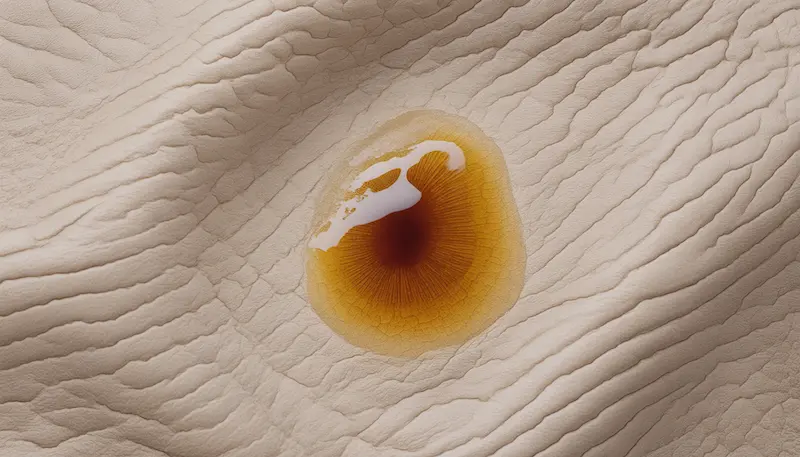
Using a Conditioner Designed for Other Leather Types
Many leather conditioners on the market are formulated for coarser, heavier leathers — full-grain sofa leather, boot leather, belt leather. These products often contain oils that penetrate deeply and aggressively.
On Hermès calfskin — which is fine-grained, precisely tanned, and finished with particular attention to surface character — that level of penetration changes the leather. It saturates it. It can darken it. It can soften it in ways that were never intended.
Some owners use mink oil. This is one of the more common errors. Mink oil conditions effectively, but it darkens light-colored leathers significantly and can alter the surface finish of smooth leathers like Swift or Box calf in ways that don't reverse.
Over-Conditioning
This one surprises people. More conditioning does not equal better care. Leather has a saturation point. Beyond that point, additional product sits on the surface rather than absorbing into the fibers — creating a greasy film, attracting dust, and in some cases beginning to break down the surface finish over time.
The signs of over-conditioning are subtle: a slight tackiness to the touch, an altered sheen that looks slightly off, a surface that attracts and holds dust more readily than it used to.
This is something most owners don't notice until it's too late — because the change happens gradually, application by application, until one day the leather simply doesn't look right.
Conditioning Without Knowing the Leather Type
Epsom leather — Hermès's pressed-grain option — does not absorb conditioner the same way natural-grain leathers do. Its surface is more closed.
Applying the same product in the same quantity as you would on Togo or Clemence leaves excess sitting on the surface. On Epsom, less is genuinely more.
Box calf, on the other hand, benefits from conditioning but responds visibly to heavy products. Its high-gloss finish can be altered by conditioners that are too rich or too oily. The gloss becomes matte. That's not a patina — it's damage.
If you're not certain which leather your bag is made from, understanding your Hermès leather type before conditioning is the first step — not an optional one.
Applying to an Uncleaned Surface
Conditioning over surface dirt, body oils, or fine particles doesn't just fail to help — it seals those contaminants into the leather. The conditioner creates a barrier over whatever is already on the surface. Cleaning first, conditioning second. In that order. Always.
Using Water-Based Products on Smooth Leathers
Some conditioning products are water-based, which works reasonably well on pebbled, more absorbent leathers. On smooth leathers like Swift or Box calf, water content can cause surface changes — slight bubbling, texture shift, or an altered finish in the application area. These leathers require products specifically formulated for fine, smooth calfskin.
What a Good Hermès Leather Conditioner Actually Does
A well-chosen conditioner does three things:
- Replaces moisture lost through exposure, handling, and time — keeping leather fibers pliable and preventing the drying that leads to cracking at stress points.
- Maintains the surface character of the leather without altering its color, finish, or texture.
- Creates a light protective layer that helps the leather resist minor surface contact — not a waterproof seal, but a degree of resilience.
What it does not do: prevent scratches (a common misconception), restore already damaged leather, or compensate for poor storage or handling conditions. Conditioning is maintenance, not repair.
The Products That Work — And Why
Saphir Renovateur
Among serious collectors, Saphir Renovateur (View details) is one of the most consistently recommended products for fine calfskin. It's a mild, non-greasy cream that conditions without saturating — the kind of formula that respects a carefully finished surface rather than overwhelming it. It works well on Togo, Clemence, and with careful application, on smoother leathers like Swift.
The key with Saphir Renovateur is quantity. A very small amount — less than most people's instinct — applied with a soft cloth and buffed gently is sufficient. It absorbs cleanly and doesn't leave residue.
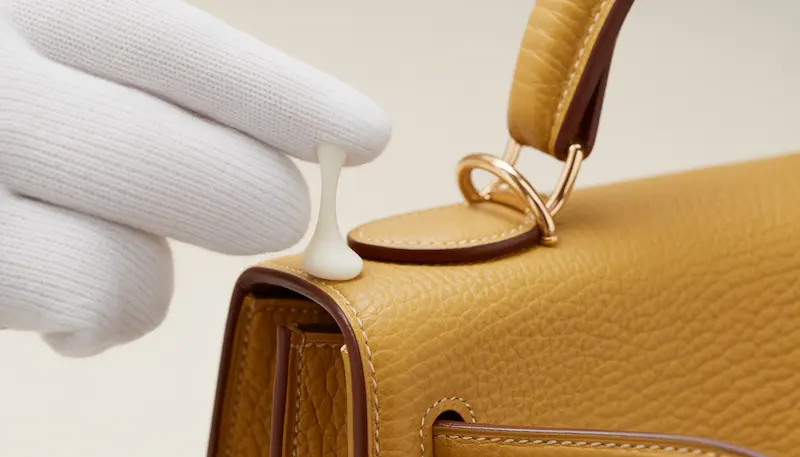
Collonil 1909 Supreme Crème
Collonil 1909 Supreme Crème (Check on Amazon) is another option that performs well on fine leather. It contains natural waxes that help maintain surface integrity without the heaviness of oil-based products. For smooth leathers in particular, the wax component provides a subtle protective quality that conditioning creams alone don't offer.
What to Avoid
Products containing silicone, petroleum-based oils, or high concentrations of mink oil should be kept away from Hermès leather entirely. These either penetrate too aggressively, leave a residue that builds up over time, or alter surface finishes in ways that can't be undone.
How to Condition Correctly: A Practical Process
Before anything, identify the leather. The tanning method and surface finish determine everything that follows. If you're unsure, err toward the mildest product available and use the smallest possible amount.
Clean the surface first. Use a soft, dry microfiber cloth to remove surface dust and particles. For anything beyond surface dust, a small amount of leather-appropriate cleaner — applied with a clean cloth, not sprayed directly onto the leather — handles the rest. Allow the surface to dry completely before proceeding.
A lint-free microfiber cloth like the MagicFiber Professional set (See current price) is useful here. Fine dust particles act as micro-abrasives during cleaning if the cloth has any texture, and on smooth Hermès leathers, that matters.
Apply the conditioner sparingly. Use your fingertip or a soft cloth to apply a very small amount to one section at a time. Work in gentle, circular motions. The goal is an even, thin layer — not saturation.
Let it absorb. Give the conditioner time to work before buffing. For most products, five to ten minutes is enough. Then buff with a clean, soft cloth using light pressure.
Assess the result. Check the surface in good light. The leather should look the same — or very slightly richer — without any greasy film, altered texture, or color shift. If the surface looks greasy, you've applied too much.
How often? For bags in regular use, conditioning two to three times per year is typically sufficient. For bags in long-term storage, conditioning before storing and once during storage if the period extends beyond six months covers what the leather needs.
For bags that spend extended periods in storage, proper storage practices work alongside conditioning — one doesn't replace the other.
A Quick Comparison: Right vs. Wrong
| Common Mistake | Correct Approach |
|---|---|
| Using mink oil on smooth leathers | Use fine calfskin-specific conditioner |
| Conditioning without cleaning first | Always clean, then condition |
| Applying heavily to saturate | Apply sparingly — less than feels necessary |
| Using same product on all leathers | Match product to leather type |
| Conditioning monthly | Two to three times per year is enough |
| Skipping the buff | Always buff after absorption |
| Applying to Epsom as you would Togo | Use minimal product on pressed-grain leather |
Smooth Leathers Require Extra Attention
It's worth noting that the same leathers most vulnerable to conditioning mistakes are also the ones most sensitive to surface damage generally.
Swift, Box calf, and Evercolor show the effects of wrong product choices more visibly than grained leathers — and they also scratch more readily under normal use.
If you own a bag in one of these leathers, understanding how smooth Hermès leathers behave gives useful context for the full picture of care — not just conditioning, but handling, storage, and daily decisions.
For a broader view of which conditioner works best for specific leather types, the full guide to leather conditioners for Hermès bags covers product selection in more depth than this article can.
Frequently Asked Questions
Can I use regular leather conditioner on my Hermès bag?
Not all regular leather conditioners are suitable. Products formulated for heavier leathers — boots, furniture, belts — often contain oils that penetrate too aggressively and can darken or alter the surface of fine Hermès calfskin. Use conditioners specifically formulated for fine, finished calfskin, such as Saphir Renovateur or Collonil 1909.
How often should I condition my Hermès bag?
Two to three times per year is sufficient for bags in regular use. Over-conditioning is a real risk — applying product more frequently than the leather needs creates buildup on the surface that attracts dust and can alter the finish over time.
Will conditioning prevent scratches on my Hermès bag?
No. Conditioning maintains leather health and suppleness but does not create a scratch-resistant barrier. Scratch prevention comes from handling habits, storage practices, and leather choice — not from any product applied to the surface.
What happens if I use the wrong conditioner on Swift leather?
Swift is a smooth, sensitive leather that reacts visibly to conditioning mistakes. Heavy or oil-rich products can darken the surface, create a greasy film, or alter the matte finish. In some cases these effects fade over time, but they can also become permanent — particularly with repeated wrong applications.
Is Hermès's own leather care product the safest option?
Hermès does offer a leather care product through their boutiques, and it's formulated for their leathers. It's a reasonable choice, particularly if you're uncertain about third-party options. That said, well-established products like Saphir Renovateur have a long track record with fine leather and are widely trusted by experienced collectors.
Final Thought
Conditioning a Hermès bag should feel like a calm, deliberate act — not a routine applied on autopilot. The leather type, the product, the quantity, the frequency: each of these variables matters, and getting them right isn't complicated once you understand what you're working with.
The collectors whose bags look the same ten years after purchase didn't do more. They did the right things, correctly, without overreaching. Less product. More patience. Better knowledge.
Precision over excess. Consistency over intensity. That's the standard worth holding.