How to Store Hermès Bags Properly (Avoid Mold & Shape Damage)
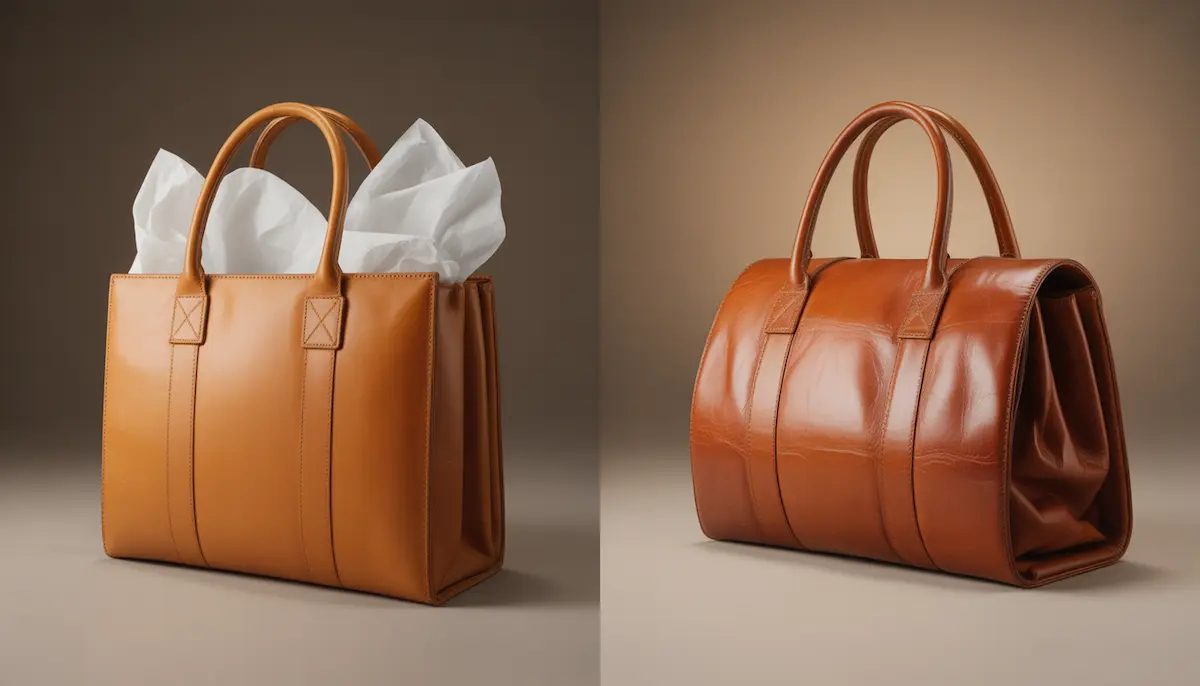
There's a particular kind of disappointment that comes from opening a closet after six months and finding a bag you loved — now misshapen, with a faint musty smell and pressure marks across the front panel where the hardware rested against the leather. No dramatic accident.
No spill. Just storage done the wrong way, quietly working against everything the bag was supposed to be.
Knowing how to store Hermès bags properly is one of those things that sounds obvious until you realize most people are getting it wrong. Not through carelessness — through assumptions. The assumption that a dust bag is enough. That any shelf will do. That leather this expensive must be more resilient than it is.
It isn't. And the damage is almost always gradual, which is exactly what makes it so easy to miss.
Table of Contents
Why Storage Matters More Than Most People Think
The irony of luxury bag ownership is this: the bags that get used regularly often fare better than the ones that sit in storage. Use keeps leather conditioned through natural handling. Storage, done poorly, creates the conditions for slow, invisible damage.
Mold is the most serious risk. Hermès leathers — particularly smooth varieties like Swift and Box calf — are susceptible to mold growth in humid, poorly ventilated environments.
Mold on leather isn't always a dramatic green bloom. It often starts as a faint haze or white dusting that owners mistake for dust. By the time it's visible, the leather fibers may already be compromised.
Shape damage is the second issue. A bag stored without internal support will eventually take the shape of whatever it's resting against — or simply collapse into itself. On structured bags like the Kelly or Birkin, this means the base loses its flat integrity and the sides begin to bow. Restoring this at a professional level is possible, but it's expensive and never completely invisible.
Then there's the hardware problem. When a bag is stored flat with the clasp or hardware resting directly against the leather, the pressure creates impressions over time.
This is something most owners don't notice until it's too late — because it happens in the dark, behind a closet door, over months.
The Most Common Storage Mistakes
Storing in Plastic
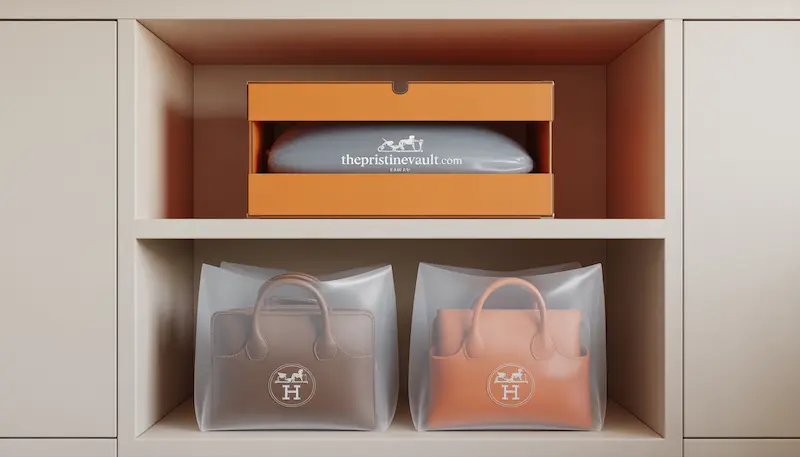
Plastic covers trap moisture. Leather needs to breathe, and sealing it in a non-porous environment creates the humidity conditions that mold thrives in. Even the original Hermès box, if used for long-term storage, should have some ventilation — the box alone isn't a safe long-term solution.
Stacking Bags
Stacking bags on top of each other concentrates weight on the lowest bag, distorting its shape over time. It also means hardware from one bag can press into or scratch the leather of another.
A shelf that looks organized can be quietly damaging everything on the bottom row.
Using Cedar or Scented Products Near Leather
Cedar balls and scented sachets are fine for fabrics. Near leather — particularly untreated or lightly finished leather — strong scents can transfer and become difficult to remove. Some cedar products can also dry out leather if placed in direct contact.
Ignoring Humidity
High humidity promotes mold. Low humidity dries leather out and leads to cracking. The ideal storage range is between 40% and 60% relative humidity. Most people have no idea what the humidity level is in their closets.
If you live in a climate with seasonal humidity extremes, this isn't a small concern.
How to Store Hermès Bags Properly: A Practical Breakdown
Step 1: Clean Before You Store
Never store a bag that's been in regular use without wiping it down first. Body oils, light dirt, and residue from surfaces accumulate on leather during use. Left in a dark, enclosed space, these can accelerate surface deterioration and create conditions for mold.
Use a soft, dry microfiber cloth to wipe down the exterior. For deeper cleaning, a leather-appropriate cleaner applied gently with a clean cloth handles what dry wiping can't. Don't use household cleaning products — the pH balance matters with fine leather.
Step 2: Condition the Leather
Before long-term storage, conditioning the leather is worth the effort. A thin application of a quality conditioner like Saphir Renovateur (View details) helps maintain moisture levels during the period the bag won't be in use. Think of it as preparation — you're giving the leather what it needs to stay healthy while it sits.
Understanding how leather conditioning works for Hermès pieces will help you choose the right product and avoid over-conditioning, which carries its own risks.
Step 3: Fill the Bag for Shape Retention
This step gets skipped more than any other. An empty bag will lose its structure. Fill the interior with acid-free tissue paper or a properly sized bag pillow insert — something that holds the shape without overstuffing. The goal is gentle, consistent support, not pressure.
A bag shaper like the Purse Bling insert (Check on Amazon) is the kind of investment that seems minor until you compare a supported bag and an unsupported one after twelve months of storage. The difference is visible.
Avoid newspaper. The ink can transfer to interior linings over time, particularly in humid conditions.
Step 4: Handle the Hardware
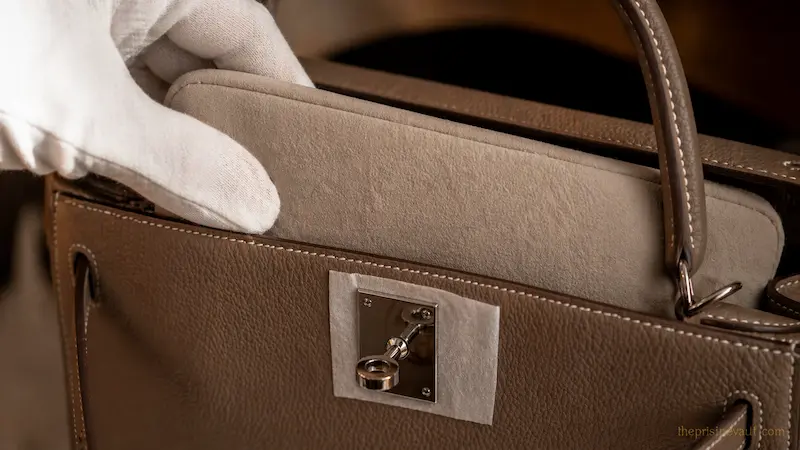
Before placing the bag in its dust bag, make sure the clasp is in the open or neutral position — not pressing against the leather panel. For bags with exposed hardware like the Kelly's turn-lock, placing a small square of soft acid-free tissue between the hardware and the leather prevents impression marks during storage.
This small step takes thirty seconds. The marks it prevents can take years to appear — and can't be fully removed once they do.
Step 5: Use the Dust Bag Correctly
The original Hermès dust bag is cotton — breathable, soft, and appropriately sized. Use it. But don't tie it so tightly at the top that air circulation is completely cut off. A loose closure allows enough ventilation to prevent moisture buildup inside.
If you've lost the original dust bag, a plain cotton pillowcase is a reasonable substitute. Avoid synthetic fabrics — they don't breathe the same way.
Step 6: Choose the Right Storage Location
The shelf inside a climate-controlled closet — away from exterior walls, away from direct light, at a consistent temperature — is ideal. Avoid:
- Attics (temperature extremes)
- Basements (humidity and mold risk)
- Areas near windows (UV exposure and temperature variation)
- The floor of a closet (dust, moisture from ground level)
If you live in a humid climate, a small silica gel packet placed near — not inside — the dust bag helps manage ambient moisture without over-drying the leather. Replace it every three to four months.
Step 7: Check Periodically
Storage isn't set-and-forget. Once a month, open the dust bag and let the bag breathe for an hour or two. Check for any early signs of mold — that faint haze or chalky bloom on the surface. Check that the shape is holding. Check that hardware isn't creating pressure marks.
This takes five minutes. It catches problems before they become permanent.
Leather Type Matters for Storage Decisions
Not all Hermès leathers respond the same way to storage conditions. Smooth leathers like Swift and Box calf show mold and pressure damage more readily than grained leathers like Togo or Clemence. Epsom, with its pressed grain and more resilient surface, is the most forgiving in storage.
If you're storing a bag in Swift or Box calf for an extended period, the steps above aren't optional — they're the minimum. If you're working with Togo or Clemence, you have slightly more margin, but the same principles apply.
For a broader look at how different leathers behave under various conditions, understanding your Hermès leather type is a useful starting point before making any long-term storage decisions.
It's also worth knowing which leathers are more vulnerable to surface damage in general — not just in storage. Smooth Hermès leathers scratch more easily than most owners expect, and that vulnerability doesn't pause when the bag goes into the closet.
A Note on Long-Term Storage vs. Seasonal Rotation
There's a difference between storing a bag for a season and storing it for years. For seasonal rotation — three to six months — the steps above are sufficient with regular checks.
For long-term storage beyond a year, the approach needs to be more deliberate. The bag should be conditioned more carefully before storage, checked monthly without exception, and ideally kept in a space with a small hygrometer to monitor actual humidity levels.
A basic digital hygrometer like the Govee model (See current price) costs very little and gives you actual data instead of assumptions about your closet environment.
Long-term storage is where most serious damage happens — because the longer the period, the more confident people become that everything is fine. It usually isn't, until it suddenly is very much not.
Frequently Asked Questions
How should I store my Hermès bag to prevent mold?
Store the bag in a breathable cotton dust bag in a well-ventilated, climate-controlled space with humidity between 40–60%. Never use plastic covers or sealed boxes for long-term storage.
Place a silica gel packet nearby to manage ambient moisture, and check the bag monthly for any early signs of mold.
Should I store my Hermès bag in the original box?
The original Hermès box is fine for short-term storage or display, but it's not ideal for long-term storage. Boxes restrict airflow. If you use the box, leave it slightly open to allow some ventilation, and always keep the bag inside its cotton dust bag within the box.
How do I keep my Hermès bag from losing its shape in storage?
Fill the bag with acid-free tissue paper or a properly sized bag insert before storing. This provides gentle, consistent internal support that prevents the structure from collapsing over time.
Avoid overfilling — the goal is support, not stretching.
Can I store multiple Hermès bags together?
Yes, but never stacked. Store them upright on a shelf with space between each bag. Stacking concentrates weight on lower bags and allows hardware from one bag to press into the leather of another.
How often should I check on bags in storage?
Once a month is a reasonable minimum. Open the dust bag, let the bag air for an hour, inspect the surface for mold or pressure marks, and confirm the shape is holding.
Five minutes of attention each month prevents the kind of damage that takes years to develop and can't be fully reversed.
Final Thought
Storage is the least glamorous part of owning a Hermès bag. There's no moment of appreciation in it — no one sees the inside of your closet. But the bag that comes out looking exactly as it went in, season after season, tells a quiet story about how its owner thinks.
The details are small. The consistency is what matters.
Precision over excess. A little attention, maintained regularly, is worth more than any expensive intervention after the damage is done.