How to Tell If a Watch Has Been Serviced Recently

Someone I know bought a "recently serviced" vintage Waltham off eBay, based entirely on the seller's word. Six months later it was losing eleven minutes a day. When he finally took it to a watchmaker, the movement had clearly never been touched — no fresh oil, no tool marks, just a case that had been wiped clean to look presentable.
Sellers say "serviced" a lot. It doesn't always mean much.
Table of Contents
Why the Word Itself Is Unreliable
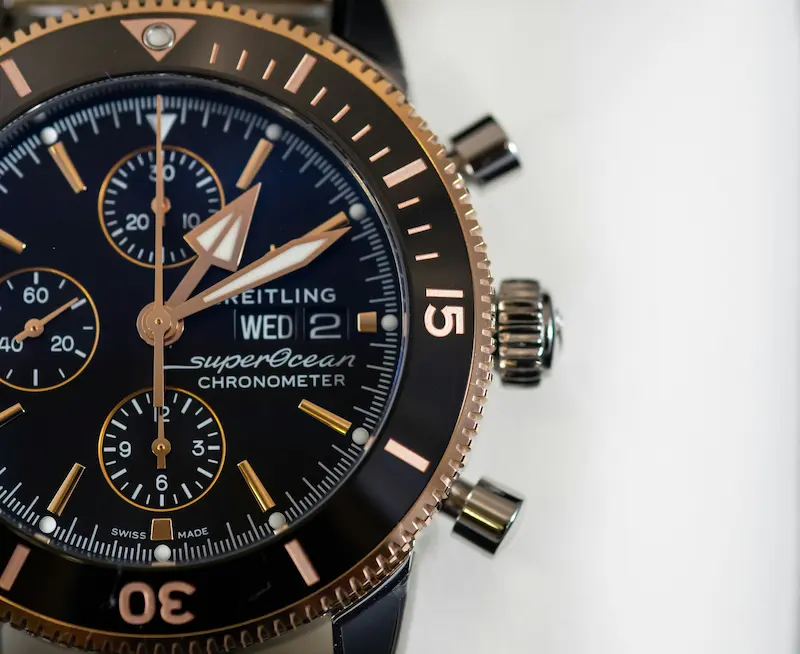
"Serviced" can mean anything from a full disassembly, cleaning, oiling, and timing regulation, to someone spraying compressed air into the case and calling it a day. There's no universal standard enforced at the point of sale, especially outside of authorized dealer networks, which means the word alone tells you almost nothing about what was actually done.
The honest move, if you're buying secondhand, is to ask specifically: was it cleaned, lubricated, timed, and were any timing errors actually corrected afterward? Simply checking the rate isn't the same as fixing it if something was off.
But since you can't always get a straight answer, there are physical checks that reveal more than the seller's description will.
Timekeeping Accuracy Over a Full Day
This is the simplest test and arguably the most telling. Set the watch, compare it against a phone or reference clock, and check it again 24 hours later without touching it in between.
A well-serviced mechanical watch should stay within a reasonable range — typically a handful of seconds to under a minute per day, depending on the movement's grade. Large swings, especially inconsistent ones (fast one day, slow the next), suggest either it wasn't actually regulated during service, or there's an underlying issue that service alone didn't fix.
Consistency matters more than perfection here. A watch that's reliably five seconds fast every day isn't concerning. One that gains two minutes one day and loses three the next is telling you something.
Preventing damage is always much cheaper and easier than trying to restore a ruined luxury item later on. Find the complete preventive steps in our [Luxury Maintenance Mistakes to Avoid]
How the Crown Feels
This is something almost nobody checks before buying, and it's one of the more revealing signs. A freshly serviced watch should have a crown that turns smoothly, with even resistance — no grinding, no looseness, no catching at certain points in the rotation.
A dry, gritty, or inconsistent feel when winding or setting usually points to old or missing lubrication, which is exactly what a proper service is supposed to address. If the crown feels rough on a watch that was supposedly just serviced, that's a reasonable red flag.
Date Changes and Function Behavior
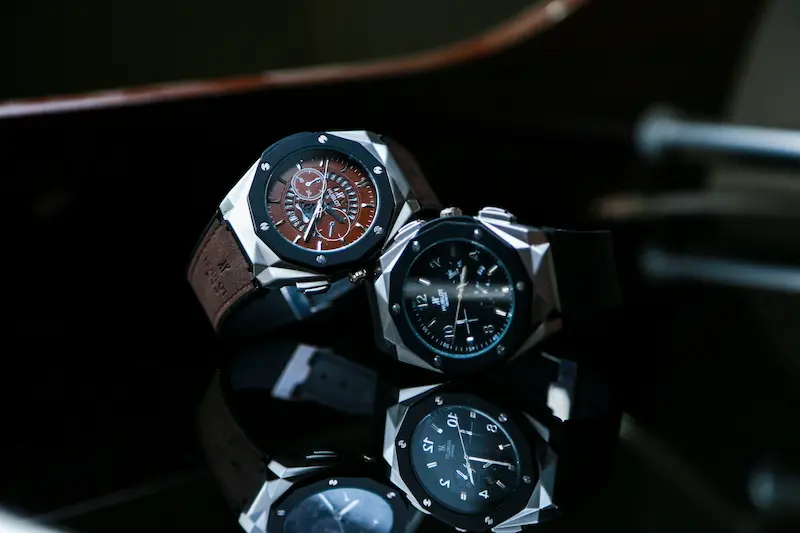
If the watch has a date function, check how cleanly it changes. It should snap over at midnight (or close to it) rather than slowly creeping across several hours, and it shouldn't skip or hesitate.
Sluggish date changes often point to old lubricant or wear in the date mechanism specifically — something a real service would typically address, so its presence on a "recently serviced" watch is worth questioning.
Case Back and Tool Marks
Watchmakers open the case to access the movement, and that process usually leaves small, clean marks around the case back edge — tool marks from a case knife or movement holder. These aren't damage; they're just evidence someone was actually inside the watch.
The distinction to look for is between light, precise marks and heavy, careless gouging. Clean marks suggest a watchmaker who knew what they were doing. Rough marks, or a complete absence of any marks on a watch claimed to have been serviced, are both worth a second look — the latter especially, since it can mean the case was never actually opened.
Power Reserve Test
Wind the watch fully (by hand if it accepts manual winding, or let it run a full day if automatic) and let it run down completely without wearing it. Compare how long it runs against the movement's rated power reserve, which is usually listed in the watch's specifications.
A serviced watch should run close to its rated reserve. Falling significantly short suggests something inside — old mainspring, poor lubrication, a mechanical issue — that a proper service should have caught and addressed.
What a Timing Machine Tells You (If You Have Access to One)
If you know a watchmaker willing to check the watch on a timegrapher, this gives a much more precise picture than manual observation — amplitude, beat error, and rate can all be measured directly rather than inferred from a day of wearing it. This isn't something most buyers have easy access to, but it's worth asking a local watchmaker if a quick check is possible before committing to an expensive purchase.
A Combination, Not a Single Test
None of these checks alone is definitive. A watch could pass the timekeeping test and still have a crown that feels rough, or vice versa. The value is in combining several — clean case marks, smooth crown action, consistent daily rate, proper date function, and a power reserve that matches spec together paint a much clearer picture than any single check on its own.
For a deeper dive into preserving the structural integrity and aesthetic appeal of your collection, don't miss our expert-approved advice. Explore more on our [Expert Care Tips Hub]

FAQ
Is a clean-looking watch proof it was serviced?
No. Cleaning the case and bracelet is cosmetic and easy to do without ever opening the movement. It tells you nothing about the internal condition.
How long should a recently serviced watch keep accurate time?
Most mechanical movements should stay within a few seconds to under a minute per day, consistently, not just occasionally.
What if the seller has no service paperwork?
Ask specifically what was done rather than accepting the word "serviced" at face value, and rely on physical checks like timekeeping and crown feel to verify independently.
Can a watch be serviced without any tool marks appearing?
It's uncommon. Opening a case back typically leaves at least faint marks, even with careful work. A complete absence of marks on a watch supposedly serviced is worth questioning.
Should I get a pressure test after service too?
If water resistance matters to you, yes — servicing and gasket/seal replacement don't always happen together unless specifically requested, so it's worth confirming separately.
None of this replaces trusting a good watchmaker. But when you're buying secondhand, or just trying to figure out whether your own watch is due for attention, these are the checks that actually tell you something — far more than the word "serviced" printed in a listing.