Why Mechanical Watches Run Differently Depending on Position

Someone on a watch forum once described noticing his freshly regulated Seiko losing a second a day when left face-down overnight, then gaining almost the same amount when left face-up. Nothing had changed about the watch itself between those two nights — just which way it happened to be resting on the nightstand.
That's not a flaw. It's one of the more counterintuitive, genuinely interesting quirks of mechanical timekeeping, and once you understand why it happens, it explains a lot about how watchmakers actually calibrate a movement.
Table of Contents
- The Basic Cause: Gravity Acting on a Spinning Balance Wheel
- Two Different Mechanisms Are Actually at Play
- Why Watchmakers Test in Multiple Positions
- Why This Actually Works in Your Favor During Daily Wear
- What Counts as Normal Positional Variance
- How to Actually Check This on Your Own Watch
- FAQ
- Is it normal for my watch to run differently depending on how it's positioned overnight?
- Can I fix positional error myself at home?
- Why does my watch seem more accurate when worn than when left sitting still?
- Does this apply to quartz watches too?
- Should I store an automatic watch in a specific position when not wearing it?
The Basic Cause: Gravity Acting on a Spinning Balance Wheel
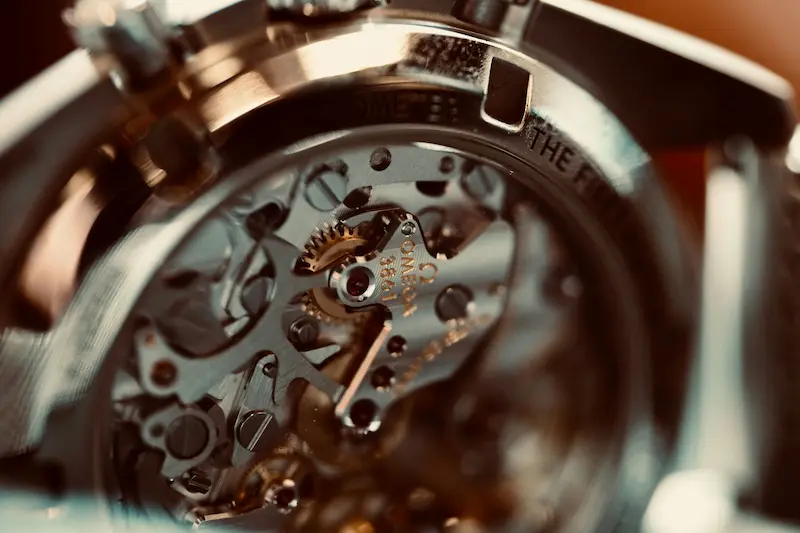
At the heart of every mechanical watch is a balance wheel oscillating back and forth, regulated by a hairspring that controls how fast it swings.
In a perfect world, that oscillation rate would stay identical no matter which way the watch was oriented. In the real world, gravity pulls on the balance wheel's mass slightly differently depending on orientation, and that tiny gravitational influence is enough to measurably shift the rate.
This matters more than it might sound like it should, because a mechanical watch's accuracy is often measured in single-digit seconds per day for a well-regulated piece. A gravitational effect that shifts the rate by even one or two seconds is a meaningful percentage of the watch's total error budget.
Two Different Mechanisms Are Actually at Play
There's friction, and there's the geometry of the hairspring itself, and they behave somewhat differently.
Friction changes with orientation. When a watch is lying flat, dial up or dial down, the balance wheel's pivot rests against the flat end of its jewel bearing, which creates relatively low friction. When the watch is vertical, the pivot instead rests against the side of the jewel, and that changes the friction dynamics enough to measurably affect the oscillation, generally in a way that adds slightly more resistance than the flat positions do.
The hairspring's relationship with its regulator pins also shifts with gravity. In a traditional regulator-style movement, two small pins guide the hairspring and determine its effective working length, which in turn controls rate.
Gravity can very slightly shift how the hairspring interacts with those pins depending on orientation, effectively making the spring behave as if it were fractionally longer or shorter, which changes the beat rate. If those regulator pins aren't perfectly parallel — a manufacturing and finishing detail that varies by movement quality — this effect becomes more pronounced.
Higher-end movements sometimes use what's called a free-sprung balance instead of pins, letting the hairspring "breathe" without physical contact points that gravity can interfere with in the same way, which in theory reduces this specific source of positional error, though a well-adjusted traditional regulator movement can still perform comparably in practice.

Why Watchmakers Test in Multiple Positions
This is exactly why watch movements, especially anything aiming for chronometer-level certification, get tested and adjusted in five or six standard positions: dial up, dial down, and the watch resting on its crown at several different clock positions.
A watch that's only regulated in one orientation might read perfectly accurate sitting on a desk but drift noticeably once it's actually worn on a wrist, which spends most of its time in a vertical-ish orientation rather than flat.
The adjustment process itself, called poising, involves a watchmaker fine-tuning the balance wheel so its rate stays as consistent as possible across all tested orientations — not eliminating positional variance entirely, since that's essentially impossible with a mechanical system, but minimizing it to an acceptable range.
Why This Actually Works in Your Favor During Daily Wear
Here's the detail that surprises people once they understand it: a watch worn on the wrist moves through many different orientations throughout a normal day, which means positional errors in one direction often partially cancel out positional errors in another direction over the course of that day.
This is part of why a watch might show inconsistent results sitting still on a nightstand in a single position overnight, but average out to a tighter daily rate when it's actually being worn and moving through multiple orientations.
This is also the logic behind an old trick some collectors use with automatic watches they don't wear daily: storing the watch overnight in whichever fixed position causes it to run in the opposite direction from its typical daytime drift, partially self-correcting the average rate over a full day-night cycle.
It's a bit of a workaround rather than a real fix, but it demonstrates the underlying mechanism clearly — position genuinely does change rate, predictably enough that some people use it deliberately.
What Counts as Normal Positional Variance
There's no single universal number, since it depends heavily on the movement's grade and how much adjustment work went into it at the factory or during a service. A handful of seconds per day of difference between dial-up and dial-down positions is generally considered unremarkable for a standard mechanical movement.
Watches that have been more extensively adjusted, sometimes marketed with terms indicating multi-position regulation, aim for noticeably tighter consistency across orientations, which is part of what separates a basic movement from a more finely finished one, independent of brand name or price point alone.
Large, erratic differences between positions — rather than small, consistent ones — are more likely to indicate an actual problem: a damaged pivot, an out-of-round balance wheel, or hairspring pins that aren't properly parallel, any of which is worth having a watchmaker actually look at rather than assuming it's just normal positional behavior.
How to Actually Check This on Your Own Watch
You don't need professional equipment to get a rough sense of your own watch's positional behavior. Set the watch accurately, then leave it resting overnight in a fixed position — dial up on a table, for instance — and compare against a reliable reference the next morning. Repeat on a different night with the watch resting dial down, or propped on its side if you want to test a vertical orientation.
This is obviously much less precise than a professional timing machine, which can isolate positional rate differences down to fractions of a second using a properly calibrated microphone and multiple test cycles, but a rough overnight comparison is enough to notice if your particular watch has an unusually large swing between positions, which is worth mentioning to a watchmaker at your next service even if the watch seems to be running fine day to day.
This kind of home observation connects to something worth remembering about service intervals generally — a watch that's overdue for attention often shows exactly this kind of inconsistency before it develops a more obvious problem, which is part of why simply timing your watch casually every so often is a reasonable, low-effort habit for anyone who cares about keeping a mechanical piece running well over the long term.
No matter how durable the material is, implementing a regular maintenance routine is the only way to keep your prized possessions in mint condition. Learn more in our Comprehensive Care Guide
Does This Matter for Modern, Everyday Wear?
For most people wearing a watch day to day rather than trying to hit chronometer-level precision, positional error is more of an interesting mechanical quirk than a practical problem. The daily wear-and-motion averaging effect described earlier usually smooths out much of the variance that would show up in isolated, static position testing.
Where it becomes genuinely relevant is for watches that spend long stretches sitting still rather than being worn — an automatic on a winder, for instance, or a piece stored between occasional use — since a fixed resting position removes the natural averaging that daily wear provides, and a watch with a noticeable positional bias will show that bias much more clearly under those static conditions.
FAQ
Is it normal for my watch to run differently depending on how it's positioned overnight?
Yes, to some degree. A few seconds of difference between positions is typical for most mechanical movements and doesn't indicate a problem on its own.
Can I fix positional error myself at home?
Not really — actual adjustment requires opening the movement and precision timing equipment. What you can do at home is observe the pattern and mention it to a watchmaker, who can perform the adjustment during service if it's outside a normal range.
Why does my watch seem more accurate when worn than when left sitting still?
Wearing the watch moves it through many orientations throughout the day, and positional errors in different directions tend to average out, which is why static overnight testing in one position can look worse than actual daily wear performance.
Does this apply to quartz watches too?
No. Quartz movements rely on electronic crystal oscillation rather than a gravity-sensitive mechanical balance wheel, so positional variance in the mechanical sense doesn't apply to them.
Should I store an automatic watch in a specific position when not wearing it?
Some collectors deliberately choose a resting position that counteracts their watch's typical daytime drift, but this is a minor optimization rather than something most owners need to think about.
None of this makes a mechanical watch unreliable — if anything, understanding positional error is part of appreciating just how much fine mechanical tuning goes into making something as small as a wristwatch keep time as consistently as it does, gravity and all.