Why Vintage Watches Lose Accuracy Over Time
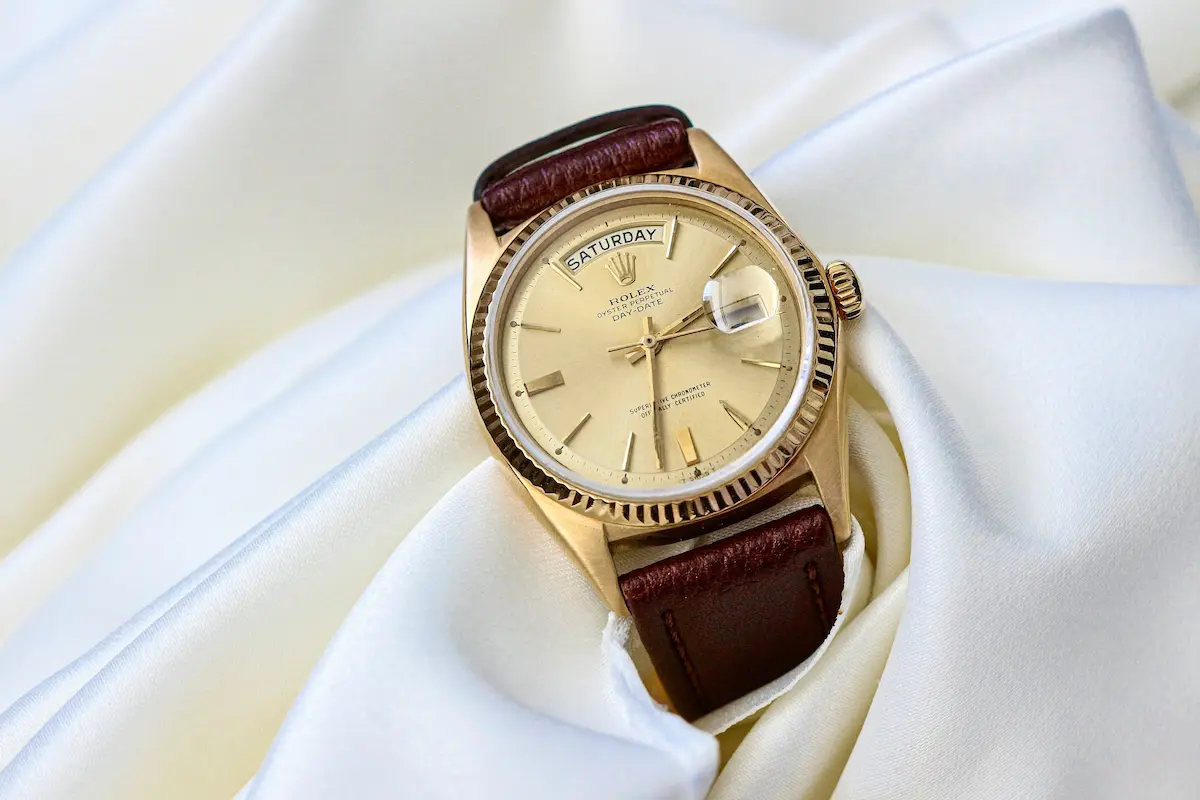
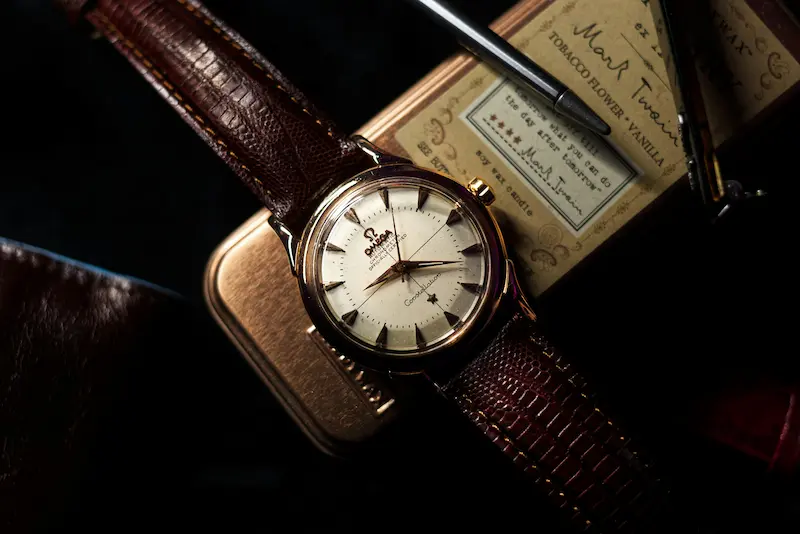
A collector I know has a 1960s Omega that used to run within a couple of seconds a day, back when he first inherited it. A decade later, without any obvious damage or dramatic event, it was drifting by almost two minutes daily. Nothing had broken.
Nothing had been dropped. The watch had simply aged, the way mechanical things do.
That gradual drift confuses a lot of people, because there's an assumption that a watch either works or it doesn't — that accuracy is a fixed property rather than something that slowly shifts as decades pass. It isn't fixed.
And understanding why helps you tell the difference between normal aging and something that actually needs attention.
Table of Contents
- Vintage Doesn't Mean Broken, But It Does Mean Older
- Lubricant Breakdown Is the Biggest Factor
- Component Wear Accumulates Even Without Misuse
- Temperature's Role Over Long Periods
- Magnetism: An Invisible, Cumulative Problem
- Position and How the Watch Actually Rested Over the Years
- What's Normal Versus What Needs a Watchmaker
- Why Regular Service Matters More For Vintage Pieces
- FAQ
Vintage Doesn't Mean Broken, But It Does Mean Older
Every part of a mechanical movement is a physical component subject to wear, and a watch built sixty years ago has had sixty years for that wear to accumulate, even under the best care. This isn't a flaw specific to old watches — it's just what happens to any precision mechanism over a long enough timeline.
The difference between a vintage watch running well and one running poorly usually comes down to how consistently it's been serviced over its lifetime, not its age alone. A well-maintained 1960s movement can still perform close to its original spec.
A neglected one from the same era, even from a respected brand, often can't — and no amount of service now fully undoes decades of accumulated wear if parts were allowed to run dry or damaged for long stretches.
Lubricant Breakdown Is the Biggest Factor
Mechanical movements rely on extremely small, precise amounts of oil at specific friction points — the balance staff, the escapement, the gear train pivots. These lubricants aren't permanent. Over years, they oxidize, thicken, or migrate away from where they're needed, and once that happens, friction increases in places that were designed to move with almost none.
Increased friction doesn't cause a sudden failure most of the time. It causes a gradual, creeping loss of amplitude — the swing of the balance wheel — which directly affects timekeeping. A watch running on old, degraded lubricant will typically start losing time inconsistently, sometimes worse in certain positions than others, long before it stops running altogether.
This is really the core reason vintage watches need periodic servicing regardless of how well they're treated day to day. It's not about preventing damage from use; it's about replacing lubricant before its degradation starts affecting performance.
Component Wear Accumulates Even Without Misuse
Beyond lubrication, physical wear on components themselves plays a role. Pivots wear against their jewel bearings over millions of oscillations. Over enough decades, even hardened steel components show measurable wear, and that wear changes how precisely parts interact with each other.
This is part of why a watchmaker's honest answer to "can you get my 60-year-old watch back to chronometer accuracy" is often "maybe" rather than "yes." If the movement is old and worn when it arrives, it's still going to be old and worn when it leaves — cleaned, re-lubricated, and adjusted as well as possible, but not magically restored to factory-new tolerances if the underlying parts have genuinely worn down.
A reasonable expectation for an older watch with an unknown or inconsistent service history is something like plus or minus a minute a day — not because the watch is defective, but because that's a realistic outcome for a mechanism that old, even after proper servicing.
To ensure your luxury pieces retain their high resale value over the years, proper protection should start from day one. Read our full guide on How to Protect Your Luxury Investments
Temperature's Role Over Long Periods
Temperature affects mechanical movements in the moment — heat expands metal components including the balance spring, which can slow oscillation and cause a watch to run slower in warm conditions — but it also plays a longer-term role in vintage pieces specifically.
Decades of temperature cycling, especially in watches that weren't stored carefully for long stretches, can affect the properties of certain movement components over time, particularly in watches made before modern temperature-compensated alloys became standard. Some brands, like certain Omega calibers with bimetallic balance wheels, were specifically engineered to resist this — which is part of why some vintage movements have reputations for holding up better than others of the same era.
Magnetism: An Invisible, Cumulative Problem
Magnetic fields from speakers, phone cases, laptops, and various household electronics can magnetize the steel components inside a watch movement, particularly the hairspring. A magnetized hairspring effectively shortens itself in a way that speeds up oscillation, causing the watch to run fast, sometimes dramatically so.
Vintage watches are arguably more exposed to this risk over a lifetime simply because they've existed through decades of proximity to whatever magnetic sources happened to be nearby, and older movements weren't always designed with the same anti-magnetic shielding modern watches sometimes include. If a vintage watch suddenly starts running significantly fast after functioning normally, magnetism is one of the more common explanations, and it's usually a quick, inexpensive fix — a demagnetizer resolves it in seconds, no disassembly required.
Position and How the Watch Actually Rested Over the Years
Where a watch sits, or how it's worn, affects its rate because gravity interacts differently with the balance wheel depending on orientation. Watchmakers actually adjust and regulate movements across multiple positions during a proper service specifically to minimize this effect.
Over a vintage watch's lifetime, if it was worn inconsistently, stored in various orientations for long stretches, or never properly adjusted across positions in the first place, positional variance can become more noticeable than it would be in a watch that's been carefully regulated more recently.
What's Normal Versus What Needs a Watchmaker
There's a wide range of "normal" for a vintage watch, and it depends heavily on original quality and service history. Some rough reference points:
A well-serviced, good-quality vintage movement can often run within 10-20 seconds a day, similar to what's expected from many modern mechanical watches. A vintage watch that hasn't been serviced in many years, or has unknown history, running within a minute a day is a reasonable, unsurprising outcome — not necessarily cause for concern by itself.
Watches drifting by several minutes a day, or behaving inconsistently (fine one day, wildly off the next), usually indicate something more specific — often degraded lubrication, wear, or magnetization — that's worth a watchmaker's attention rather than just accepting as "old watch behavior."
The distinction that matters most is consistency. A vintage watch that's reliably 40 seconds fast every single day isn't broken — it's just running at a known, stable rate that a watchmaker could adjust if you wanted better accuracy, but isn't strictly necessary. A watch with an inconsistent, unpredictable rate is telling you something is actively wrong, not just old.
No matter how durable the material is, implementing a regular maintenance routine is the only way to keep your prized possessions in mint condition. Learn more in our Comprehensive Care Guide
Why Regular Service Matters More For Vintage Pieces
Because lubricant degradation and gradual wear are cumulative, and because many vintage watches have passed through owners with wildly different maintenance habits, service intervals matter more here than with a new watch under warranty.
A vintage piece with unknown service history benefits from a full service simply to establish a baseline — cleaning, fresh lubrication, and adjustment — even if it currently seems to be running fine, since underlying wear or dried lubricant isn't always obvious just from wearing the watch day to day.
Skipping service because "it seems to still work" tends to accelerate exactly the kind of wear that eventually turns a fixable issue into a more expensive one, since a movement running dry for years does more cumulative damage to pivots and jewels than one kept properly lubricated throughout.
FAQ
Is it normal for a vintage watch to lose several minutes a day?
It depends on service history. A vintage watch that hasn't been serviced in a long time, or has unknown maintenance history, losing a minute or so a day isn't unusual. Several minutes, or inconsistent behavior, usually points to something specific worth addressing.
Can a vintage watch ever be as accurate as a new one?
Sometimes, if it's a high-quality movement in good condition with proper, consistent servicing. A worn or poorly maintained example generally won't match factory-new tolerances even after service, simply due to accumulated component wear.
How often should a vintage watch be serviced?
There's no single rule, but many watchmakers suggest checking in every few years for a vintage piece, more frequently than you might assume necessary for a watch that "seems fine," since lubricant degradation isn't always outwardly visible.
Does magnetism affect vintage watches more than modern ones?
Not inherently, but vintage watches have had more time and exposure to accumulate magnetization risk, and many weren't built with the anti-magnetic shielding some modern movements include.
Should I expect a full service to restore original accuracy?
Not always. Service addresses lubrication, cleaning, and adjustment, but it can't reverse physical wear on components that have degraded over decades.
A watchmaker can usually give a realistic expectation once they've actually opened the movement and assessed its condition.
None of this makes a vintage watch a bad investment or a fragile one. It just means accuracy in an old mechanical movement is the result of decades of history, not a fixed spec — and understanding that history is usually more useful than chasing perfect timekeeping from a machine that was never really designed to hold it forever without help.