Why Gemstone Settings Loosen Over Time, Even Without Any Damage
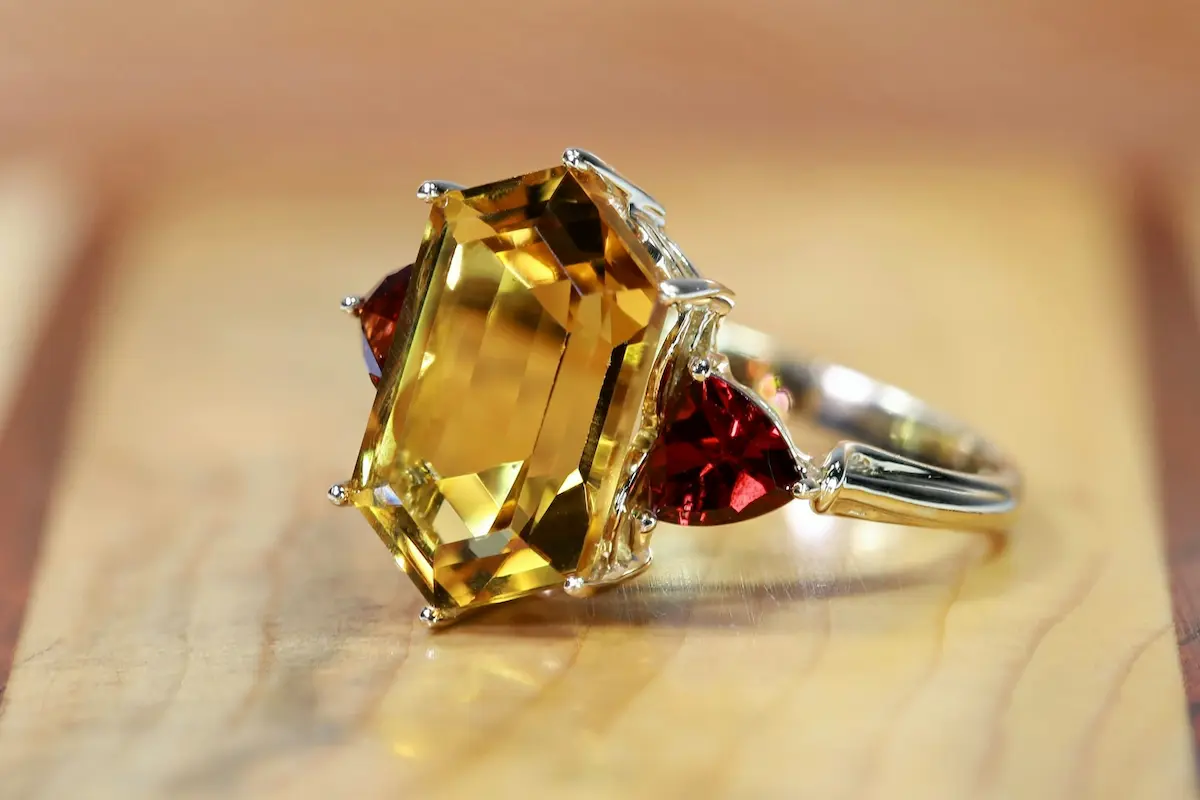
A jeweler once showed me a diamond that had come loose in its setting from a ring that, by every visible measure, looked completely fine. No bent prong, no obvious impact damage, no scratches suggesting rough handling. The stone had simply worked itself loose through nothing more dramatic than years of ordinary wear, the kind of thing that happens to careful owners just as often as careless ones.
This surprises people because it seems to violate a reasonable assumption: that a setting should either be damaged and therefore loose, or undamaged and therefore secure. The reality is a bit more gradual and mechanical than that binary suggests.
Table of Contents
- What a Prong Setting Is Actually Doing, Mechanically
- Why Constant Micro-Movement Matters More Than Occasional Impact
- Why Hand Jewelry Specifically Faces This More Than Other Pieces
- Temperature Changes Add a Layer Most People Don't Consider
- How This Connects to Something Worth Understanding About Metal Generally
- Why Regular Inspection Catches This Before It Becomes a Real Problem
- What Re-Tipping and Prong Rebuilding Actually Involves
- Why This Isn't a Reason to Worry Constantly, Just to Check Periodically
What a Prong Setting Is Actually Doing, Mechanically
A prong setting holds a gemstone in place through metal tips bent inward over the stone's edge, applying continuous physical pressure that keeps the stone from moving. This isn't a passive, static connection; it's an active mechanical hold that depends on the prong metal maintaining its bent shape and applied pressure indefinitely, which is a genuinely different situation from, say, a glued or fully enclosed setting where the holding mechanism doesn't rely on ongoing metal tension in the same way.
Metal, even hard, durable metals like platinum or high-karat gold, isn't perfectly rigid under sustained pressure over long periods. It experiences what's essentially very slow, cumulative deformation under that constant load, a phenomenon closely related to metal fatigue and creep that engineers account for in all sorts of mechanical applications, not just jewelry.
No matter how durable the material is, implementing a regular maintenance routine is the only way to keep your prized possessions in mint condition. Learn more in our Comprehensive Care Guide
Why Constant Micro-Movement Matters More Than Occasional Impact
Most people assume loose settings come primarily from a specific damaging event, a hard knock against a doorframe, a fall, something identifiable. In practice, a much larger contributor is the accumulated effect of thousands of small, low-force movements and vibrations that happen during completely ordinary daily wear, typing, gesturing, brushing against fabric and surfaces throughout a normal day.
None of these individual movements does anything noticeable on their own. But prongs experience constant tiny flexes from this ordinary handling, and over months and years, that repeated low-level stress gradually loosens the prong's grip in a way that's mechanically similar to how repeated bending eventually fatigues a paperclip, even though any single bend looked harmless in isolation.
Why Hand Jewelry Specifically Faces This More Than Other Pieces
Rings experience this dynamic more intensely than most other jewelry categories simply because hands are in almost constant motion and contact with surfaces throughout daily life, far more than earlobes or a neck typically experience. This is part of why jewelers specifically recommend more frequent prong inspections for rings compared to necklaces or earrings holding comparably valuable or delicate stones, since the underlying mechanical stress genuinely differs based on how the piece is actually worn and used day to day.
This also explains why the same ring worn during physically active periods, exercise, manual tasks, gardening, tends to develop loosening faster than one worn primarily during more sedentary activities, even accounting for the same total number of years of ownership, since the actual mechanical stress accumulated depends heavily on the nature of daily use rather than time elapsed alone.
Temperature Changes Add a Layer Most People Don't Consider
Metal expands and contracts slightly with temperature changes, and a ring moving between a cold outdoor environment and a warm indoor one, or exposed to hot water during dishwashing or showering, experiences repeated small expansion and contraction cycles that add to the cumulative mechanical stress on the prong setting over time. This isn't usually a dominant factor compared to the sheer volume of physical movement stress from wear, but it does contribute meaningfully over enough years, particularly for anyone who doesn't remove rings during activities involving significant temperature exposure.
How This Connects to Something Worth Understanding About Metal Generally
This is really a version of the same underlying material behavior that shows up elsewhere in fine jewelry and watches, where metal under sustained mechanical stress gradually deforms even without any dramatic single event causing it, similar in principle to how a dive watch's bezel spring gradually loses tension through thousands of ordinary compression cycles rather than through any specific traumatic failure. Metal components under continuous stress simply behave this way over long enough timeframes, and jewelry settings are far from the only place this shows up.
Why Regular Inspection Catches This Before It Becomes a Real Problem
Since this loosening process is gradual rather than sudden, it's almost always detectable well before a stone actually falls out, provided someone is actually checking. A jeweler can typically identify early-stage prong loosening through simple visual inspection and gentle testing, checking whether a stone has any perceptible wiggle when light pressure is applied, well before that looseness becomes severe enough to risk losing the stone entirely during normal wear.
This is part of why jewelers commonly recommend periodic professional inspection, often suggested at roughly annual intervals for frequently worn pieces, specifically because this kind of gradual mechanical loosening doesn't typically announce itself clearly to the wearer the way a visible crack or obvious damage would. The stone can look perfectly seated and secure right up until it's suddenly not, unless someone is actually checking the underlying mechanical connection rather than relying purely on visual appearance.
What Re-Tipping and Prong Rebuilding Actually Involves
When a jeweler identifies loosening prongs, the standard fix involves adding or reshaping metal at the prong tips, sometimes called re-tipping, to restore proper tension and grip around the stone. This is a well-established, routine jewelry repair rather than anything unusual or concerning, and catching the issue early, before a prong has thinned or worn significantly, generally makes for a simpler, less expensive repair than addressing more advanced wear where more extensive rebuilding might be necessary.
This connects to a broader principle worth applying to jewelry maintenance generally: catching mechanical issues in their early stages, before they progress to the point of actually risking stone loss, is almost always the cheaper and simpler path compared to addressing the same underlying problem after it's had more time to develop into something more serious.
Why This Isn't a Reason to Worry Constantly, Just to Check Periodically
None of this means fine jewelry is fragile or poorly engineered. Prong settings have held stones securely for a very long time using this exact mechanical principle, and the vast majority of pieces go years or decades without incident, provided the gradual loosening process gets caught through reasonably regular inspection rather than being left entirely unchecked for extended periods.
The practical habit worth adopting is simple: periodically check valued rings, either through your own careful visual and tactile inspection or, better, through occasional professional jeweler inspection, rather than assuming that an absence of visible damage means the setting underneath is necessarily still as secure as it was when new. Metal under constant mechanical stress changes slowly and quietly, and the only real defense against that gradual, invisible process is actually looking for it before it becomes obvious the hard way.