What Actually Happens Inside a Bank Safe Deposit Box (Humidity and Temperature Explained)

A watch collector I know spent years assuming his bank vault was the safest possible place for his pieces — until he read a thread of other owners comparing notes, several of whom had put actual thermometers and hygrometers inside their boxes out of curiosity.
What they found surprised most of them: no climate control at all, just whatever air happened to be circulating through the vault room that day.
This isn't a scandal or a hidden secret the bank is keeping from you. It's just an assumption most people never bother to check, because "bank vault" sounds inherently more controlled than it usually is.
Table of Contents
- The Assumption Most People Make
- What Vault Conditions Actually Look Like
- Why Humidity Is the Bigger Concern Than Temperature
- Condensation Is a Specific, Underappreciated Risk
- What Banks Actually Guarantee (And What They Don't)
- What Long-Term Box Renters Actually Do About It
- Is a Safe Deposit Box Still Worth Using?
- FAQ
The Assumption Most People Make
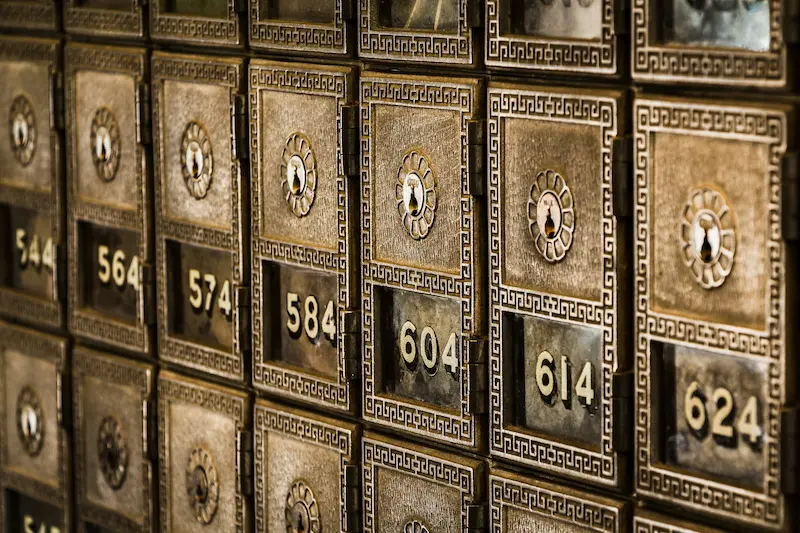
Safe deposit boxes get marketed, implicitly if not explicitly, as secure storage — and they genuinely are, when it comes to theft and fire resistance.
What that marketing doesn't usually clarify is that "secure" and "climate controlled" are two completely different things, and most vaults only deliver on the first one.
People planning to store watches, jewelry, or important documents in a safe deposit box often assume the vault environment is meaningfully different from a regular room in their house — cooler, more stable, better regulated.
In reality, according to numerous account from bank employees and long-term box renters comparing notes, the vast majority of vaults run on the same general building HVAC system as the rest of the branch, with no dedicated climate control specific to the vault room itself.
What Vault Conditions Actually Look Like
Based on firsthand accounts from people who've actually measured their own boxes with portable hygrometers, a typical vault experiences meaningful temperature swings tied to when the vault door opens, how often bank staff or other customers are moving through the area, and the general HVAC performance of the building during different seasons.
Some vaults, particularly in warmer climates, do run air conditioning consistently simply because turning it off would create mold problems in the building generally — but that's building-wide climate management, not a feature specifically engineered to protect the contents of individual boxes.
Vaults in older buildings or in regions with milder banking infrastructure sometimes have no air conditioning ducting into the vault room at all, meaning conditions can get genuinely warm in summer and cold in winter, tracking outdoor weather more than most renters would expect.
One detail worth understanding: vault doors themselves are usually solid and well-insulated for security reasons, but that same insulation can work against temperature stability once the door closes for an extended period, particularly overnight or over a weekend, since there's often minimal air exchange happening in between staff visits.
Why Humidity Is the Bigger Concern Than Temperature
Absolute temperature swings inside a vault are usually less damaging than the humidity conditions that come along with them. A sealed, poorly ventilated room with inconsistent airflow is exactly the kind of environment where moisture can accumulate, especially if the box itself isn't airtight and ambient humidity from the building finds its way in over time.
This matters more for certain valuables than others. Paper documents can wrinkle or become brittle depending on humidity swings.
Photographs can deteriorate. And for anyone storing watches or fine jewelry specifically, humidity is the same enemy that quietly degrades gaskets, tarnishes metal hardware, and creates the kind of slow corrosion that's often invisible until a piece is actually taken out and inspected.
This connects directly to something worth understanding about watches specifically — the same humidity-driven seal degradation that gradually compromises a watch's water resistance rating over years doesn't pause just because the watch happens to be sitting in a bank vault rather than a bedroom closet.
If anything, an unventilated, infrequently opened box can trap humidity more consistently than a well-ventilated home storage solution would.
Condensation Is a Specific, Underappreciated Risk
One scenario that catches people off guard: moving a piece from a cooler environment into a warmer one, or vice versa, can cause condensation to form on or near metal surfaces as the item adjusts to the new ambient temperature.
If a box has been sitting in cooler vault conditions and a piece is then handled in a warmer bank lobby, or the reverse, that temperature differential can create exactly the kind of moisture exposure that accelerates tarnishing on hardware or, in the case of jewelry and watch cases, promotes the same kind of surface oxidation that shows up as unwanted discoloration over time.
This is a similar principle to why watch collectors are advised against storing pieces in a refrigerator for supposed "protection" — moving a cold item into room-temperature air creates condensation risk, and a vault environment isn't fundamentally immune to a milder version of the same effect if temperature differentials are significant enough.
What Banks Actually Guarantee (And What They Don't)
It's worth being clear about what a safe deposit box rental agreement typically covers, because it's usually far less than people assume.
Banks generally provide physical security and some degree of fire resistance up to a certain temperature threshold, but they explicitly do not insure the contents of the box, and most rental agreements make no claims whatsoever about climate control or humidity regulation.
This means any protection against humidity or temperature swings inside the box is entirely up to what the renter does themselves — there's no assumption to be made that the bank is handling this on your behalf, and asking directly, before renting a box specifically to protect climate-sensitive valuables, is a reasonable thing to do rather than simply assuming a favorable answer.
What Long-Term Box Renters Actually Do About It
The practical response many experienced collectors have landed on isn't avoiding safe deposit boxes altogether, but adding their own small layer of humidity management inside the box itself, since the box's contents are usually a small enough space that this is genuinely effective, unlike trying to manage humidity in an entire room.
Silica gel packets, the kind that don't require any power source, are commonly used inside individual boxes specifically because they passively absorb ambient moisture without needing any electrical outlet, which safe deposit boxes obviously don't have.
These need periodic replacement or reactivation, since a saturated packet stops doing anything useful, but checking and swapping them during a routine visit is a simple habit that meaningfully reduces the humidity risk that comes from an unmonitored, infrequently opened space.
For pieces particularly sensitive to environmental swings, some collectors also use their own portable hygrometer inside the box during visits, simply to get a read on actual conditions over time rather than assuming either the best or the worst about their specific vault's environment.
This isn't a common habit, but it's a low-cost way to replace assumption with actual data.
Is a Safe Deposit Box Still Worth Using?
None of this means safe deposit boxes are a bad choice for valuables — for security against theft, fire, and general household risk, they still offer real advantages that a home storage solution generally can't match on its own.
The point isn't to avoid vaults, but to stop assuming they're doing more climate-related work than they actually are.
For pieces where security matters most and gradual climate exposure is a secondary concern, a vault remains a reasonable choice, especially paired with basic humidity management inside the box itself.
For pieces that are extremely climate-sensitive and visited rarely enough that condition monitoring isn't practical, some collectors choose to keep those specific items in a well-managed home storage setup instead, reserving vault space for items where security is the primary concern rather than long-term environmental preservation.
FAQ
Are bank safe deposit boxes climate controlled?
Generally, no. Most vaults run on the same building-wide HVAC system as the rest of the bank branch, without dedicated climate control specific to individual boxes or the vault room itself.
Is humidity really a problem inside a sealed vault?
Yes, potentially more than people expect. Poor ventilation and inconsistent air exchange can allow humidity to accumulate, especially in boxes that aren't opened frequently.
Should I put silica gel packets in my safe deposit box?
Many long-term renters do exactly this, since it's a passive, no-power way to manage ambient moisture inside the relatively small space of an individual box.
Does the bank insure what's stored in a safe deposit box?
No. Banks generally do not insure box contents, and a separate rider on a homeowner's policy or standalone insurance is usually necessary if coverage matters to you.
Is it worth checking my own box's actual conditions?
If you're storing something genuinely climate-sensitive, using a portable hygrometer during a visit gives you real data rather than an assumption, and it's a low-cost way to understand your specific vault's environment rather than every vault in general.
A safe deposit box solves a real problem — theft and physical security — but it was never designed to solve a different one, which is long-term climate preservation. Understanding that distinction is really the whole point: it's not about avoiding vaults, it's about not outsourcing a job to them that they were never actually built to do.