7 Mistakes That Ruin Your Hermès Bag
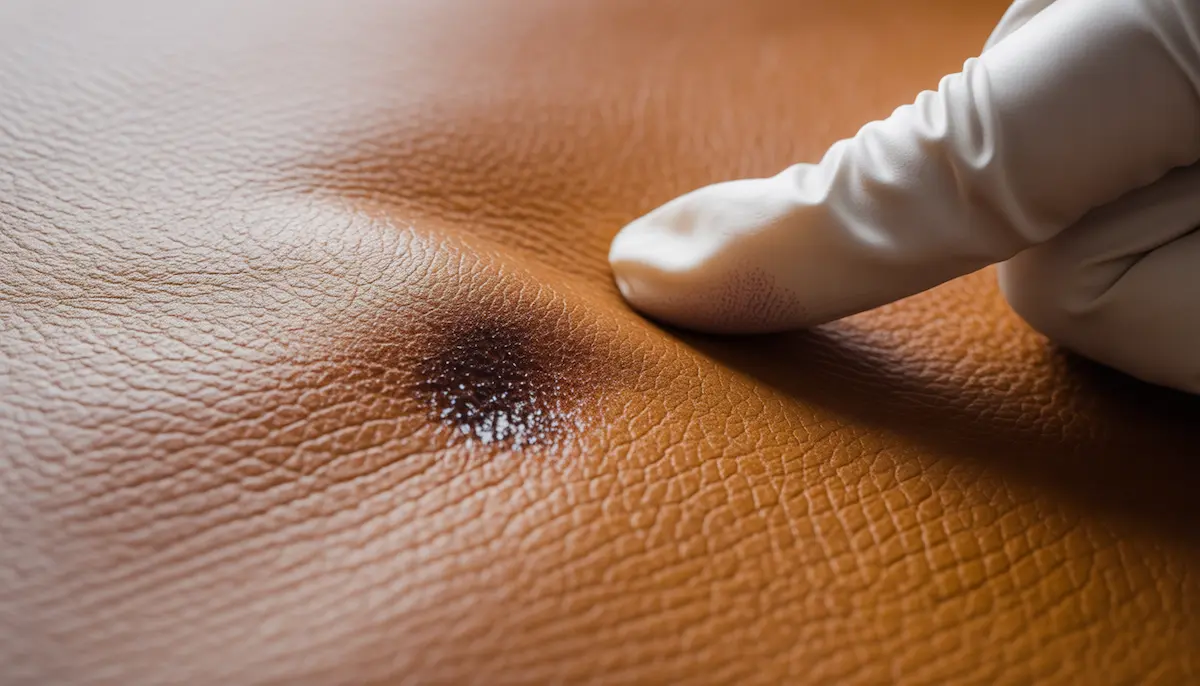
A small scratch here. A faint tide mark there. Leather that slowly loses its depth without you understanding why. By the time most owners notice something is wrong, the damage has already been building for months.
I've looked at a lot of Hermès bags over the years. Some that were three decades old and still looked extraordinary. Others that were barely two years out of the box and already showing signs of premature wear.
Table of Contents
- Mistake 1: Storing the Bag Without Stuffing It
- Mistake 2: Using the Wrong Cleaning Product
- Mistake 3: Ignoring the Effect of Direct Sunlight
- Mistake 4: Conditioning Too Frequently (Or With the Wrong Product)
- Mistake 5: Leaving Hardware in Contact with the Leather
- Mistake 6: Carrying Through Rain Without Preparation
- Mistake 7: Neglecting the Interior
- A Note on Leather-Specific Knowledge
- Practical Checklist: What to Review Today
- Frequently Asked Questions
- Conclusion
This post contains affiliate links. We may earn a small commission at no extra cost to you.
Mistake 1: Storing the Bag Without Stuffing It
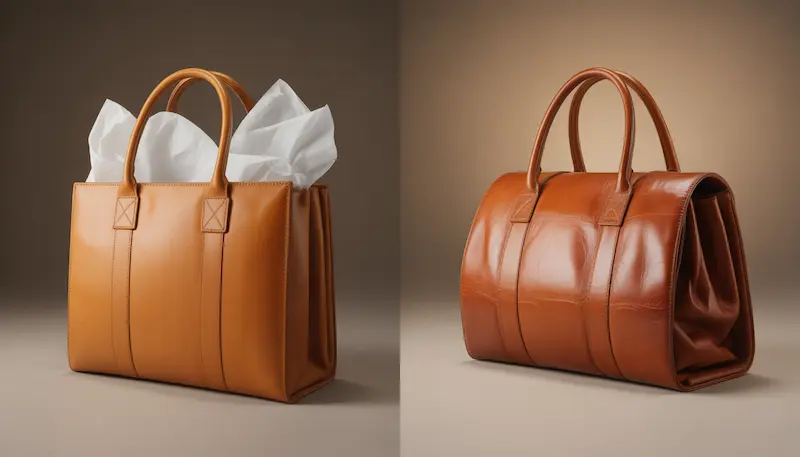
An empty Hermès bag slowly loses its shape. This seems obvious in theory, yet the number of Birkins and Kellys I've seen with compressed bases and collapsed sides suggests that many owners underestimate how quickly this happens.
Leather is not rigid. It responds to gravity, pressure, and the absence of internal support. A bag stored flat and empty will develop permanent creases at the fold points. The base corners will soften and round. The structured silhouette that defines these bags — and contributes significantly to their resale value — quietly deteriorates.
The fix is simple. Use acid-free tissue paper or a soft cotton insert to maintain structure during storage. Fill the bag enough to hold its natural form, but don't overpack — stretched leather creates its own problems.
This is something most owners don't notice until it's too late, when the bag's profile looks noticeably different from how it appeared in the boutique.
For detailed guidance on long-term storage environments and methods, the guide on how to store Hermès bags properly to avoid mold and shape damage covers this thoroughly.
Mistake 2: Using the Wrong Cleaning Product
This one causes irreversible damage more often than any other mistake on this list.
Hermès leathers are not homogeneous. Togo and Clemence — the grained calfskins most commonly seen on Birkins — behave very differently from Box calf, Epsom, or Barenia. A product that safely cleans one leather can discolor, dry out, or chemically alter another.
The most frequent offenders are baby wipes and "all-purpose" leather cleaners. Both seem harmless. Baby wipes contain alcohol and fragrance compounds that strip natural oils from the leather surface. All-purpose leather cleaners are typically formulated for furniture or automotive leather — thicker, more processed materials that bear no resemblance to the hand-finished hides Hermès uses.
The result tends to appear as dullness first — the leather loses its characteristic depth and begins to look flat. Then, over time, surface cracking if the leather has been significantly dried out.
A simple microfiber cloth for surface dust, and a cleaner specifically formulated for fine calfskin, is all most Hermès leathers need. Something like the Leather Honey Leather Cleaner is appropriate for most Togo and Clemence surfaces — used sparingly and always tested on a hidden area first. But understanding your specific leather before applying anything is the more important step.
Mistake 3: Ignoring the Effect of Direct Sunlight
Extended exposure to direct sunlight fades Hermès leather faster than almost any other environmental factor.
This affects darker colors most visibly — a Rouge H that should retain its deep, slightly oxidized red gradually shifts toward a lighter, flatter tone. But it affects all colors over time.
The physics are straightforward: UV radiation breaks down the dye compounds in the leather's surface. Hermès uses exceptional dyes, but no dye is immune to sustained UV exposure.
Where this mistake typically happens: bags displayed on shelves near windows, bags left in cars, bags placed on surfaces during outdoor events. None of these feel like significant exposure in the moment. Cumulatively, they represent hours of UV contact that compresses what would otherwise be years of natural aging into a much shorter timeline.
Storage in a dust bag inside a closed wardrobe, away from windows, is the correct approach. The orange Hermès dust bag provided with purchase is designed exactly for this purpose — use it.
Mistake 4: Conditioning Too Frequently (Or With the Wrong Product)
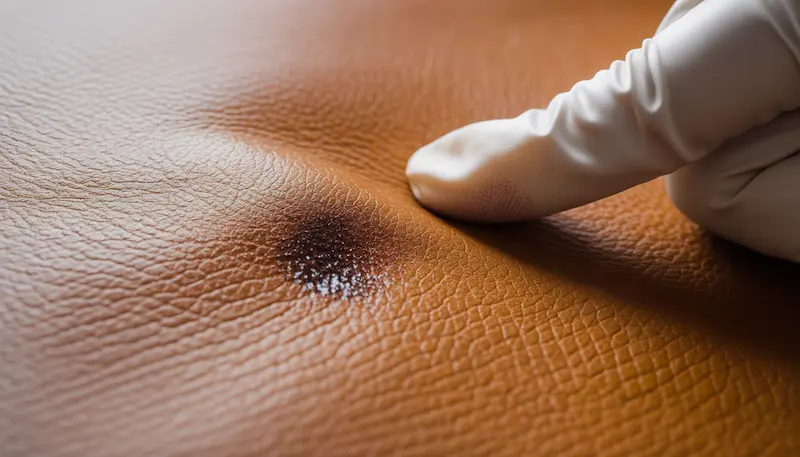
There's a common misconception that leather needs frequent conditioning to stay healthy. For most Hermès leathers, the opposite error is more common and more damaging.
Over-conditioning saturates the leather's pores, creates a tacky surface that attracts dust and debris, and can actually soften structured leathers to the point where they lose their natural resilience.
Togo, for example, is chosen by many Hermès owners precisely for its texture and slight firmness. Over-conditioning changes this characteristic permanently.
The other side of this mistake is conditioning with the wrong product. Mink oil, commonly recommended for leather care in general, is too heavy for most Hermès calfskin. It darkens the leather and alters its surface finish in ways that cannot be reversed.
For leathers that genuinely need conditioning — Barenia and Box calf being the most thirsty — a product like Saphir Renovateur applied twice yearly is typically sufficient. For Togo and Clemence, conditioning is needed rarely if at all, and a dry wipe with microfiber is often the right intervention.
Understanding the specific care requirements of your leather type is the most important foundation for all of this. The Hermès leather types and maintenance guide covers the major hides in practical detail.
Mistake 5: Leaving Hardware in Contact with the Leather
Palladium and gold-plated hardware — the closures, the clochette, the turn-lock — can leave marks on the leather surface when left in sustained contact. This is particularly visible on lighter-colored leathers where the hardware rests against the bag's exterior.
The mechanism is simple: even with the finest finishes, hardware is harder than leather. Weight and time create pressure marks, and the metal can transfer trace compounds to the leather surface.
This is most commonly observed at the bag's closure point, where the hardware rests against the front panel during storage. The fix is to store bags with tissue placed between the hardware and the leather surface.
It's a minor step. Most owners skip it. The marks it prevents are difficult to remove once they've developed.
Mistake 6: Carrying Through Rain Without Preparation
Water and unprotected Hermès leather is a predictable problem. But the nuance here is worth understanding.
Not all Hermès leathers react the same way to moisture. Epsom leather — stamped, with a firmer surface — is considerably more water-resistant than Togo or Clemence. Box calf, being smooth and finished, shows water marks distinctly and can develop tide marks that require professional attention to address.
The mistake isn't necessarily using a Hermès bag in uncertain weather. The mistake is not knowing your specific leather's tolerance and not having a plan.
For leathers with genuine water sensitivity, a light application of a protective spray formulated for smooth calfskin — applied carefully and tested first — provides a degree of protection without altering the leather's appearance. This is not the same as heavy waterproofing products designed for outdoor gear, which are inappropriate for fine leather.
If a bag does get wet, the correct response is to blot excess moisture immediately with a dry cloth, then allow the bag to dry naturally at room temperature. Not near a heat source. Not in sunlight. Not with a hairdryer. Heat applied to wet leather causes rapid contraction of the fibers, leading to cracking and permanent texture change.
Mistake 7: Neglecting the Interior
The interior of a Hermès bag is chevre or goatskin in many models — a fine, tightly grained leather that's durable but not indestructible. Pen leaks, cosmetic spills, and the general accumulation of debris inside an unorganized bag cause damage to the interior that affects both the bag's condition and its resale value.
A simple bag organizer prevents most interior damage by keeping items contained and reducing the direct contact between the interior leather and anything that might stain or scratch it. This is a practical solution that many Hermès owners overlook because it feels overly cautious.
The interior condition is one of the first things a knowledgeable buyer examines at resale. Bags with pristine exteriors but damaged interiors sell for significantly less. The math makes the preventive step worthwhile.
A Note on Leather-Specific Knowledge
Many of these mistakes stem from treating Hermès leather as a uniform material when it isn't. A care approach appropriate for one hide can be damaging to another.
If you're uncertain about which leather your bag uses, or how that leather responds to specific products and conditions, understanding which Hermès leathers scratch easily and what owners notice too late provides specific guidance before any intervention.
Practical Checklist: What to Review Today
If you're looking at your current care routine with fresh eyes, these are the points worth evaluating:
Storage:
- Is the bag stuffed to maintain its shape?
- Is it stored away from light in its dust bag?
- Is hardware separated from leather surfaces?
Cleaning:
- Are you using a product formulated for your specific leather type?
- Are you cleaning with a clean microfiber cloth or something rougher?
- How frequently are you conditioning, and is that frequency appropriate for your leather?
Daily use:
- Is the interior organized to prevent spills and scratches?
- Do you know your leather's water sensitivity?
These aren't complicated adjustments. But applied consistently, they're the difference between a bag that holds its character for decades and one that shows its age prematurely.
Frequently Asked Questions
Q: How often should I clean my Hermès Birkin?
A: For regular use, a dry wipe with a clean microfiber cloth after each wearing is usually sufficient. Deeper cleaning with an appropriate product should happen no more than every few months, and only when genuinely needed. More frequent cleaning — especially with any liquid product — creates more risk than it eliminates.
Q: Can I use baby wipes to clean my Hermès bag?
A: No. Baby wipes contain alcohol and fragrance compounds that strip natural oils from the leather over time. Even one use can affect the surface of sensitive leathers. A clean, dry or slightly damp microfiber cloth is the safer alternative for light cleaning.
Q: How should I store my Hermès bag when not in use?
A: In its dust bag, stuffed gently with acid-free tissue to maintain shape, stored away from direct light and humidity. Hardware should be separated from the leather surface with tissue. The bag should not be stacked under other items that create sustained pressure.
Q: Is it safe to use a leather conditioner on all Hermès leathers?
A: No. Different Hermès leathers have very different conditioning needs. Barenia and Box calf benefit from occasional conditioning. Togo and Clemence rarely need it. Epsom, with its sealed surface, generally does not absorb conditioners at all. Using the wrong product or conditioning too frequently causes more harm than good.
Q: What should I do if my Hermès bag gets wet?
A: Blot excess moisture immediately with a dry cloth without rubbing. Allow the bag to dry naturally at room temperature, away from heat sources and sunlight. Do not use a hairdryer. Once dry, assess whether any conditioning is appropriate for your specific leather type.
Conclusion
The most effective care for a Hermès bag isn't complicated. It's consistent, informed, and calibrated to the specific leather in front of you.
Most of the damage I've seen on these bags wasn't caused by accidents or negligence. It was caused by small habits that seemed reasonable — products that felt safe, storage that seemed adequate, cleaning schedules that felt responsible.
The problem was that they weren't quite right for the specific leather or the specific situation.
Precision matters more than effort here. Doing the right small things consistently — the correct product for your leather, appropriate storage, minimal intervention — will serve a Hermès bag far better than intensive care applied without sufficient understanding.
That's the philosophy behind everything on this site. Not more. Just right.