Togo vs Epsom: Which Hermès Leather Actually Lasts Longer?
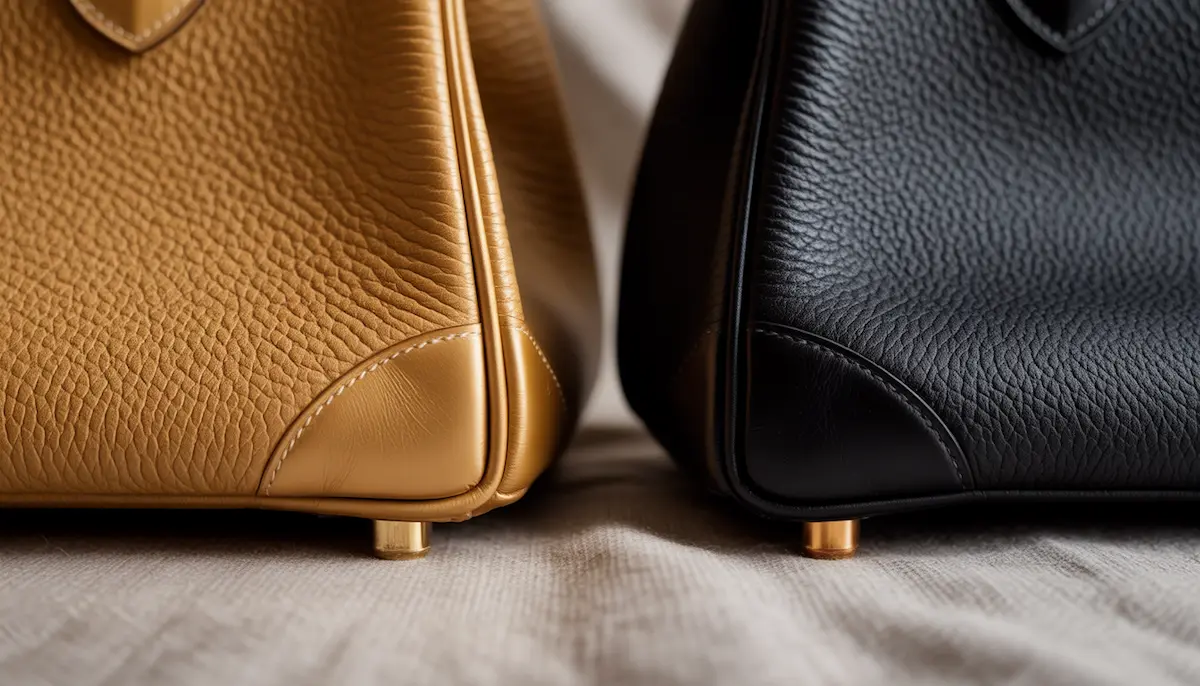
Most people choose between Togo and Epsom based on how the bag looks on the shelf. The texture. The way it holds its shape. Maybe the weight.
What they don't consider — and what ends up mattering most — is how each leather behaves over two years, five years, ten years of actual use.
The Togo vs Epsom Hermès leather question isn't really about aesthetics. It's about understanding two fundamentally different materials that happen to share a price tag and a brand name.
They age differently. They respond to moisture differently. They require different care approaches. And they tell very different stories after a decade of ownership.
Getting this wrong doesn't ruin a bag overnight. It just means you chose the wrong material for how you actually live — and you figure that out slowly, wear mark by wear mark, until the bag looks older than it should.
Table of Contents
- Why This Decision Has Real Consequences
- What Togo Actually Is
- What Epsom Actually Is
- Direct Comparison: How They Perform Over Time
- Which One Actually Lasts Longer?
- How to Care for Each Leather Correctly
- What Most People Get Wrong About This Comparison
- The Decision Framework
- Frequently Asked Questions
- Final Thought
Why This Decision Has Real Consequences
Hermès bags are not seasonal purchases. They're long-term objects — designed to last decades, valued accordingly, and traded in a resale market where condition determines price as much as model or hardware.
The leather choice you make at purchase sets the trajectory for everything that follows. A leather that's wrong for your lifestyle will show its age faster. It will require more careful handling than you realistically have time for. And it will disappoint you in ways that feel vague — the bag just doesn't look right anymore — before the specific cause becomes clear.
This isn't about one leather being better than the other in an absolute sense. It's about understanding what each material actually is, what it does well, where it falls short, and which one fits your reality.
What Togo Actually Is
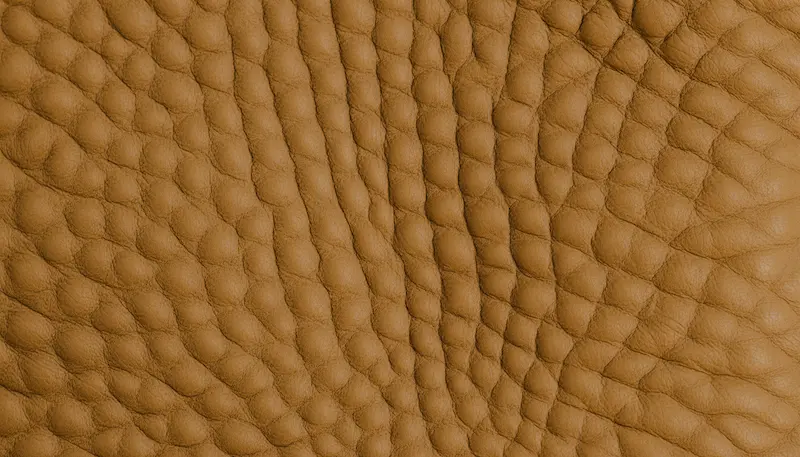
Togo is a natural-grain calfskin. The texture — those visible, irregular pebbles across the surface — comes from the leather itself, not from any manufacturing process applied after tanning. Each hide has its own character, which means two Togo bags in the same color will have slightly different grain patterns.
That natural grain is what makes Togo so practical. Surface marks — light scratches, minor scuffs, the evidence of a bag being used — tend to disappear into the texture rather than sitting visibly on top of it. This is the single most important practical advantage Togo has over smoother leathers.
Togo is also relatively heavyweight for calfskin, which gives it a satisfying solidity when carried. It holds its shape reasonably well during use and responds to conditioning in a natural, predictable way — the leather absorbs what it needs and the surface character remains intact.
Where Togo Shows Its Age
The main vulnerability is structural. Togo is a softer leather, which means bags made from it — particularly larger sizes — can develop a slight sag with consistent heavy use. A Birkin 35 in Togo carried daily with a full load will soften at the base over time more noticeably than the same bag in Epsom.
It's also more susceptible to water marking than Epsom. Caught in rain, a Togo bag will show water spots that typically fade as the leather dries, but the process isn't always clean and consistent.
What Epsom Actually Is
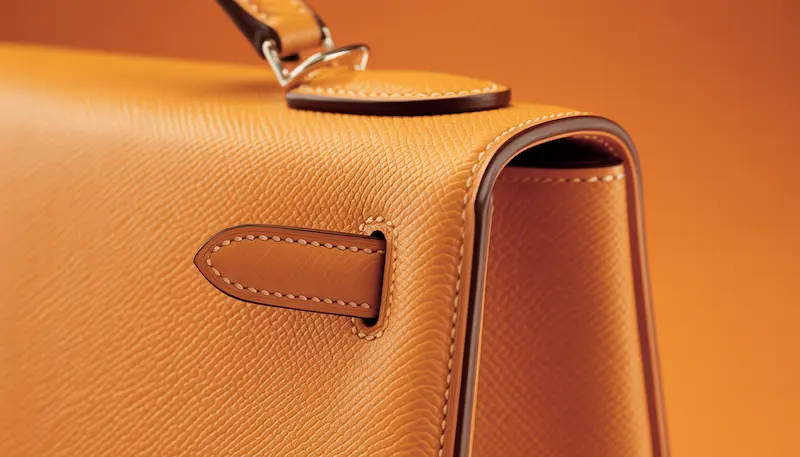
Epsom is where the comparison gets interesting. Unlike Togo, Epsom's grain is stamped — the texture is pressed into the leather surface rather than being naturally occurring. The result is a more uniform, refined appearance with a slightly firmer hand.
This pressed surface is what gives Epsom its primary practical advantage: resistance to surface marking. Because the grain is more closed and the surface more dense, scratches and scuffs don't penetrate as easily. Epsom handles contact with hard surfaces, light rain, and the general friction of daily use without showing the evidence as readily.
Epsom is also lighter than Togo, which matters over a long day. And because the surface is firmer and more structured, it holds the bag's geometry consistently — no sagging at the base, no softening of the sides, even in larger sizes and with regular full loads.
Where Epsom Falls Short
The limitation of Epsom is in how it ages at a deeper level. Because the surface is pressed and more closed, it doesn't develop patina the way natural-grain leathers do. Togo, properly maintained, develops a warmth and depth over years that collectors genuinely value. Epsom stays consistent — which is either a feature or a limitation depending on what you're looking for.
Conditioning works differently on Epsom too. The pressed surface doesn't absorb product as readily as Togo, which means the same application technique can leave residue sitting on the surface rather than nourishing the leather beneath.
Less product, more patience — that's the approach Epsom requires.
And at stress points — the handles, the corners, the areas around hardware — Epsom can eventually crack rather than simply wear, particularly if it's allowed to dry out over time.
This is something most owners don't notice until it's too late, because the early signs are subtle and the progression is slow.
Direct Comparison: How They Perform Over Time
| Category | Togo | Epsom |
|---|---|---|
| Surface scratch resistance | Good — grain conceals marks | Excellent — dense surface deflects marks |
| Structural integrity | Moderate — can soften with heavy use | High — holds shape consistently |
| Patina development | Rich, natural over years | Minimal — stays consistent |
| Water resistance | Moderate — spots typically fade | Better — more resistant to water |
| Weight | Heavier | Lighter |
| Conditioning absorption | Natural, responsive | Minimal — closed surface, use sparingly |
| Cracking risk at stress points | Lower | Higher if not maintained |
| Aging character | Warm, lived-in appeal | Clean, consistent appearance |
Neither column is universally better. The right answer depends entirely on what you're asking the bag to do.
Which One Actually Lasts Longer?
This is where the question gets more nuanced than most comparisons allow for.
If "lasting longer" means maintaining a clean, unmarked surface appearance under regular use — Epsom. Its resistance to visible surface damage is genuinely superior. A bag used daily in office environments, casual social settings, and light travel will show less obvious wear in Epsom than in Togo over the same period.
If "lasting longer" means maintaining the structural and material integrity of the leather itself — Togo has an edge. Natural-grain leather, properly conditioned, maintains its fiber integrity over decades. Epsom, if the maintenance is inconsistent, is more prone to surface cracking at high-stress areas — the handle roots, the corners, around clasp hardware.
If "lasting longer" means holding value in the resale market — both perform well, but context matters.
A Togo bag with a rich, well-developed patina and excellent surface condition can command a premium among collectors who understand what they're looking at.
A pristine Epsom bag appeals to buyers who prioritize a clean, structured appearance. Neither is consistently worth more than the other across the market.
The honest answer: both leathers last decades with appropriate care. The question is whether the care they each require aligns with how you actually use and maintain your bags.
How to Care for Each Leather Correctly
Caring for Togo
Togo is forgiving but not indestructible. The grain conceals minor surface marks, but deeper scratches and structural softening from overfilling are real risks.
Condition Togo two to three times per year using a mild conditioner formulated for natural calfskin. Saphir Renovateur (View details) works well — it nourishes without saturating and maintains the surface character without altering it. Apply with a soft cloth, use less than feels necessary, and buff after absorption.
For surface cleaning between conditioning sessions, a quality microfiber cloth like the MagicFiber Professional set (Check on Amazon) handles dust and light residue safely. On a grained leather like Togo, it's particularly useful for working gently around the texture without catching.
Avoid overfilling. The structural softening that affects larger Togo bags over time is accelerated significantly by consistent overloading.
For a broader understanding of how to preserve your Hermès bag's condition over time, the patterns that cause premature wear apply to Togo as directly as any other leather.
Caring for Epsom
Epsom requires a lighter touch with conditioning — less product, applied less frequently. The pressed surface doesn't absorb the same way Togo does, and over-conditioning leaves residue that sits on the surface rather than nourishing the leather beneath. Once a year, or twice at most, is typically sufficient.
The priority with Epsom is preventing the surface from drying at stress points. Handles and corners are where cracking tends to begin.
A very small, targeted application of conditioner to these areas — even between full conditioning sessions — addresses the risk without over-treating the rest of the bag.
Store Epsom bags with internal support to maintain their structure, though because Epsom is naturally more rigid, this is less urgent than with softer leathers. Still, consistent support during storage prevents any unnecessary stress on the leather.
For proper long-term storage practices that apply across both leather types, the fundamentals remain consistent regardless of which material you're working with.
What Most People Get Wrong About This Comparison
The assumption most people make is that Epsom, being more resistant to surface damage, requires less care overall. That's not accurate. Epsom's maintenance needs are different — more targeted, less frequent — but neglecting them has more visible consequences at stress points than neglecting a Togo bag would.
The other misconception: that Togo's susceptibility to surface marks means it ages poorly. It doesn't. It ages differently — developing character rather than maintaining consistency. Whether that's desirable depends on the owner. Some collectors actively prefer Togo precisely because of how it evolves.
Understanding which Hermès leathers are most vulnerable to specific types of wear puts both Togo and Epsom in context alongside the full range of leathers — and makes the comparison more useful than examining either one in isolation.
And if conditioning is part of your regular maintenance — which it should be for either leather — matching the right conditioner to the right leather makes a real difference in outcomes over time.
The Decision Framework
Before choosing between Togo and Epsom, answer these honestly:
How do you carry the bag?
Daily use with full loads → Epsom's structural rigidity handles this better
Occasional use with lighter loads → Togo's natural character rewards this
What's your tolerance for surface marks?
Low tolerance, prefer consistent appearance → Epsom
Comfortable with character development over time → Togo
How consistent is your maintenance?
Regular, attentive care → Either leather rewards this well
Occasional, minimal maintenance → Epsom is more forgiving of gaps, but more at risk at stress points if conditioning is skipped entirely
What do you value in how a bag ages?
Consistent, structured appearance year after year → Epsom
Warm, evolving patina with visible history → Togo
There's no wrong answer — only a mismatch between expectation and reality.
Frequently Asked Questions
Is Togo or Epsom better for everyday use?
Both handle everyday use well, but for different reasons. Epsom's firmer surface and structural rigidity make it practical for daily carry — it holds its shape under consistent use and resists surface marking well. Togo is slightly more susceptible to structural softening with heavy daily loads but conceals minor surface marks better through its natural grain. For daily carry with heavy loads, Epsom has a slight practical edge.
Does Togo scratch more easily than Epsom?
Both leathers resist scratching better than smooth Hermès leathers like Swift or Box calf, but they do so differently. Togo's natural grain conceals scratches by absorbing them into the texture. Epsom's pressed, dense surface physically deflects surface marks more effectively. Under equivalent conditions, Epsom shows fewer visible scratches.
Which leather develops patina — Togo or Epsom?
Togo develops a genuine, natural patina over years of use — a warmth and depth that many long-term collectors value. Epsom, because its surface is pressed rather than naturally grained, develops minimal patina. It maintains a consistent appearance over time, which is either an advantage or a limitation depending on what you prefer.
Can Epsom leather crack over time?
Yes, at stress points — handles, corners, and areas around hardware — Epsom is more susceptible to cracking than Togo if conditioning is neglected and the leather is allowed to dry out. Targeted conditioning at these areas, even between full conditioning sessions, significantly reduces this risk.
Which Hermès leather holds resale value better — Togo or Epsom?
Both perform well in the resale market. Condition matters more than leather type for resale value in most cases. A Togo bag with rich patina and excellent surface condition appeals to collector-oriented buyers. A pristine Epsom bag appeals to buyers who prioritize a clean, structured appearance. Neither consistently commands a higher premium across the market.
Final Thought
The Togo vs Epsom question doesn't have a universal answer — and anyone who tells you otherwise is simplifying something that deserves more care.
What it does have is a right answer for your specific situation: how you carry, how you maintain, what you value in how a bag evolves, and how much tolerance you have for the inevitable evidence of use.
Both leathers are exceptional. Both last decades with appropriate care. The decision is about alignment — matching the material to the life it's going into, not the life you imagine in the boutique.
Precision over excess. Know what you're choosing and why. That clarity is what makes the difference between a bag that rewards you for a decade and one that quietly disappoints you long before it should.