Why Your Hermès Bag Wears Out Too Fast (7 Costly Mistakes)
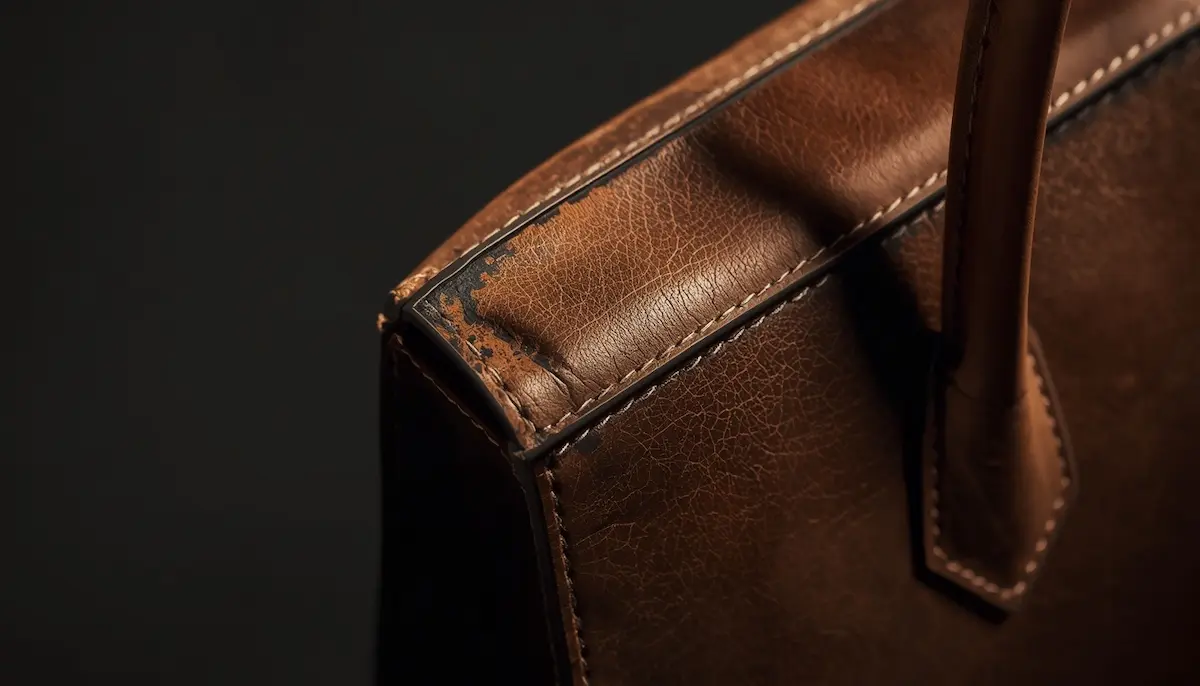
A Hermès bag is supposed to last decades. That's not marketing language — it's the reason the waiting lists exist, the reason the resale market holds value the way it does, and the reason certain vintage pieces from the 1970s still look extraordinary today.
When someone asks why their Hermès bag wears out fast, the answer is almost never the bag itself.
It's what's happening to it between uses.
The damage is rarely dramatic. No single moment of carelessness that explains everything.
It's a collection of small, repeated mistakes — each one minor on its own — that compound quietly over months until the leather looks older than it should, the structure feels softer than it was, and the bag that was supposed to appreciate is now something you'd hesitate to bring to a resale conversation.
Here's what's actually driving that premature wear.
Table of Contents
- The Real Problem: Invisible Damage Adds Up
- Mistake 1: Overfilling the Bag
- Mistake 2: Ignoring What the Bag Rests Against
- Mistake 3: Carrying With Skin Contact on the Same Spot
- Mistake 4: Cleaning With the Wrong Materials
- Mistake 5: Using the Wrong Conditioner — or Over-Conditioning
- Mistake 6: Poor Storage Between Uses
- Mistake 7: Ignoring the Leather Type's Specific Vulnerabilities
- A Side-by-Side: What Accelerates Wear vs. What Preserves It
- What Premature Wear Actually Costs
- Frequently Asked Questions
- Final Thought
The Real Problem: Invisible Damage Adds Up
Hermès leather is exceptional. But "exceptional" doesn't mean "invincible," and the assumption that it does is precisely what accelerates wear.
Fine calfskin — whether it's Togo, Swift, Clemence, or Box calf — responds to its environment constantly.
Humidity, body heat, UV exposure, the pressure of objects inside the bag, the friction of surfaces it rests against: all of these leave a mark. Not always visible immediately. Often not visible for months. But cumulative and real.
The owners whose bags look pristine after five years of regular use aren't lucky. They've simply avoided the mistakes below — most of them without even realizing they were doing so.
Mistake 1: Overfilling the Bag
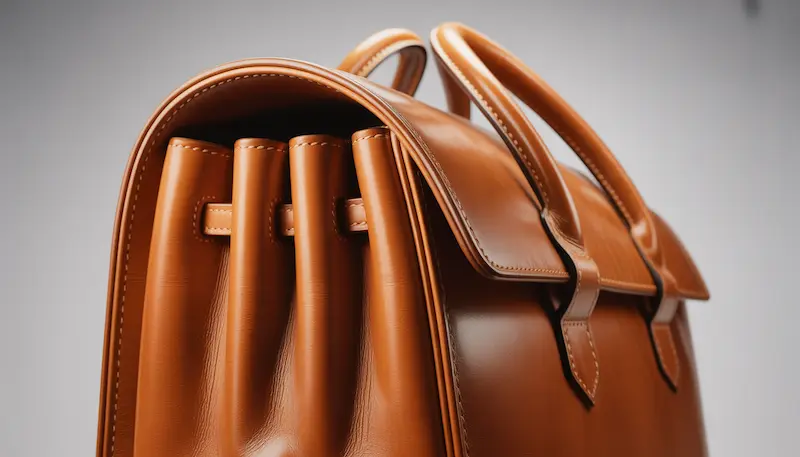
This is probably the most common cause of premature structural wear, and also the easiest to dismiss.
When a bag is overfilled — when the interior is packed tightly enough to strain the stitching, push against the leather panels from inside, and prevent the bag from closing naturally — several things happen simultaneously.
The base stretches. The side panels bow outward. The stitching at stress points begins to fatigue. The hardware stresses its anchoring points in the leather.
A Birkin or Kelly has a designed capacity. Respecting that capacity isn't being precious — it's understanding that the bag was built to specific proportions, and those proportions depend on not being consistently exceeded.
The fix is simple: carry what the bag was designed to carry. If you regularly need more, use a larger size or a different bag for high-capacity days.
Mistake 2: Ignoring What the Bag Rests Against
Every surface the bag contacts is a potential source of wear. The restaurant chair. The car seat. The table at a coffee shop. The floor — if it ever touches one.
Rough or textured surfaces scratch smooth leathers directly. Damp surfaces transfer moisture. Dark surfaces can transfer color to light-colored leathers over time. And setting a bag down repeatedly on the same surface creates wear patterns on the base that accumulate faster than most people expect.
This is something most owners don't notice until it's too late — because you're focused on the meeting, the dinner, the conversation — not what's underneath the bag.
A habit worth developing: always set the bag on a clean, smooth surface. On a chair, not the floor. On a cloth, not directly on a textured table. Small adjustments, consistent practice.
Mistake 3: Carrying With Skin Contact on the Same Spot
The handle area of any frequently carried bag is the first to show wear — and the reason is direct: skin contact. The natural oils, perspiration, and heat from hands and wrists affect leather over time, particularly smooth leathers.
On handles, this tends to manifest as darkening, softening, and a gradual change in surface texture that becomes more pronounced with time. On shoulder straps carried against bare skin or thin fabric, color transfer and surface degradation can appear relatively quickly.
Using a handle wrap or simply alternating how you carry the bag — handles one day, crook of the arm the next — distributes wear rather than concentrating it.
It extends the lifespan of the most vulnerable part of the bag significantly.
Mistake 4: Cleaning With the Wrong Materials
The instinct to wipe down a bag when something gets on it is correct. What most people reach for is not.
Household cleaning wipes, baby wipes, and general-purpose sprays contain ingredients — alcohol, fragrances, surfactants — that strip the surface finish of fine leather or alter its pH balance.
On smooth leathers like Swift or Box calf, a single application of the wrong product can leave a permanent dull patch where the finish has been compromised.
Even water, applied incorrectly, leaves tide marks on certain leathers.
A soft, dry microfiber cloth like the MagicFiber Professional set (Check on Amazon) handles most surface situations safely — removing dust, light residue, and surface particles without any risk to the leather. For anything that requires more than dry wiping, a leather-specific cleaner applied sparingly with a clean cloth is the correct next step.
The rule: when in doubt, do less. A dry wipe is almost always safer than whatever else feels available in the moment.
Mistake 5: Using the Wrong Conditioner — or Over-Conditioning
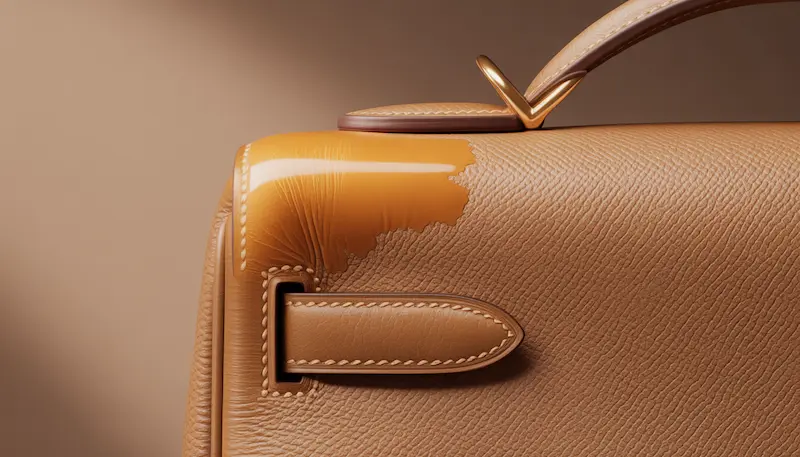
Conditioning is maintenance. It's also, done incorrectly, one of the faster routes to surface damage that's difficult to reverse.
Oil-rich conditioners designed for heavier leathers saturate fine calfskin. They darken the surface.
They can create a tacky residue that attracts dust and builds up with each application. And because the effect is gradual, owners sometimes apply more product thinking the earlier application didn't work — which compounds the problem.
Over-conditioning is the less-discussed risk. Leather has a saturation point. Past that point, product sits on the surface rather than absorbing. The surface begins to look slightly off — a sheen that's wrong, a texture that's slightly changed. These signs are subtle. Easy to attribute to other causes. But the pattern becomes clear eventually.
The right conditioner for Hermès leather is mild, formulated for fine calfskin, and applied sparingly two to three times per year. Saphir Renovateur (View details) is a product with a long track record among serious collectors — nourishing without saturating, and respectful of surface finishes that took skilled hands to create.
For a full breakdown of what to use, what to avoid, and how different leathers respond differently, understanding how leather conditioning works for Hermès pieces is the reference worth reading before you open any product.
Mistake 6: Poor Storage Between Uses
This one operates entirely out of sight, which is why it causes so much damage without anyone catching it early.
A bag stored without internal support slowly loses its structure. The base softens. The sides lean.
The hardware — if resting against a leather panel — creates pressure impressions over weeks and months. In humid conditions, mold can establish itself before any visible sign appears.
The standard mistake is assuming the dust bag handles everything. It doesn't. The dust bag protects against surface dust. It doesn't support shape. It doesn't regulate humidity. It doesn't prevent hardware from pressing into leather.
A few things that actually matter for storage:
- Fill the bag with acid-free tissue or a proper insert before storing
- Position hardware so it doesn't rest against leather panels
- Keep the bag in a breathable cotton dust bag with a loose — not sealed — closure
- Store in a climate-controlled space, away from direct light and temperature extremes
- Check the bag once a month rather than leaving it unattended for extended periods
Proper storage practices for Hermès bags cover this in full detail — including what to do for seasonal storage versus long-term care.
Mistake 7: Ignoring the Leather Type's Specific Vulnerabilities
Not all Hermès leathers age the same way. A Togo leather Birkin and a Swift leather Birkin in identical colors, carried identically, will look very different after two years of regular use.
Swift scratches more easily. Box calf shows every mark on its glossy surface. Epsom is more forgiving but doesn't respond to conditioning the same way natural-grain leathers do. Clemence softens and may slouch without proper support.
Caring for a bag without understanding which leather it's made from is like applying the same maintenance schedule to fundamentally different materials — some steps will be insufficient, others excessive, and the cumulative effect will be visible.
Understanding which Hermès leathers are most vulnerable to surface damage changes how you handle and store your specific bag — not bags in general.
For a comprehensive view of the full leather lineup and how each type responds to daily use and maintenance, the Hermès leather types maintenance guide is the reference that makes every other care decision more precise.
A Side-by-Side: What Accelerates Wear vs. What Preserves It
| Accelerates Wear | Preserves Condition |
|---|---|
| Overfilling the bag consistently | Carrying within designed capacity |
| Setting bag on rough or damp surfaces | Clean, smooth surface every time |
| Same carry position, every day | Rotate carry style to distribute wear |
| Cleaning with household wipes | Dry microfiber cloth as first response |
| Heavy conditioner applied frequently | Mild conditioner, sparingly, 2–3x per year |
| Empty bag stored without support | Filled with tissue or insert before storage |
| Ignoring leather type differences | Tailoring care to specific leather |
What Premature Wear Actually Costs
This isn't an abstract concern. A Birkin 25 in Swift that shows significant surface wear, structural softening, and handle discoloration trades at a meaningfully lower price than a comparable bag in excellent condition. The difference can run to several thousand dollars — sometimes more, depending on color and hardware.
That gap exists because of the decisions made during ownership. Decisions that individually felt minor. Collectively, they determined the bag's trajectory.
The bags that hold or appreciate in value over time are the ones where the owner understood that purchase price and maintenance standards need to match. One without the other eventually shows.
Frequently Asked Questions
Why does my Hermès bag look worn after only a year?
Premature wear is almost always the result of accumulated small mistakes: overfilling, incorrect cleaning products, poor storage without shape support, or carrying habits that concentrate wear on the same areas. Identifying which of these applies to your situation is the first step toward slowing the decline.
Can a worn Hermès bag be restored?
Some damage can be addressed by professional leather restorers or through Hermès's own spa service. Surface scratches on Box calf can sometimes be partially buffed out. Structural damage from overfilling is harder to reverse. Color fading and finish damage from wrong cleaning products may be permanent. Prevention is significantly more effective than restoration.
Does leather conditioner prevent wear?
Conditioning maintains leather health — specifically moisture balance and suppleness — which helps prevent cracking and drying. It does not prevent surface scratches or structural wear. Those require handling and storage habits, not product applications.
Which Hermès leather lasts longest with regular use?
Togo and Epsom are generally the most durable for daily carry. Togo's pebbled texture conceals minor marks well, and Epsom's pressed grain resists surface damage effectively. Swift and Box calf are more vulnerable to visible wear under the same conditions.
How often should I condition my Hermès bag?
For bags in regular use, two to three times per year is the right interval. More frequent conditioning doesn't improve outcomes — it risks over-saturating the leather and building up residue on the surface that affects the finish over time.
Final Thought
A Hermès bag that wears out too fast isn't a product failure. It's an information gap — between what the leather needs and what the owner knew to provide.
The seven mistakes above aren't exotic or difficult to avoid. They're patterns that emerge when people assume expensive materials take care of themselves. They don't. They respond to how they're treated, every day, in the small decisions that don't feel significant in the moment.
The collectors whose bags still look right after a decade didn't do more. They did the right things, consistently, without overcomplicating it.
Precision over excess. Consistency over intensity. That's the standard that keeps these pieces worth keeping.