Hermès Birkin for Sale: 11 Things Smart Buyers Check Before Spending $10,000+
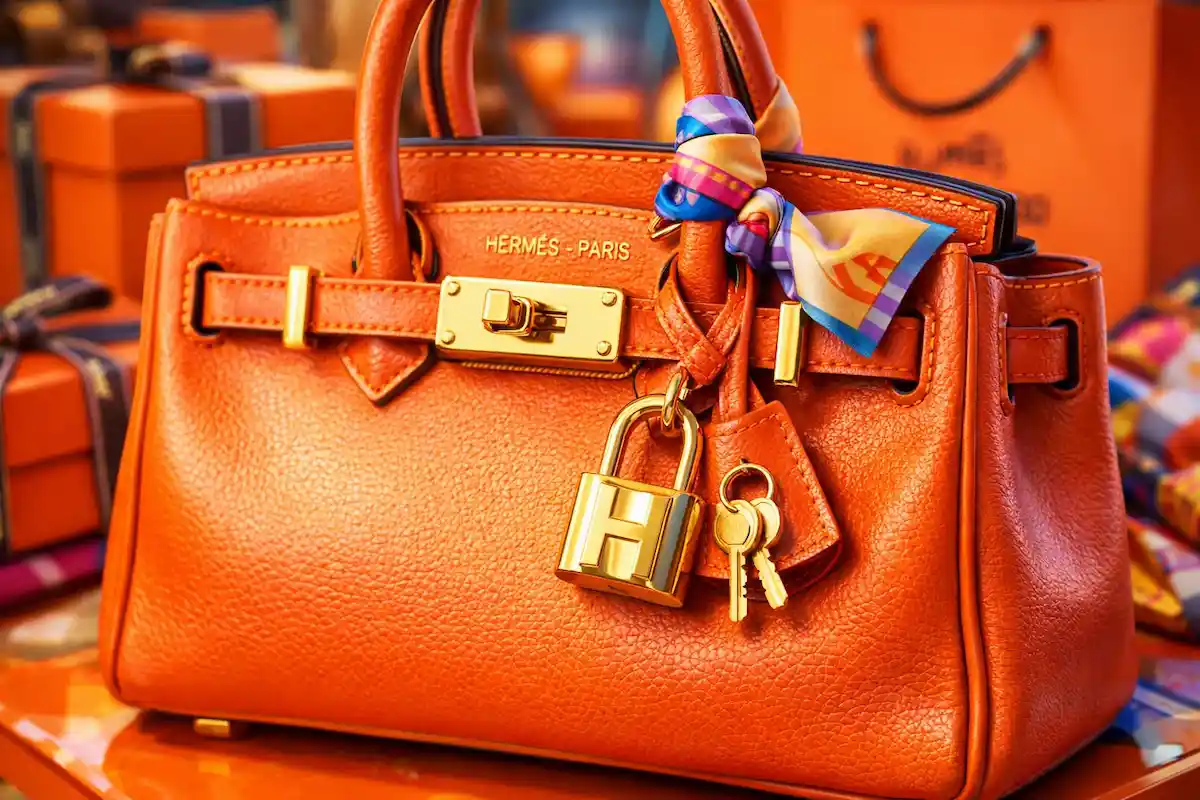
There's a particular moment that happens to a lot of first-time Birkin buyers. They find what looks like a perfect bag — right size, right color, right hardware — listed as a Hermès Birkin bag for sale at a price that seems fair for the secondary market.
The photos look clean. The seller has positive reviews. The authentication card is present. They buy it.
And then, three weeks later, something feels off. The leather doesn't respond the way Hermès leather is supposed to. The stitching pitch is slightly uneven in a way they couldn't see in photographs. The hardware has a weight that doesn't match what they've held in boutiques.
This scenario plays out regularly — not because buyers are careless, but because the secondary Birkin market rewards sellers who understand what uninformed buyers overlook.
This guide is for the buyer who wants to be informed before that moment arrives.
Table of Contents
- Why the Secondary Birkin Market Requires a Different Mindset
- What Makes a Birkin Worth Its Price — And What Doesn't
- 11 Things Smart Buyers Verify Before Purchasing
- 1. The Blind Stamp
- 2. The Leather Identification
- 3. The Stitching
- 4. The Hardware Weight and Finish
- 5. The Clochette and Lock
- 6. The Interior Stamp
- 7. The Condition of the Handles
- 8. The Dust Bag and Accessories
- 9. The Leather Condition Assessment
- 10. The Seller's Verification Process
- 11. The Price Relative to Market
- The Leather Care Question That Comes After Purchase
- Storage After Purchase
- A Quick Pre-Purchase Checklist
- Frequently Asked Questions
- Final Thought
Why the Secondary Birkin Market Requires a Different Mindset
Buying a Hermès Birkin through official boutiques means years on a waiting list, an established client relationship, and the certainty that what you receive is exactly what it claims to be.
The secondary market — resale platforms, private sellers, auction houses, consignment stores — offers none of those certainties by default.
What it does offer is availability. You can find Birkins in discontinued colors, rare hardware combinations, and sizes that aren't currently available in boutiques. You can acquire one without the waiting list.
And if you know what you're doing, you can find genuine pieces at fair market value.
The risk is real, though. Counterfeit Birkins have become increasingly sophisticated. Authentic bags in poor condition are sometimes presented as excellent.
And well-meaning sellers occasionally misrepresent details they themselves don't understand. The price of getting this wrong starts at several thousand dollars and climbs significantly from there.
What Makes a Birkin Worth Its Price — And What Doesn't
Before looking at specific checks, it helps to understand what you're actually evaluating.
A Hermès Birkin's value comes from three sources: authenticity, condition, and desirability. Authenticity is binary — it either is or it isn't. Condition exists on a spectrum and directly affects price.
Desirability is driven by leather type, color, hardware, and size — elements that vary in how much any individual buyer values them.
A bag can be completely authentic and still be a poor purchase if the condition doesn't match the asking price. Conversely, a bag in exceptional condition commands a premium that's justified — but only if you know how to verify that the condition claim is accurate.
The eleven checks below address all three dimensions.
11 Things Smart Buyers Verify Before Purchasing
1. The Blind Stamp
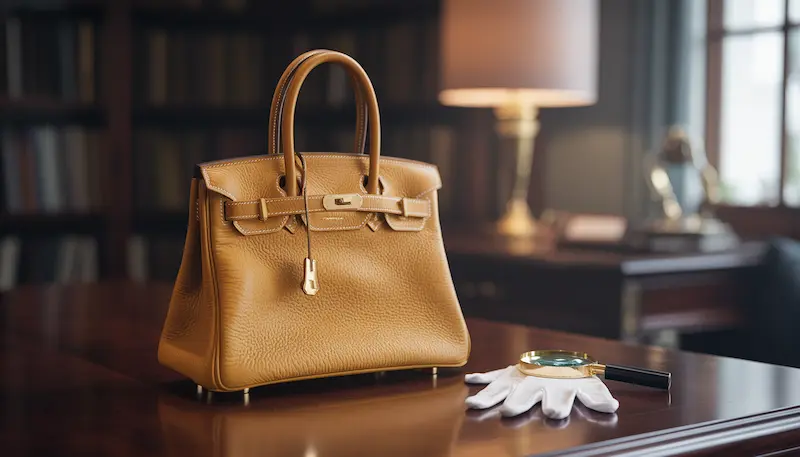
Every Hermès bag carries a blind stamp — a letter inside a shape (square, circle, or no shape) stamped into the leather, typically near the stitching on an interior panel. This letter corresponds to the year of production.
The stamp should be crisp and clean, pressed evenly into the leather. Fakes often have stamps that are smudged, too shallow, too deep, or incorrectly positioned. Knowing which letter corresponds to which year — and verifying it matches the bag's apparent age and condition — is a basic but important step.
A bag described as being from a specific year should show the blind stamp that matches. If the seller can't confirm this detail, that's information.
2. The Leather Identification
Not all Hermès leathers look the same in photographs, and not all sellers accurately identify what they're selling. A bag listed as Togo might be Clemence. A bag listed as Swift might be Evercolor. These distinctions matter — for care, for aging characteristics, and for resale value in certain markets.
If you're considering a specific leather type, ask for close-up photographs of the grain pattern and cross-reference against known references. Understanding how different Hermès leathers behave over time is useful background before you try to identify them in secondary market listings.
3. The Stitching
Hermès stitching is done by hand using a saddle stitch technique. Each stitch is consistent in pitch, tension, and angle. The thread is linen, waxed, and appears in a color that either matches or deliberately contrasts with the leather.
In authentic bags, the stitching is even throughout — not just on the visible exterior panels, but on the handles, gussets, and interior edges.
Fakes almost always reveal themselves at the stitching: slightly uneven pitch, machine regularity that looks wrong, or thread that doesn't match Hermès's specifications.
Request close-up photographs of multiple stitching areas — not just the front panel. The handle attachment points and the gussets are often where inconsistency appears first.
4. The Hardware Weight and Finish
Hermès hardware — whether palladium, gold-plated, or brushed — has a specific weight and surface quality.
Palladium hardware has a cool, slightly reflective finish that doesn't yellow. Gold hardware has warmth without excess shine. Both feel substantial when handled.
Counterfeit hardware often feels lighter than it should, shows inconsistent plating, or has a finish that photographs well but looks different in person. The clasp mechanism — the fermoir — should operate with smooth, consistent resistance. It shouldn't feel loose, stiff, or uncertain in its movement.
This is difficult to evaluate from photographs alone, which is one reason in-person inspection or purchasing from a reputable authenticator matters.
5. The Clochette and Lock
The clochette — the small leather piece that holds the lock — should be stitched with the same precision as the rest of the bag. The lock itself should bear the Hermès stamp and operate smoothly with its corresponding key.
Two keys should accompany every authentic Birkin at original sale; secondary market pieces sometimes arrive with one or none, which is acceptable but should be reflected in price.
The clochette leather should match the bag leather in color and texture — not perfectly (natural variation exists), but consistently enough to appear from the same source.
6. The Interior Stamp
Inside the bag, typically on the flap beneath the main compartment, you'll find the Hermès Paris stamp — "Hermès Paris Made in France" — along with the craftsperson's stamp. Both should be clean, evenly pressed, and centered appropriately.
The font Hermès uses is specific. The spacing is specific. The depth of the impression is specific.
These details are difficult for counterfeiters to replicate perfectly, which is why the interior stamp remains one of the most reliable authenticity indicators despite being one of the most studied.
7. The Condition of the Handles
Handles are the first area to show wear on any frequently carried bag. On a used Birkin, some handle wear is expected and appropriate — it tells you the bag was used, which is honest. What to look for is how the handles have worn.
Authentic Hermès leather wears in a particular way: the surface softens and develops character without fraying or breaking down at the edges. The stitching at handle attachment points should remain intact.
The handle shape should be maintained even with use.
Handles that show excessive darkening from skin contact, fraying stitching at attachment points, or structural softening that changes the handle's cross-section are red flags — either for authenticity or for condition problems that aren't reflected in the asking price.
8. The Dust Bag and Accessories
An authentic Birkin is sold with an Hermès dust bag, a clochette with lock and keys, and typically a rain cover. Secondary market pieces may be missing some of these — which is understandable for older bags — but the items that are present should be examined carefully.
The dust bag should be cotton, with the Hermès logo in the correct font and proportion. The interior should feel soft and clean. A dust bag that's too bright, too stiff, or has a logo with incorrect spacing is a problem — either it's not original, or it's from a different bag entirely.
This is something most owners don't notice until it's too late: the accessories accompanying a bag are themselves an authenticity signal, and a mismatched or incorrect dust bag can indicate that the bag's provenance isn't what it's presented as.
A high-quality replacement cotton dust bag — if the original is missing — keeps the leather protected during storage. Options like the Ziploc Weather Shield Storage bag for luxury items (Check on Amazon) serve as a practical interim for protecting the bag while you source the correct cotton alternative.
9. The Leather Condition Assessment
Beyond authenticity, condition matters enormously for pricing. A bag described as "excellent" should show minimal wear — perhaps very light handle patina, no visible scratches on the leather panels, hardware without deep scratching.
A bag described as "good" will show more evidence of use.
The problem is that these descriptors are inconsistently applied across sellers. What one seller calls excellent, another would grade as good. Look for specific condition details rather than general descriptors:
Are there scratches on the front panel? Has the base leather softened? Is there any mold or water damage?
Knowing which Hermès leathers are most susceptible to surface damage helps you evaluate condition claims accurately — a scratch on Togo reads differently than the same scratch on Swift.
10. The Seller's Verification Process
Reputable secondary market sellers — Vestiaire Collective, The RealReal, Madison Avenue Couture, Privé Porter, Fashionphile, among others — have authentication processes.
Some are more rigorous than others. Understanding what a specific seller's authentication process actually involves — not just that they claim to authenticate — matters.
For private sales, independent authentication services like Entrupy or Real Authentication offer documented verification.
The cost of authentication is minimal relative to the transaction value. A seller who resists independent authentication is providing information through that resistance.
11. The Price Relative to Market
Birkin prices on the secondary market are well-documented. A bag priced significantly below market — particularly for popular sizes, colors, and hardware combinations — warrants additional scrutiny, not celebration.
Pricing below market happens legitimately: sellers who need liquidity, estates that don't know current values, older bags in conditions that affect pricing. But it also happens when authenticity is the variable that makes the price possible.
Know the market before you engage. Platforms like Vestiaire Collective and Fashionphile provide current market reference points for specific configurations. A price that seems too good to be true usually has a reason.
The Leather Care Question That Comes After Purchase
Once you've purchased a verified, authentic Birkin, the conversation shifts to preservation. This is where many buyers who did everything right at purchase start making mistakes in ownership.
The leather type you've acquired determines the care approach. Togo, Clemence, and Epsom each respond differently to conditioning products and storage conditions. Using the wrong conditioner on fine Hermès calfskin — or over-conditioning out of enthusiasm — can alter the surface finish in ways that are difficult to reverse.
A mild conditioner like Saphir Renovateur (View details), applied sparingly two to three times per year, is a safe starting point for most Hermès leathers. For Epsom in particular, even less product than feels necessary is usually the right amount.
For a complete approach to avoiding the conditioning mistakes that accelerate leather wear, the pattern of errors is consistent enough to be worth understanding before the first application.
Storage After Purchase
A Birkin in excellent condition at purchase can deteriorate significantly within a year of poor storage. The original dust bag, used with a loose closure rather than sealed tight, combined with internal support to maintain the bag's structure, covers the basics.
For long-term storage — anything beyond a few months — a bag pillow insert like the Purse organizer (See current price) maintains the interior shape and prevents the base from softening under its own weight. It's a minor investment relative to the bag's value and the cost of professional restoration if the shape is lost.
Climate matters too. A closet with consistent humidity between 40–60% relative humidity is the right environment. Basements, attics, and rooms with significant seasonal temperature variation create conditions that leather responds to, slowly and permanently.
A Quick Pre-Purchase Checklist
Before committing to any secondary market Birkin purchase:
- Blind stamp confirmed and year-appropriate
- Leather type identified and consistent with listing description
- Stitching examined in multiple locations — handles, gussets, panels
- Hardware weight and finish assessed in person or via video
- Clochette leather consistent with bag leather
- Interior stamp clean, centered, correct font
- Handle condition reflects asking price accurately
- Dust bag and accessories present and consistent
- Condition described specifically, not just categorically
- Seller authentication process understood
- Price validated against current market references
This list takes perhaps fifteen minutes to work through properly. It's the difference between a confident purchase and a regretted one.
Frequently Asked Questions
How do I know if a Hermès Birkin for sale is authentic?
The most reliable approach combines multiple verification methods: examining the blind stamp, stitching quality, hardware weight and finish, interior stamp font and placement, and the seller's authentication documentation. For significant purchases, independent authentication through a service like Entrupy provides documented verification that a single seller's claim cannot.
What is a fair price for a used Hermès Birkin?
Secondary market prices vary by size, leather, color, hardware, and condition. A Birkin 25 in a popular leather like Togo or Epsom with neutral hardware typically trades at or above retail. Larger sizes, exotic leathers, and rare hardware combinations command premiums.
Bags with condition issues — scratching, structural wear, hardware damage — are discounted accordingly. Current listings on Vestiaire Collective and Fashionphile provide reliable market reference points.
What should come with a Hermès Birkin when purchased new or secondhand?
A new Birkin comes with a dust bag, clochette, padlock, two keys, and a rain cover. Secondary market pieces may be missing some accessories — this is common for older bags. The items that are present should be examined for authenticity. Missing accessories, particularly the lock and keys, should be reflected in the asking price.
Which Birkin size is best for a first purchase?
The Birkin 30 is the most versatile size for most buyers — it handles daily use without being oversized, and it holds its structure well in most leathers. The Birkin 25 is more compact and commands higher relative prices in the secondary market due to demand. The Birkin 35 offers more capacity but is heavier and shows structural wear more readily in softer leathers.
What is the best leather for a Hermès Birkin on the secondary market?
For practical daily use with good durability, Togo and Epsom are the most consistently recommended leathers.
Togo conceals surface marks well through its natural grain and develops a rich patina over time.
Epsom resists surface marking effectively and holds its structure consistently. Both hold resale value well. Smooth leathers like Swift are beautiful but require more careful handling to maintain their appearance.
Final Thought
Buying a Hermès Birkin on the secondary market is a legitimate way to acquire one of the most enduring luxury objects in circulation — but it rewards buyers who approach it with the same precision they'd apply to any significant decision.
The eleven checks above aren't excessive. They're proportional. A fifteen-minute verification process before a five-figure purchase is not due diligence. It's the minimum.
Find the right bag, verify it carefully, and then maintain it consistently. The collectors whose pieces look the same a decade after purchase didn't do more than anyone else. They just did the right things, without shortcuts, from the beginning.
Precision over excess. Consistency over intensity.