Why Storing Luxury Bags in Plastic Damages Them
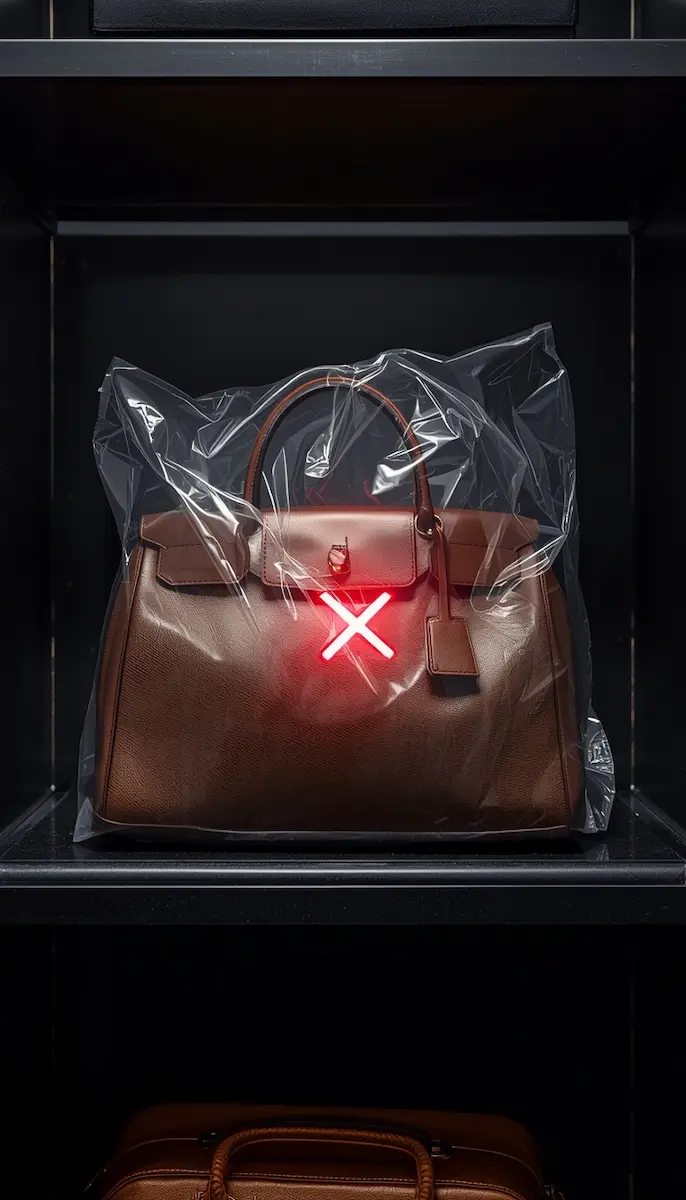
Storing luxury bags in plastic feels like the responsible thing to do. It's the instinct almost everyone has the first time they bring home something genuinely expensive: wrap it up, seal it in, keep the dust and light out.
The problem is that plastic does the opposite of what people expect, and the damage it causes often takes months to show up, long after anyone would think to connect it back to the bag on the shelf, sealed in its protective sleeve.
Table of Contents
- Why the Instinct to Use Plastic Makes Sense (And Why It's Wrong Anyway)
- What Actually Happens Inside a Sealed Plastic Bag
- Why This Damage Takes So Long to Notice
- What to Use Instead
- When Plastic Is Actually Fine
- What to Do If a Bag Has Already Been Stored in Plastic
- Suede Deserves Its Own Mention Here
- Why the Hardware Matters Too, Not Just the Leather
- Why the Stitching Is Also at Risk
- Frequently Asked Questions
Why the Instinct to Use Plastic Makes Sense (And Why It's Wrong Anyway)
Plastic seems like it should work. It's a physical barrier, it keeps dust off, and it feels sturdier than a soft dust bag. That logic holds up for almost everything except leather goods specifically, because leather isn't an inert material sitting still inside its packaging. It's organic, and it continues reacting to its environment long after it leaves the factory.
Sealing leather inside plastic traps whatever moisture is already present, in the leather itself, in the surrounding air, in tiny amounts transferred from handling, and gives it nowhere to go. A dust bag or breathable cotton cover does the opposite: it blocks light and surface dust while still letting the leather breathe, which is exactly what leather actually needs over the long term.
What Actually Happens Inside a Sealed Plastic Bag
Trapped humidity has nowhere to escape. Leather naturally releases small amounts of moisture, and in an open environment that moisture simply disperses into the air. Inside a sealed plastic bag, it has nowhere to go, so it just accumulates, creating a persistently humid microclimate right against the leather's surface.
That trapped humidity accelerates mold and mildew growth. Leather is an organic material, and organic materials in a warm, humid, sealed environment are exactly what mold spores need to take hold. This is why bags stored in plastic for extended periods sometimes come out with faint white or greenish spotting nobody expected, condensation and trapped moisture did that quietly, over months, without anyone touching the bag at all.
Plastic itself can directly stain and discolor leather. Many plastic bags, especially cheaper ones or older PVC-based dry cleaning bags, contain plasticizers, chemical compounds that keep the plastic flexible. Over time, and especially in warmer conditions, those plasticizers can migrate out of the plastic and onto whatever surface it's touching. On leather, this often shows up as a yellowish discoloration or a slightly sticky residue that wasn't there when the bag went into storage.
Sealed plastic also traps heat unevenly. A bag stored in a closet that gets even mildly warm during the day, near a window, in an attic, in a garage, heats up faster and retains that heat longer when sealed in plastic than it would in a breathable cover. Repeated heat cycling is part of what causes leather to dry out and eventually crack, the opposite of what the protective plastic was supposed to prevent.
Why This Damage Takes So Long to Notice
Nobody opens a sealed bag every week to check on it, that's rather the point of sealing it away in the first place. This is exactly why the damage from plastic storage is so easy to miss until it's already significant.
A bag put away carefully for a season, or during a move, or simply because it wasn't currently in rotation, can develop real problems that only become visible the next time it actually comes out.
By the time discoloration, a musty smell, or a slightly tacky surface shows up, the underlying moisture and chemical exposure has usually been happening for weeks or months already, not days.
This is different from a more obvious, immediate kind of damage, it's cumulative and quiet, which makes it easy to blame on "just getting old" rather than tracing it back to how the bag was actually stored.
What to Use Instead
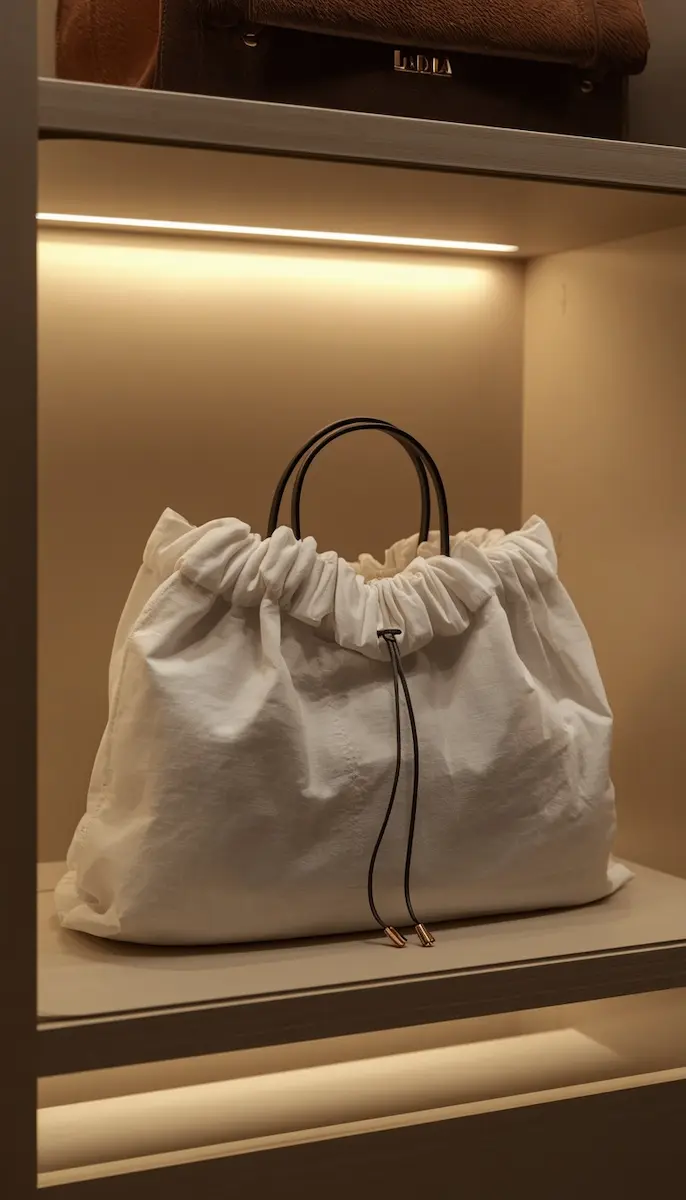
A breathable cotton dust bag is the simplest fix, and it solves the core problem directly: it blocks dust and light while allowing normal air exchange, so moisture never accumulates in the first place. The MISSLO Cotton Breathable Dust-Proof Storage Bag [Check on Amazon] works well here, soft flannel cotton construction that protects the surface without sealing anything in.
Acid-free tissue paper, stuffed loosely inside the bag, helps maintain its shape without introducing the moisture problems that plastic or newspaper can cause. Regular newsprint contains acids and inks that can transfer onto lighter-colored leather over time, which is exactly why archival-grade acid-free paper exists as a safer alternative. A pack of RYKOMO Acid-Free Tissue Paper [Check on Amazon] handles this well for bags, shoes, and other leather goods alike.
A dedicated purse shaper insert does the same shaping job with an added benefit, some are specifically designed with moisture-wicking materials built in, actively helping manage humidity rather than just filling space. The Bag-a-Vie Purse Shaper Pillow Insert [Check on Amazon] is built around exactly this idea, keeping the bag's structure while also helping pull moisture away from the interior lining.
Silica gel packets placed near, not inside, sensitive areas add another layer of humidity control, particularly useful in genuinely humid climates or basement-level closets where ambient moisture is already a concern regardless of what the bag is stored in. Dry & Dry Silica Gel Packets [Check on Amazon] are a reusable, rechargeable option that can be periodically dried out in the sun or a low oven and used again indefinitely.
When Plastic Is Actually Fine
None of this means plastic is universally bad for every situation. A brief period in a plastic sleeve during shipping, or a short trip where a bag needs extra protection from actual rain, is a completely different scenario from long-term storage. The risk is specifically about duration, a bag sealed in plastic for a few hours or days doesn't have time to develop the trapped-moisture problems that show up after weeks or months of continuous sealed storage.
The original retail dust bag that came with a bag is usually the right long-term choice precisely because manufacturers already know this, which is why quality dust bags are almost always breathable fabric rather than plastic in the first place.
What to Do If a Bag Has Already Been Stored in Plastic
If a bag comes out of long-term plastic storage with a musty smell, visible spotting, or a slightly tacky feel, the first step is simply removing it from the plastic and letting it air out somewhere with good airflow but out of direct sunlight, rather than immediately reaching for a cleaning product. Direct sunlight can fade leather that's already been chemically stressed, so a shaded, well-ventilated spot works better for this initial airing-out period.
Visible mold spotting, rather than just a musty smell, is worth addressing carefully rather than simply wiping it away, since improper cleaning can push mold spores deeper into the leather rather than removing them.
For anything beyond light surface dust, a professional leather cleaner experienced with mold-related issues specifically is generally a safer bet than DIY approaches, which can sometimes make surface staining worse rather than better.
Suede Deserves Its Own Mention Here
Suede reacts even more dramatically to trapped moisture than smooth leather does, since its napped surface absorbs moisture more readily and shows water spotting and matting far more visibly once it happens. Plastic storage is genuinely riskier for suede bags specifically than for smooth leather ones, and the breathable-cover principle matters even more here.
Our complete guide on how to protect a new suede designer bag covers suede-specific storage and care in more depth, since it behaves differently enough from smooth leather to warrant its own dedicated approach beyond what applies to leather goods generally.
Why the Hardware Matters Too, Not Just the Leather
Sealed plastic storage doesn't only affect the leather itself. Metal hardware, clasps, zippers, decorative studs, sits inside that same trapped, humid microclimate, and metal reacts to persistent moisture in its own way, through oxidation and tarnishing that can happen faster in a sealed, humid environment than in open air.
This connects directly to something worth understanding about hardware specifically, our piece on the hidden reason designer handbag hardware turns green covers this exact oxidation process, and humidity trapped by plastic storage is one of the accelerating factors behind it.
Why the Stitching Is Also at Risk
It's easy to focus entirely on the leather and the hardware and forget that the thread holding a bag together is affected by the same humid, trapped environment. Thread exposed to persistent moisture over long stretches can weaken faster than it would in normal, breathable storage conditions, and since stitching is already one of the more vulnerable parts of any well-made bag under ordinary use, adding unnecessary moisture exposure on top of that isn't doing it any favors.
Our guide on why stitching fails before the leather does on expensive bags goes into more detail on why thread is often the first thing to actually give out, and why protecting it through proper storage conditions matters just as much as protecting the leather itself.
Frequently Asked Questions
Is it ever okay to store a bag in plastic for a short time? Yes, brief periods, during shipping or short-term protection from actual rain, aren't the concern. The damage described here develops specifically from extended, sealed storage over weeks or months, not hours or a couple of days.
How can I tell if my bag has already been damaged by plastic storage? Look for a musty or slightly chemical smell when first opening the bag, any visible white or greenish spotting, discoloration (often a yellowish tint), or a surface that feels slightly tacky rather than smooth and dry.
Does this apply to all leather, or just certain types? The core moisture-trapping problem applies to leather generally, though suede is especially sensitive due to its absorbent, napped surface. Smooth, finished leather is somewhat more resistant but still fully susceptible to the same underlying issue over long enough storage periods.
Can I just poke holes in a plastic bag to let it breathe? This helps somewhat but doesn't fully solve the problem, since plastic still traps humidity more than a genuinely breathable fabric does, even with some holes added. A proper cotton dust bag is a more reliable fix than modifying a plastic one.
What if my bag didn't come with its own dust bag? A generic breathable cotton dust bag, sized appropriately for the bag, works just as well as one included by the manufacturer. The material and breathability matter far more than whether it has a specific brand's logo printed on it.
Storing a bag in plastic comes from a genuinely good instinct, wanting to protect something valuable, it's just aimed at the wrong kind of protection. Leather needs to breathe even while it's resting, and the difference between a sealed plastic bag and a simple breathable cotton cover is often the difference between a bag that looks the same in five years and one that quietly develops problems nobody saw coming.
Disclosure: This article may contain affiliate links. As an Amazon Associate, we earn from qualifying purchases at no extra cost to you.